Building Blocks
Subcategorías de "Building Blocks"
- Ácidos borónicos y derivados del ácido borónico(5.780 productos)
- Building Blocks quirales(1.241 productos)
- Building Blocks de hidrocarburos(6.100 productos)
- Building Blocks orgánicos(61.023 productos)
Se han encontrado 205289 productos de "Building Blocks"
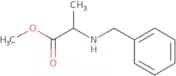
N-Benzylalanine methyl ester
CAS:N-Benzylalanine methyl ester is a natural product that is used for the treatment of Parkinson's disease. It has been shown to have an anti-inflammatory effect, which may be due to inhibition of amines and neurotransmitters, as well as its ability to inhibit enzymes that break down these compounds. N-Benzylalanine methyl ester is produced by asymmetric synthesis and has been shown to be enantiopure. It can be synthesized through enzymatic methods or via synthetic methods. N-Benzylalanine methyl ester can also be made by skeleton rearrangement and chiral synthesis.br>br>
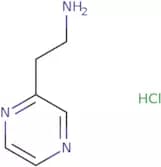
N-Benzylalanine methyl ester is synthesized in the human body from L-phenylalanine and benzoic acid. The molecule contains a benzene ring with a nitrogen atom attached to it. This benzene ring is substituted with an amino group at one end and a carboxylic acid group at theFórmula:C11H15NO2Pureza:Min. 95%Peso molecular:193.24 g/mol2-Pyrazin-2-yl-ethylamine HCl
CAS:Versatile small molecule scaffold
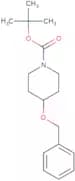
Fórmula:C6H10ClN3Pureza:Min. 95%Peso molecular:159.62 g/moltert-Butyl 4-(benzyloxy)piperidine-1-carboxylate
CAS:Versatile small molecule scaffold
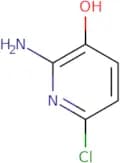
Fórmula:C17H25NO3Pureza:Min. 95%Peso molecular:291.39 g/mol2-amino-6-chloropyridin-3-ol
CAS:Versatile small molecule scaffold
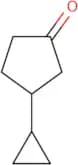
Fórmula:C5H5ClN2OPureza:Min. 95%Peso molecular:144.6 g/mol3-Cyclopropylcyclopentan-1-one
CAS:Versatile small molecule scaffold
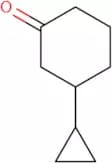
Fórmula:C8H12OPureza:Min. 95%Peso molecular:124.18 g/mol3-Cyclopropylcyclohexan-1-one
CAS:Versatile small molecule scaffold
Fórmula:C9H14OPureza:Min. 95%Peso molecular:138.21 g/mol3-Iodo-7-methyl-imidazo[1,2-a]pyridine
CAS:Versatile small molecule scaffold
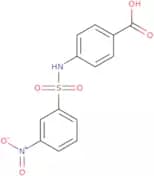
Fórmula:C8H7IN2Pureza:Min. 95%Peso molecular:258.06 g/mol4-(3-Nitro-benzenesulfonylamino)-benzoic acid
CAS:Versatile small molecule scaffold
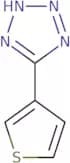
Fórmula:C13H10N2O6SPureza:Min. 95%Peso molecular:322.3 g/mol5-(Thiophen-3-yl)-2H-1,2,3,4-tetrazole
CAS:Versatile small molecule scaffold
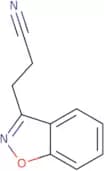
Fórmula:C5H4N4SPureza:Min. 95%Peso molecular:152.18 g/mol3-(1,2-Benzoxazol-3-yl)propanenitrile
CAS:Versatile small molecule scaffold
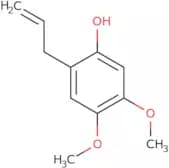
Fórmula:C10H8N2OPureza:Min. 95%Peso molecular:172.18 g/mol2-Allyl-4,5-dimethoxyphenol
CAS:2-Allyl-4,5-dimethoxyphenol is a pheromone that binds to the olfactory receptor of Diptera. It is also present in the fruit of Eugenia sp. (Myrtaceae). The binding of 2-allyl-4,5-dimethoxyphenol to the olfactory receptor of Diptera has been shown in vivo and in vitro. Spectrometric analyses have revealed significant cytotoxicity for this molecule against breast cancer cells. This molecule may be transformed by β-caryophyllene and eugenol into bioactive molecules with cytotoxic, antioxidant, or antiinflammatory activities.
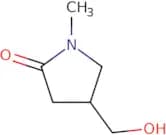
Fórmula:C11H14O3Pureza:Min. 95%Peso molecular:194.23 g/mol4-(Hydroxymethyl)-1-methylpyrrolidin-2-one
CAS:Versatile small molecule scaffold
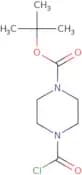
Fórmula:C6H11NO2Pureza:Min. 95%Peso molecular:129.16 g/moltert-Butyl 4-chlorocarbonylpiperazine-1-carboxylate
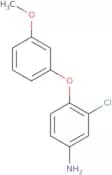
CAS:Versatile small molecule scaffoldFórmula:C10H17ClN2O3Pureza:Min. 95%Forma y color:PowderPeso molecular:248.71 g/mol3-Chloro-4-(3-methoxyphenoxy)aniline
CAS:Versatile small molecule scaffold
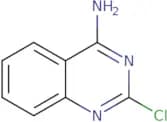
Fórmula:C13H12ClNO2Pureza:Min. 95%Peso molecular:249.69 g/mol2-chloroquinazolin-4-amine
CAS:2-Chloroquinazolin-4-amine (CQA) is an anti-oxidant that exhibits significant cytotoxicity against human cancer cells. It is a competitive inhibitor of the enzyme chloride channel protein, which is involved in regulating the concentration of chloride ions in the blood. CQA has been shown to inhibit chemotaxis of white blood cells and platelets, and to have a protective effect on muscle tissue. The cytotoxic effects of CQA were shown to be due to its ability to induce apoptosis, or programmed cell death.
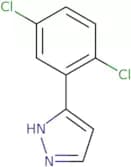
Fórmula:C8H6ClN3Pureza:Min. 95%Peso molecular:179.6 g/mol3-(2,5-Dichlorophenyl)pyrazole
CAS:Versatile small molecule scaffold
Fórmula:C9H6Cl2N2Pureza:Min. 95%Peso molecular:213.06 g/mol4-(1,2,3-Thiadiazol-4-yl)phenol
CAS:4-(1,2,3-Thiadiazol-4-yl)phenol is an antibiotic that belongs to the group of antimicrobials. It has an inhibitory concentration (IC) of 0.5 micrograms/ml against pyogenic bacteria and 1.0 micrograms/ml against a number of other bacterial strains. 4-(1,2,3-Thiadiazol-4-yl)phenol also has antimicrobial properties against fungi and may be used for the treatment of catalase-producing bacteria such as Streptococcus pyogenes or Staphylococcus aureus. Elemental analysis revealed that this compound is composed entirely of carbon, hydrogen, and oxygen. The molecular weight was found to be 166.16 g/mol. This compound inhibits bacterial growth by binding to DNA-dependent RNA polymerase and preventing transcription and replication of DNA. This active form is metabolized through a number of metabolic transformations including hydro
Fórmula:C8H6N2OSPureza:Min. 95%Peso molecular:178.21 g/mol4-bromo-3-sulfamoylbenzoic acid
CAS:Versatile small molecule scaffold
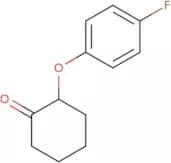
Fórmula:C7H6BrNO4SPureza:Min. 95%Peso molecular:280.1 g/mol2-(4-Fluorophenoxy)cyclohexan-1-one
CAS:Versatile small molecule scaffold
Fórmula:C12H13FO2Pureza:Min. 95%Peso molecular:208.23 g/molRef: 3D-JCA79893
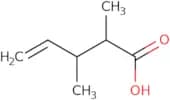
Producto descatalogado2,3-Dimethylpent-4-enoic acid
CAS:Versatile small molecule scaffold
Fórmula:C7H12O2Pureza:Min. 95%Peso molecular:128.17 g/mol

![3-Iodo-7-methyl-imidazo[1,2-a]pyridine](/_next/image/?url=https%3A%2Fstatic.cymitquimica.com%2Fproducts%2F3D%2Fthumb-webp%2FJCA93833.webp&w=3840&q=75)