Building Blocks
Subcategorías de "Building Blocks"
- Ácidos borónicos y derivados del ácido borónico(5.784 productos)
- Building Blocks quirales(1.244 productos)
- Building Blocks de hidrocarburos(6.105 productos)
- Building Blocks orgánicos(61.070 productos)
Se han encontrado 205437 productos de "Building Blocks"
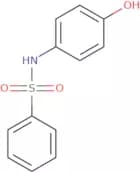
N-(4-Hydroxyphenyl)benzenesulfonamide
CAS:N-(4-Hydroxyphenyl)benzenesulfonamide (NPSA) is a potentiator of chlorine that increases the activity of monooxygenases, such as epoxide hydrolase. NPSA also has the ability to inhibit glutathione synthesis in the liver and kidneys. This inhibition leads to liver cell necrosis. It is believed that NPSA may act by inhibiting the synthesis of an intermediate in the biosynthesis of cholesterol, 3-methylcholanthrene. The chlorobenzenesulfonamide moiety reacts with glutathione to form a reactive chloride ion, which then reacts with other cellular components to cause damage.
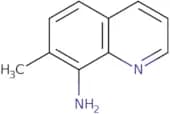
Fórmula:C12H11NO3SPureza:Min. 95%Peso molecular:249.29 g/mol7-Methylquinolin-8-amine
CAS:7-Methylquinolin-8-amine is a chemical compound that belongs to the group of quinoline derivatives. It has been shown to inhibit collagen synthesis, which may be due to its alkalizing effect on the extracellular matrix. This agent also acts as an inhibitor of cardiac hypertrophy and modulates cardiac muscle cell proliferation. 7-Methylquinolin-8-amine also represses the transcription of protein genes and prevents the activation of cardiac tissues by chloride ions.
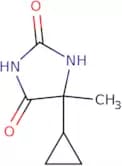
Fórmula:C10H10N2Pureza:Min. 95%Peso molecular:158.2 g/mol5-Cyclopropyl-5-methylimidazolidine-2,4-dione
CAS:Versatile small molecule scaffold
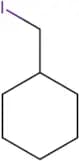
Fórmula:C7H10N2O2Pureza:Min. 95%Peso molecular:154.17 g/mol(Iodomethyl)cyclohexane
CAS:Iodomethylcyclohexane is a cyclohexane compound that is used as an ingredient in the production of other substances. It has been shown to have inhibitory effects on bowel disease and has a stereoisomer with a ph optimum of 7. Iodomethylcyclohexane also has an average particle diameter of 6.5 micrometers, which means it is a liquid crystal composed of molecules that are arranged in a regular and periodic manner. Iodomethylcyclohexane binds to receptors on cells, such as chloride and acid phosphatase, which are important for the regulation of cell growth. Iodomethylcyclohexane also binds to adrenergic receptors and can cause constriction of blood vessels. END>>
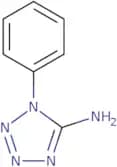
Fórmula:C7H13IPureza:Min. 95%Peso molecular:224.08 g/mol1-Phenyl-1H-1,2,3,4-tetrazol-5-amine
CAS:The compound 1-Phenyl-1H-1,2,3,4-tetrazol-5-amine is a growth factor that is used in pharmaceutical preparations. The reactive functional group is amine and the drug has been shown to be biocompatible and non-toxic. It is used as a diagnostic agent for diabetes mellitus type 2 and cardiac diseases. It has also been shown to have cytotoxic effects on cancer cells lines including MDA-MB-231 cell line with EC50 of 0.8 μM.
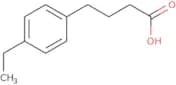
Fórmula:C7H7N5Pureza:Min. 95%Peso molecular:161.16 g/mol4-(4-Ethylphenyl)butanoic acid
CAS:Versatile small molecule scaffold
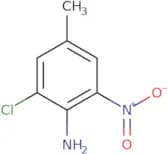
Fórmula:C12H16O2Pureza:Min. 95%Peso molecular:192.25 g/mol2-Chloro-4-methyl-6-nitroaniline
CAS:Versatile small molecule scaffold
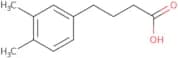
Fórmula:C7H7ClN2O2Pureza:Min. 95%Peso molecular:186.6 g/mol4-(3,4-Dimethylphenyl)butanoic acid
CAS:Versatile small molecule scaffold
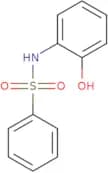
Fórmula:C12H16O2Pureza:Min. 95%Peso molecular:192.25 g/molN-(2-Hydroxyphenyl)benzenesulfonamide
CAS:Versatile small molecule scaffold
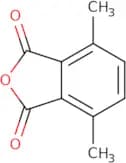
Fórmula:C12H11NO3SPureza:Min. 95%Peso molecular:249.29 g/mol4,7-Dimethyl-1,3-dihydro-2-benzofuran-1,3-dione
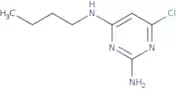
CAS:4,7-Dimethyl-1,3-dihydro-2-benzofuran-1,3-dione is a functional theory that stabilizes the molecule by preventing the formation of an intermediate. It can be used to prevent the generation of reactive radicals and other undesirable side reactions. 4,7-Dimethyl-1,3-dihydro-2-benzofuran-1,3-dione is uncatalyzed and reacts with water to form a cyclic compound that has a section of two functional groups that are bifunctional in nature. The parameters for this reaction include acid as a catalyst and proton as an acceptor. In catalysis, hydrogen bond forms between hydrogen fluoride and one of the hydroxyl groups on the 4,7 dimethyl benzofuran ring. This bond breaks down during dehydration when hydrogen fluoride leaves the molecule to form water.Fórmula:C10H8O3Pureza:Min. 95%Peso molecular:176.17 g/mol4-N-Butyl-6-chloropyrimidine-2,4-diamine
CAS:Versatile small molecule scaffold
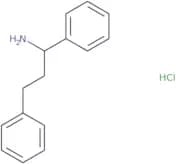
Fórmula:C8H13ClN4Pureza:Min. 95%Peso molecular:200.67 g/mol1,3-Diphenylpropan-1-amine hydrochloride
CAS:Versatile small molecule scaffold
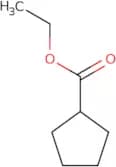
Fórmula:C15H18ClNPureza:Min. 95%Peso molecular:247.76 g/molEthyl cyclopentane carboxylate
CAS:Ethyl cyclopentane carboxylate is a cell signaling molecule that is synthesized from an amide and diacylglycerol. It has been shown to have therapeutic effects in autoimmune diseases, cancer, inflammatory diseases, bowel disease, and transfer reactions. Ethyl cyclopentane carboxylate inhibits the MCL-1 protein and CB2 receptor in the immune system. Ethyl cyclopentane carboxylate has also been shown to inhibit the inflammatory response in experimental models of inflammatory bowel disease by inhibiting the activity of the Cb2 receptor.
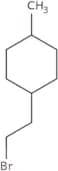
Fórmula:C8H14O2Pureza:Min. 95%Peso molecular:142.2 g/mol1-(2-Bromoethyl)-4-methylcyclohexane
CAS:Versatile small molecule scaffold
Fórmula:C9H17BrPureza:Min. 95%Peso molecular:205.13 g/molRef: 3D-FAA45269
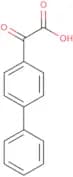
Producto descatalogado2-Oxo-2-(4-phenylphenyl)acetic acid
CAS:Versatile small molecule scaffold
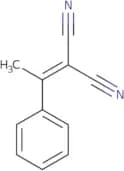
Fórmula:C14H10O3Pureza:Min. 95%Peso molecular:226.23 g/mol2-(1-Phenylethylidene)malononitrile
CAS:2-(1-Phenylethylidene)malononitrile (2-PMAN) is a chemical compound that is used as starting material for the manufacture of other chemicals. It can be obtained by the reaction of anthranilic acid with trichloroacetonitrile in the presence of hydride transfer agents. The product is purified by crystallization and recrystallization, and then reacts with carbon disulfide to form 2-phenylethanamine. 2-PMAN has been shown to have nematocidal activity, which may be due to its ability to inhibit protein synthesis by interfering with the uptake of amino acids into cells. Additionally, 2-PMAN can undergo dimerization or isomerisation reactions which affect its biological activity.
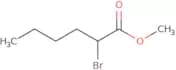
Fórmula:C11H8N2Pureza:Min. 95%Peso molecular:168.19 g/molMethyl 2-Bromohexanoate
CAS:Methyl 2-bromohexanoate is a reactive chemical that has been found in the urine of healthy volunteers. It is used as an intermediate for pharmaceutical preparations and can be introduced into the body through inhalation, ingestion, or skin contact. Methyl 2-bromohexanoate also has potential use as a biomarker for cancer, since it has been detected in patients with cervical cancer and environmental exposure to benzene. This compound reacts with sulfoxide in the environment to form polymers and phosphates. It also exhibits optical properties when polymerized.
Fórmula:C7H13BrO2Pureza:Min. 95%Peso molecular:209.08 g/mol1H-Benzo[d]imidazole-2-sulfonamide
CAS:1H-Benzo[d]imidazole-2-sulfonamide is a transcriptional regulator that is used in the treatment of bowel disease. It has been shown to be active against autoimmune diseases, such as inflammatory bowel disease and rheumatoid arthritis. 1H-Benzo[d]imidazole-2-sulfonamide regulates gene expression by binding to response elements in the promoter region of certain genes. The drug is an inhibitor of human serum proteases, which may lead to decreased inflammation and improved symptoms of inflammation bowel disease. The drug also has pharmacokinetic properties that make it suitable for oral administration.
Fórmula:C7H7N3O2SPureza:Min. 95%Peso molecular:197.21 g/mol1-(2-Chlorophenyl)butan-1-ol
CAS:Versatile small molecule scaffold
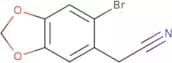
Fórmula:C10H13ClOPureza:Min. 95%Peso molecular:184.66 g/mol2-(6-Bromo-1,3-dioxaindan-5-yl)acetonitrile
CAS:Versatile small molecule scaffold
Fórmula:C9H6BrNO2Pureza:Min. 95%Peso molecular:240.05 g/mol

![1H-Benzo[d]imidazole-2-sulfonamide](/_next/image/?url=https%3A%2Fstatic.cymitquimica.com%2Fproducts%2F3D%2Fthumb-webp%2FFAA43531.webp&w=3840&q=75)