Building Blocks
Subcategorías de "Building Blocks"
- Ácidos borónicos y derivados del ácido borónico(5.783 productos)
- Building Blocks quirales(1.242 productos)
- Building Blocks de hidrocarburos(6.105 productos)
- Building Blocks orgánicos(61.055 productos)
Se han encontrado 205383 productos de "Building Blocks"
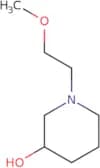
1-(2-Methoxyethyl)piperidin-3-ol
CAS:Versatile small molecule scaffold
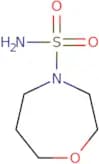
Fórmula:C8H17NO2Pureza:Min. 95%Peso molecular:159.23 g/mol1,4-Oxazepane-4-sulfonamide
CAS:Versatile small molecule scaffold
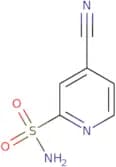
Fórmula:C5H12N2O3SPureza:Min. 95%Peso molecular:180.2 g/mol4-Cyanopyridine-2-sulfonamide
CAS:Versatile small molecule scaffold
Fórmula:C6H5N3O2SPureza:Min. 95%Peso molecular:183.19 g/mol[1-(6-Methylpyridazin-3-yl)pyrrolidin-2-yl]methanol
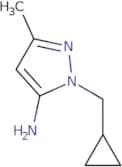
CAS:Versatile small molecule scaffoldFórmula:C10H15N3OPureza:Min. 95%Peso molecular:193.25 g/mol1-(Cyclopropylmethyl)-3-methyl-1H-pyrazol-5-amine
CAS:Versatile small molecule scaffold
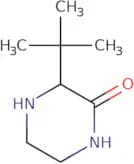
Fórmula:C8H13N3Pureza:Min. 95%Peso molecular:151.21 g/mol3-tert-Butylpiperazin-2-one
CAS:Versatile small molecule scaffold
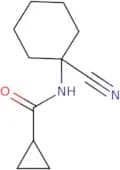
Fórmula:C8H16N2OPureza:Min. 95%Peso molecular:156.2 g/molN-(1-Cyanocyclohexyl)cyclopropanecarboxamide
CAS:Versatile small molecule scaffold
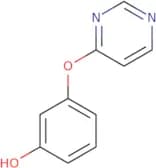
Fórmula:C11H16N2OPureza:Min. 95%Peso molecular:192.26 g/mol3-(Pyrimidin-4-yloxy)phenol
CAS:Versatile small molecule scaffold
Fórmula:C10H8N2O2Pureza:Min. 95%Peso molecular:188.18 g/molTert-Butyl 3-Bromo-5,6-Dihydrospiro[Piperidine-4,7-Pyrrolo[1,2-A]Imidazole]-1-Carboxylate
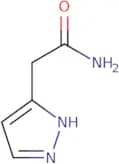
CAS:Versatile small molecule scaffoldFórmula:C15H22BrN3O2Pureza:Min. 95%Peso molecular:356.26 g/mol2-(1H-Pyrazol-3-yl)acetamide
CAS:2-(1H-Pyrazol-3-yl)acetamide (2PZA) is a nitroheterocyclic compound that exhibits anticancer activity by inhibiting the growth of cancer cells. It has been shown to inhibit cell growth and induce apoptosis in vitro. 2PZA also interacts with DNA and inhibits nucleotide synthesis, which leads to inhibition of protein synthesis. The functional theory for this compound is based on its ability to undergo hydrogen bonding interactions with aromatic amino acid residues. 2PZA also has significant antioxidant properties and can be used as a magnetic resonance imaging contrast agent for brain tumors.
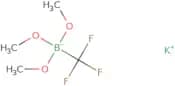
Fórmula:C5H7N3OPureza:Min. 95%Peso molecular:125.13 g/molPotassium Trimethoxy(trifluoromethyl)borate
CAS:Potassium trifluoromethoxytrimethylborate is a boronic acid. It is used in organic chemistry as an oxidant and nucleophile. It reacts with alcohols, iodides, and aldehydes to form the corresponding potassium salt and alcohol or the corresponding potassium salt and iodide or the corresponding potassium salt and aldehyde. Potassium trifluoromethoxytrimethylborate has been used for the synthesis of fluoxetine hydrochloride. The reaction time is dependent on the substrate chosen, but typically ranges from 5-12 hours.
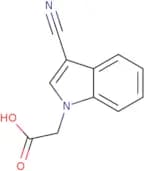
Fórmula:C4H9BF3KO3Pureza:Min. 95%Peso molecular:212.02 g/mol(3-Cyano-indol-1-yl)-acetic acid
CAS:Versatile small molecule scaffold
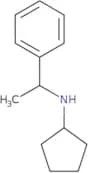
Fórmula:C11H8N2O2Pureza:Min. 95%Peso molecular:200.2 g/molCyclopentyl-(1-phenyl-ethyl)-amine
CAS:Cyclopentyl-(1-phenyl-ethyl)-amine is a cavity-forming molecule that can be used as a molecular probe. It has been shown to interact with the amine groups in polymers and form chains, which can be used for template molecules. Cyclopentyl-(1-phenyl-ethyl)-amine has been shown to have selectivity for interactions with amines over other moieties, such as nitrobenzene or water. The steric interactions of cyclopentyl-(1-phenyl-ethyl)-amine are also important when considering its interactions with other molecules, such as polymers. Cyclopentyl-(1-phenyl-ethyl)-amine has been shown to form molecular structures that could be used as templates for the synthesis of other molecules.
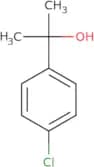
Fórmula:C13H19NPureza:Min. 95%Peso molecular:189.3 g/mol2-(4-Chlorophenyl)propan-2-ol
CAS:Versatile small molecule scaffold
Fórmula:C9H11ClOPureza:Min. 95%Peso molecular:170.64 g/mol4-Hydroxy-9H-fluoren-9-one
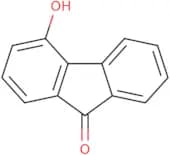
CAS:4-Hydroxy-9H-fluoren-9-one is a byproduct of the oxidation of fatty acids in soil microorganisms. It inhibits bacterial growth and has been shown to have synergistic effects with aromatic hydrocarbons. 4-Hydroxy-9H-fluoren-9-one can inhibit the production of enzymes such as acetyl coenzyme A carboxylase, which are necessary for cellular respiration and carbon metabolism. This compound also inhibits the dioxygenation of propionate to acetate and butyrate, which are important substrates for microorganisms. 4-Hydroxy-9H-fluoren-9-one is produced by bacteria in deionized water when exposed to dioxygen. It can be used as a carbon source for bacterial growth and can inhibit the activity of enzymes that metabolize aromatic compounds, such as biphenyl.
Fórmula:C13H8O2Pureza:Min. 95%Peso molecular:196.2 g/mol1-Methanesulfonylpropan-2-ol
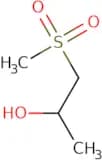
CAS:Methanesulfonylpropan-2-ol is a sulfonic acid that is used in clinical chemistry for the measurement of the concentration of mercaptans. This liquid has an acidic character, which distinguishes it from other sulfonic acids. Methanesulfonylpropan-2-ol also has a magnetic property and can be used to detect the presence of this substance in urine or blood samples.
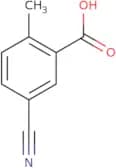
Methanesulfonylpropan-2-ol is excreted by the kidneys and intestines and is diluted when mixed with water. This substance can be detected using chromatographic science, such as gas chromatography, to identify its presence in biological samples. Methanesulfonylpropan-2-ol may have anticancer properties due to its ability to inhibit cell growth and proliferation. It binds to DNA, disrupting the production of new cells. The intestinal absorption of this drug leads to an increased concentration in the intestine, which may lead to anticancer effectsFórmula:C4H10O3SPureza:Min. 95%Peso molecular:138.19 g/mol5-Cyano-2-methylbenzoic acid
CAS:Versatile small molecule scaffold
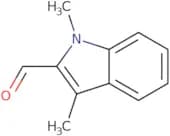
Fórmula:C9H7NO2Pureza:Min. 95%Peso molecular:161.16 g/mol1,3-Dimethyl-1H-indole-2-carbaldehyde
CAS:Diethyl succinate (DES) is a chemical compound that has reversible photochromic properties. It absorbs ultraviolet light and converts to 1,3-dimethyl-1H-indole-2-carbaldehyde (DMICA), which can be reverted back to DES by exposure to visible light. DMICA is chemically stable in the absence of oxygen and air, but it decomposes in the presence of strong oxidizing agents. The absorption spectrum of DMICA shows maxima at 230 nm and 270 nm with a peak at 254 nm. Diethyl succinate is an isomer of diethyl malonate, which has a similar structure. Diethyl succinate has no solubility in water, but it dissolves readily in organic solvents such as acetone or ethanol.
Fórmula:C11H11NOPureza:Min. 95%Peso molecular:173.21 g/mol[3,3'-Bipyridine]-5-carboxylic acid
CAS:Versatile small molecule scaffold
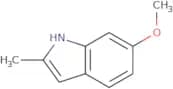
Fórmula:C11H8N2O2Pureza:Min. 95%Peso molecular:200.19 g/mol6-Methoxy-2-methyl-1H-indole
CAS:Versatile small molecule scaffold
Fórmula:C10H11NOPureza:Min. 95%Peso molecular:161.2 g/mol

![[1-(6-Methylpyridazin-3-yl)pyrrolidin-2-yl]methanol](/_next/image/?url=https%3A%2Fstatic.cymitquimica.com%2Fproducts%2F3D%2Fthumb-webp%2FBAC25616.webp&w=3840&q=75)
![Tert-Butyl 3-Bromo-5,6-Dihydrospiro[Piperidine-4,7-Pyrrolo[1,2-A]Imidazole]-1-Carboxylate](/_next/image/?url=https%3A%2Fstatic.cymitquimica.com%2Fproducts%2F3D%2Fthumb-webp%2FBAC00016.webp&w=3840&q=75)
![[3,3'-Bipyridine]-5-carboxylic acid](/_next/image/?url=https%3A%2Fstatic.cymitquimica.com%2Fproducts%2F3D%2Fthumb-webp%2FBAA97081.webp&w=3840&q=75)