Building Blocks
Subcategorías de "Building Blocks"
- Ácidos borónicos y derivados del ácido borónico(5.784 productos)
- Building Blocks quirales(1.242 productos)
- Building Blocks de hidrocarburos(6.105 productos)
- Building Blocks orgánicos(61.065 productos)
Se han encontrado 205418 productos de "Building Blocks"
2,4-Dibromo-5-methoxyaniline
CAS:2,4-Dibromo-5-methoxyaniline is an analog of 2,4-diaminopyridine. It is a synthetic compound that can be prepared by catalytic reduction of the corresponding bromide. The yields are between 60 and 90%. It is used as a precursor to make other compounds such as methoxybenzene and 4-bromo-2,6-dimethoxyphenol. The compound has two methoxy groups and two hydroxy groups that can be substituted with dialkoxy or alkoxy groups. This compound also undergoes debromination to form 2,4-dibromo-5-(hydroxymethyl)aniline. 2,4-Dibromo-5-(hydroxymethyl)aniline can be oxidized to form aniline or reduced to form dihydroxybenzene (1,3).
Fórmula:C7H7Br2NOPureza:Min. 95%Peso molecular:280.94 g/mol2-{[(tert-Butoxy)carbonyl]amino}-8-oxononanoic acid
CAS:Versatile small molecule scaffoldFórmula:C14H25NO5Pureza:Min. 95%Peso molecular:287.35 g/mol9-Azabicyclo[4.2.1]nonan-2-ol hydrochloride
CAS:Versatile small molecule scaffold
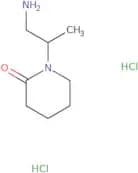
Fórmula:C8H16ClNOPureza:Min. 95%Peso molecular:177.7 g/mol1-(1-Aminopropan-2-yl)piperidin-2-one dihydrochloride
CAS:Versatile small molecule scaffold
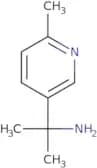
Fórmula:C8H18Cl2N2OPureza:Min. 95%Peso molecular:229.14 g/mol2-(6-Methylpyridin-3-yl)propan-2-amine
CAS:Versatile small molecule scaffold
Fórmula:C9H14N2Pureza:Min. 95%Peso molecular:150.22 g/molRef: 3D-RXA15578
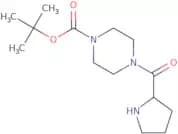
Producto descatalogadotert-butyl 4-(pyrrolidine-2-carbonyl)piperazine-1-carboxylate
CAS:Versatile small molecule scaffold
Fórmula:C14H25N3O3Pureza:Min. 95%Peso molecular:283.4 g/mol4-{[(Propan-2-yl)amino]methyl}benzonitrile hydrochloride
CAS:Versatile small molecule scaffold
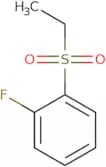
Fórmula:C11H15ClN2Pureza:Min. 95%Peso molecular:210.7 g/mol1-(Ethanesulfonyl)-2-fluorobenzene
CAS:Versatile small molecule scaffold
Fórmula:C8H9FO2SPureza:Min. 95%Peso molecular:188.22 g/mol[(1-Methoxycyclopentyl)methyl](methyl)amine
CAS:Versatile small molecule scaffold
Fórmula:C8H17NOPureza:Min. 95%Peso molecular:143.23 g/mol2-([(tert-Butoxy)carbonyl]amino)-5-(1,3-dioxolan-2-yl)pentanoic acid
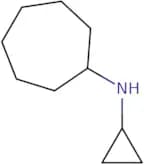
CAS:Versatile small molecule scaffoldFórmula:C13H23NO6Pureza:Min. 95%Peso molecular:289.32 g/molN-Cyclopropylcycloheptanamine
CAS:Versatile small molecule scaffold
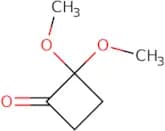
Fórmula:C10H19NPureza:Min. 95%Peso molecular:153.26 g/mol2,2-Dimethoxycyclobutan-1-one
CAS:Versatile small molecule scaffold
Fórmula:C6H10O3Pureza:Min. 95%Peso molecular:130.14 g/molRef: 3D-NCA70348
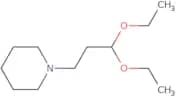
Producto descatalogado1-(3,3-Diethoxypropyl)piperidine
CAS:Versatile small molecule scaffold
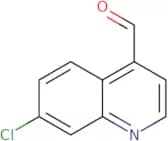
Fórmula:C12H25NO2Pureza:Min. 95%Peso molecular:215.33 g/mol7-Chloroquinoline-4-carbaldehyde
CAS:7-Chloroquinoline-4-carbaldehyde is an intermediate in the synthesis of quinolines. It is a functionalized, hydroxylated compound that can be used as an antiproliferative reagent. 7-Chloroquinoline-4-carbaldehyde has been shown to inhibit the growth of leukemia cells, prostate cancer cells and breast cancer cells. The hydroxyl group on this molecule reacts with electrophiles to form covalent adducts and undergoes substitution reactions with amino groups. This molecule also has an aryl group that can be modified to create bioisosteres.
Fórmula:C10H6ClNOPureza:Min. 95%Peso molecular:191.61 g/molRef: 3D-KBA71448
Producto descatalogadoMethyl 5-ethynylpyridine-2-carboxylate
CAS:Methyl 5-ethynylpyridine-2-carboxylate is a ligand that binds in the active site of many enzymes. It can enhance the activity of these enzymes and also change their conformations. Methyl 5-ethynylpyridine-2-carboxylate interacts with four subunits to form a tetradentate framework, which is responsible for this molecule's ability to bind to any type of ligand. This enhancement effect is reversible, and it can be reversed by oxidizing methyl 5-ethynylpyridine-2-carboxylate with nitric acid. The yield of methyl 5-ethynylpyridine-2-carboxylate depends on the reaction conditions and the type of arylacetylene used. Methyl 5-ethynylpyridine-2-carboxylate has been shown to be an effective ligand with a high emission yield when using 1,3
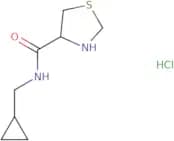
Fórmula:C9H7NO2Pureza:Min. 95%Peso molecular:161.2 g/molN-(Cyclopropylmethyl)-1,3-thiazolidine-4-carboxamide hydrochloride
CAS:Versatile small molecule scaffold
Fórmula:C8H15ClN2OSPureza:Min. 95%Peso molecular:222.74 g/mol2-{[(Pyridin-2-ylmethyl)amino]methyl}phenol
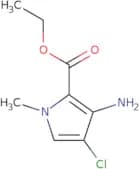
CAS:2-{[(Pyridin-2-ylmethyl)amino]methyl}phenol is a ligand that crystallizes in the monoclinic space group P21/c. The compound crystallizes with two molecules per asymmetric unit, and contains one water molecule per molecule. It has been shown to have cyclic voltammetry, which includes cyclic voltammetry and linear sweep voltammetry. 2-{[(Pyridin-2-ylmethyl)amino]methyl}phenol binds to the perchlorate ion and oxygen atoms coordinate to the nitrogen atoms of the ligand.Fórmula:C13H14N2OPureza:Min. 95%Peso molecular:214.26 g/molEthyl 3-amino-4-chloro-1-methyl-1H-pyrrole-2-carboxylate
CAS:Versatile small molecule scaffoldFórmula:C8H11ClN2O2Pureza:Min. 95%Peso molecular:202.64 g/mol4-Allyl-3-thiosemicarbazide
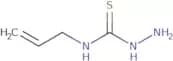
CAS:4-Allyl-3-thiosemicarbazide is a copper complex that inhibits the growth of cancer cells. Copper chloride is an important catalyst for this reaction. The coordination geometry of the copper ion and the structure of the product are key factors in determining its cytotoxicity. This compound has been shown to have significant cytotoxicity against a variety of cancer cell lines, including leukemia, lymphoma, breast, prostate, lung, pancreatic and colon cancer cells. 4-Allyl-3-thiosemicarbazide is also able to inhibit kinesin by binding to its ATPase site and preventing it from transporting cargo along microtubules.
Fórmula:C4H9N3SPureza:Min. 95%Peso molecular:131.2 g/mol(4-Benzylphenyl)methanol
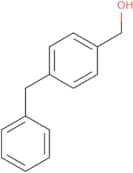
CAS:4-Benzylphenylmethanol is a natural compound that belongs to the class of amines. It is found in pyrethrum, which is derived from plants of the genus Chrysanthemum. 4-Benzylphenylmethanol has been used as a supplement for insect control, usually as an additive to natural pyrethrins. This substance has been shown to be effective against insect species such as the German cockroach, the fruit fly, and the mosquito. 4-Benzylphenylmethanol also has insecticidal properties by preventing insects from breaking down the chemical bonds in their cell membranes. This allows for more rapid death of insects and lessens their ability to regenerate cells after contact with this substance.
Fórmula:C14H14OPureza:Min. 95%Peso molecular:198.27 g/mol


![2-{[(tert-Butoxy)carbonyl]amino}-8-oxononanoic acid](/_next/image/?url=https%3A%2Fstatic.cymitquimica.com%2Fproducts%2F3D%2Fthumb-webp%2FXXC56420.webp&w=3840&q=75)
![9-Azabicyclo[4.2.1]nonan-2-ol hydrochloride](/_next/image/?url=https%3A%2Fstatic.cymitquimica.com%2Fproducts%2F3D%2Fthumb-webp%2FAPD14219.webp&w=3840&q=75)
![4-{[(Propan-2-yl)amino]methyl}benzonitrile hydrochloride](/_next/image/?url=https%3A%2Fstatic.cymitquimica.com%2Fproducts%2F3D%2Fthumb-webp%2FBAC92399.webp&w=3840&q=75)
amine](/_next/image/?url=https%3A%2Fstatic.cymitquimica.com%2Fproducts%2F3D%2Fthumb-webp%2FSAA86031.webp&w=3840&q=75)
![2-([(tert-Butoxy)carbonyl]amino)-5-(1,3-dioxolan-2-yl)pentanoic acid](/_next/image/?url=https%3A%2Fstatic.cymitquimica.com%2Fproducts%2F3D%2Fthumb-webp%2FXXC57848.webp&w=3840&q=75)

![2-{[(Pyridin-2-ylmethyl)amino]methyl}phenol](/_next/image/?url=https%3A%2Fstatic.cymitquimica.com%2Fproducts%2F3D%2Fthumb-webp%2FNCA67168.webp&w=3840&q=75)