Building Blocks
Subcategorías de "Building Blocks"
- Ácidos borónicos y derivados del ácido borónico(5.786 productos)
- Building Blocks quirales(1.246 productos)
- Building Blocks de hidrocarburos(6.107 productos)
- Building Blocks orgánicos(61.079 productos)
Se han encontrado 205461 productos de "Building Blocks"
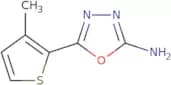
5-(3-Methylthiophen-2-yl)-1,3,4-oxadiazol-2-amine
CAS:5-(3-Methylthiophen-2-yl)-1,3,4-oxadiazol-2-amine is a ligand that binds to the ion channels in cells and activates them. It is used as a research tool in pharmacology and protein interactions. 5-(3-Methylthiophen-2-yl)-1,3,4-oxadiazol-2-amine has been shown to activate potassium channels by interacting with the receptor site. This ligand was also shown to inhibit cell growth by binding to the antibody site of the receptor. 5-(3-Methylthiophen-2-yl)-1,3,4--oxadiazol-2--amine has been shown to have a high purity of 99%.
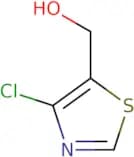
Fórmula:C7H7N3OSPureza:Min. 95%Peso molecular:181.22 g/mol(4-Chloro-1,3-thiazol-5-yl)methanol
CAS:Versatile small molecule scaffold
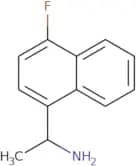
Fórmula:C4H4ClNOSPureza:Min. 95%Peso molecular:149.6 g/mol1-(4-Fluoronaphthalen-1-yl)ethan-1-amine
CAS:Versatile small molecule scaffoldFórmula:C12H12FNPureza:Min. 95%Peso molecular:189.23 g/mol1-[4-(4-Chlorophenyl)piperazin-1-yl]-2-methylpropan-2-amine
CAS:Versatile small molecule scaffold
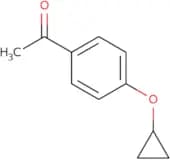
Fórmula:C14H22ClN3Pureza:Min. 95%Peso molecular:267.8 g/mol1-(4-Cyclopropoxyphenyl)ethan-1-one
CAS:1-(4-Cyclopropoxyphenyl)ethan-1-one is a stable, colorless ether. It is used in the acylation of aromatic or aliphatic compounds and has been shown to undergo acylation reactions with nitric acid, sulfuric acid, or phosphoric acid. This compound can also be cleaved with hydrochloric acid to form propionaldehyde.
Fórmula:C11H12O2Pureza:Min. 95%Peso molecular:176.21 g/molRef: 3D-NBA38091
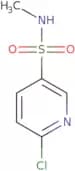
Producto descatalogado6-Chloro-N-methylpyridine-3-sulfonamide
CAS:Versatile small molecule scaffold
Fórmula:C6H7ClN2O2SPureza:Min. 95%Peso molecular:206.65 g/molN-[3-(Dimethylamino)propyl]-2-hydroxybenzamide
CAS:Versatile small molecule scaffoldFórmula:C12H18N2O2Pureza:Min. 95%Peso molecular:222.28 g/mol5-[(2-Chloro-6-fluorophenyl)methyl]-1,3,4-oxadiazole-2-thiol
CAS:Versatile small molecule scaffold
Fórmula:C9H6ClFN2OSPureza:Min. 95%Peso molecular:244.67 g/mol4-[(4-Methoxyphenyl)methyl]azetidin-2-one
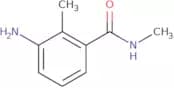
CAS:Versatile small molecule scaffoldFórmula:C11H13NO2Pureza:Min. 95%Peso molecular:191.23 g/mol3-amino-N,2-dimethylbenzamide
CAS:Versatile small molecule scaffold
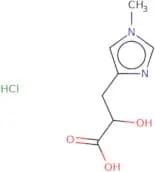
Fórmula:C9H12N2OPureza:Min. 95%Peso molecular:164.2 g/mol2-Hydroxy-3-(1-methyl-1H-imidazol-4-yl)propanoic acid hydrochloride
CAS:Versatile small molecule scaffold
Fórmula:C7H11ClN2O3Pureza:Min. 95%Peso molecular:206.6 g/molRef: 3D-DPD36465
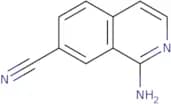
Producto descatalogado1-Aminoisoquinoline-7-carbonitrile
CAS:Versatile small molecule scaffold
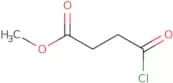
Fórmula:C10H7N3Pureza:Min. 95%Peso molecular:169.18 g/molMethyl 4-chloro-4-oxobutanoate
CAS:Methyl 4-chloro-4-oxobutanoate is a chemical compound that is used as a medicine. It has been shown to have an affinity for the human immunodeficiency virus (HIV) and can be used to treat HIV infection. Methyl 4-chloro-4-oxobutanoate is also used in other types of medicines, such as those for treating high blood pressure and heart disease. This chemical binds to the receptors on cells that are responsible for regulating blood pressure and heart rate, which leads to inhibition of cyclic guanosine monophosphate (cGMP) production. Methyl 4-chloro-4-oxobutanoate inhibits the activity of lipolytic enzymes, which break down fats into smaller units, by binding at the active site of these enzymes. It also binds to chloride ions and prevents them from being released from cells, which causes a rise in intracellular chloride levels. This increase in chloride
Fórmula:C5H7ClO3Pureza:Min. 95%Forma y color:Clear LiquidPeso molecular:150.56 g/mol4-aminopyrimidine-5-carboxamide
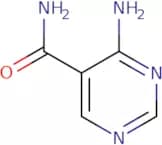
CAS:4-Aminopyrimidine-5-carboxamide is an amide that is synthesized from the reaction of eosinophil and amine. This compound inhibits transcription in a dose-dependent manner, with a high potency for iminium and amines, but not primary amines. 4-Aminopyrimidine-5-carboxamide is orally bioavailable and has shown to be effective in animal models. The compound has been optimized for oral administration and has shown to produce good yields. 4-Aminopyrimidine-5-carboxamide also possesses transcription factor inhibitory activity against interleukin, which may provide therapeutic benefit for inflammatory disorders.
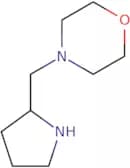
Fórmula:C5H6N4OPureza:Min. 95%Peso molecular:138.13 g/mol4-(2-Pyrrolidinylmethyl)-morpholine dihydrochloride
CAS:Versatile small molecule scaffold
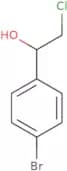
Fórmula:C9H18N2OPureza:Min. 95%Peso molecular:170.25 g/mol(1R)-1-(4-Bromophenyl)-2-chloroethan-1-ol
CAS:Versatile small molecule scaffold
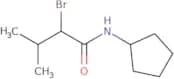
Fórmula:C8H8BrClOPureza:Min. 95%Peso molecular:235.5 g/mol2-Bromo-N-cyclopentyl-3-methylbutanamide
CAS:Versatile small molecule scaffold
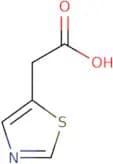
Fórmula:C10H18BrNOPureza:Min. 95%Peso molecular:248.16 g/mol2-(Thiazol-5-yl)acetic acid
CAS:2-(Thiazol-5-yl)acetic acid is an antimicrobial that is used as a fungicide. It has been shown to inhibit the growth of Fusarium and Curvularia. 2-(Thiazol-5-yl)acetic acid also has fungicidal activity against Refluxing, butanoic acid, and Oxysporum. This compound has been found to be effective against fungi in a number of different studies. 2-(Thiazol-5-yl)acetic acid inhibits the synthesis of ribosomes by inhibiting mRNA translation, leading to cell death by inhibition of protein synthesis.
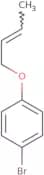
Fórmula:C5H5NO2SPureza:Min. 95%Peso molecular:143.16 g/mol1-Bromo-4-(but-2-en-1-yloxy)benzene
CAS:Versatile small molecule scaffold
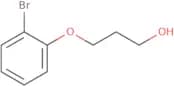
Fórmula:C10H11BrOPureza:Min. 95%Peso molecular:227.1 g/mol3-(2-Bromophenoxy)propan-1-ol
CAS:Versatile small molecule scaffold
Fórmula:C9H11BrO2Pureza:Min. 95%Peso molecular:231.09 g/mol

![1-[4-(4-Chlorophenyl)piperazin-1-yl]-2-methylpropan-2-amine](/_next/image/?url=https%3A%2Fstatic.cymitquimica.com%2Fproducts%2F3D%2Fthumb-webp%2FGCC19931.webp&w=3840&q=75)
![N-[3-(Dimethylamino)propyl]-2-hydroxybenzamide](/_next/image/?url=https%3A%2Fstatic.cymitquimica.com%2Fproducts%2F3D%2Fthumb-webp%2FNBA39443.webp&w=3840&q=75)
![5-[(2-Chloro-6-fluorophenyl)methyl]-1,3,4-oxadiazole-2-thiol](/_next/image/?url=https%3A%2Fstatic.cymitquimica.com%2Fproducts%2F3D%2Fthumb-webp%2FCWB54200.webp&w=3840&q=75)
![4-[(4-Methoxyphenyl)methyl]azetidin-2-one](/_next/image/?url=https%3A%2Fstatic.cymitquimica.com%2Fproducts%2F3D%2Fthumb-webp%2FEFC81230.webp&w=3840&q=75)