Building Blocks
Subcategorías de "Building Blocks"
- Ácidos borónicos y derivados del ácido borónico(5.778 productos)
- Building Blocks quirales(1.243 productos)
- Building Blocks de hidrocarburos(6.098 productos)
- Building Blocks orgánicos(61.038 productos)
Se han encontrado 205191 productos de "Building Blocks"
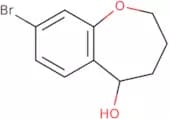
8-Bromo-2,3,4,5-tetrahydro-1-benzoxepin-5-ol
CAS:Versatile small molecule scaffold
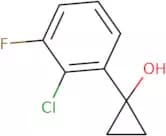
Fórmula:C10H11BrO2Pureza:Min. 95%Peso molecular:243.1 g/mol1-(2-Chloro-3-fluorophenyl)cyclopropan-1-ol
CAS:Versatile small molecule scaffold
Fórmula:C9H8ClFOPureza:Min. 95%Peso molecular:186.61 g/molRef: 3D-EKC93198
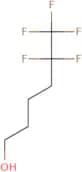
Producto descatalogado5,5,6,6,6-Pentafluorohexan-1-ol
CAS:Versatile small molecule scaffold
Fórmula:C6H9F5OPureza:Min. 95%Peso molecular:192.13 g/molrac-(3R,4R)-3-Hydroxy-4-[(2-phenylethyl)amino]-1lambda6-thiolane-1,1-dione
CAS:Versatile small molecule scaffold
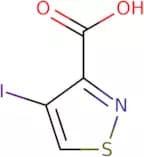
Fórmula:C12H17NO3SPureza:Min. 95%Peso molecular:255.34 g/mol4-Iodo-1,2-thiazole-3-carboxylic acid
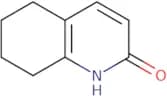
CAS:Versatile small molecule scaffoldFórmula:C4H2INO2SPureza:Min. 95%Peso molecular:255.04 g/mol5,6,7,8-Tetrahydroquinolin-2(1H)-one
CAS:Tetrahydroquinolin-2(1H)-one is a hydrobromide that has been found in the environment as an environmental pollutant. Tetrahydroquinolin-2(1H)-one is used to synthesize amides and has been studied by single-crystal x-ray diffraction. The molecule is centrosymmetric, with a molecular weight of 244.06 g/mol. Tetrahydroquinolin-2(1H)-one can be used as a ligand for metals such as chlorine and magnesium. It does not dissolve in water but does dissolve in organic solvents such as ethers, chloroform, or benzene.
Fórmula:C9H11NOPureza:Min. 95%Peso molecular:149.19 g/mol4-Chloro-2-hydroxy-6-methylphenylboronic acid
CAS:Versatile small molecule scaffoldFórmula:C7H8BClO3Pureza:Min. 95%Peso molecular:186.4 g/mol2-Bromo-3,3,3-trifluoro-1-propene
CAS:Producto controlado2-Bromo-3,3,3-trifluoro-1-propene is a chemical compound that has been synthesized in an asymmetric reaction. The reactant is bromopropane and the product is 2,2,2-trifluoropropene. The methylene group on the propene molecule is activated by the nucleophilic attack of a fluoride ion from hydrogen fluoride to form a cavity with a highly strained bond. The kinetic study of this reaction revealed that the activation energy for the reaction is 42 kJ/mol. Palladium-catalyzed coupling reactions are catalyzed by palladium and require nonpolar solvents such as toluene or dichloromethane. This type of reaction has been shown to be exothermic with an isolated yield of 1%.
Fórmula:C3H2BrF3Pureza:Min. 95%Forma y color:Colorless PowderPeso molecular:174.95 g/mol3-Hydroxy-5-methylpyridine
CAS:3-Hydroxy-5-methylpyridine (3HMP) is a chemical substance that has been classified as an amine. It is a product of the metabolism of purines, which are nitrogenous bases found in DNA and RNA. 3HMP is produced by aerogenic bacteria (such as Enterobacter), and can be used to estimate the number of these bacteria present in water samples. 3HMP has been shown to have antiviral properties against influenza virus, and can be used as a biomarker for the presence of other viruses in animals. 3HMP also has mineralization properties, which have been studied extensively, particularly with regards to pancreatic disease.
Fórmula:C6H7NOPureza:Min. 95%Forma y color:PowderPeso molecular:109.13 g/molRef: 3D-FH16174
Producto descatalogado4,5-Dihydroxy-2,3-Pentanedione
CAS:4,5-Dihydroxy-2,3-pentanedione is a carbonyl compound that is the product of the oxidation of ascorbic acid. It is used in wastewater treatment and has antimicrobial properties against infectious diseases. This compound has been shown to inhibit protein synthesis by binding to the ribosome and preventing the formation of peptide bonds between amino acids. 4,5-Dihydroxy-2,3-pentanedione has also been shown to bind to plasma proteins, which may be due to its acyl chain structure. 4,5-Dihydroxy-2,3-pentanedione can be synthesized in a catalytic mechanism that involves dehydroascorbic acid and molecular oxygen.
Fórmula:C5H8O4Pureza:Min. 95%Forma y color:PowderPeso molecular:132.11 g/molRef: 3D-FD180770
Producto descatalogadoPiperyline
CAS:Piperyline is an alkanoic acid that has shown to be effective against skin cancer. It also has antimicrobial properties, which may be due to its ability to bind metal ions and form polymeric compounds. Piperyline inhibits microbial growth by inhibiting the synthesis of proteins and nucleic acids. The antimicrobial activity is related to its cationic polymerization with hydroxyl groups, which forms a structure that can inhibit microbial enzymes and disrupt microbial cell membranes. This compound also interacts with the skin's natural lipids, making it difficult for microorganisms to attach and grow on the skin. Piperyline is synthesized in organic chemistry laboratories as an amide precursor of other pharmaceuticals such as penicillin.
Fórmula:C16H17NO3Pureza:Min. 95%Peso molecular:271.31 g/mol

![rac-(3R,4R)-3-Hydroxy-4-[(2-phenylethyl)amino]-1lambda6-thiolane-1,1-dione](/_next/image/?url=https%3A%2Fstatic.cymitquimica.com%2Fproducts%2F3D%2Fthumb-webp%2FJHD90934.webp&w=3840&q=75)