Building Blocks
Esta sección contiene productos fundamentales para la síntesis de compuestos orgánicos y biológicos. Building blocks son los materiales de partida esenciales utilizados para construir moléculas complejas a través de diversas reacciones químicas. Desempeñan un papel crítico en el descubrimiento de fármacos, la ciencia de materiales y la investigación química. En CymitQuimica, ofrecemos una gama diversa de building blocks de alta calidad para apoyar sus investigaciones innovadoras y proyectos industriales, asegurando que tenga los componentes esenciales para una síntesis exitosa.
Subcategorías de "Building Blocks"
- Ácidos borónicos y derivados del ácido borónico(5.756 productos)
- Building Blocks quirales(1.242 productos)
- Building Blocks de hidrocarburos(6.093 productos)
- Building Blocks orgánicos(60.534 productos)
Se han encontrado 195534 productos de "Building Blocks"
Ordenar por
Pureza (%)
0
100
|
0
|
50
|
90
|
95
|
100
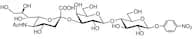
Neu5Acα(2-3)Galβ(1-4)Glc-β-pNP
CAS:Fórmula:C29H42N2O21Pureza:>97.0%(HPLC)Forma y color:White to Light yellow to Green powder to crystalinePeso molecular:754.65Polyethylene Glycol Stearylamine (n=approx. 10)
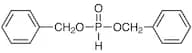
Pureza:min. 90.0 %Forma y color:Orange to Brown to Dark red clear liquidDibenzyl Phosphite
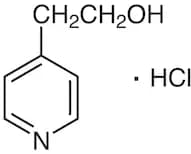
CAS:Fórmula:C14H15O3PPureza:>95.0%(GC)Forma y color:Colorless to Almost colorless clear liquidPeso molecular:262.244-Pyridineethanol Hydrochloride
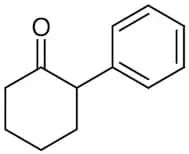
CAS:Fórmula:C7H9NO·HClPureza:>98.0%(T)(HPLC)Forma y color:White to Almost white powder to crystalPeso molecular:159.612-Phenylcyclohexanone
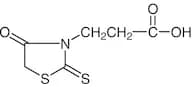
CAS:Fórmula:C12H14OPureza:>98.0%(GC)Forma y color:White to Orange to Green powder to crystalPeso molecular:174.24Rhodanine-3-propionic Acid
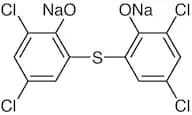
CAS:Fórmula:C6H7NO3S2Pureza:>98.0%(GC)(T)Forma y color:Light yellow to Brown powder to crystalPeso molecular:205.25Bithionol Disodium Salt
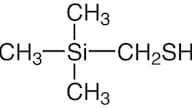
CAS:Fórmula:C12H4Cl4Na2O2SPureza:>98.0%(T)(HPLC)Forma y color:White to Gray to Brown powder to crystalPeso molecular:400.00Trimethylsilylmethanethiol
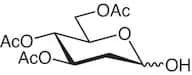
CAS:Fórmula:C4H12SSiPureza:>97.0%(GC)Forma y color:Colorless to Almost colorless clear liquidPeso molecular:120.293,4,6-Tri-O-acetyl-2-deoxy-D-glucopyranose
CAS:Fórmula:C12H18O8Pureza:>98.0%(GC)Forma y color:White to Almost white powder to crystalPeso molecular:290.27DL-Alanine methyl ester hydrochloride
CAS:<p>DL-Alanine methyl ester hydrochloride is a cytotoxic drug that is used to treat cancer. It inhibits the growth of cancer cells by binding to guanine in the cell's DNA and preventing its incorporation into DNA during replication. The substance also inhibits amino acid transport, causing a shortage of amino acids for protein synthesis. This leads to cell death by nucleophilic attack on the bond between two amino acids. DL-Alanine methyl ester hydrochloride has been shown to be effective against murine leukemia, HIV, and Herpes simplex virus type 1 (HSV-1). DL-Alanine methyl ester hydrochloride has two geometric isomers: L-alanine methyl ester hydrochloride and D-alanine methyl ester hydrochloride. These substances have different reactivities due to their different geometric shapes. Magnetic resonance spectroscopy can be used to differentiate between these substances in vivo, as well as in vitro.</p>Fórmula:C4H9NO2·HClPureza:Min. 95%Forma y color:White PowderPeso molecular:139.58 g/mol3-Bromo-4-methylpyridine
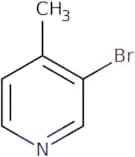
CAS:<p>3-Bromo-4-methylpyridine is a molecule that consists of a five-membered ring containing three bromine atoms and one carbon atom. It has the chemical formula C5H6BrN. The molecule contains two methyl groups attached to the pyridine ring (hence its name). 3-Bromo-4-methylpyridine has been shown to be an effective synthon for palladium-catalyzed cross-coupling reactions, which are used in organic synthesis for the production of pharmaceuticals. This molecule is also an excellent ligand for metal ions, such as calcium and hydrogen, because it forms strong bonds with these ions. 3-Bromo-4-methylpyridine can be used as a bidentate ligand because it has two nitrogen atoms that can bind to metal ions. The molecule also has functional properties, such as photochromism and bilayer formation due to its symmetry.</p>Fórmula:C6H6BrNPureza:Min. 95%Forma y color:Clear LiquidPeso molecular:172.02 g/mol(S)-1,1'-Bi-2-Naphthol
CAS:<p>The chemical structure of 1,1'-bi-2-naphthol is an alkanoic acid with a hydroxyl group. It has been shown to react in the presence of amines and sodium salts to form hydrogen bonding interactions. The x-ray crystal structures of magnesium salt and hydrogen bonding interactions were found to have a steric interaction with the fatty acids. The reaction mechanism for 1,1'-bi-2-naphthol is similar to that of other alkanoic acids: it reacts with a nucleophilic compound, such as water or ammonia, to produce an alcohol (hydroxyl group). When these reactions occur intramolecularly, the hydrogen bonds are formed between adjacent molecules.</p>Fórmula:C20H14O2Pureza:Min. 95%Forma y color:White PowderPeso molecular:286.32 g/molBenzofuran-2-carboxaldehyde
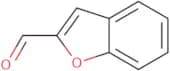
CAS:<p>Benzofuran-2-carboxaldehyde is a compound that inhibits metathesis reactions. It has been shown to inhibit the growth of cancer cells in vivo and in vitro. Benzofuran-2-carboxaldehyde also shows estrogen receptor modulator activity, which may be due to its ability to bind to estrogen receptors. The molecular modelling study of this compound reveals a possible mechanism for benzofuran-2-carboxaldehyde’s inhibition of metathesis reactions as well as its cytotoxicity. This mechanism suggests that the benzofuran-2-carboxaldehyde molecule can form hydrogen bonds with diphenyl ether and mcf7 cells, leading to their destabilization.</p>Fórmula:C9H6O2Pureza:Min. 95%Peso molecular:146.14 g/mol2,2'-Bipyridine-4,4'-dicarboxylic acid
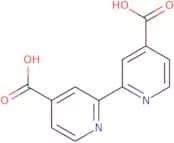
CAS:<p>2,2'-Bipyridine-4,4'-dicarboxylic acid (BBDA) is a synthetic molecule that has been used as an oxidant in organic synthesis. It is a redox-active compound with a reversible oxidation potential of +0.2 V. The electron transfer to the adjacent nitrogen atom is accompanied by light emission at 490 nm and chloride ion release. BBDA reacts with potassium dichromate in water to form 2,2'-bipyridine-6,6'-dicarboxylic acid and potassium chloride. This reaction can be monitored by magnetic resonance analysis and X-ray absorption spectroscopy. The formation of BBDA from dimethylformamide and esters has been reported in the literature.</p>Fórmula:C12H8N2O4Pureza:Min. 95%Forma y color:PowderPeso molecular:244.21 g/mol5-Bromo-1-pentene
CAS:<p>5-Bromo-1-pentene (5BP) is an antitumoral drug that has potent inhibitory activity against the t-cell leukemia cell line and other tumor cells. 5BP is an organoborane ester with a bromine atom at the 1-position. It is synthesized by reacting trifluoroacetic acid with a hydrohalic acid such as hydrochloric acid, or with a metal halide such as sodium carbonate, followed by reaction with dimethyl formamide and n-dimethylformamide. The 5BP molecule has a coordination geometry of octahedral and its structure consists of three hydrogen atoms, two methyl groups, one hydroxyl group, and one unsaturated alkyl group. The mechanism of action of 5BP is still unclear. The inhibition of protein synthesis may be due to the steric hindrance caused by the bulky bromine atom at the 1 position on the benzene ring.</p>Fórmula:C5H9BrPureza:Min. 95%Forma y color:Colorless Clear LiquidPeso molecular:149.03 g/mol2-Bromo-4-chloropyridine
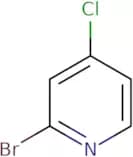
CAS:<p>2-Bromo-4-chloropyridine is a 4-chloropyridine derivative with the chemical structure of a heterocyclic amine. It has been synthesised as an analog of 2,4,6-trimethylaniline to explore its pharmacological effect. 2-Bromo-4-chloropyridine has been shown to have a bladder carcinogenic effect in animals. The compound was evaluated for its potential to cause bladder cancer in humans by determining the concentration of the compound in human urine following oral administration and by measuring the frequency of bladder tumors in rats. It has also been found that 2-bromo-4-chloropyridine inhibits serotonin receptors (5HT2C) and dopamine receptors (D2).</p>Fórmula:C5H3BrCINPureza:Min. 95%Forma y color:Off-White To Yellow Solid Or Liquid (May Vary)Peso molecular:192.44 g/mol8-Bromo-1-octene
CAS:<p>8-Bromo-1-octene is a biologically active molecule that is an aliphatic hydrocarbon with a hydroxyl group. It is used in the study of growth factors and viruses, and has been shown to inhibit the growth of cells in tissue cultures. 8-Bromo-1-octene has also been shown to inhibit RNA synthesis and protein synthesis in vitro, as well as the growth of recombinant virus. 8-Bromo-1-octene can be synthesized by reacting 6-bromo-1-hexene with hydrogen bromide, or can be obtained from commercially available sources.</p>Fórmula:C8H15BrPureza:Min. 95%Forma y color:Colorless Slightly Yellow Clear LiquidPeso molecular:191.11 g/molN-Boc-2-methyl-L-proline
CAS:<p>N-Boc-2-methyl-L-proline is a chemical compound that is used as a building block in the synthesis of other compounds. This substance is also an intermediate in the production of pharmaceuticals and pesticides. The compound has been shown to have high quality, versatility, and complexity. N-Boc-2-methyl-L-proline can be used as a reagent for research or as a speciality chemical. The CAS number for this substance is 103336-06-7.</p>Fórmula:C11H19NO4Pureza:Min. 95%Forma y color:White To Off-White SolidPeso molecular:229.27 g/mol2-Bromo-1H-imidazole
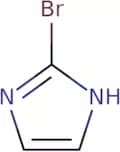
CAS:<p>2-Bromo-1H-imidazole is an environmental pollutant that has been detected in the atmosphere, water, and soil. It is used as a pesticide and has been found to be an impurity in biphenyl. 2-Bromo-1H-imidazole can be used as a substrate for the Suzuki coupling reaction or as a starting material for the synthesis of imidazole derivatives. The compound spontaneously fragments under acidic conditions to form nitric acid and hydrogen bromide. 2-Bromo-1H-imidazole has been shown to inhibit hepatitis C virus (HCV) replication and induce cancer cell apoptosis in vitro.<br>2-Bromo-1H-imidazole is also known to cause DNA fragmentation in cells through oxidation by reactive oxygen species or through spontaneous decomposition of the molecule into acid, bromine radicals, and ammonia.</p>Fórmula:C3H3BrN2Pureza:Min. 95%Forma y color:PowderPeso molecular:146.97 g/mol1,2-Bis(diphenylphosphino)ethane
CAS:<p>1,2-Bis(diphenylphosphino)ethane is a ligand that binds to the metal molybdenum. It has been shown to have biochemical properties in relation to its ability to form complexes with adriamycin and other drugs. The redox potential of 1,2-Bis(diphenylphosphino)ethane depends on the presence of sodium ions. This ligand is able to bind to the iron in the mitochondrial membrane and can affect the mitochondrial membrane potential. X-ray crystal structures show that this ligand binds to a monosodium salt. 1,2-Bis(diphenylphosphino)ethane has been shown to be a potent inhibitor of transfer reactions and is used as an analytical reagent for structural analysis.</p>Fórmula:C26H24P2Pureza:Min. 98 Area-%Forma y color:White Off-White PowderPeso molecular:398.42 g/mol