Building Blocks
Esta sección contiene productos fundamentales para la síntesis de compuestos orgánicos y biológicos. Building blocks son los materiales de partida esenciales utilizados para construir moléculas complejas a través de diversas reacciones químicas. Desempeñan un papel crítico en el descubrimiento de fármacos, la ciencia de materiales y la investigación química. En CymitQuimica, ofrecemos una gama diversa de building blocks de alta calidad para apoyar sus investigaciones innovadoras y proyectos industriales, asegurando que tenga los componentes esenciales para una síntesis exitosa.
Subcategorías de "Building Blocks"
- Ácidos borónicos y derivados del ácido borónico(5.756 productos)
- Building Blocks quirales(1.242 productos)
- Building Blocks de hidrocarburos(6.093 productos)
- Building Blocks orgánicos(60.532 productos)
Se han encontrado 195533 productos de "Building Blocks"
Ordenar por
Pureza (%)
0
100
|
0
|
50
|
90
|
95
|
100
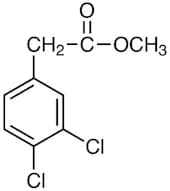
Methyl 3,4-Dichlorophenylacetate
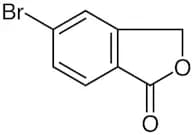
CAS:Fórmula:C9H8Cl2O2Pureza:>98.0%(GC)Forma y color:Colorless to Light orange to Yellow clear liquidPeso molecular:219.065-Bromophthalide
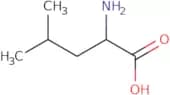
CAS:Fórmula:C8H5BrO2Pureza:>98.0%(GC)Forma y color:White to Light yellow to Light orange powder to crystalPeso molecular:213.03DL-Leucine
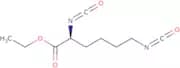
CAS:<p>DL-Leucine is an amino acid that is needed for the formation of proteins. It is also able to inhibit the activity of enzymes by hydrolyzing them. DL-Leucine has been shown to be a potent inhibitor of lysine hydrolases and can be used as an additive in the manufacture of animal feed. DL-Leucine has been shown to be stable in many environments, including those containing chlorine, hydrochloric acid, n-dimethyl formamide, and x-ray crystallography. The enantiomers of DL-leucine have different chemical stability; one form is more stable than the other in acidic environments.</p>Fórmula:C6H13NO2Pureza:Min. 95%Forma y color:PowderPeso molecular:131.17 g/molL-Lysine diisocyanate ethyl ester
CAS:<p>L-Lysine diisocyanate ethyl ester (LDIEE) is a fluorescence probe that can be used to detect the presence of disulfide bonds. This compound reacts with thiols, such as cysteine, glutathione, and metallothioneins. LDIEE has been shown to bind to human serum proteins and has been used in biological studies for the detection of hydrogen bonding interactions. The biological properties of this compound have not been studied but it is hypothesized that LDIE may have anti-cancer activities due to its ability to react with coumarin derivatives.</p>Fórmula:C10H14N2O4Pureza:Min. 95 Area-%Forma y color:Clear LiquidPeso molecular:226.23 g/molMethylmaleic Hydrazide
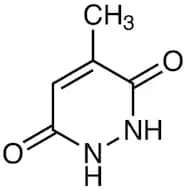
CAS:Fórmula:C5H6N2O2Pureza:>98.0%(GC)Forma y color:White to Light yellow powder to crystalPeso molecular:126.122,2':6',2'-Terpyridine-4,4',4''-tricarboxylic acid
CAS:<p>2,2':6',2'-Terpyridine-4,4',4''-tricarboxylic acid is a model system that has been studied for its photochemical properties. In this molecule, there are two carboxyl groups and three pyridine rings. The molecule can be protonated easily by electron transfer to form a positively charged anion. This allows the molecule to undergo electron transfer reactions with other molecules in the presence of radiation or visible light. 2,2':6',2'-Terpyridine-4,4',4''-tricarboxylic acid absorbs photons easily and then transfers its energy to a nearby electron. The electron then passes on the energy to another molecule, which can produce a photocurrent.</p>Fórmula:C18H11N3O6Pureza:Min. 95%Forma y color:Brown SolidPeso molecular:365.3 g/mol4-Bromoisatin
CAS:<p>4-Bromoisatin is a synthetic compound that reversibly inhibits the activity of telomerase and has been shown to be effective against a broad range of bacterial species. It binds to the catalytic site on telomerase and prevents the synthesis of ribonucleotides, which are necessary for DNA replication. 4-Bromoisatin is synthesized by humans, but can also be found in plants such as coffee beans and black tea leaves. The antibacterial properties of 4-bromoisatin may be due to its ability to inhibit the biosynthesis of purine, an essential component in bacterial DNA synthesis.</p>Fórmula:C8H4BrNO2Pureza:Min. 95%Forma y color:Orange PowderPeso molecular:226.03 g/mol2,3,3-Trimethyl-3H-benzo[e]indole
CAS:<p>2,3,3-Trimethyl-3H-benzo[e]indole is a reactive molecule that has been shown to be an effective treatment for cervical cancer. It can be used in conjunction with monoclonal antibodies that have been designed to target the acidic protonation sites on the surface of cervical cancer cells. This active form binds to the site and emits fluorescence when illuminated with a laser, which can then be detected by a confocal microscope. This technique can also be used for the diagnosis of other cancers. 2,3,3-Trimethyl-3H-benzo[e]indole is not toxic to human serum as it does not react with this type of tissue.</p>Fórmula:C15H15NPureza:Min. 98 Area-%Forma y color:PowderPeso molecular:209.29 g/molTetrahydro-1,3-dimethyl-1H-pyrimidin-2-one
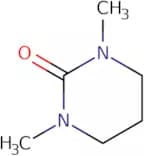
CAS:<p>Tetrahydro-1,3-dimethyl-1H-pyrimidin-2-one is an organic compound that is used in the synthesis of drugs and other organic compounds. It can be synthesized by reacting hydrogen fluoride with nitrogen atoms. Tetrahydro-1,3-dimethyl-1H-pyrimidin-2-one can form stable complexes with iodination reactions and has been used to prepare monoclonal antibodies. This molecule has also been studied using x-ray crystal structures and titration calorimetry to investigate its reaction mechanism. The light emission from this molecule is due to intermolecular hydrogen bonding between a pyrazole ring and a phenyl ring.</p>Fórmula:C6H12N2OPureza:Min. 98%Forma y color:Colorless Slightly Yellow Clear LiquidPeso molecular:128.17 g/molSodium 4-Ethylbenzenesulfonate
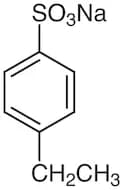
CAS:Fórmula:C8H9NaO3SPureza:>98.0%(T)(HPLC)Forma y color:White to Almost white powder to crystalPeso molecular:208.21Diphenyl Oxalate
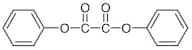
CAS:Fórmula:C14H10O4Pureza:>98.0%(GC)Forma y color:White to Light yellow to Light orange powder to crystalPeso molecular:242.23Tetrahydropyranylethyleneglycol
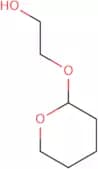
CAS:<p>Tetrahydropyranyl ethyleneglycol is a polymerized, telechelic molecule with a hetero-bifunctional linkage. It is used in bioconjugate chemistry and has been shown to be effective in the treatment of neuropathic pain. Tetrahydropyranyl ethyleneglycol has an acidic hydroxyl group that can be used for ring-opening reactions. It also has a primary amino group that can be used for ion exchange or as a bifunctional agent. The heterobifunctional properties of tetrahydropyranyl ethyleneglycol allow it to be incorporated into polymers and other polymeric materials.</p>Fórmula:C7H14O3Pureza:Min. 95%Forma y color:PowderPeso molecular:146.18 g/mol4-Chloro-1H-imidazole
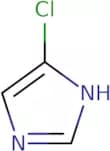
CAS:<p>4-Chloro-1H-imidazole is an organic chemical compound that contains a heterocyclic ring with one nitrogen and three carbons. It is classified as a weak acid. 4-Chloro-1H-imidazole can be found in hydrochloric acid, methyl ketones, and the acid conjugates of pyrazole rings. It has minimal toxicity. 4-Chloro-1H-imidazole binds to receptors in the body, which may account for its effects on blood pressure and heart rate. This drug also reacts with diazonium salts to form an intermediate that is then oxidized by chloride ions to form a reactive intermediate that can react with histidine or flavin (a type of vitamin B2) to form a fluorescent product that can be detected by light absorption or fluorescence emission spectroscopy.</p>Fórmula:C3H3ClN2Pureza:Min. 95%Forma y color:White PowderPeso molecular:102.52 g/mol3-Amino-3-(4-chlorophenyl)propionic Acid
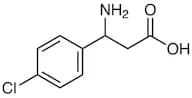
CAS:Fórmula:C9H10ClNO2Pureza:>97.0%(T)(HPLC)Forma y color:White to Almost white powder to crystalPeso molecular:199.632'-Aminoacetanilide
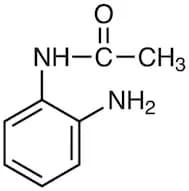
CAS:Fórmula:C8H10N2OPureza:>98.0%(T)Forma y color:Light orange to Light red powder to crystallinePeso molecular:150.182-Chloroethyl p-Toluenesulfonate
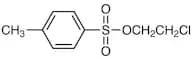
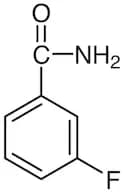
CAS:Fórmula:C9H11ClO3SPureza:>98.0%(GC)Forma y color:Colorless to Light yellow clear liquidPeso molecular:234.693-Fluorobenzamide
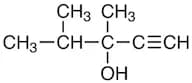
CAS:Fórmula:C7H6FNOPureza:>97.0%(HPLC)(N)Forma y color:White to Almost white powder to crystalPeso molecular:139.133,4-Dimethyl-1-pentyn-3-ol
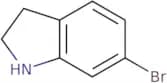
CAS:Fórmula:C7H12OPureza:>96.0%(GC)Forma y color:Colorless to Light orange to Yellow clear liquidPeso molecular:112.176-Bromo-2,3-dihydro-1H-indole
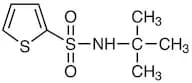
CAS:<p>6-Bromo-2,3-dihydro-1H-indole is a natural product that has been shown to inhibit cancer cell growth in vitro. In the presence of 6-bromoindole, cells are unable to proliferate and undergo apoptosis. This compound also shows anti-cancer activity against human leukemia cells. The mechanism of action for this molecule is not yet known but may be related to its ability to activate the caspase enzyme family or its ability to bind to DNA. 6-Bromoindole has been shown to have anti-inflammatory properties through inhibition of prostaglandin synthesis in animal models.</p>Fórmula:C8H8BrNPureza:Min. 95%Forma y color:Off-White PowderPeso molecular:198.06 g/molN-tert-Butyl-2-thiophenesulfonamide
CAS:Fórmula:C8H13NO2S2Pureza:>98.0%(GC)Forma y color:White to Almost white powder to crystalPeso molecular:219.32




![2,3,3-Trimethyl-3H-benzo[e]indole](/_next/image/?url=https%3A%2Fstatic.cymitquimica.com%2Fproducts%2F3D%2Fthumb-webp%2FFT29018.webp&w=3840&q=75)