Building Blocks
Esta sección contiene productos fundamentales para la síntesis de compuestos orgánicos y biológicos. Building blocks son los materiales de partida esenciales utilizados para construir moléculas complejas a través de diversas reacciones químicas. Desempeñan un papel crítico en el descubrimiento de fármacos, la ciencia de materiales y la investigación química. En CymitQuimica, ofrecemos una gama diversa de building blocks de alta calidad para apoyar sus investigaciones innovadoras y proyectos industriales, asegurando que tenga los componentes esenciales para una síntesis exitosa.
Subcategorías de "Building Blocks"
- Ácidos borónicos y derivados del ácido borónico(5.756 productos)
- Building Blocks quirales(1.242 productos)
- Building Blocks de hidrocarburos(6.093 productos)
- Building Blocks orgánicos(60.519 productos)
Se han encontrado 195533 productos de "Building Blocks"
Ordenar por
Pureza (%)
0
100
|
0
|
50
|
90
|
95
|
100
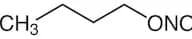
Butyl Nitrite
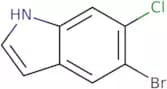
CAS:Fórmula:C4H9NO2Pureza:>95.0%(GC)Forma y color:Light yellow to Yellow clear liquidPeso molecular:103.125-Bromo-6-chloro-1H-indole
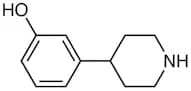
CAS:<p>5-Bromo-6-chloro-1H-indole is a fine chemical that is used as a building block for research chemicals, reagents, and speciality chemicals. It is soluble in chloroform and benzene, but insoluble in water. This product can be used as a reaction component or a useful intermediate in the production of complex compounds. 5-Bromo-6-chloro-1H-indole has been reported to be an effective scaffold for the synthesis of many novel compounds with potential applications such as pharmaceuticals, agrochemicals, and dyes.</p>Fórmula:C8H5BrClNPureza:Min. 95%Forma y color:PowderPeso molecular:230.49 g/mol4-(3-Hydroxyphenyl)piperidine
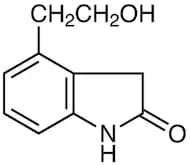
CAS:Fórmula:C11H15NOPureza:>98.0%(GC)(T)Forma y color:White to Orange to Green powder to crystalPeso molecular:177.254-(2-Hydroxyethyl)oxindole
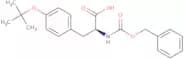
CAS:Fórmula:C10H11NO2Pureza:>98.0%(GC)Forma y color:White to Orange to Green powder to crystalPeso molecular:177.20Z-O-tert-Butyl-L-tyrosine
CAS:<p>Z-O-tert-Butyl-L-tyrosine is a fine chemical that is soluble in water and has a wide range of uses. It is a versatile scaffold for the synthesis of complex compounds, and can be used as a building block or reaction component in research chemicals. Z-O-tert-Butyl-L-tyrosine is an important reagent for organic synthesis, especially when combined with other chemicals. This chemical can also be used as a speciality chemical to produce high quality products.</p>Fórmula:C21H25NO5Pureza:Min. 95%Forma y color:White PowderPeso molecular:371.43 g/mol4-Nitrophenylsulfur Pentafluoride
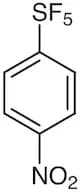
CAS:Fórmula:C6H4F5NO2SPureza:>96.0%(GC)Forma y color:White or Colorless to Yellow powder to lump to clear liquidPeso molecular:249.161,4-Diphenyl-2-butyne-1,4-dione
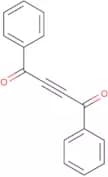
CAS:<p>1,4-Diphenyl-2-butyne-1,4-dione is a reactive compound that reacts with nucleophiles (such as hydroxide) to form an oxime. It is a chiral compound that has been shown to react with amines and hydrogen chloride in the presence of UV light. The UV absorption spectrum of 1,4-diphenyl-2-butyne-1,4-dione has been measured at wavelengths from 190 nm to 400 nm. The x-ray diffraction data showed the molecular structure of the molecule and revealed a very short bond length between the carbonyl group and hydrogen chloride.</p>Fórmula:C16H10O2Pureza:Min. 95%Forma y color:White To Yellow SolidPeso molecular:234.25 g/mol2,3-Dichlorobenzaldehyde
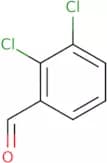
CAS:<p>2,3-Dichlorobenzaldehyde (2,3-DBA) is an organic compound that is used as a synthetic intermediate in the preparation of other chemicals. It is prepared by reacting 2-chloroacetophenone with hydrochloric acid and sodium carbonate in a reaction vessel. The product can be purified through fractional distillation or crystallization. The optical properties of 2,3-DBA are determined by its dipole moment and the substituents attached to the methylene group. Molecular modeling studies have shown that felodipine can bind to 2,3-DBA through its active methylene group. The reaction products between sulfadiazine and 2,3-DBA are pyridinedicarboxylic acid and 3-chlorobenzaldehyde.</p>Fórmula:C7H4Cl2OPureza:Min. 95%Forma y color:White PowderPeso molecular:175.01 g/mol3,4-Dihydro-2H-pyran-2-methanol
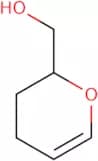
CAS:<p>3,4-Dihydro-2H-pyran-2-methanol is a tetrahydropyran alcohol that has been shown to be able to form cationic polymers in the presence of a ring-opening metathesis polymerization catalyst. The chloride anion is also capable of initiating the polymerization reaction. This compound has potential applications as a drug delivery agent or biomaterials scaffold due to its ability to act as a linker for the synthesis of biocompatible polymers. 3,4-Dihydro-2H-pyran-2-methanol can also be used in molecular modelling studies to explore the reactivity between hydroxy groups and nucleophiles.</p>Fórmula:C6H10O2Pureza:Min. 95%Forma y color:Colorless PowderPeso molecular:114.14 g/mol3,4-Dimethoxyphenylacetic acid
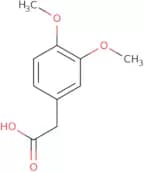
CAS:3,4-Dimethoxyphenylacetic acid is an aromatic acid that has antimicrobial properties. It is used as a food additive for the preservation of meat and poultry. The 3,4-dimethoxyphenyl group in this molecule is an intramolecular hydrogen acceptor. This property allows it to undergo transfer reactions with other molecules, such as protocatechuic acid and lignin. 3,4-Dimethoxyphenylacetic acid also inhibits cellular physiology and can be used in the treatment of bacteria in biological systems. The hydroxyl group can form an acidic compound by reacting with a proton donor, such as water or trifluoroacetic acid (TFA). This reaction may be catalyzed by the enzyme cytochrome P450 reductase.Fórmula:C10H12O4Pureza:Min. 95%Forma y color:White PowderPeso molecular:196.2 g/mol3-[Bis(phenylmethyl)amino]-5-fluoro-6-methyl-2-(phenylmethoxy)benzoic acid phenyl ester
CAS:<p>Building block in tetracycline antibiotic synthesis</p>Fórmula:C35H30FNO3Pureza:Min. 95%Forma y color:PowderPeso molecular:531.62 g/mol4,6-Dichloro-2-methylpyrimidine
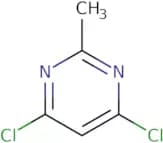
CAS:<p>2-Chloro-6-methylaniline is a synthetic compound that has been used in the synthesis of medicines, such as dasatinib. It is a nucleophile that binds to the receptor site on cells and blocks the binding of natural hormones. It is also an inhibitor of certain enzymes, including RNA polymerase and protein kinase. 2-Chloro-6-methylaniline is industrially produced by reacting sodium chloride with chlorosulfonic acid or hydrochloric acid in an autoclave at a temperature of 180 °C for three hours. The product can be purified by adding magnesium oxide and activated with hydrochloric acid to form 2-chloro-6-methylpyrimidine. The main impurities are 4,6-dichloro2 methylpyrimidine and 6,8 dichloro2 methylpyrimidine.</p>Fórmula:C5H4Cl2N2Pureza:Min. 95%Forma y color:White To Yellow SolidPeso molecular:163 g/mol1,2-Dibromo-2,4-dicyanobutane
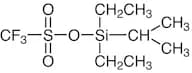
CAS:<p>1,2-Dibromo-2,4-dicyanobutane is a chemical substance with antimicrobial properties. It is used as an ingredient in the production of health care products and preservatives for food. 1,2-Dibromo-2,4-dicyanobutane inhibits bacterial growth by preventing the synthesis of fatty acids and proteins. This compound has been shown to have synergistic effects when combined with benzalkonium chloride or potassium dichromate. 1,2-Dibromo-2,4-dicyanobutane has not been found to be carcinogenic in animal studies and does not cause allergic reactions.</p>Fórmula:C6H6Br2N2Pureza:Min. 95%Forma y color:White PowderPeso molecular:265.93 g/molDiethylisopropylsilyl Trifluoromethanesulfonate
CAS:Fórmula:C8H17F3O3SSiPureza:>98.0%(T)Forma y color:Colorless to Light yellow to Light orange clear liquidPeso molecular:278.363,5,7-Trimethyl-1-aminoadamantane hydrochloride
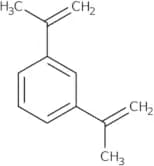
CAS:<p>3,5,7-Trimethyl-1-aminoadamantane hydrochloride is a versatile building block that can be used in the production of various fine chemicals. 3,5,7-Trimethyl-1-aminoadamantane hydrochloride is a reagent and speciality chemical that has been used as a research chemical in the synthesis of complex compounds. It is also a useful building block for the synthesis of high quality reaction components and scaffolds.</p>Fórmula:C13H23N•HClPureza:Min. 95%Forma y color:White PowderPeso molecular:229.79 g/mol1,3-Diisopropenylbenzene - stabilized with TBC
CAS:<p>1,3-Diisopropenylbenzene is a hydrocarbon solvent with thermal expansion properties. It has been shown to be an effective cross-linking agent for cationic polymerization and is used as a surfactant for the production of polyurethanes. 1,3-Diisopropenylbenzene is also used as a chemical intermediate in the production of higher molecular weight polymers and plastics. The ester linkages in 1,3-diisopropenylbenzene are susceptible to hydrolysis and oxidation, which can lead to degradation. 1,3-diisopropenylbenzene is stabilized with TBC by forming an ether linkage with the terminal hydroxyl group on TBC.</p>Fórmula:C12H14Pureza:Min. 95%Forma y color:Colorless PowderPeso molecular:158.24 g/mol4-Bromo-2-nitrobenzoic acid
CAS:<p>4-Bromo-2-nitrobenzoic acid is an anthranilic acid derivative that can be used as a radiolabel for the diagnosis of bladder cancer. The uptake of 4-Bromo-2-nitrobenzoic acid in the bladder is proportional to the number of cells, which are then detected by positron emission tomography (PET) scanning. The affinity of 4-Bromo-2-nitrobenzoic acid to human bladder tissue was determined by measuring its uptake in humans and rats. 4-Bromo-2-nitrobenzoic acid has been shown to be effective against cancer cells in vitro. Radiolabeling with this compound allows for more accurate diagnostic imaging than using other radiopharmaceuticals.</p>Fórmula:C7H4BrNO4Pureza:Min. 95%Forma y color:PowderPeso molecular:246.02 g/mol6-Hydroxy-2-naphtoic acid
CAS:<p>6-Hydroxy-2-naphtoic acid is an amide that is hydrolyzed to 6-hydroxybenzoic acid and formamide. It has been used as a viscosity modifier in the synthesis of polymers. 6-Hydroxy-2-naphtoic acid can be produced by a borane-tetrahydrofuran complex reaction with naphthalene. This reaction also produces p-hydroxybenzoic acid, which can then be converted to hydroxybenzoic acid with hydrochloric acid. The structural analysis of this compound has been performed using fluorescence probes and an inorganic acid.</p>Fórmula:C11H8O3Pureza:Min. 95%Forma y color:Yellow PowderPeso molecular:188.18 g/molEthyl 4,4,4-Trifluoroacetoacetate
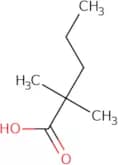
CAS:Fórmula:C6H7F3O3Pureza:>98.0%(GC)Forma y color:Colorless to Almost colorless clear liquidPeso molecular:184.112,2-Dimethylvaleric acid
CAS:<p>2,2-Dimethylvaleric acid is a fatty acid that can be synthesized from 2,2-dimethylolpropane. It has been shown to reduce blood pressure in mice by inhibiting the synthesis of certain fatty acids. The mechanism of action may be due to the inhibition of messenger RNA (mRNA) and protein synthesis in the central nervous system. 2,2-Dimethylvaleric acid has also been shown to have neurotrophic effects on cultured cells and is an effective antioxidant. This compound has been used as a control for diode experiments in optical systems.</p>Fórmula:C7H14O2Pureza:Min. 95%Forma y color:Colorless Clear LiquidPeso molecular:130.18 g/mol


![3-[Bis(phenylmethyl)amino]-5-fluoro-6-methyl-2-(phenylmethoxy)benzoic acid phenyl ester](/_next/image/?url=https%3A%2Fstatic.cymitquimica.com%2Fproducts%2F3D%2Fthumb-webp%2FFB101468.webp&w=3840&q=75)