Building Blocks
Esta sección contiene productos fundamentales para la síntesis de compuestos orgánicos y biológicos. Building blocks son los materiales de partida esenciales utilizados para construir moléculas complejas a través de diversas reacciones químicas. Desempeñan un papel crítico en el descubrimiento de fármacos, la ciencia de materiales y la investigación química. En CymitQuimica, ofrecemos una gama diversa de building blocks de alta calidad para apoyar sus investigaciones innovadoras y proyectos industriales, asegurando que tenga los componentes esenciales para una síntesis exitosa.
Subcategorías de "Building Blocks"
- Ácidos borónicos y derivados del ácido borónico(5.756 productos)
- Building Blocks quirales(1.242 productos)
- Building Blocks de hidrocarburos(6.093 productos)
- Building Blocks orgánicos(60.522 productos)
Se han encontrado 195533 productos de "Building Blocks"
Ordenar por
Pureza (%)
0
100
|
0
|
50
|
90
|
95
|
100
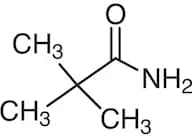
Pivalamide
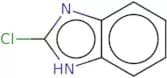
CAS:Fórmula:C5H11NOPureza:>98.0%(GC)(N)Forma y color:White to Almost white powder to crystalPeso molecular:101.152-Chlorobenzimidazole
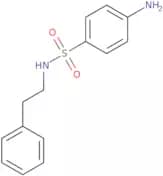
CAS:<p>2-Chlorobenzimidazole is an analog of benzimidazole that has been synthesized by Langmuir adsorption isotherm. It is a white crystalline solid that can be dissolved in water and hydrochloric acid. 2-Chlorobenzimidazole inhibits the growth of herpes simplex virus by acting as a competitive inhibitor for the viral enzyme thymidine kinase, which catalyzes the conversion of thymine to thymidine. 2-Chlorobenzimidazole also binds to monoclonal antibodies, inhibiting their binding to their corresponding antigens. This activity may be due to its ability to bind covalently with amino groups on proteins and other molecules. Magnetic resonance spectroscopy has shown that 2-chlorobenzimidazole binds tightly with protonated (positively charged) phosphorous atoms within cells.</p>Fórmula:C7H5ClN2Pureza:Min. 95%Forma y color:White PowderPeso molecular:152.58 g/mol4-Amino-N-(2-phenylethyl)benzenesulfonamide
CAS:<p>4-Amino-N-(2-phenylethyl)benzenesulfonamide (4APBS) is a histone deacetylase inhibitor. It has been shown to inhibit the histone methyltransferase activity of EZH2, which is important for regulating gene expression, in cells treated with 4APBS. This inhibition leads to increased levels of the transcriptional coactivator β-catenin and reduced levels of tumor suppressor genes. These changes ultimately lead to an increase in cancer cell proliferation and decreased apoptosis. 4APBS also interacts with hormone receptors that are found on the surface of cells and can regulate cellular functions such as proliferation, differentiation, or apoptosis.</p>Fórmula:C14H16N2O2SPureza:Min. 95%Forma y color:Off-White PowderPeso molecular:276.36 g/molTetramethylpropylcyclopentadiene (mixture of isomers)
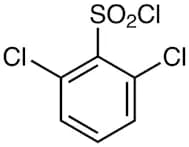
Fórmula:C12H20Pureza:>95.0%(GC)Forma y color:White to Yellow to Green clear liquidPeso molecular:164.292,6-Dichlorobenzenesulfonyl Chloride
CAS:Fórmula:C6H3Cl3O2SPureza:>97.0%(GC)(T)Forma y color:White to Light yellow powder to crystalPeso molecular:245.502-(2,2-Diethoxyethyl)-1,3-propanediol
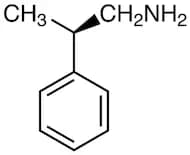
CAS:Fórmula:C9H20O4Pureza:>88.0%(GC)Forma y color:Colorless to Light yellow clear liquidPeso molecular:192.26(R)-(+)-β-Methylphenethylamine
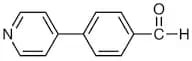
CAS:Fórmula:C9H13NPureza:>98.0%(GC)(T)Forma y color:Colorless to Almost colorless clear liquidPeso molecular:135.214-(4-Pyridyl)benzaldehyde
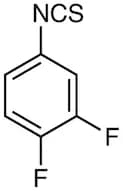
CAS:Fórmula:C12H9NOPureza:>98.0%(GC)Forma y color:White to Orange to Green powder to crystalPeso molecular:183.213,4-Difluorophenyl Isothiocyanate
CAS:Fórmula:C7H3F2NSPureza:>98.0%(GC)Forma y color:White - Yellow LiquidPeso molecular:171.16L-Valine b-naphthylamide
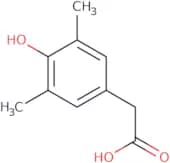
CAS:<p>H-Val-bNA</p>Fórmula:C15H18N2OPureza:Min. 99 Area-%Peso molecular:242.32 g/mol3,5-Dimethyl-4-hydroxyphenylacetic acid
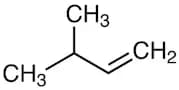
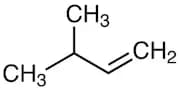
CAS:<p>3,5-Dimethyl-4-hydroxyphenylacetic acid (DHPA) is a fine chemical that can be used as a building block in the production of other chemicals. It is a useful intermediate in organic synthesis and has been used to produce pharmaceuticals, fragrances, and dyes. DHPA is also an important reagent for research purposes and can be used to synthesize other compounds.</p>Fórmula:C10H12O3Pureza:Min. 95%Forma y color:Off-White PowderPeso molecular:180.2 g/mol3-Methyl-1-butene (ca. 12.5% in Tetrahydrofuran, ca. 1.5mol/L)
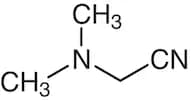
CAS:Fórmula:C5H10Forma y color:Colorless to Almost colorless clear liquidPeso molecular:70.14(Dimethylamino)acetonitrile
CAS:Fórmula:C4H8N2Pureza:>96.0%(GC)(T)Forma y color:Colorless to Light yellow to Light orange clear liquidPeso molecular:84.123-Methyl-1-butene (ca. 15% in Dichloromethane, ca. 2.5mol/L)
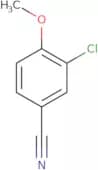
CAS:Fórmula:C5H10Forma y color:Colorless to Almost colorless clear liquidPeso molecular:70.143-Chloro-4-methoxybenzonitrile
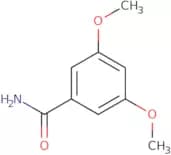
CAS:<p>3-Chloro-4-methoxybenzonitrile is a chemical compound that can be used as a reactant, reagent, or building block in the synthesis of other chemicals. It is an important intermediate for the production of pharmaceuticals, pesticides and dyes. 3-Chloro-4-methoxybenzonitrile is also being investigated for use in the manufacture of photoresists for semiconductor device fabrication. This chemical is listed on the Chemical Abstracts Service registry with CAS number 102151-33-7.</p>Fórmula:C8H6ClNOPureza:Min. 95%Forma y color:SolidPeso molecular:167.59 g/mol3,5-Dimethoxybenzamide
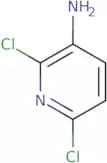
CAS:<p>3,5-Dimethoxybenzamide belongs to the class of quinolone drugs. It is a potentiator of nabilone, which is a synthetic cannabinoid similar to THC. 3,5-Dimethoxybenzamide has been shown to be an electron-deficient compound that reacts with 5-hydroxytryptamine (serotonin) in vitro. This reaction leads to the formation of hydrogen bonds and modifications in the structure of serotonin molecules. 3,5-Dimethoxybenzamide also has grignard reagent activity and can be used as a carboxyamide or amide precursor in organic synthesis.</p>Fórmula:C9H11NO3Pureza:Min. 95%Forma y color:PowderPeso molecular:181.19 g/mol3-Amino-2,6-dichloropyridine
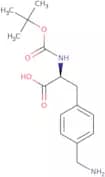
CAS:<p>3-Amino-2,6-dichloropyridine is a carboxamidopyridine that is used as an antiplatelet agent. This drug inhibits the action of ADP and thrombin in platelets, thereby inhibiting platelet aggregation. 3-Amino-2,6-dichloropyridine has been shown to be effective when given orally and is not degraded by stomach acid. It has been shown to inhibit transcriptase activity in vitro. The drug also inhibits the synthesis of prostaglandin E2 (PGE2) through inhibition of cyclooxygenase (COX) enzymes and prevents platelet aggregation by suppressing the production of adenosine diphosphate (ADP).</p>Pureza:Min. 95%Forma y color:PowderPeso molecular:162.92 g/molBoc-4-(aminomethyl)-L-phenylalanine
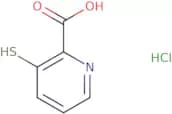
CAS:<p>Boc-4-(aminomethyl)-L-phenylalanine is a useful building block in research and development of pharmaceuticals, agricultural chemicals, and other chemical products. It is a versatile intermediate that can be used in the production of many types of organic compounds. Boc-4-(aminomethyl)-L-phenylalanine has been used as a reagent for the preparation of various complex compounds and a reaction component in organic synthesis. It is also used to produce fluoroquinolones and other antibiotics. CAS No.: 137452-49-4</p>Fórmula:C15H22N2O4Pureza:Min. 95%Peso molecular:294.35 g/mol3-Mercapto-2-pyridinecarboxylic acid hydrochloride
CAS:<p>3-Mercapto-2-pyridinecarboxylic acid hydrochloride (3MP) is a small molecule that is a phosphoenolpyruvate carboxykinase inhibitor. The inhibition of this enzyme leads to an accumulation of 3-phosphoglyceric acid and inhibits the conversion of pyruvate to acetyl CoA, which results in the accumulation of reactive oxygen species. 3MP has been shown to inhibit the activity of mitochondrial phosphoenolpyruvate carboxykinase (PEPCK) in porcine hepatocytes, leading to decreased triglycerides and increased glucose uptake. It also inhibits PEPCK activity in vitro in cultured human cells, leading to increased HSP70 levels and exacerbated oxidative stress.</p>Fórmula:C6H5NO2S·HClPureza:Min. 95%Forma y color:PowderPeso molecular:191.64 g/mol2-Iodo-3-fluoronitrobenzene
CAS:<p>2-Iodo-3-fluoronitrobenzene is a chemical compound that is used as a building block for the synthesis of pharmaceuticals, agrochemicals and other organic compounds. It is also used as a reagent in organic synthesis. This compound can be used as a reactant to produce various products with different functional groups. 2-Iodo-3-fluoronitrobenzene has a high quality and versatility, which makes it useful in the synthesis of many different types of molecules.</p>Fórmula:C6H3FINO2Pureza:Min. 95%Forma y color:White PowderPeso molecular:267 g/mol