Building Blocks
Esta sección contiene productos fundamentales para la síntesis de compuestos orgánicos y biológicos. Building blocks son los materiales de partida esenciales utilizados para construir moléculas complejas a través de diversas reacciones químicas. Desempeñan un papel crítico en el descubrimiento de fármacos, la ciencia de materiales y la investigación química. En CymitQuimica, ofrecemos una gama diversa de building blocks de alta calidad para apoyar sus investigaciones innovadoras y proyectos industriales, asegurando que tenga los componentes esenciales para una síntesis exitosa.
Subcategorías de "Building Blocks"
- Ácidos borónicos y derivados del ácido borónico(5.756 productos)
- Building Blocks quirales(1.242 productos)
- Building Blocks de hidrocarburos(6.095 productos)
- Building Blocks orgánicos(61.038 productos)
Se han encontrado 196817 productos de "Building Blocks"
Ordenar por
Pureza (%)
0
100
|
0
|
50
|
90
|
95
|
100
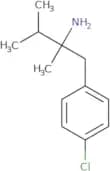
1-(4-Chlorophenyl)-2,3-dimethylbutan-2-amine
CAS:<p>4-Chloro-1-(4-chlorophenyl)butan-2-amine (PCPA) is a versatile building block in organic synthesis. It is used as a precursor to other chemicals, such as pharmaceuticals and pesticides. PCPA can be used to synthesize many complex compounds, such as 1-(4-chlorophenyl)-2,3-dimethylbutan-2-amine. PCPA is useful for the production of research chemicals and speciality chemical intermediates. This compound has a high quality and can be used as a reagent for further reactions.</p>Fórmula:C12H18ClNPureza:Min. 95%Forma y color:Clear LiquidPeso molecular:211.73 g/mol2-(Pyrrolidin-2-yl)cyclohexan-1-one hydrochloride
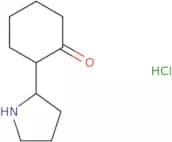
CAS:<p>Versatile small molecule scaffold</p>Fórmula:C10H18ClNOPureza:Min. 95%Forma y color:PowderPeso molecular:203.71 g/mol1-Methylfluorene
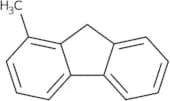
CAS:<p>1-Methylfluorene is a colorless liquid that is soluble in water and alcohols. It is used as a monomer to produce polymers, such as poly(vinylidene fluoride) or poly(chlorotrifluoroethylene). 1-Methylfluorene is also used to prepare perfluorocarbon emulsions for use in water vapor permeable membranes which are used in wastewater treatment. 1-Methylfluorene has shown to be an effective inhibitor of human monocytic cells, thp-1 cells. It also binds to the receptor site on the cell membrane, inhibiting the influx of cations and water molecules. This can result in apoptosis, or programmed cell death. The sample preparation for 1-Methylfluorene includes extraction with petroleum ether followed by purification using column chromatography with silica gel and elution with hydrogen chloride acidified methanol.</p>Fórmula:C14H12Pureza:Min. 95%Forma y color:PowderPeso molecular:180.25 g/molL-Histidine
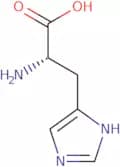
CAS:<p>L-histidine is a molecule that chelates metal ions and inhibits their function. L-Histidine is used as an analytical reagent for the determination of metal ions in water, a polymerase chain reaction (PCR) inhibitor, and an immunosuppressant. L-histidine is also used to treat bowel disease and cancer by inhibiting the production of certain molecules. L-histidine has been shown to bind to toll-like receptor 4 (TLR4) in intestinal cells, which activates the immune system to produce cytokines such as IL-8. In addition, L-histidine can act as a cofactor for enzymes involved in protein synthesis by protecting them from oxidation. L histidine can also be found in the protein that binds with gold particles, forming colloidal gold</p>Fórmula:C6H9N3O2Forma y color:White PowderPeso molecular:155.15 g/molMethyl gentisate
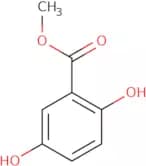
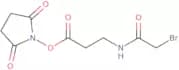
CAS:<p>Starting material for euonyminol synthesis; inhibits melanogenesis</p>Fórmula:C8H8O4Pureza:Min. 98 Area-%Forma y color:PowderPeso molecular:168.15 g/molSuccinimidyl 3-(bromoacetamido)propionate
CAS:<p>Succinimidyl 3-(bromoacetamido)propionate (SBAP) is a reactive chemical that can be used to synthesize a variety of polymers. SBAP is used in the treatment of inflammatory bowel disease, where it acts as an immunosuppressant by suppressing antibody response to the bowel. SBAP has also been shown to increase collagen production and glycoconjugates, which are compounds found on the surface of cells that act as receptors for many types of bacteria and viruses. The polymerase chain reaction (PCR), which is used in DNA analysis, uses SBAP as a way to separate DNA fragments. For this reason, SBAP is often found in wastewater treatment plants. It has been shown that exposure to SBAP can cause infectious diseases in humans, such as tuberculosis and leprosy. This compound has also been studied for its effects on growth factor-β1 and body mass index, which may help with autoimmune diseases such as multiple</p>Fórmula:C9H11N2O5BrPureza:Min. 98 Area-%Forma y color:White PowderPeso molecular:307.1 g/mol4-{5H,6H,7H,8H-Pyrido[4,3-c]pyridazin-3-yl}-1,4-oxazepane
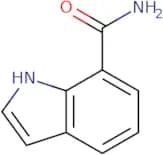
CAS:<p>Versatile small molecule scaffold</p>Fórmula:C12H18N4OPureza:Min. 95%Forma y color:PowderPeso molecular:234.3 g/mol1H-Indole-7-carboxamide
CAS:<p>Rauwolscine is a pharmacological agent that acts as an alpha-2 adrenergic receptor agonist. It is used to treat eye disease, such as glaucoma and iritis, and also has been used for the treatment of disorders of the urogenital system, such as prostatic hypertrophy. Rauwolscine is metabolized by oxidation at the nitrogen atom to form active metabolites with similar effects. This drug has been shown to be effective for the treatment of cancer, although it does not have any significant effect on muscle tissue. The major route of elimination for this drug is through urine and it may accumulate in tissues with renal disease.</p>Fórmula:C9H8N2OPureza:90%MinForma y color:PowderPeso molecular:160.18 g/molL-Valinol
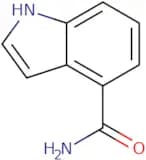
CAS:<p>L-Valinol is a model system that is used to study the reaction of aziridines with oxygen nucleophiles. It has been shown that this reaction proceeds through the formation of an intermediate, hydrogen tartrate, followed by a second step with nitrogen atoms as the nucleophile and alcohol residue as the substrate. The use of L-valinol in asymmetric synthesis was also demonstrated. In this process, amides were obtained with high enantioselectivity by reacting L-valinol with amines in acidic conditions. This synthetic pathway was found to be synergic with other reactions, such as nitroolefination and benzoylation.</p>Fórmula:C5H13NOPureza:Min. 95%Forma y color:Solidified MassPeso molecular:103.16 g/mol1H-Indole-4-carboxamide
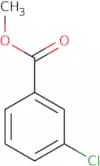
CAS:<p>1H-Indole-4-carboxamide is a hydrogen bond inhibitor that has anticancer activity. It inhibits the growth of cancer cells by interacting with alkoxycarbonyl groups and carboxyalkyl groups in proteins. In addition, it was found to have synergistic effects when combined with Jak2 inhibitors or diazepine derivatives. 1H-Indole-4-carboxamide has been shown to inhibit the tyrosine kinase activity of the JAK2 protein and inhibit cell proliferation in murine melanoma cells.</p>Fórmula:C9H8N2OPureza:Min. 95%Forma y color:PowderPeso molecular:160.17 g/molMethyl 3-chlorobenzoate
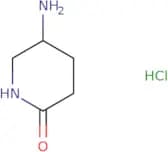
CAS:<p>Methyl 3-chlorobenzoate is a carbonyl compound that is used in the synthesis of salicylhydroxamic acid. This product has been shown to be an effective inhibitor of soil microorganisms, with the greatest inhibitory effect occurring at concentrations of 0.5 mg/L. The methyl 3-chlorobenzoate molecule contains aryl chlorides and a functional group, which can be identified using nmr spectra. Methyl 3-chlorobenzoate also has control experiments that show it does not interfere with the production of ethyl esters or benzoates from acetaldehyde and propionaldehyde respectively.<br>Methyl 3-chlorobenzoate is synthesized by heating copper salt with an isopropyl group and ethyl esters in benzene solvent at refluxing temperature for two hours.</p>Fórmula:C8H7ClO2Pureza:Min. 95%Forma y color:PowderPeso molecular:170.59 g/mol5-Amino-piperidin-2-one hydrochloride
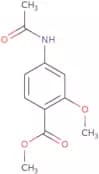
CAS:<p>5-Amino-piperidin-2-one hydrochloride is an enantiomerically pure chiral molecule. It is a white solid with a molecular weight of 138.12 that has been shown to exhibit anti-inflammatory properties in experiments conducted on mice. This drug also has the ability to inhibit the enzyme cyclooxygenase, which plays an important role in the production of prostaglandins. 5-Amino-piperidin-2-one hydrochloride binds to the active site of cyclooxygenase and prevents its conversion of arachadonic acid into prostaglandins. 5-Amino-piperidin-2-one hydrochloride has been shown to be effective against many bacteria, including methicillin resistant Staphylococcus aureus (MRSA) and Mycobacterium tuberculosis, but not against Mycobacterium avium complex.</p>Fórmula:C5H11ClN2OPureza:Min. 95%Peso molecular:150.61 g/molMethyl 4-acetamido-2-methoxybenzoate
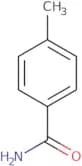
CAS:<p>Methyl 4-acetamido-2-methoxybenzoate is a chemical compound that belongs to the group of heterocycles. It is a precursor to the imidazopyridine, imidazopyrazine and thiazolopyridine classes of drugs. The protonation of methyl 4-acetamido-2-methoxybenzoate has been shown experimentally to be an important factor in its biological activity, especially for its binding affinity for DNA. Methyl 4-acetamido-2-methoxybenzoate has been used as an inotropic agent and as an atypical antipsychotic drug.</p>Fórmula:C11H13NO4Pureza:Min. 95%Forma y color:PowderPeso molecular:223.23 g/mol4-Methylbenzamide
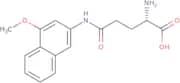
CAS:<p>4-Methylbenzamide is a palladium complex that has been used in the synthesis of imatinib, a drug used to treat chronic myeloid leukemia. 4-Methylbenzamide has been shown to form a hydrogen bond with water molecules and also exhibits cavity effects. The cavity effect can be explained by intermolecular hydrogen bonding and the deuterium isotope effect. The deuterium isotope effect is observed when an atom of deuterium replaces an atom of hydrogen in a molecule. This substitution leads to reduced boiling point and increased solubility for the compound. 4-Methylbenzamide is also known for its inhibitory effects on p38 kinase, which are seen through titration calorimetry.</p>Fórmula:C8H9NOPureza:Min. 95%Forma y color:PowderPeso molecular:135.16 g/molγ-Glutamyl-4-methoxy-β-naphthylamide
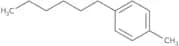
CAS:<p>Gamma-Glutamyl-4-methoxy-beta-naphthylamide is a versatile building block that can be used in the synthesis of a variety of complex compounds. It is a high quality chemical that is useful as an intermediate in organic syntheses and as a reagent in research. Gamma-Glutamyl-4-methoxy-beta-naphthylamide has been shown to be an effective scaffold for the preparation of other chemical substances.</p>Fórmula:C16H18N2O4Pureza:Min. 95%Peso molecular:302.33 g/mol1-Hexyl-4-methylbenzene
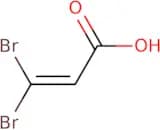
CAS:<p>1-Hexyl-4-methylbenzene is a hydrocarbon with the chemical formula C8H18. It has an octane rating of 100 and a boiling point of 156°C. This compound is used in the preparation of pharmaceuticals, dyes, and cleaning agents. It has been shown to react with palladium catalysts to form homopolymers in the presence of oxygen or water. These polymers are used for optical purposes due to their emission properties. They also have high photophysical properties that make them suitable for use in lasers and photonic devices. The intramolecular interactions between the benzene rings give this compound its conformational stability.</p>Fórmula:C13H20Pureza:Min. 95%Forma y color:Clear LiquidPeso molecular:176.3 g/mol3,3-Dibromoprop-2-enoic acid
CAS:<p>Versatile small molecule scaffold</p>Fórmula:C3H2Br2O2Pureza:Min. 95%Peso molecular:229.85 g/mol4-Methoxybenzamide
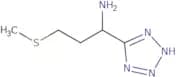
CAS:<p>4-Methoxybenzamide is a small molecule that has been shown to have anticancer activity in vitro and in vivo. It is a hydroxylated benzamide with an intramolecular hydrogen bond, which allows it to selectively bind to DNA at the C4' position of cytosine. The compound's anticancer effects are due to its ability to inhibit the transcription of genes involved in cancer cell proliferation and its ability to induce apoptosis via caspase activation. 4-Methoxybenzamide has been shown to be synergistic when used with other chemotherapeutics, such as cisplatin, doxorubicin or 5-fluorouracil. This drug also inhibits the uptake of these drugs by cancer cells, limiting their therapeutic effects on healthy tissues.</p>Fórmula:C8H9NO2Pureza:Min. 95%Forma y color:PowderPeso molecular:151.16 g/mol(1S)-3-(Methylsulfanyl)-1-(2H-1,2,3,4-tetrazol-5-yl)propan-1-amine
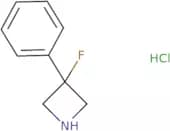
CAS:<p>Versatile small molecule scaffold</p>Fórmula:C5H11N5SPureza:Min. 95%Forma y color:PowderPeso molecular:173.24 g/mol3-Fluoro-3-phenylazetidine hydrochloride
CAS:<p>3-Fluoro-3-phenylazetidine hydrochloride is a versatile building block that can be used in the synthesis of complex compounds. This compound has been shown to have high quality and is a useful reagent for research chemists. 3-Fluoro-3-phenylazetidine hydrochloride is also used as a valuable intermediate for the preparation of many important organic compounds, including pharmaceuticals and agrochemicals. It has been shown to be an effective scaffold for the synthesis of new chemical compounds with high drug potential.</p>Fórmula:C9H11ClFNPureza:Min. 95%Forma y color:PowderPeso molecular:187.64 g/mol

![4-{5H,6H,7H,8H-Pyrido[4,3-c]pyridazin-3-yl}-1,4-oxazepane](/_next/image/?url=https%3A%2Fstatic.cymitquimica.com%2Fproducts%2F3D%2Fthumb-webp%2FJHD95611.webp&w=3840&q=75)