Building Blocks
Esta sección contiene productos fundamentales para la síntesis de compuestos orgánicos y biológicos. Building blocks son los materiales de partida esenciales utilizados para construir moléculas complejas a través de diversas reacciones químicas. Desempeñan un papel crítico en el descubrimiento de fármacos, la ciencia de materiales y la investigación química. En CymitQuimica, ofrecemos una gama diversa de building blocks de alta calidad para apoyar sus investigaciones innovadoras y proyectos industriales, asegurando que tenga los componentes esenciales para una síntesis exitosa.
Subcategorías de "Building Blocks"
- Ácidos borónicos y derivados del ácido borónico(5.756 productos)
- Building Blocks quirales(1.242 productos)
- Building Blocks de hidrocarburos(6.095 productos)
- Building Blocks orgánicos(61.038 productos)
Se han encontrado 196817 productos de "Building Blocks"
Ordenar por
Pureza (%)
0
100
|
0
|
50
|
90
|
95
|
100
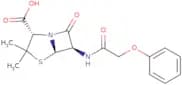
Penicillin V
CAS:<p>Penicillin V is an antibiotic that belongs to the class of penicillins. It is used in the treatment of bacterial infections, such as streptococcal pharyngitis and infectious diseases. Penicillin V binds to the penicillin-binding proteins, which are located on the outer surface of the bacterial membrane and prevent cell wall synthesis. This binding inhibits cell wall biosynthesis by preventing transpeptidation and transglycosylation reactions and leads to cell death. Penicillin V also inhibits the production of certain cytokines, including interleukin-1β (IL-1β) and tumor necrosis factor α (TNFα), which may be a result of its ability to inhibit Toll-like receptor 4 (TLR4). The solubility data for penicillin V was obtained from experiments conducted with experimental animals. The oral cephalosporins were shown to have a greater affinity for penicillin-binding proteins than pen</p>Fórmula:C16H18N2O5SPureza:Min. 95%Peso molecular:350.39 g/molVioluric acid
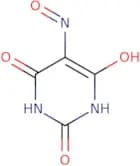
CAS:<p>Violuric acid is a chemical compound that is used in biological treatment. It has a hydroxyl group and UV absorption, which makes it reactive. Violuric acid undergoes protonation and deprotonation to form an acid complex with water. The nitrogen atoms in violuric acid can react with the oxygen atoms of water molecules to form nitrous acid, which then reacts with hydrogen peroxide to form an oxidizing agent. Violuric acid is synthesized by chain reactions between organic acids and inorganic acids. Violuric acid has a redox potential of −0.35 volts, making it an excellent reducing agent for organic compounds. In organic chemistry, violuric acid is used as a reducing agent for esters or amides.</p>Fórmula:C4H3N3O4Pureza:Min. 95%Forma y color:PowderPeso molecular:157.08 g/molPiperitone
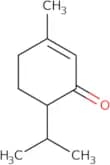
CAS:<p>Piperitone is a natural product that is isolated from the roots of Piper aduncum L. It has shown antimicrobial activity against Gram-positive and Gram-negative bacteria, fungi, and protozoa. The compound has been used as a broad-spectrum antimicrobial agent to treat infectious diseases such as malaria, leishmaniasis, and trypanosomiasis. Piperitone's mechanism of action is not well understood but it may be due to its ability to inhibit fatty acid synthesis or by inhibiting the biosynthesis of hepg2 in human erythrocytes.</p>Fórmula:C10H16OPureza:Min. 95%Forma y color:Clear LiquidPeso molecular:152.23 g/mol2,2-Dichloro-N-(4-hydroxyphenyl)-N-methylacetamide
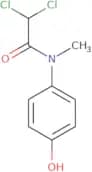
CAS:<p>2,2-Dichloro-N-(4-hydroxyphenyl)-N-methylacetamide (FUROATE) is a synthetic antimicrobial agent that is structurally related to the furoate class of antibiotics. FUROATE has been shown to be effective against urothelial carcinoma cells and minimal toxic in animals. It binds to the fatty acid component of bacterial cell membranes and causes rapid lysis. FUROATE is used as an analytical reagent for the determination of hydroxyl groups in organic solutes. The detection limit of this test is 0.1 ppm. Monoclonal antibodies can be generated against FUROATE for use as diagnostic or therapeutic agents for infectious diseases, such as HIV infection.</p>Fórmula:C9H9Cl2NO2Pureza:Min. 95%Forma y color:PowderPeso molecular:234.08 g/mol2-Hydroxyisophthalic acid
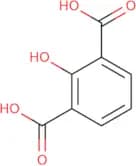
CAS:<p>2-Hydroxyisophthalic acid is a hydroxylated derivative of p-hydroxybenzoic acid. It is used in the manufacture of esters such as 2-ethoxyethanol and 2-ethoxyethyl acetate. It has also been shown to have a number of enzyme activities, including esterases, glycosidases, and lipases. The macrocyclic structure of 2-hydroxyisophthalic acid is responsible for its ability to interact with other molecules through hydrogen bonding and coordination chemistry. The carboxylate group on 2-hydroxyisophthalic acid interacts with the hydroxy group on the fatty acids found in soap, which leads to its use as an emulsifying agent. The carbonyl oxygens on 2-hydroxyisophthalic acid are responsible for its anti-inflammatory properties as they inhibit prostaglandin synthesis when they bind to the cyclooxygenase enzymes that catalyze</p>Fórmula:C8H6O5Pureza:Min. 95 Area-%Forma y color:PowderPeso molecular:182.13 g/moltert-Butyl N-[2-(aminooxy)ethyl]carbamate
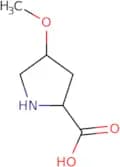
CAS:<p>tert-Butyl N-[2-(aminooxy)ethyl]carbamate is a fine chemical that can be used as a versatile building block in the synthesis of complex compounds. It can also be used to synthesize useful scaffolds, which are chemical substances that form the basis for the design of new drugs. This compound has CAS No. 75051-55-7 and is a useful intermediate, research chemicals, and reaction component for speciality chemicals. Tert-butyl N-[2-(aminooxy)ethyl]carbamate has been shown to have high quality and is an excellent reagent in organic synthesis.</p>Fórmula:C7H16N2O3Pureza:Min. 95 Area-%Forma y color:Clear LiquidPeso molecular:176.2 g/mol(2S,4S)-4-Methoxypyrrolidine-2-carboxylic acid
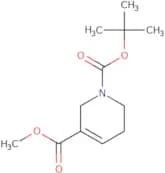
CAS:<p>Versatile small molecule scaffold</p>Fórmula:C6H11NO3Pureza:Min. 95%Peso molecular:145.16 g/mol1-tert-Butyl 3-methyl 1,2,5,6-tetrahydropyridine-1,3-dicarboxylate
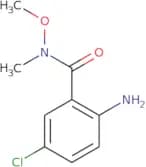
CAS:<p>1-tert-Butyl 3-methyl 1,2,5,6-tetrahydropyridine-1,3-dicarboxylate is a chemical compound that is used as a reagent in organic synthesis. It is also a useful intermediate for the production of other chemicals such as pharmaceuticals and pesticides. This compound has been found to be an effective building block for the preparation of complex compounds. The 1,2,5,6-tetrahydropyridine moiety can be used as a scaffold or building block to produce various compounds with different modifications. This class of compounds has also been found to be versatile in chemical reactions due to their ability to form covalent bonds with many types of functional groups.</p>Fórmula:C12H19NO4Pureza:Min. 90%Forma y color:Clear Viscous LiquidPeso molecular:241.28 g/mol2-Amino-5-chloro-N-methoxy-N-methylbenzamide
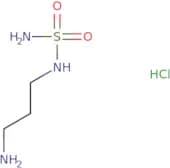
CAS:<p>Versatile small molecule scaffold</p>Fórmula:C9H11ClN2O2Pureza:Min. 95%Forma y color:PowderPeso molecular:214.65 g/mol(3-Aminopropyl)(sulfamoyl)amine hydrochloride
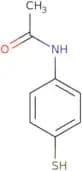
CAS:<p>Versatile small molecule scaffold</p>Fórmula:C3H12ClN3O2SPureza:Min. 95%Forma y color:PowderPeso molecular:189.67 g/mol4-Acetamidothiophenol
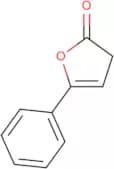
CAS:<p>4-Acetamidothiophenol (4AAT) is an organic compound that has been used in the treatment of inflammatory bowel disease. It has a chemical structure that resembles 5-hydroxytryptamine (5-HT), which is a neurotransmitter and hormone involved in regulating mood and appetite. 4AAT is also used as a reagent in the treatment of wastewater, where it reacts with sulfide to form thiosulfate. In acidic environments, 4AAT undergoes chemical ligation reactions to form covalent bonds with other molecules. Surface-enhanced Raman spectroscopy was used to study the adsorption mechanism of 4AAT on polystyrene particles. This technique revealed that 4AAT binds to the surface of polystyrene particles through hydrophobic interactions and hydrogen bonding with functional groups on the particle surface. The inhibition study showed that 4AAT inhibits 5-hydroxytryptamine receptors.br></p>Fórmula:C8H9NOSPureza:Min. 95%Forma y color:PowderPeso molecular:167.23 g/mol5-Phenyl-3H-furan-2-one
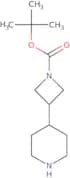
CAS:<p>5-Phenyl-3H-furan-2-one is an antiviral agent that belongs to the group of aldehydes. It is used as an active ingredient in influenza vaccines. The virus is inactivated by 5-phenyl-3H-furan-2-one and produces a recemic product that can be detected with a branched chain profile after chemical hydrolysis.</p>Fórmula:C10H8O2Pureza:Min. 95%Forma y color:PowderPeso molecular:160.17 g/moltert-Butyl 3-(piperidin-4-yl)azetidine-1-carboxylate
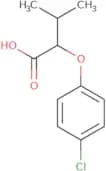
CAS:<p>tert-Butyl 3-(piperidin-4-yl)azetidine-1-carboxylate is a fine chemical that is used as a reagent, research chemical, or speciality chemical. It has been shown to be a versatile building block and useful scaffold for the synthesis of complex compounds. This compound has been shown to undergo a number of reactions, including cyclization and Michael addition.</p>Fórmula:C13H24N2O2Pureza:Min. 95%Peso molecular:240.34 g/mol2-(4-Chlorophenoxy)-3-methylbutanoic acid
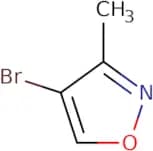
CAS:<p>Versatile small molecule scaffold</p>Fórmula:C11H13ClO3Pureza:Min. 95%Forma y color:PowderPeso molecular:228.67 g/mol4-Bromo-3-methyl-1,2-oxazole
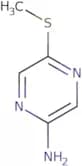
CAS:<p>4-Bromo-3-methyl-1,2-oxazole is a chemical compound that is used as a reaction component in organic synthesis. It is also used as a reagent for the synthesis of various pharmaceuticals. 4-Bromo-3-methyl-1,2-oxazole can be used to produce useful scaffolds and intermediates. This compound has been shown to be useful in the production of complex compounds and fine chemicals. CAS No. 101084-19-9</p>Fórmula:C4H4BrNOPureza:Min. 90%Forma y color:Clear LiquidPeso molecular:161.98 g/mol5-(Methylsulfanyl)pyrazin-2-amine
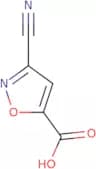
CAS:<p>5-(Methylsulfanyl)pyrazin-2-amine is an organic chemical compound that is a useful building block, reagent, and research chemical. It has many uses in the synthesis of other compounds. 5-(Methylsulfanyl)pyrazin-2-amine is a versatile building block for complex compounds. This compound can be used as a reaction component or scaffold to produce desired products. 5-(Methylsulfanyl)pyrazin-2-amine can also be used as a speciality chemical or high quality fine chemical.</p>Fórmula:C5H7N3SPureza:Min. 95%Forma y color:PowderPeso molecular:141.2 g/mol3-Cyano-1,2-oxazole-5-carboxylic acid
CAS:<p>Versatile small molecule scaffold</p>Fórmula:C5H2N2O3Pureza:Min. 95%Forma y color:PowderPeso molecular:138.08 g/molBocNH-PEG4-CH2COOH
CAS:<p>BocNH-PEG4-CH2COOH is a PEG compound with two different functional groups (also known as heterobifunctional). Unlike homobifunctional PEG compounds (same functional group on both ends), this type of compounds are more versatile as have two different anchor points. BocNH-PEG4-CH2COOH is used as a linker and spacer to add a PEG moiety, via pegylation (a bioconjugation technique) to proteins, peptides, oligonucleotides, small molecules and nanoparticles.</p>Fórmula:C15H29NO8Pureza:Min. 95%Forma y color:Clear LiquidPeso molecular:351.39 g/mol3-Methyl-4-(trifluoromethyl)benzaldehyde
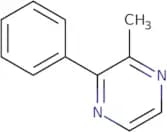
CAS:<p>3-Methyl-4-(trifluoromethyl)benzaldehyde is a high quality research chemical. It is a versatile building block that can be used in the synthesis of complex compounds, such as pharmaceuticals and pesticides. 3-Methyl-4-(trifluoromethyl)benzaldehyde can be used as a reagent to synthesize other chemicals and as a reaction component to produce new organic compounds. 3-Methyl-4-(trifluoromethyl)benzaldehyde has CAS No. 951232-01-2.</p>Fórmula:C9H7F3OPureza:Min. 95%Forma y color:PowderPeso molecular:188.15 g/mol2-Methyl-3-phenylpyrazine
CAS:<p>2-Methyl-3-phenylpyrazine is an organic compound that is a yellow crystalline solid. Its electronic structures are determined by the molecular orbitals, which determine the probability of finding electrons in different regions of space. Excitons are pairs of photons that have been emitted due to the interaction between two molecules, and can be measured with devices such as spectroscopes or photomultipliers. 2-Methyl-3-phenylpyrazine has been used to synthesize carbenes, which are ligands for organometallic compounds. It has also been used in singlet catalysis, where it coordinates with a metal atom to activate another molecule and form a new chemical bond.</p>Fórmula:C11H10N2Pureza:Min. 95%Forma y color:PowderPeso molecular:170.21 g/mol

![tert-Butyl N-[2-(aminooxy)ethyl]carbamate](/_next/image/?url=https%3A%2Fstatic.cymitquimica.com%2Fproducts%2F3D%2Fthumb-webp%2FADA05155.webp&w=3840&q=75)