Building Blocks
Esta sección contiene productos fundamentales para la síntesis de compuestos orgánicos y biológicos. Building blocks son los materiales de partida esenciales utilizados para construir moléculas complejas a través de diversas reacciones químicas. Desempeñan un papel crítico en el descubrimiento de fármacos, la ciencia de materiales y la investigación química. En CymitQuimica, ofrecemos una gama diversa de building blocks de alta calidad para apoyar sus investigaciones innovadoras y proyectos industriales, asegurando que tenga los componentes esenciales para una síntesis exitosa.
Subcategorías de "Building Blocks"
- Ácidos borónicos y derivados del ácido borónico(5.783 productos)
- Building Blocks quirales(1.242 productos)
- Building Blocks de hidrocarburos(6.105 productos)
- Building Blocks orgánicos(61.055 productos)
Se han encontrado 205383 productos de "Building Blocks"
Ordenar por
Pureza (%)
0
100
|
0
|
50
|
90
|
95
|
100
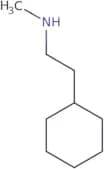
(2-Cyclohexylethyl)(methyl)amine
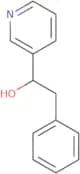
CAS:Versatile small molecule scaffoldFórmula:C9H19NPureza:Min. 95%Peso molecular:141.25 g/mol2-Phenyl-1-(pyridin-3-yl)ethan-1-ol
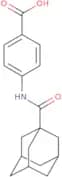
CAS:Versatile small molecule scaffoldFórmula:C13H13NOPureza:Min. 95%Peso molecular:199.25 g/mol4-(Adamantane-1-amido)benzoic acid
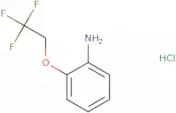
CAS:Versatile small molecule scaffoldFórmula:C18H21NO3Pureza:Min. 95%Peso molecular:299.4 g/mol2-(2,2,2-Trifluoroethoxy)aniline hydrochloride
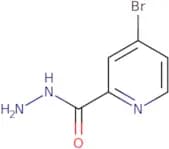
CAS:Versatile small molecule scaffoldFórmula:C8H9ClF3NOPureza:Min. 95%Peso molecular:227.61 g/mol4-Bromopicolinic hydrazide
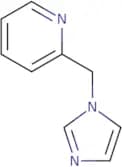
CAS:4-Bromopicolinic hydrazide is a chemical compound that has antibacterial activity. It is active against bacteria like B. subtilis, P. pneumoniae, and S. aureus as well as fungi such as M. macrophomina and A. fumigatus. 4-Bromopicolinic hydrazide is effective against bacterial strains like phaseolina, K. pneumoniae, and C. sclerotium, but not against E. coli or other Gram-negative bacteria that have been shown to be resistant to ampicillin in vitro studies. It also has antifungal properties which are active against A. fumigatus and M. macrophomina in vitro studies.br>br> 4-Bromopicolinic hydrazide inhibits the synthesis of DNA by binding to the enzyme DNA polymerase and preventing it from making copies of the bacterial DNA during replication.br>br> This drug hasFórmula:C6H6BrN3OPureza:Min. 95%Peso molecular:216.04 g/mol2-(1H-Imidazol-1-ylmethyl)pyridine
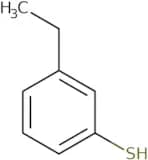
CAS:Versatile small molecule scaffoldFórmula:C9H9N3Pureza:Min. 95%Peso molecular:159.19 g/mol3-Ethylbenzenethiol
CAS:3-Ethylbenzenethiol is a chlorinated derivative of benzenethiol that is used as a reagent in organic synthesis. It has been used to synthesize potassium and copper chlorides, and it has also been used in the preparation of 2-iodobenzoic acid. 3-Ethylbenzenethiol is a strong bronchodilator with cataleptic properties that can be used to control coughs. It has been shown to have antitussive effects when given at high doses, with no adverse side effects.
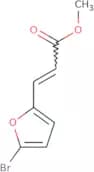
Fórmula:C8H10SPureza:Min. 95%Peso molecular:138.23 g/molMethyl (2E)-3-(5-bromofuran-2-yl)prop-2-enoate
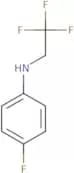
CAS:Versatile small molecule scaffoldFórmula:C8H7BrO3Pureza:Min. 95%Peso molecular:231.04 g/mol(4-Fluoro-phenyl)-(2,2,2-trifluoro-ethyl)-amine
CAS:Versatile small molecule scaffoldFórmula:C8H7F4NPureza:Min. 95%Peso molecular:193.14 g/mol1-(4-Methoxyphenyl)-5-phenyl-1H-pyrazole-3-carboxylic acid
CAS:Versatile small molecule scaffoldFórmula:C17H14N2O3Pureza:Min. 95%Peso molecular:294.3 g/molSpiro[4.5]dec-3-en-2-one
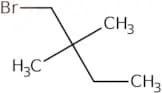
CAS:Versatile small molecule scaffoldFórmula:C10H14OPureza:Min. 95%Peso molecular:150.22 g/mol1-Bromo-2,2-dimethylbutane
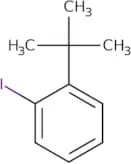
CAS:Versatile small molecule scaffoldFórmula:C6H13BrPureza:Min. 95%Peso molecular:165.07 g/mol1-tert-Butyl-2-iodobenzene
CAS:Versatile small molecule scaffoldFórmula:C10H13IPureza:Min. 95%Peso molecular:260.11 g/mol[2-(Methoxymethyl)phenyl]methanol
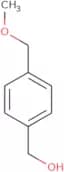
CAS:Versatile small molecule scaffoldFórmula:C9H12O2Pureza:Min. 95%Peso molecular:152.19 g/mol(4-Methoxymethyl-phenyl)-methanol
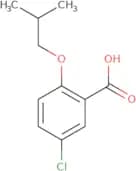
CAS:4-Methoxymethyl-phenyl)-methanol is an inorganic chemical. It is a synthetic compound that has been used as an experimental result to study the effects of introducing chloride into mosquitoes. The nitro group on the molecule was found to be of particular interest, as it may be able to react with a variety of organic compounds, including pyrethroid insecticides. 4-Methoxymethyl-phenyl)-methanol can be synthesized by reacting methoxymethyl chloride with potassium hydroxide in a constant temperature reaction.Fórmula:C9H12O2Pureza:Min. 95%Peso molecular:152.19 g/mol2-Iso-butoxy-5-chlorobenzoic acid
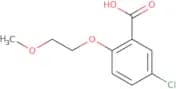
CAS:Versatile small molecule scaffoldFórmula:C11H13ClO3Pureza:Min. 95%Peso molecular:228.67 g/mol5-Chloro-2-(2-methoxyethoxy)benzoic acid
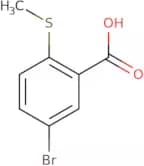
CAS:Versatile small molecule scaffoldFórmula:C10H11ClO4Pureza:Min. 95%Peso molecular:230.64 g/mol5-Bromo-2-(methylsulfanyl)benzoic acid
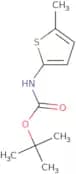
CAS:Versatile small molecule scaffoldFórmula:C8H7BrO2SPureza:Min. 95%Peso molecular:247.11 g/moltert-Butyl N-(5-methylthiophen-2-yl)carbamate
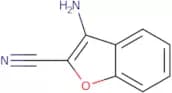
CAS:Versatile small molecule scaffoldFórmula:C10H15NO2SPureza:Min. 95%Peso molecular:213.3 g/mol3-Amino-1-benzofuran-2-carbonitrile
CAS:3-Amino-1-benzofuran-2-carbonitrile is a heterocyclic compound that belongs to the isothiocyanate family. It has been shown to be an analog of phenyl isothiocyanate by x-ray crystallography, and it reacts with selenium dioxide in a 1:1 ratio to form selenides. The reaction mechanism is believed to be analogous to the reaction of phenyl isothiocyanate, although this has not yet been confirmed. The reaction proceeds with a refluxing pyridine as solvent, which crystallizes on cooling.Fórmula:C9H6N2OPureza:Min. 95%Peso molecular:158.16 g/mol

![Spiro[4.5]dec-3-en-2-one](/_next/image/?url=https%3A%2Fstatic.cymitquimica.com%2Fproducts%2F3D%2Fthumb-webp%2FMCA16749.webp&w=3840&q=75)
![[2-(Methoxymethyl)phenyl]methanol](/_next/image/?url=https%3A%2Fstatic.cymitquimica.com%2Fproducts%2F3D%2Fthumb-webp%2FMCA17288.webp&w=3840&q=75)