Building Blocks
Esta sección contiene productos fundamentales para la síntesis de compuestos orgánicos y biológicos. Building blocks son los materiales de partida esenciales utilizados para construir moléculas complejas a través de diversas reacciones químicas. Desempeñan un papel crítico en el descubrimiento de fármacos, la ciencia de materiales y la investigación química. En CymitQuimica, ofrecemos una gama diversa de building blocks de alta calidad para apoyar sus investigaciones innovadoras y proyectos industriales, asegurando que tenga los componentes esenciales para una síntesis exitosa.
Subcategorías de "Building Blocks"
- Ácidos borónicos y derivados del ácido borónico(5.783 productos)
- Building Blocks quirales(1.242 productos)
- Building Blocks de hidrocarburos(6.105 productos)
- Building Blocks orgánicos(61.055 productos)
Se han encontrado 205383 productos de "Building Blocks"
Ordenar por
Pureza (%)
0
100
|
0
|
50
|
90
|
95
|
100
4-Methoxy-2,3-dihydro-1H-inden-1-ol
CAS:Versatile small molecule scaffold
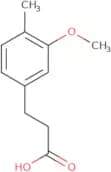
Fórmula:C10H12O2Pureza:Min. 95%Peso molecular:164.2 g/mol3-(3-Methoxy-4-methylphenyl)propanoic acid
CAS:Versatile small molecule scaffoldFórmula:C11H14O3Pureza:Min. 95%Peso molecular:194.23 g/molSMER3
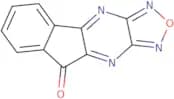
CAS:SMER3 is a ubiquitin ligase that regulates protein degradation through the ubiquitin-proteasome pathway. SMER3 is involved in the response to microbial infection, cancer, and cardiac arrhythmia. SMER3 has been shown to regulate protein levels by binding to and stabilizing proteins in order to prevent their degradation. It also plays a role in the regulation of NF-κB signaling pathways, which affects cell proliferation and differentiation. SMER3 has been shown to play an important role in the regulation of Toll-like receptors (TLRs) by interacting with TLR2, TLR4, and TLR6. This interaction leads to activation of downstream signaling pathways that may lead to cellular responses such as inflammation and immunity.Fórmula:C11H4N4O2Pureza:Min. 95%Peso molecular:224.18 g/mol4-Iodo-1,3-dimethyl-1H-pyrazole-5-carboxylic acid
CAS:Versatile small molecule scaffold
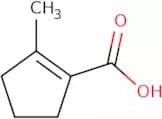
Fórmula:C6H7IN2O2Pureza:Min. 95%Peso molecular:266.04 g/mol2-Methylcyclopent-1-ene-1-carboxylic acid
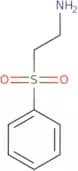
CAS:2-Methylcyclopent-1-ene-1-carboxylic acid is an efficient synthetic route for the preparation of nitroalkanes. This process proceeds by the reaction of ammonium formate with nitromethane to produce 2-methylcyclopent-1-ene, which is then converted to 2-methylcyclopent-1-ene-1-carboxylic acid with hydrolysis. The allylic rearrangement can be carried out using sodium methoxide in methanol, and the denitration can be carried out using piperidine.Fórmula:C7H10O2Pureza:Min. 95%Peso molecular:126.15 g/mol2-(Benzenesulfonyl)ethan-1-amine
CAS:Versatile small molecule scaffoldFórmula:C8H11NO2SPureza:Min. 95%Peso molecular:185.25 g/mol4-[(Trifluoromethyl)sulfanyl]benzene-1-sulfonyl chloride
CAS:Versatile small molecule scaffoldFórmula:C7H4ClF3O2S2Pureza:Min. 95%Peso molecular:276.7 g/mol{[2-(Bromomethyl)phenyl]methyl}triphenylphosphanium bromide
CAS:Versatile small molecule scaffoldFórmula:C26H23Br2PPureza:Min. 95%Peso molecular:526.2 g/moltert-Butyldimethylsilyl 2-[(tert-butyldimethylsilyl)oxy]acetate
CAS:Tert-butyldimethylsilyl 2-[(tert-butyldimethylsilyl)oxy]acetate (TBDSO) is an acetylating agent used to produce tertiary alcohols. TBDSO is a nitro compound that is converted by the body into carbon dioxide and water. TBDSO is not orally bioavailable, but can be administered intravenously or intramuscularly. TBDSO has been shown to inhibit the production of cholesterol in animals and humans. It may be used as a chiral building block for pharmaceutical drugs such as statins. Statins are drugs that lower cholesterol levels by inhibiting HMG-CoA reductase, an enzyme involved in the synthesis of cholesterol from mevalonic acid.Fórmula:C14H32O3Si2Pureza:Min. 95%Peso molecular:304.57 g/mol4H-Furo[3,2-b]pyrrole-5-carboxylic acid
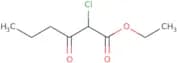
CAS:4H-Furo[3,2-b]pyrrole-5-carboxylic acid is a chemical compound that has been shown to be an effective optical sensor for the detection of neutrinos. It has also been used in the study of skin cancer and solar radiation. This chemical can be detected using a filament that emits light when it is excited by the absorption of energy from 4H-Furo[3,2-b]pyrrole-5-carboxylic acid. The chemical's ability to produce unique optical properties makes it a valuable tool for diagnosis. Titration calorimetry experiments have confirmed that 4H-Furo[3,2-b]pyrrole-5-carboxylic acid absorbs electromagnetic radiation with wavelengths between 190 nm and 260 nm.Fórmula:C7H5NO3Pureza:Min. 95%Peso molecular:151.12 g/molEthyl 2-chloro-3-oxohexanoate
CAS:Versatile small molecule scaffoldFórmula:C8H13ClO3Pureza:Min. 95%Peso molecular:192.64 g/mol6,7-dimethoxyquinoline
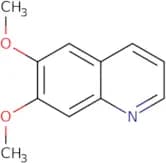
CAS:6,7-dimethoxyquinoline is a palladium-catalyzed coupling agent that has been shown to inhibit the growth of cells by blocking epidermal growth factor receptor. It has been shown to be effective in inhibiting restenosis and angioplasty in animal models. 6,7-Dimethoxyquinoline also has an innovative mechanism of action for cancer treatment as it inhibits the activation of certain signal transduction molecules. It also acts as a potent inhibitor for chloride channels and other ion channels, which may lead to its use as a powerful antihypertensive agent.
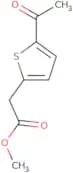
Fórmula:C11H11NO2Pureza:Min. 95%Peso molecular:189.21 g/molMethyl 2-(5-acetylthiophen-2-yl)acetate
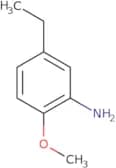
CAS:Versatile small molecule scaffoldFórmula:C9H10O3SPureza:Min. 95%Peso molecular:198.24 g/mol5-Ethyl-2-methoxyaniline
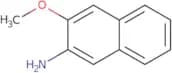
CAS:Versatile small molecule scaffoldFórmula:C9H13NOPureza:Min. 95%Peso molecular:151.21 g/mol2-Amino-3-methoxynaphthalene
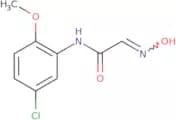
CAS:Versatile small molecule scaffoldFórmula:C11H11NOPureza:Min. 95%Peso molecular:173.21 g/molN-(5-Chloro-2-methoxyphenyl)-2-(N-hydroxyimino)acetamide
CAS:Versatile small molecule scaffoldFórmula:C9H9ClN2O3Pureza:Min. 95%Peso molecular:228.63 g/mol4-Bromo-7-methoxyindoline-2,3-dione
CAS:Versatile small molecule scaffoldFórmula:C9H6BrNO3Pureza:Min. 95%Peso molecular:256.05 g/mol2-Amino-6-chloro-3-methoxybenzoic acid
CAS:Versatile small molecule scaffoldFórmula:C8H8ClNO3Pureza:Min. 95%Peso molecular:201.61 g/mol2-(6-Bromo-4-oxo-3,4-dihydroquinazolin-3-yl)acetic acid
CAS:Versatile small molecule scaffoldFórmula:C10H7BrN2O3Pureza:Min. 95%Peso molecular:283.08 g/mol3,3-Dimethyl-1-phenylbutan-2-amine
CAS:Producto controladoVersatile small molecule scaffoldFórmula:C12H19NPureza:Min. 95%Peso molecular:177.29 g/mol



![4-[(Trifluoromethyl)sulfanyl]benzene-1-sulfonyl chloride](/_next/image/?url=https%3A%2Fstatic.cymitquimica.com%2Fproducts%2F3D%2Fthumb-webp%2FSCA21675.webp&w=3840&q=75)
![{[2-(Bromomethyl)phenyl]methyl}triphenylphosphanium bromide](/_next/image/?url=https%3A%2Fstatic.cymitquimica.com%2Fproducts%2F3D%2Fthumb-webp%2FSCA21944.webp&w=3840&q=75)
![tert-Butyldimethylsilyl 2-[(tert-butyldimethylsilyl)oxy]acetate](/_next/image/?url=https%3A%2Fstatic.cymitquimica.com%2Fproducts%2F3D%2Fthumb-webp%2FSCA22676.webp&w=3840&q=75)
![4H-Furo[3,2-b]pyrrole-5-carboxylic acid](/_next/image/?url=https%3A%2Fstatic.cymitquimica.com%2Fproducts%2F3D%2Fthumb-webp%2FSCA26837.webp&w=3840&q=75)