Building Blocks
Subcategorías de "Building Blocks"
- Ácidos borónicos y derivados del ácido borónico(5.784 productos)
- Building Blocks quirales(1.244 productos)
- Building Blocks de hidrocarburos(6.105 productos)
- Building Blocks orgánicos(61.073 productos)
Se han encontrado 205446 productos de "Building Blocks"
1-Benzofuran-2-ylmethanamine hydrochloride
CAS:Versatile small molecule scaffoldFórmula:C9H10ClNOPureza:Min. 95%Peso molecular:183.63 g/mol3-Amino-N-ethylbenzamide
CAS:Versatile small molecule scaffold
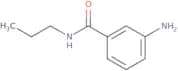
Fórmula:C9H12N2OPureza:Min. 95%Peso molecular:164.2 g/mol3-Amino-N-propylbenzamide
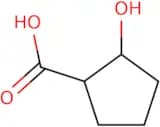
CAS:3-Amino-N-propylbenzamide is an organic compound that is a fluorometric, spectroscopic, and sensing reagent. It is a weakly basic anion with the chemical formula CH3CH2C6H4NHCO2. It has been used as an emission indicator in fluorescence measurements of anthracene and supramolecular systems. It can be used to identify the presence of nitrate ion by its interaction with the anthracene molecule. 3-Amino-N-propylbenzamide can also be used for chain spectroscopy methods to study the binding of small molecules to proteins.Fórmula:C10H14N2OPureza:Min. 95%Peso molecular:178.24 g/mol2-Hydroxycyclopentane-1-carboxylic acid
CAS:2-Hydroxycyclopentane-1-carboxylic acid is a chemical compound that belongs to the class of hydroxyproline derivatives. It is used as an intermediate in the synthesis of glucosides and tosyl esters. 2-Hydroxycyclopentane-1-carboxylic acid can be prepared by the reaction of methyl acetoacetate with sodium methoxide in methanol solution. The resulting product can be hydrolyzed with hydrochloric acid to release 2-hydroxycyclopentane-1-carboxylic acid, which can then be converted into other compounds through various reactions.
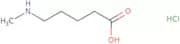
2-Hydroxycyclopentane-1-carboxylic acid has been used as a reagent for tosylation reactions and as an intermediate for the synthesis of organic esters and phenolic compounds.Fórmula:C6H10O3Pureza:Min. 95%Peso molecular:130.14 g/mol5-(Methylamino)pentanoic acid hydrochloride
CAS:Versatile small molecule scaffold
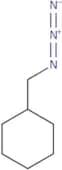
Fórmula:C6H14ClNO2Pureza:Min. 95%Peso molecular:167.63 g/mol(Azidomethyl)cyclohexane
CAS:Azidomethylcyclohexane is a triazole drug that inhibits the activity of opioid receptors. It also has an inhibitory effect on fatty acid biosynthesis and antibacterial properties. This compound has been clinically used as an anti-tuberculosis drug, but its mechanism of action is not yet fully understood. Azidomethylcyclohexane may inhibit the synthesis of mycolic acids by inhibiting enzymes involved in their biosynthesis. This compound also inhibits terminal alkynes, which are responsible for the synthesis of mycothiols, which are essential for the growth and survival of Mycobacterium tuberculosis. Azidomethylcyclohexane would not be expected to inhibit other bacteria because it does not have any known effects on enzymes other than those involved in fatty acid biosynthesis, terminal alkynes, and mycolic acid synthesis.
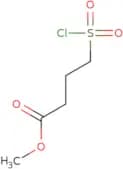
Fórmula:C7H13N3Pureza:Min. 95%Peso molecular:139.2 g/molMethyl 4-(chlorosulfonyl)butanoate
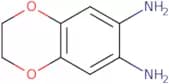
CAS:Versatile small molecule scaffoldFórmula:C5H9ClO4SPureza:Min. 95%Peso molecular:200.64 g/mol2,3-Dihydro-1,4-benzodioxine-6,7-diamine
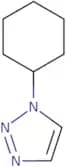
CAS:2,3-Dihydro-1,4-benzodioxine-6,7-diamine is an aromatic compound and a sealant. It is a fluorescent derivative of the fatty acid 2,3-dihydro-1,4-benzodioxin with a cationic surfactant as a plasticizer. This compound has been used in the manufacture of glycol ethers and glycol esters. The hydroxy group and benzoate have been shown to react with calcium stearate to form a sealant that is resistant to water vapor and glycol esters. Database sequences show that this compound reacts with zirconium oxide to form a sealant that can be used in high temperatures.Fórmula:C8H10N2O2Pureza:Min. 95%Peso molecular:166.18 g/mol1-Cyclohexyl-1H-1,2,3-triazole
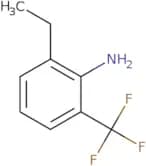
CAS:Versatile small molecule scaffoldFórmula:C8H13N3Pureza:Min. 95%Peso molecular:151.21 g/mol2-Ethyl-6-(trifluoromethyl)aniline
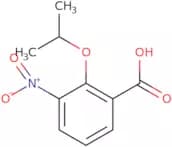
CAS:Versatile small molecule scaffoldFórmula:C9H10F3NPureza:Min. 95%Peso molecular:189.18 g/mol3-Nitro-2-(propan-2-yloxy)benzoic acid
CAS:Versatile small molecule scaffoldFórmula:C10H11NO5Pureza:Min. 95%Peso molecular:225.2 g/mol2,3-Dihydrospiro[indene-1,3'-pyrrolidine] hydrochloride
CAS:Versatile small molecule scaffold
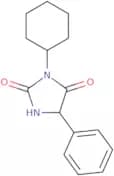
Fórmula:C12H16ClNPureza:Min. 95%Peso molecular:209.71 g/mol3-Cyclohexyl-5-phenylimidazolidine-2,4-dione
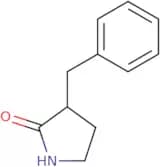
CAS:Versatile small molecule scaffoldFórmula:C15H18N2O2Pureza:Min. 95%Peso molecular:258.32 g/mol3-Benzylpyrrolidin-2-one
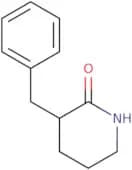
CAS:3-Benzylpyrrolidin-2-one is a synthetic compound that has been shown to inhibit the tyrosine kinase activity of receptor tyrosine kinases. This inhibition prevents the phosphorylation and activation of downstream signaling molecules, which are necessary for tumor cell proliferation. The inhibition of these kinases has been shown to be effective against metastasis in animal models. 3-Benzylpyrrolidin-2-one has also been shown to inhibit the growth of cancer cells through a number of different mechanisms, including inhibiting cyclic AMP production, preventing the migration of cancer cells and blocking the synthesis of DNA.Fórmula:C11H13NOPureza:Min. 95%Peso molecular:175.23 g/mol3-Benzylpiperidin-2-one
CAS:Versatile small molecule scaffoldFórmula:C12H15NOPureza:Min. 95%Peso molecular:189.25 g/molBicyclo[4.1.0]heptane-7-carbaldehyde
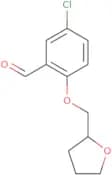
CAS:Bicyclo[4.1.0]heptane-7-carbaldehyde is a pyrogenic compound that inhibits protein synthesis in bacteria, including staphylococci and chorismate-producing organisms (e.g., Pyogenes). This compound has been shown to be effective against uncomplicated skin infections, such as abrasions, due to its ability to inhibit protein synthesis in the bacteria. Bicyclo[4.1.0]heptane-7-carbaldehyde also exhibits antimicrobial activity against dermatophytes, with a good safety profile for human use. It can be used as a therapeutic agent for uncomplicated skin infections and has been evaluated for use in combination with other antimicrobials for more complicated or resistant cases of skin infection.Fórmula:C8H12OPureza:Min. 95%Peso molecular:124.18 g/mol5-Chloro-2-(oxolan-2-ylmethoxy)benzaldehyde
CAS:Versatile small molecule scaffoldFórmula:C12H13ClO3Pureza:Min. 95%Peso molecular:240.68 g/mol4,5,6,7-Tetrahydro-3H-[1,2,3]triazolo[4,5-c]pyridine
CAS:Versatile small molecule scaffold
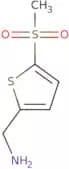
Fórmula:C5H8N4Pureza:Min. 95%Peso molecular:124.14 g/mol(5-Methanesulfonylthiophen-2-yl)methanamine
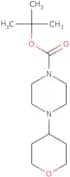
CAS:Versatile small molecule scaffoldFórmula:C6H9NO2S2Pureza:Min. 95%Peso molecular:191.3 g/moltert-Butyl 4-(oxan-4-yl)piperazine-1-carboxylate
CAS:Versatile small molecule scaffoldFórmula:C14H26N2O3Pureza:Min. 95%Peso molecular:270.37 g/mol


![2,3-Dihydrospiro[indene-1,3'-pyrrolidine] hydrochloride](/_next/image/?url=https%3A%2Fstatic.cymitquimica.com%2Fproducts%2F3D%2Fthumb-webp%2FGDA96205.webp&w=3840&q=75)
![Bicyclo[4.1.0]heptane-7-carbaldehyde](/_next/image/?url=https%3A%2Fstatic.cymitquimica.com%2Fproducts%2F3D%2Fthumb-webp%2FGDA98022.webp&w=3840&q=75)
![4,5,6,7-Tetrahydro-3H-[1,2,3]triazolo[4,5-c]pyridine](/_next/image/?url=https%3A%2Fstatic.cymitquimica.com%2Fproducts%2F3D%2Fthumb-webp%2FGDB75705.webp&w=3840&q=75)