Building Blocks
Esta sección contiene productos fundamentales para la síntesis de compuestos orgánicos y biológicos. Building blocks son los materiales de partida esenciales utilizados para construir moléculas complejas a través de diversas reacciones químicas. Desempeñan un papel crítico en el descubrimiento de fármacos, la ciencia de materiales y la investigación química. En CymitQuimica, ofrecemos una gama diversa de building blocks de alta calidad para apoyar sus investigaciones innovadoras y proyectos industriales, asegurando que tenga los componentes esenciales para una síntesis exitosa.
Subcategorías de "Building Blocks"
- Ácidos borónicos y derivados del ácido borónico(5.780 productos)
- Building Blocks quirales(1.241 productos)
- Building Blocks de hidrocarburos(6.100 productos)
- Building Blocks orgánicos(61.024 productos)
Se han encontrado 205297 productos de "Building Blocks"
Ordenar por
Pureza (%)
0
100
|
0
|
50
|
90
|
95
|
100
2-[(Thian-4-yl)amino]ethan-1-ol hydrochloride
CAS:Versatile small molecule scaffoldFórmula:C7H16ClNOSPureza:Min. 95%Peso molecular:197.73 g/mol2-Amino-4-(phenylsulfanyl)butanoic acid
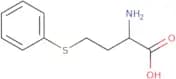
CAS:2-Amino-4-(phenylsulfanyl)butanoic acid (NPA) is an inhibitor of the enzyme s-adenosyl-l-methionine synthase, which is involved in the synthesis of methyl groups from methionine. It has been shown to inhibit the growth of viruses such as herpes simplex virus type 1 and 2. NPA has also been shown to inhibit the growth of bacteria such as Mycobacterium tuberculosis and Mycobacterium avium complex by inhibiting the production of mycolic acids, which are essential for cell wall synthesis. NPA also inhibits conformational changes in enzymes, which may be related to its ability to inhibit the growth of bacteria that require a linear transition state for catalysis.Fórmula:C10H13NO2SPureza:Min. 95%Peso molecular:211.28 g/mol(2S)-2-Amino-4-phenoxybutanoic acid
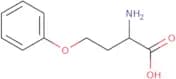
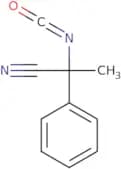
CAS:(2S)-2-Amino-4-phenoxybutanoic acid is a chiral amino acid that can be synthesized from s-adenosyl-l-methionine. It has been shown to have antiviral properties, as it inhibits the infectivity of viruses by acting as a competitive inhibitor of the enzyme ribonucleotide reductase. (2S)-2-Amino-4-phenoxybutanoic acid also has an inhibitory effect on the activity of nitro compounds and nitrosamines, which are potentially carcinogenic substances found in tobacco smoke and processed meats. This compound has been shown to be an effective inhibitor of enzymes involved in the synthesis of norvaline, an intermediate in the production of several pharmaceuticals.Fórmula:C10H13NO3Pureza:Min. 95%Peso molecular:195.21 g/mol2-Isocyanato-2-phenylpropanenitrile
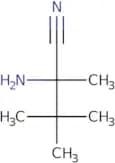
CAS:Versatile small molecule scaffoldFórmula:C10H8N2OPureza:Min. 95%Peso molecular:172.18 g/mol2-Amino-2,3,3-trimethylbutanenitrile
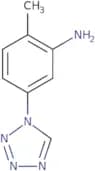
CAS:Versatile small molecule scaffoldFórmula:C7H14N2Pureza:Min. 95%Peso molecular:126.2 g/mol2-Methyl-5-(1H-tetrazol-1-yl)aniline
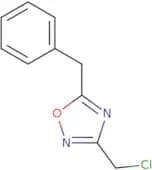
CAS:2-Methyl-5-(1H-tetrazol-1-yl)aniline is a chemical compound with the formula C6H3N3. It is a white solid that is soluble in water and ethanol. 2-Methyl-5-(1H-tetrazol-1-yl)aniline has been used as a reagent for the determination of the rate of spontaneous reactions, such as condensation reactions, by measuring the rate constant for these reactions. The values of its constants are found in Table 1.Fórmula:C8H9N5Pureza:Min. 95%Peso molecular:175.19 g/mol5-Benzyl-3-(chloromethyl)-1,2,4-oxadiazole
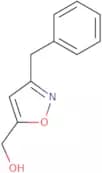
CAS:Versatile small molecule scaffoldFórmula:C10H9ClN2OPureza:Min. 95%Peso molecular:208.64 g/mol(3-Benzyl-1,2-oxazol-5-yl)methanol
CAS:Versatile small molecule scaffold
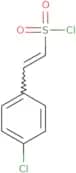
Fórmula:C11H11NO2Pureza:Min. 95%Peso molecular:189.21 g/mol2-(4-Chlorophenyl)ethene-1-sulfonyl chloride
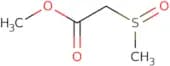
CAS:Versatile small molecule scaffoldFórmula:C8H6Cl2O2SPureza:Min. 95%Peso molecular:237.1 g/molMethyl 2-methanesulfinylacetate
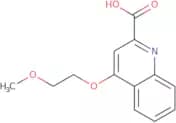
CAS:Versatile small molecule scaffoldFórmula:C4H8O3SPureza:Min. 95%Peso molecular:136.17 g/mol4-(2-Methoxyethoxy)quinoline-2-carboxylic acid
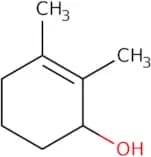
CAS:Versatile small molecule scaffoldFórmula:C13H13NO4Pureza:Min. 95%Peso molecular:247.25 g/mol2,3-Dimethylcyclohex-2-en-1-ol
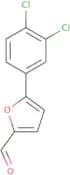
CAS:Versatile small molecule scaffoldFórmula:C8H14OPureza:Min. 95%Peso molecular:126.2 g/mol5-(3,4-Dichlorophenyl)furfural
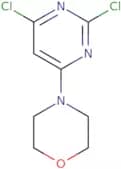
CAS:5-(3,4-Dichlorophenyl)furfural (5F) is a hepatotoxic agent that has been shown to cause liver cancer in animal studies. 5F binds to the casein kinase II (CKII) and inhibits its kinase activity, leading to apoptosis of cancer cells. This compound also inhibits the proliferation of human cancer cells by inhibiting the protein kinases involved in cell cycle regulation.Fórmula:C11H6Cl2O2Pureza:Min. 95%Peso molecular:241.07 g/mol4-(2,6-Dichloropyrimidin-4-yl)-morpholine
CAS:Versatile small molecule scaffoldFórmula:C8H9Cl2N3OPureza:Min. 95%Peso molecular:234.08 g/molN-[(4-Methoxyphenyl)methyl]-1,3-thiazol-2-amine
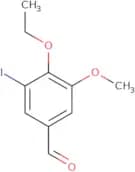
CAS:Versatile small molecule scaffoldFórmula:C11H12N2OSPureza:Min. 95%Peso molecular:220.29 g/mol4-Ethoxy-3-iodo-5-methoxybenzaldehyde
CAS:Versatile small molecule scaffoldFórmula:C10H11IO3Pureza:Min. 95%Peso molecular:306.1 g/mol1-[(5-Chlorothien-2-yl)sulfonyl]piperidine-4-carboxylic acid
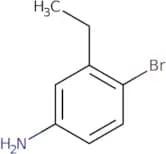
CAS:Versatile small molecule scaffoldFórmula:C10H12ClNO4S2Pureza:Min. 95%Peso molecular:309.8 g/mol4-Bromo-3-ethylaniline
CAS:Versatile small molecule scaffoldFórmula:C8H10BrNPureza:Min. 95%Peso molecular:200.08 g/molMethyl 6-([(tert-butoxycarbonyl)amino]methyl)nicotinate
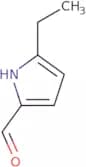
CAS:Versatile small molecule scaffoldFórmula:C13H18N2O4Pureza:Min. 95%Peso molecular:266.29 g/mol5-Ethyl-1H-pyrrole-2-carbaldehyde
CAS:5-Ethyl-1H-pyrrole-2-carbaldehyde is an anticancer drug that belongs to the group of natural products. This compound has been shown to be a potent inhibitor of Jak3, which is a protein tyrosine kinase receptor. It prevents the activation of the JAK3 signaling pathway and inhibits cell growth in cultured cells. 5-Ethyl-1H-pyrrole-2-carbaldehyde also has anti-cancer properties that are due to its ability to inhibit DNA synthesis and cause lysosomal damage. 5-Ethyl-1H-pyrrole-2-carbaldehyde can be used as a potential treatment for cancer, with possible advances in synthetic chemistry and biological mechanisms.
Fórmula:C7H9NOPureza:Min. 95%Peso molecular:123.15 g/mol
![2-[(Thian-4-yl)amino]ethan-1-ol hydrochloride](/_next/image/?url=https%3A%2Fstatic.cymitquimica.com%2Fproducts%2F3D%2Fthumb-webp%2FCCA16306.webp&w=3840&q=75)

![N-[(4-Methoxyphenyl)methyl]-1,3-thiazol-2-amine](/_next/image/?url=https%3A%2Fstatic.cymitquimica.com%2Fproducts%2F3D%2Fthumb-webp%2FJQA85814.webp&w=3840&q=75)
![1-[(5-Chlorothien-2-yl)sulfonyl]piperidine-4-carboxylic acid](/_next/image/?url=https%3A%2Fstatic.cymitquimica.com%2Fproducts%2F3D%2Fthumb-webp%2FJQA84776.webp&w=3840&q=75)
![Methyl 6-([(tert-butoxycarbonyl)amino]methyl)nicotinate](/_next/image/?url=https%3A%2Fstatic.cymitquimica.com%2Fproducts%2F3D%2Fthumb-webp%2FJQA83157.webp&w=3840&q=75)