Building Blocks
Subcategorías de "Building Blocks"
- Ácidos borónicos y derivados del ácido borónico(5.774 productos)
- Building Blocks quirales(1.237 productos)
- Building Blocks de hidrocarburos(6.098 productos)
- Building Blocks orgánicos(60.970 productos)
Se han encontrado 205135 productos de "Building Blocks"
2-Hydroxyhexanoic acid
CAS:2-Hydroxyhexanoic acid is a fatty acid that is used in the treatment of diabetic patients. It is an intermediate product of the metabolism of glucose, which can be obtained by hydrolysis of glycerol with hydrochloric acid and supercritical carbon dioxide. The molecule has two hydroxyl groups, which are important for its function as a substrate in chemical reactions. 2-Hydroxyhexanoic acid also reacts with lysine residues at neutral pH, forming an ester linkage. This reaction can be demonstrated by adding phosphotungstic acid to a solution containing 2-hydroxyhexanoic acid or lysine residues.
Fórmula:C6H12O3Pureza:Min. 95%Peso molecular:132.16 g/mol5-Aminopentanenitrile hydrochloride
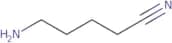
CAS:5-Aminopentanenitrile hydrochloride is a chemical compound that has been used as a food additive. It is also found in medicines and dietary supplements, where it is used to prevent the formation of gas in the stomach. The chlorine atom in 5-aminopentanenitrile hydrochloride can be substituted with other atoms, such as hydrogen or bromine, which changes its properties. Substituting the chlorine atom with an organic solvent such as ethylene (or replacing it with a nucleophilic group) will lead to different chemical transformations. When catalyzed by enzymes, 5-aminopentanenitrile hydrochloride becomes l-glutamic acid and l-phenylalanine through a process called amination. This transformation requires the presence of hydrogen peroxide and an organic solvent, such as ethylene or alcohols.Fórmula:C5H10N2Pureza:Min. 95%Peso molecular:98.15 g/mol3',4'-Dihydroxyflavonol
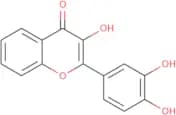
CAS:3,4-Dihydroxyflavonol is a potent antioxidant that prevents oxidative damage to DNA and proteins. It has been shown to be effective in experimental models of ischemia–reperfusion injury and cardiac ischemia reperfusion. 3,4-Dihydroxyflavonol also inhibits the production of reactive oxygen species during reperfusion and reduces the size of infarcted myocardial tissue. 3,4-Dihydroxyflavonol has been shown to have anti-cancer effects in animal models of bone cancer and mesenteric lymphadenopathy. In addition, it may have neuroprotective effects that are due to its ability to inhibit monoamine oxidase activity.Fórmula:C15H10O5Pureza:Min. 95%Peso molecular:270.24 g/molIsothiocyanatocyclobutane
CAS:Versatile small molecule scaffoldFórmula:C5H7NSPureza:Min. 95%Peso molecular:113.18 g/mol2-(Thien-2-yl)benzoic acid
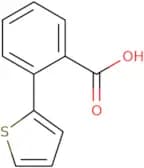
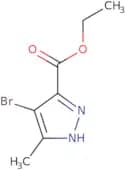
CAS:2-(Thien-2-yl)benzoic acid (TBA) is an organic compound. It is a structural analog of thiophene, with the sulfur replaced by a carbon atom. TBA has been shown to have functional groups that are activated by spontaneous reactions and is classified as an organic acid. TBA has been seen to have biological properties, such as being able to protect against radiation damage in the heart, and it also has been shown to be effective at lowering blood pressure in rats. TBA's chemical formula can be written as C6H5COOH.Fórmula:C11H8O2SPureza:Min. 95%Peso molecular:204.25 g/molEthyl 4-bromo-5-methyl-1H-pyrazole-3-carboxylate
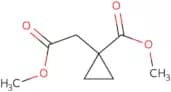
CAS:Versatile small molecule scaffoldFórmula:C7H9BrN2O2Pureza:Min. 95%Peso molecular:233.06 g/molMethyl 1-(2-methoxy-2-oxoethyl)cyclopropane-1-carboxylate
CAS:Versatile small molecule scaffoldFórmula:C8H12O4Pureza:Min. 95%Peso molecular:172.18 g/mol3-[3-(2-Carboxyethyl)phenyl]propanoic acid
CAS:3-[3-(2-Carboxyethyl)phenyl]propanoic acid is a reagent used in oxidation reactions. It has been shown to be a good catalyst for the amination of alkanes, as well as oxidation of benzylic substrates. 3-[3-(2-Carboxyethyl)phenyl]propanoic acid is a dinuclear molecule with two sulfamoyl groups. The sulfamoyl group can be oxidized by adding an oxidizing agent such as hydrogen peroxide or potassium permanganate. This then leads to the formation of the sulfonamide and carboxylic acid products.Fórmula:C12H14O4Pureza:Min. 95%Peso molecular:222.24 g/mol2-Hydroxy-3-iodo-5-methylbenzoic acid
CAS:Versatile small molecule scaffoldFórmula:C8H7IO3Pureza:Min. 95%Peso molecular:278.04 g/molo-(Butan-2-yl)hydroxylamine hydrochloride
CAS:Versatile small molecule scaffoldFórmula:C4H12ClNOPureza:Min. 95%Peso molecular:125.6 g/mol2-Chloro-1-N-methylbenzene-1,4-diamine
CAS:Versatile small molecule scaffoldFórmula:C7H9ClN2Pureza:Min. 95%Peso molecular:156.61 g/mol2-Chloro-1-N,1-N-dimethylbenzene-1,4-diamine
CAS:2-Chloro-1-N,1-N-dimethylbenzene-1,4-diamine is a chemical compound that belongs to the class of organic compounds. It is used as an analytical reagent for flow cells and has been shown to be adsorbed onto activated carbon under acidic conditions. The flow rate of 2CBDD can be determined by measuring the optical density at 250 nm. The elution time can be determined by measuring the absorption at 280 nm.Fórmula:C8H11ClN2Pureza:Min. 95%Peso molecular:170.64 g/mol4-Azido-3-nitrophenol
CAS:Versatile small molecule scaffoldFórmula:C6H4N4O3Pureza:Min. 95%Peso molecular:180.12 g/mol4-Bromobutan-2-ol
CAS:Versatile small molecule scaffold
Fórmula:C4H9BrOPureza:Min. 95%Peso molecular:153.02 g/mol2,4,6-Trimethylphenyl Isothiocyanate
CAS:2,4,6-Trimethylphenyl Isothiocyanate is a reactive compound that can inactivate enzymes. It is used as a catalyst and an intermediate in the production of dyes and pharmaceuticals. 2,4,6-Trimethylphenyl Isothiocyanate reacts with dimethyldioxirane to form diphenylphosphine acid. This acid reacts with choline to produce sulfines. The sulfines react with hydrogen to yield the desired product or prodrug. 2,4,6-Trimethylphenyl Isothiocyanate also catalyzes the reaction between sulfur and hydrogen gas at high temperatures to form hydrogen sulfide gas.br>br>
br>br>
Yield: 100%Fórmula:C10H11NSPureza:Min. 95%Peso molecular:177.27 g/mol4-chloro-5-fluoro-2-(methylsulfanyl)pyrimidine
CAS:Versatile small molecule scaffoldFórmula:C5H4ClFN2SPureza:Min. 95%Peso molecular:178.61 g/mol3-Amino-1-(4-methylphenyl)pyrrolidin-2-one
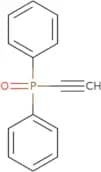
CAS:Versatile small molecule scaffoldFórmula:C11H14N2OPureza:Min. 95%Peso molecular:190.24 g/molEthynyl(diphenyl)phosphine oxide
CAS:Ethynyl(diphenyl)phosphine oxide is an amide that has been shown to be useful in coordination, catalysis, and organic chemistry. It is a conformational analog of the amide group. Ethynyl(diphenyl)phosphine oxide has been used as a hydrogen-bond donor in esterification reactions. This compound can be synthesized by reacting the corresponding boronic acid with ethynyl alcohol. The yields of this reaction are dependent on the temperature and have been found to range from 60% to 70%. The nmr spectra of this compound show two signals at δ 2.95 and δ 4.85 ppm, corresponding to two different conformers of ethynyl(diphenyl)phosphine oxide.
Fórmula:C14H11OPPureza:Min. 95%Peso molecular:226.21 g/molN-(3-Aminopropyl)benzamide
CAS:Versatile small molecule scaffoldFórmula:C10H14N2OPureza:Min. 95%Peso molecular:178.23 g/mol2,3-Dimethyl-1H-indole-5-carboxamide
CAS:Versatile small molecule scaffold
Fórmula:C11H12N2OPureza:Min. 95%Peso molecular:188.23 g/mol



![3-[3-(2-Carboxyethyl)phenyl]propanoic acid](/_next/image/?url=https%3A%2Fstatic.cymitquimica.com%2Fproducts%2F3D%2Fthumb-webp%2FGAA08286.webp&w=3840&q=75)