Building Blocks
Subcategorías de "Building Blocks"
- Ácidos borónicos y derivados del ácido borónico(5.774 productos)
- Building Blocks quirales(1.237 productos)
- Building Blocks de hidrocarburos(6.098 productos)
- Building Blocks orgánicos(60.970 productos)
Se han encontrado 205134 productos de "Building Blocks"
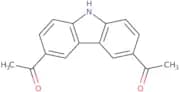
1,1-(9H-carbazole-3,6-diyl)diethanone
CAS:1,1-(9H-carbazole-3,6-diyl)diethanone is an aromatic compound with a molecular formula of C12H10N2O that belongs to the class of enol ethers. It can be used as a framework for the synthesis of other compounds. The acylation reaction is catalyzed by a transfer catalyst and carried out in dioxane at room temperature. After filtration and washing with deionized water, it is then dried under vacuum to yield the product. Friedel-Crafts acylation or a metal salt may be used during this process. 1,1-(9H-carbazole-3,6-diyl)diethanone has also been shown to act as a ligand for transition metals such as copper and zinc in certain reactions.
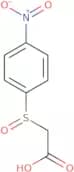
Fórmula:C16H13NO2Pureza:Min. 95%Peso molecular:251.28 g/mol2-(4-Nitrobenzenesulfinyl)acetic acid
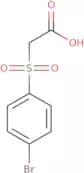
CAS:2-(4-Nitrobenzenesulfinyl)acetic acid is an organic compound that has a hydrogen bond acceptor and a hydrogen bond donor. It also has two groups of nitrobenzenesulfonic acid attached to the same carbon atom, and therefore contains both electron-donating and electron-withdrawing groups.Fórmula:C8H7NO5SPureza:Min. 95%Peso molecular:229.21 g/mol2-(4-Bromobenzenesulfonyl)acetic acid
CAS:Versatile small molecule scaffoldFórmula:C8H7BrO4SPureza:Min. 95%Peso molecular:279.11 g/mol2-[(4-Nitrophenyl)sulfanyl]acetic acid
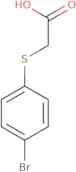
CAS:2-[(4-Nitrophenyl)sulfanyl]acetic acid is a colorless liquid with a boiling point of 168°C. It is soluble in water, glycol, and ether, but not in ethanol. 2-[(4-Nitrophenyl)sulfanyl]acetic acid has been shown to be an acceptor for borate, forming the perborate ion. It also reacts with glycol to form the glyoxalate ion. The compound has been shown to react with nitric acid and ethylene glycol to form nitroethane and acetic acid molecules. This reaction is catalyzed by hydrogen bonding between the oxygen atoms of acetic acid and nitric acid, which causes an electron transfer from nitric acid to acetic acid molecules. This process results in reactive species that can then react with other substances such as hydrogen bonds or peracetic acid.Fórmula:C8H7NO4SPureza:Min. 95%Peso molecular:213.21 g/mol(4-Bromo-phenylsulfanyl)-acetic acid
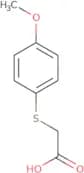
CAS:Versatile small molecule scaffoldFórmula:C8H7BrO2SPureza:Min. 95%Peso molecular:247.11 g/mol2-((4-Methoxyphenyl)thio)acetic acid
CAS:Versatile small molecule scaffoldFórmula:C9H10O3SPureza:Min. 95%Peso molecular:198.24 g/mol1-(4-Bromophenyl)-3,3-dimethylurea
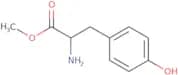
CAS:1-(4-Bromophenyl)-3,3-dimethylurea is a growth regulator that belongs to the heterocycle pyrazole derivative. It binds to the cytochrome P450 enzyme and inhibits the production of proteins vital for cell division, leading to cell death by inhibiting the production of proteins vital for cell division. 1-(4-Bromophenyl)-3,3-dimethylurea has been shown to inhibit methionine adenosyltransferase and suppress DNA methylation. This drug also has a toxic effect on respiratory system cells, which may be due to its ability to induce apoptosis.Fórmula:C9H11BrN2OPureza:Min. 95%Peso molecular:243.1 g/molMethyl (2R)-2-amino-3-(4-hydroxyphenyl)propanoate
CAS:Methyl (2R)-2-amino-3-(4-hydroxyphenyl)propanoate is a linker that binds to the nuclear hormone receptors found in cancer cells. It has been shown that this molecule has anticancer activity in animals, but its efficacy has not been evaluated in humans. Methyl (2R)-2-amino-3-(4-hydroxyphenyl)propanoate is a stereoselective agent, which means it selectively binds to one of two mirror images of the same molecule. The molecule was originally synthesized for use as an estrogen receptor antagonist but also shows affinity for progesterone and androgen receptors. This linker is being investigated as a potential drug for the treatment of hormone receptor positive glioma, prostate cancer, and breast cancer.Fórmula:C10H13NO3Pureza:Min. 95%Peso molecular:195.21 g/molEthyl[1-(oxolan-2-yl)-2-phenylethyl]amine
CAS:Versatile small molecule scaffold
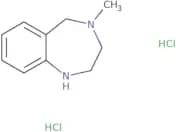
Fórmula:C14H21NOPureza:Min. 95%Peso molecular:219.32 g/mol4-Methyl-2,3,4,5-tetrahydro-1H-1,4-benzodiazepine dihydrochloride
CAS:Versatile small molecule scaffold
Fórmula:C10H16Cl2N2Pureza:Min. 95%Peso molecular:235.15 g/mol2-Benzylbenzo[D]isothiazol-3(2H)-one 1,1-dioxide
CAS:Versatile small molecule scaffoldFórmula:C14H11NO3SPureza:Min. 95%Peso molecular:273.31 g/mol1,2,3,4-Tetrahydroquinolin-3-ol
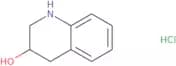
CAS:1,2,3,4-Tetrahydroquinolin-3-ol is a stabilizer that can be used to prevent or slow down the polymerization of epoxy resins. It can also be used as an intermediate in the synthesis of other organic compounds. 1,2,3,4-Tetrahydroquinolin-3-ol has been shown to react with amines and nucleophiles to form new compounds. It has also been shown to stabilize proton transfer reactions. This compound is also capable of reacting with inorganic acids to form ring-opening polymers.
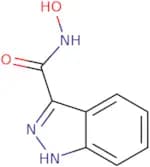
Fórmula:C9H11NOPureza:Min. 95%Peso molecular:149.19 g/molN-Hydroxy-1H-indazole-3-carboxamide
CAS:Versatile small molecule scaffoldFórmula:C8H7N3O2Pureza:Min. 95%Peso molecular:177.16 g/mol1-N-[2-(Dimethylamino)ethyl]benzene-1,2-diamine
CAS:Versatile small molecule scaffoldFórmula:C10H17N3Pureza:Min. 95%Peso molecular:179.26 g/mol2-[(4-Methylphenyl)sulfanyl]-5-nitrobenzoic acid
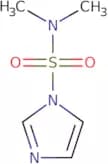
CAS:Versatile small molecule scaffoldFórmula:C14H11NO4SPureza:Min. 95%Peso molecular:289.31 g/mol1-(Dimethylsulfamoyl)imidazole
CAS:1-(Dimethylsulfamoyl)imidazole is a chemical compound that belongs to the class of heterocycles. It has been shown to inhibit the activity of two enzymes, which are xanthine oxidase and nitric oxide synthase. 1-(Dimethylsulfamoyl)imidazole is synthesized by reacting 2-aminothiophene with methyl sulfonyl chloride in tetrahydrofuran. The yield of this reaction is low, which may be due to the imidazole ring being a poor nucleophile in this reaction. This chemical has been shown to have an inhibitory potency against xanthine oxidase and nitric oxide synthase, which may be due to its functional groups or dimethylformamide solvate state. The mechanism for 1-(dimethylsulfamoyl)imidazole's inhibition of these enzymes is not yet known.
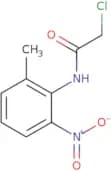
Fórmula:C5H9N3O2SPureza:Min. 95%Peso molecular:175.21 g/mol2-Chloro-N-(2-methyl-6-nitrophenyl)acetamide
CAS:Versatile small molecule scaffold
Fórmula:C9H9ClN2O3Pureza:Min. 95%Peso molecular:228.63 g/mol6,7-Dihydro-5H-cyclopenta[b]pyridin-4-amine
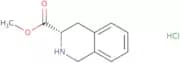
CAS:Versatile small molecule scaffoldFórmula:C8H10N2Pureza:Min. 95%Peso molecular:134.18 g/mol(S)-Methyl 1,2,3,4-tetrahydroisoquinoline-3-carboxylate hydrochloride
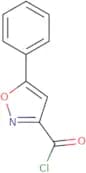
CAS:Versatile small molecule scaffoldFórmula:C11H13NO2·HClPureza:Min. 95%Peso molecular:227.69 g/mol5-Phenyl-isoxazole-3-carbonyl chloride
CAS:5-Phenyl-isoxazole-3-carbonyl chloride is a cytostatic drug that inhibits the activity of tyrosine kinases. It binds to amines and furyl groups in proteins and prevents the formation of ATP. This leads to cell death by blocking the synthesis of DNA, RNA, and protein. 5-Phenyl-isoxazole-3-carbonyl chloride has been shown to be effective against primary tumors and medulloblastoma cells. It is also used as a ligand for metals such as platinum or cisplatin, which can be used for cancer treatments.Fórmula:C10H6ClNO2Pureza:Min. 95%Peso molecular:207.61 g/mol

![2-[(4-Nitrophenyl)sulfanyl]acetic acid](/_next/image/?url=https%3A%2Fstatic.cymitquimica.com%2Fproducts%2F3D%2Fthumb-webp%2FDAA40675.webp&w=3840&q=75)
![Ethyl[1-(oxolan-2-yl)-2-phenylethyl]amine](/_next/image/?url=https%3A%2Fstatic.cymitquimica.com%2Fproducts%2F3D%2Fthumb-webp%2FDAA41334.webp&w=3840&q=75)
![2-Benzylbenzo[D]isothiazol-3(2H)-one 1,1-dioxide](/_next/image/?url=https%3A%2Fstatic.cymitquimica.com%2Fproducts%2F3D%2Fthumb-webp%2FDAA41659.webp&w=3840&q=75)
![1-N-[2-(Dimethylamino)ethyl]benzene-1,2-diamine](/_next/image/?url=https%3A%2Fstatic.cymitquimica.com%2Fproducts%2F3D%2Fthumb-webp%2FDDA15603.webp&w=3840&q=75)
![2-[(4-Methylphenyl)sulfanyl]-5-nitrobenzoic acid](/_next/image/?url=https%3A%2Fstatic.cymitquimica.com%2Fproducts%2F3D%2Fthumb-webp%2FDDA16005.webp&w=3840&q=75)
![6,7-Dihydro-5H-cyclopenta[b]pyridin-4-amine](/_next/image/?url=https%3A%2Fstatic.cymitquimica.com%2Fproducts%2F3D%2Fthumb-webp%2FDDA18315.webp&w=3840&q=75)