Building Blocks
Subcategorías de "Building Blocks"
- Ácidos borónicos y derivados del ácido borónico(5.774 productos)
- Building Blocks quirales(1.237 productos)
- Building Blocks de hidrocarburos(6.098 productos)
- Building Blocks orgánicos(60.970 productos)
Se han encontrado 205134 productos de "Building Blocks"
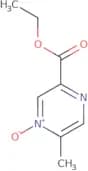
5-(Ethoxycarbonyl)-2-methylpyrazin-1-ium-1-olate
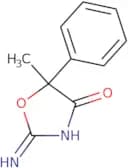
CAS:Versatile small molecule scaffoldFórmula:C8H10N2O3Pureza:Min. 95%Peso molecular:182.18 g/mol2-Amino-5-methyl-5-phenyl-4,5-dihydro-1,3-oxazol-4-one
CAS:Versatile small molecule scaffoldFórmula:C10H10N2O2Pureza:Min. 95%Peso molecular:190.2 g/molDicyclopropylmethanamine hydrochloride
CAS:Dicyclopropylmethanamine hydrochloride is a member of the class of hydroxyalkyl, amino group regulators. It can be used as a growth regulator in plants. Dicyclopropylmethanamine hydrochloride has been used for medicinal purposes and as an herbicide. This compound also shows properties that are similar to those of some cardiovascular drugs and may have potential for use in treating cardiovascular diseases.
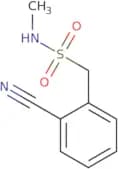
Fórmula:C7H14ClNPureza:Min. 95%Peso molecular:147.65 g/mol1-(2-Cyanophenyl)-N-methylmethanesulfonamide
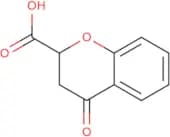
CAS:Versatile small molecule scaffoldFórmula:C9H10N2O2SPureza:Min. 95%Peso molecular:210.26 g/mol4-Oxo-3,4-dihydro-2H-1-benzopyran-2-carboxylic acid
CAS:4-Oxo-3,4-dihydro-2H-1-benzopyran-2-carboxylic acid is a copper salt that is the active compound in lipase. It is inexpensively prepared by heating the corresponding ester with sodium hydroxide in an organic solvent. 4-Oxo-3,4-dihydro-2H-1-benzopyran-2-carboxylic acid inhibits alkali metal and phosphine ligands and can be used as a source of chlorine atoms. The compound has been shown to have two isomers: one with a chlorine atom and one with fluorine.
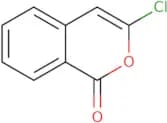
Fórmula:C10H8O4Pureza:Min. 95%Peso molecular:192.17 g/mol3-Chloro-1H-isochromen-1-one
CAS:3-Chloro-1H-isochromen-1-one is a boronic acid that can be used as a catalyst. It has been shown to be efficient in the Suzuki reaction, which is the coupling of an aryl or alkyl halide with an organoboron compound. The yield is usually high and the method is stable, so it has been used for synthesizing polycyclic aromatic compounds. 3-Chloro-1H-isochromen-1-one also has been used in palladium coupling reactions and boronic acid pinacol couplings with terminal alkynes.
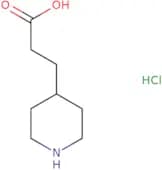
Fórmula:C9H5ClO2Pureza:Min. 95%Peso molecular:180.59 g/mol3-(Piperidin-4-yl)propanoic acid hydrochloride
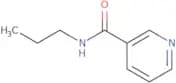
CAS:Versatile small molecule scaffoldFórmula:C8H16ClNO2Pureza:Min. 95%Peso molecular:193.67 g/molN-Propylnicotinamide
CAS:N-Propylnicotinamide is a marker of nutritional status and a methyl donor. It is a nicotinamide that can be quantified in blood, plasma, and urine. This compound has been validated as a marker for the measurement of dietary methionine intake in human subjects. N-Propylnicotinamide has also been used as an internal standard for the detection of fluorescence in biological samples by liquid chromatography with fluorescence detection (LC-FLD).
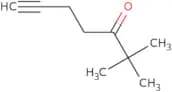
Fórmula:C9H12N2OPureza:Min. 95%Peso molecular:164.2 g/mol2,2-Dimethylhept-6-yn-3-one
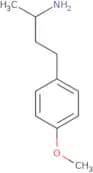
CAS:Versatile small molecule scaffoldFórmula:C9H14OPureza:Min. 95%Peso molecular:138.21 g/mol3-(4-Methoxy-phenyl)-1-methyl-propylamine
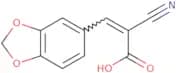
CAS:3-(4-Methoxy-phenyl)-1-methyl-propylamine is a chiral compound that inhibits the growth of bacteria. It has significant growth inhibition against Gram-positive bacteria, including Staphylococcus aureus and Enterococcus faecalis. 3-(4-Methoxy-phenyl)-1-methyl-propylamine also has significant growth inhibition against Gram-negative bacteria, including Salmonella typhimurium, Escherichia coli, and Pseudomonas aeruginosa. This drug has antifeedant activity as well as significant growth inhibition against certain fungi and protozoa.Fórmula:C11H17NOPureza:Min. 95%Peso molecular:179.26 g/mol3-(1,3-Dioxaindan-5-yl)-2-cyanoprop-2-enoic acid
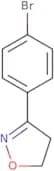
CAS:Versatile small molecule scaffoldFórmula:C11H7NO4Pureza:Min. 95%Peso molecular:217.18 g/mol3-(4-Bromophenyl)-4,5-dihydro-1,2-oxazole
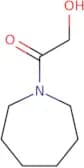
CAS:Versatile small molecule scaffoldFórmula:C9H8BrNOPureza:Min. 95%Peso molecular:226.07 g/mol1-(Azepan-1-yl)-2-hydroxyethan-1-one
CAS:Versatile small molecule scaffold
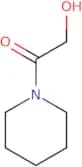
Fórmula:C8H15NO2Pureza:Min. 95%Peso molecular:157.21 g/mol2-oxo-2-piperidin-1-ylethanol
CAS:2-Oxo-2-piperidin-1-ylethanol (OPAH) is an alkynyl with a benzene ring and a pyridyl. It can be synthesized by cross-linking the alkylene, which is unsaturated, to an alkenyl. The carbamoyl group can be attached to the amide or alkyl of the alkynyl. The cycloalkyl is attached to the phenyl at its 1-4 position.
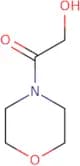
Fórmula:C7H13NO2Pureza:Min. 95%Peso molecular:143.18 g/mol2-hydroxy-1-(morpholin-4-yl)ethan-1-one
CAS:2-Hydroxy-1-(morpholin-4-yl)ethan-1-one is an anti-tuberculosis drug that inhibits the synthesis of the mycolic acid layer in Mycobacterium tuberculosis. It binds to the nitrogen and electrons of the muramic acid residues and prevents their condensation with amines, thereby inhibiting the synthesis of glycolic acid and disubstituted acids. 2HME also has inhibitory effects on growth at concentrations below its MIC. This drug may have a structural similarity to amides, which are known as inhibitors for bacterial cell wall biosynthesis. 2HME has been shown to be effective against Mycobacterium tuberculosis strains resistant to other drugs such as isoniazid and rifampin.Fórmula:C6H11NO3Pureza:Min. 95%Peso molecular:145.15 g/molMethyl 1-azabicyclo[2.2.2]octane-4-carboxylate
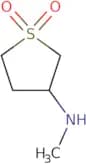
CAS:Versatile small molecule scaffoldFórmula:C9H15NO2Pureza:Min. 95%Peso molecular:169.22 g/mol3-(Methylamino)tetrahydrothiophene 1,1-dioxide
CAS:Versatile small molecule scaffold
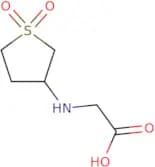
Fórmula:C5H11NO2SPureza:Min. 95%Peso molecular:149.21 g/mol(1,1-Dioxotetrahydro-1-lambda*6*-thiophen-3-yl-amino)acetic acid
CAS:Versatile small molecule scaffold
Fórmula:C6H11NO4SPureza:Min. 95%Peso molecular:193.22 g/mol[(1,1-Dioxo-tetrahydro-1lambda*6*-thiophen-3-yl)-methyl-amino]-acetic acid
CAS:Versatile small molecule scaffold
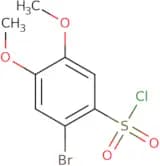
Fórmula:C7H13NO4SPureza:Min. 95%Peso molecular:207.24 g/mol2-Bromo-4,5-dimethoxybenzene-1-sulfonyl chloride
CAS:Versatile small molecule scaffoldFórmula:C8H8BrClO4SPureza:Min. 95%Peso molecular:315.57 g/mol

![Methyl 1-azabicyclo[2.2.2]octane-4-carboxylate](/_next/image/?url=https%3A%2Fstatic.cymitquimica.com%2Fproducts%2F3D%2Fthumb-webp%2FBCA06926.webp&w=3840&q=75)
![[(1,1-Dioxo-tetrahydro-1lambda*6*-thiophen-3-yl)-methyl-amino]-acetic acid](/_next/image/?url=https%3A%2Fstatic.cymitquimica.com%2Fproducts%2F3D%2Fthumb-webp%2FBCA07058.webp&w=3840&q=75)