Building Blocks
Esta sección contiene productos fundamentales para la síntesis de compuestos orgánicos y biológicos. Building blocks son los materiales de partida esenciales utilizados para construir moléculas complejas a través de diversas reacciones químicas. Desempeñan un papel crítico en el descubrimiento de fármacos, la ciencia de materiales y la investigación química. En CymitQuimica, ofrecemos una gama diversa de building blocks de alta calidad para apoyar sus investigaciones innovadoras y proyectos industriales, asegurando que tenga los componentes esenciales para una síntesis exitosa.
Subcategorías de "Building Blocks"
- Ácidos borónicos y derivados del ácido borónico(5.778 productos)
- Building Blocks quirales(1.243 productos)
- Building Blocks de hidrocarburos(6.097 productos)
- Building Blocks orgánicos(61.045 productos)
Se han encontrado 203842 productos de "Building Blocks"
Ordenar por
Pureza (%)
0
100
|
0
|
50
|
90
|
95
|
100
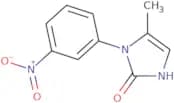
5-Methyl-1-(3-nitrophenyl)-2,3-dihydro-1H-imidazol-2-one
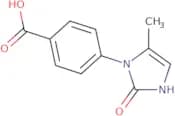
CAS:Versatile small molecule scaffoldFórmula:C10H9N3O3Pureza:Min. 95%Peso molecular:219.2 g/mol4-(5-Methyl-2-oxo-2,3-dihydro-1H-imidazol-1-yl)benzoic acid
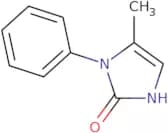
CAS:Producto controlado4-(5-Methyl-2-oxo-2,3-dihydro-1H-imidazol-1-yl)benzoic acid is a ligand that binds to ion channels and is used as a research tool in pharmacological studies. It has been shown to activate a number of ion channels, including sodium and potassium channels. This compound has also been shown to bind to the GABA receptor, which regulates chloride levels in the brain. 4-(5-Methyl-2-oxo-2,3-dihydro-1H-imidazol-1y)benzoic acid may be used as an inhibitor for some ion channels and an activator for others. 4-(5 -methyl - 2 - oxo - 2 , 3 - dihydro - 1 H - imidazol - 1 yl) benzoic acid can be used in antibody production by conjugating it with other moleculesFórmula:C11H10N2O3Pureza:Min. 95%Peso molecular:218.21 g/mol5-Methyl-1-phenyl-2,3-dihydro-1H-imidazol-2-one
CAS:Versatile small molecule scaffoldFórmula:C10H10N2OPureza:Min. 95%Peso molecular:174.2 g/mol1H-Pyrazolo[4,3-d]pyrimidin-7-amine
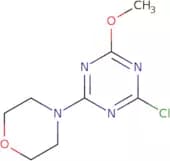
CAS:<p>1H-Pyrazolo[4,3-d]pyrimidin-7-amine is a purine derivative that has been shown to have anti-leishmanial activity. It has been shown to be effective in the treatment of Leishmania donovani infections in mice without causing any adverse effects on the host. The previous studies show that 1H-pyrazolo[4,3-d]pyrimidin-7-amine inhibits the synthesis of purines, which are involved in nucleic acid and protein biosynthesis. This drug also appears to be more potent than other pyrazolopyrimidine derivatives because it targets ribonucleotide reductase. 1H-Pyrazolo[4,3-d]pyrimidin-7-amine is metabolized by cytochrome P450 enzymes and excreted as its metabolites in urine.</p>Fórmula:C5H5N5Pureza:Min. 95%Peso molecular:135.13 g/mol2-Chloro-4-methoxy-6-(4-morpholinyl)-1,3,5-triazine
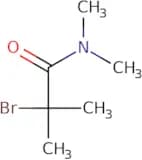
CAS:Versatile small molecule scaffoldFórmula:C8H11ClN4O2Pureza:Min. 95%Peso molecular:230.65 g/mol2-Bromo-N,N,2-trimethylpropanamide
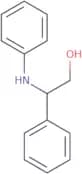
CAS:Versatile small molecule scaffoldFórmula:C6H12BrNOPureza:Min. 95%Peso molecular:194.07 g/mol2-Phenyl-2-(phenylamino)ethan-1-ol
CAS:2-Phenyl-2-(phenylamino)ethan-1-ol is a reagent that can be used in the synthesis of amines, acid catalysts, aldehydes and epoxides. It is used in the conversion of ethyl bromoacetate to an epoxide in high yield and with excellent regioselectivity. This product can also be reused for at least five cycles without significant loss in efficiency. 2-Phenyl-2-(phenylamino)ethan-1-ol has been shown to be useful for the preparation of cyclic, aliphatic and aromatic alcohols from their corresponding phenols with tetrafluoroborate as the base. The nucleophilic nature of this product makes it a suitable candidate for reactions involving anilines.Fórmula:C14H15NOPureza:Min. 95%Peso molecular:213.27 g/mol1-Bromo-2-methylpropan-2-amine hydrobromide
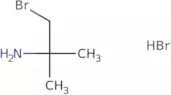
CAS:Versatile small molecule scaffoldFórmula:C4H11Br2NPureza:Min. 95%Peso molecular:232.94 g/molEthyl 2-amino-2-methyloctanoate
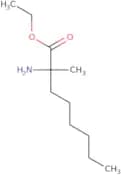
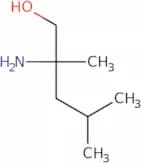
CAS:Versatile small molecule scaffoldFórmula:C11H23NO2Pureza:Min. 95%Peso molecular:201.31 g/mol2-Amino-2,4-dimethylpentan-1-ol
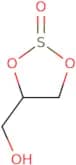
CAS:Versatile small molecule scaffoldFórmula:C7H17NOPureza:Min. 95%Peso molecular:131.22 g/mol1,3,2-Dioxathiolane-4-methanol 2-oxide
CAS:Versatile small molecule scaffoldFórmula:C3H6O4SPureza:Min. 95%Peso molecular:138.14 g/mol1H,2H,3H,4H-Benzo[G]quinazoline-2,4-dione
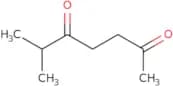
CAS:<p>1H,2H,3H,4H-Benzo[G]quinazoline-2,4-dione is an analog of the purine nucleoside adenine. It has been shown to bind to DNA by interacting with the polymerase and fluorescent probes. In addition to binding to DNA, 1H,2H,3H,4H-Benzo[G]quinazoline-2,4-dione interacts with other dna binding proteins and has been shown to form conformational triplexes with complementary strands of DNA. The compound also binds to ribonucleoprotein and can be used as a fluorescent probe for RNA synthesis. This compound has been shown to have thermal stability as well as denaturation properties that are dependent on pH and ionic strength.</p>Fórmula:C12H8N2O2Pureza:Min. 95%Peso molecular:212.2 g/mol6-Methylheptane-2,5-dione
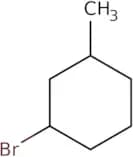
CAS:<p>Versatile small molecule scaffold</p>Fórmula:C8H14O2Pureza:Min. 95%Peso molecular:142.2 g/mol1-Bromo-3-methylcyclohexane
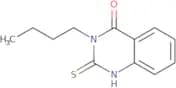
CAS:1-Bromo-3-methylcyclohexane is an organic compound that is used as a catalyst in the petroleum industry. It is activated by heating, which converts it to its active form. 1-Bromo-3-methylcyclohexane is also a precursor for the production of biofuels and other chemicals. 1-Bromo-3-methylcyclohexane can be activated by heating it under nitrogen gas, which creates a more stable product. This process can be used to create pyrolysis oil, which can be refined into biofuel or other chemicals.Fórmula:C7H13BrPureza:Min. 95%Peso molecular:177.08 g/mol3-Butyl-2-sulfanyl-3,4-dihydroquinazolin-4-one
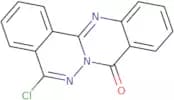
CAS:<p>Versatile small molecule scaffold</p>Fórmula:C12H14N2OSPureza:Min. 95%Peso molecular:234.32 g/mol10-Chloro-13H-5,11,12-triazatetraphen-13-one
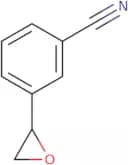
CAS:<p>Versatile small molecule scaffold</p>Fórmula:C15H8ClN3OPureza:Min. 95%Peso molecular:281.69 g/mol-3(oxiran-2-yl)benzonitrile
CAS:Versatile small molecule scaffoldFórmula:C9H7NOPureza:Min. 95%Peso molecular:145.16 g/mol2-Benzylaziridine
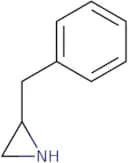
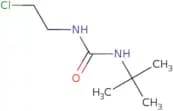
CAS:Producto controlado<p>2-Benzylaziridine is an organic compound that can be synthesized from 2-benzyloxirane and ammonia. It is used as a chromatographic stationary phase, a synthetic intermediate, and a starting material for the synthesis of other aziridines. The reaction rate of this compound depends on the energy of the reaction. Low energy reactions are generally faster than high energy reactions. In addition, ring-opening reactions are faster than aziridine synthesis because they require less activation energy. 2-Benzylaziridine can be produced in two different isomeric forms: cis and trans. This compound has been shown to have impurities such as isosafrole and aziridine which may be difficult to remove by distillation or recrystallization alone.<br>2-Benzylaziridine has been shown to have low toxicity in animal studies.END>></p>Fórmula:C9H11NPureza:Min. 95%Peso molecular:133.19 g/mol1-tert-Butyl-3-(2-chloroethyl)urea
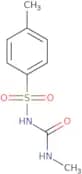
CAS:<p>Versatile small molecule scaffold</p>Fórmula:C7H15ClN2OPureza:Min. 95%Peso molecular:178.66 g/mol4-Methyl-N-(methylcarbamoyl)benzenesulfonamide
CAS:<p>Versatile small molecule scaffold</p>Fórmula:C9H12N2O3SPureza:Min. 95%Peso molecular:228.27 g/mol

![1H-Pyrazolo[4,3-d]pyrimidin-7-amine](/_next/image/?url=https%3A%2Fstatic.cymitquimica.com%2Fproducts%2F3D%2Fthumb-webp%2FNAA87756.webp&w=3840&q=75)
![1H,2H,3H,4H-Benzo[G]quinazoline-2,4-dione](/_next/image/?url=https%3A%2Fstatic.cymitquimica.com%2Fproducts%2F3D%2Fthumb-webp%2FNAA89860.webp&w=3840&q=75)