Building Blocks
Esta sección contiene productos fundamentales para la síntesis de compuestos orgánicos y biológicos. Building blocks son los materiales de partida esenciales utilizados para construir moléculas complejas a través de diversas reacciones químicas. Desempeñan un papel crítico en el descubrimiento de fármacos, la ciencia de materiales y la investigación química. En CymitQuimica, ofrecemos una gama diversa de building blocks de alta calidad para apoyar sus investigaciones innovadoras y proyectos industriales, asegurando que tenga los componentes esenciales para una síntesis exitosa.
Subcategorías de "Building Blocks"
- Ácidos borónicos y derivados del ácido borónico(5.778 productos)
- Building Blocks quirales(1.243 productos)
- Building Blocks de hidrocarburos(6.097 productos)
- Building Blocks orgánicos(61.048 productos)
Se han encontrado 203115 productos de "Building Blocks"
Ordenar por
Pureza (%)
0
100
|
0
|
50
|
90
|
95
|
100
N-(3-Chlorophenylmethyl)isopropylamine
CAS:Versatile small molecule scaffoldFórmula:C10H14ClNPureza:Min. 95%Peso molecular:183.68 g/molN-Ethyl-3-bromobenzylamine
CAS:<p>Versatile small molecule scaffold</p>Fórmula:C9H12BrNPureza:Min. 95%Peso molecular:214.11 g/mol3-[(Butylamino)methyl]benzonitrile
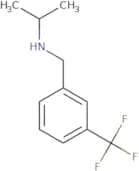
CAS:<p>Versatile small molecule scaffold</p>Fórmula:C12H16N2Pureza:Min. 95%Peso molecular:188.27 g/molIsopropyl-(3-trifluoromethyl-benzyl)-amine
CAS:<p>Versatile small molecule scaffold</p>Fórmula:C11H14F3NPureza:Min. 95%Peso molecular:217.23 g/mol[(3,5-Difluorophenyl)methyl](methyl)amine
CAS:<p>Versatile small molecule scaffold</p>Fórmula:C8H9F2NPureza:Min. 95%Peso molecular:157.16 g/mol6-Chlorothiochroman-4-one 1,1-dioxide
CAS:Versatile small molecule scaffoldFórmula:C9H7ClO3SPureza:Min. 95%Peso molecular:230.67 g/mol5-(Benzyloxy)-1,2,3,4-tetrahydronaphthalen-1-one
CAS:5-(Benzyloxy)-1,2,3,4-tetrahydronaphthalen-1-one is a synthetic tetralone that has been shown to have both estrogenic and antiestrogenic properties. It is an efficient substrate for phosphatases such as protein tyrosine phosphatase (PTP) and can be used in the study of these enzymes. 5-(Benzyloxy)-1,2,3,4-tetrahydronaphthalen-1-one is also a natural product that can be found in plants and animals. The compound's synthesis begins with the reaction of 5 hydroxybenzaldehyde with 1,2,3,4 tetrahydronaphthalene in dioxane under refluxing conditions. This process produces two products: the desired 5-(benzyloxy)-1,2,3,4-tetrahydronaphthalen-1-one and 1-(benFórmula:C17H16O2Pureza:Min. 95%Peso molecular:252.31 g/molN,N-Dimethyl-1-[(5-oxo-5,6,7,8-tetrahydronaphthalen-2-yl)sulfanyl]formamide
CAS:<p>Versatile small molecule scaffold</p>Fórmula:C13H15NO2SPureza:Min. 95%Peso molecular:249.33 g/mol7-chloro-benzo[b]thiophene
CAS:<p>7-Chloro-benzo[b]thiophene is a nicotinic acetylcholine receptor antagonist that binds to the receptor and blocks its activation. 7-Chloro-benzo[b]thiophene has been shown to be effective in treating Alzheimer's disease in humans, as well as ameliorating the symptoms of schizophrenia in animals. It has also been shown to bind to acetylcholine receptors with high affinity. This drug is an amide derivative of mercaptoacetic acid and an acetylcholine molecule. 7-Chloro-benzo[b]thiophene binds to the receptor at the site where acetylcholine would normally bind, and blocks its activation by preventing the binding of acetylcholine molecules.</p>Fórmula:C8H5ClSPureza:Min. 95%Peso molecular:168.64 g/mol2-Bromo-3-nitrobenzyl alcohol
CAS:<p>2-Bromo-3-nitrobenzyl alcohol is a lysergic acid derivative that undergoes an intramolecular cyclisation to form a triamide. This reaction can be catalysed by phosphoric acid, chloroform, or mercaptoacetic acid. The hydroxyl group and nitro group are both nucleophilic, making this reaction very useful in organic synthesis. 2-Bromo-3-nitrobenzyl alcohol has been used to synthesise dihydroindoles with high yield.</p>Fórmula:C7H6NO3BrPureza:Min. 95%Peso molecular:232.03 g/mol2-Bromo-3-nitrobenzonitrile
CAS:<p>Versatile small molecule scaffold</p>Fórmula:C7H3BrN2O2Pureza:Min. 95%Peso molecular:227.01 g/mol5,7-Dibromo-1-benzofuran-2-carboxylic acid
CAS:Versatile small molecule scaffoldFórmula:C9H4Br2O3Pureza:Min. 95%Peso molecular:319.93 g/molPropan-2-yl 5-(chloromethyl)furan-2-carboxylate
CAS:Versatile small molecule scaffoldFórmula:C9H11ClO3Pureza:Min. 95%Peso molecular:202.63 g/mol2-Methoxy-4,5-dimethyl-benzenesulfonyl chloride
CAS:<p>Versatile small molecule scaffold</p>Fórmula:C9H11ClO3SPureza:Min. 95%Peso molecular:234.7 g/mol3-Aminoquinolin-8-ol
CAS:Versatile small molecule scaffoldFórmula:C9H8N2OPureza:Min. 95%Peso molecular:160.17 g/mol6-amino-1H-indole-3-carboxylic acid
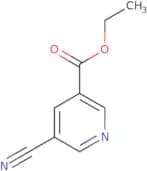
CAS:<p>Versatile small molecule scaffold</p>Fórmula:C9H8N2O2Pureza:Min. 95%Peso molecular:176.17 g/molEthyl 5-cyanonicotinate
CAS:<p>Versatile small molecule scaffold</p>Fórmula:C9H8N2O2Pureza:Min. 95%Peso molecular:176.17 g/mol1,5-Naphthyridine-3-carboxylic acid
CAS:<p>1,5-Naphthyridine-3-carboxylic acid is a member of the group of alkylthio antibiotics. It is mainly used as an antibacterial to treat bacterial infections in the respiratory tract and urinary tract. It has been shown to be effective against gram-positive organisms such as Staphylococcus aureus and Streptococcus pneumoniae. However, it is not active against gram-negative bacteria such as Escherichia coli or Pseudomonas aeruginosa. 1,5-Naphthyridine-3-carboxylic acid can be detected in urine with a high sensitivity, which makes it useful for diagnosis. This compound has been shown to have a benzodiazepine structure with some structural differences. The addition of dimethylformamide to this compound enhances its activity against certain Gram positive organisms such as staphylococci and streptococci.</p>Fórmula:C9H6N2O2Pureza:Min. 95%Peso molecular:174.16 g/mol1-Isocyanato-2-(2-methoxyethoxy)ethane
CAS:Versatile small molecule scaffoldFórmula:C6H11NO3Pureza:Min. 95%Peso molecular:145.16 g/mol4-Formyl-6-methoxy-3-nitrophenoxyacetic acid
CAS:<p>4-Formyl-6-methoxy-3-nitrophenoxyacetic acid is a photolabile formylated nitrophenol that is used to study the formation of concentration gradients across cell membranes. 4-Formyl-6-methoxy-3-nitrophenoxyacetic acid has been found to react with proton gradients and formyl groups in the membrane, which produces formaldehyde. The reaction mechanism for this process is not well understood, but it has been proposed that the reaction proceeds through a transducing step in which an electron from the formyl group reacts with a proton gradient to produce a formate ion. This mechanism is supported by experiments that show that the rate of photochemical reactions increases as the pH gradient across the membrane decreases.</p>Fórmula:C10H9NO7Pureza:Min. 95%Peso molecular:255.18 g/mol


![3-[(Butylamino)methyl]benzonitrile](/_next/image/?url=https%3A%2Fstatic.cymitquimica.com%2Fproducts%2F3D%2Fthumb-webp%2FQDA39000.webp&w=3840&q=75)
amine](/_next/image/?url=https%3A%2Fstatic.cymitquimica.com%2Fproducts%2F3D%2Fthumb-webp%2FQDA39028.webp&w=3840&q=75)


![N,N-Dimethyl-1-[(5-oxo-5,6,7,8-tetrahydronaphthalen-2-yl)sulfanyl]formamide](/_next/image/?url=https%3A%2Fstatic.cymitquimica.com%2Fproducts%2F3D%2Fthumb-webp%2FQDA40189.webp&w=3840&q=75)
![7-chloro-benzo[b]thiophene](/_next/image/?url=https%3A%2Fstatic.cymitquimica.com%2Fproducts%2F3D%2Fthumb-webp%2FQDA40714.webp&w=3840&q=75)