Building Blocks
Esta sección contiene productos fundamentales para la síntesis de compuestos orgánicos y biológicos. Building blocks son los materiales de partida esenciales utilizados para construir moléculas complejas a través de diversas reacciones químicas. Desempeñan un papel crítico en el descubrimiento de fármacos, la ciencia de materiales y la investigación química. En CymitQuimica, ofrecemos una gama diversa de building blocks de alta calidad para apoyar sus investigaciones innovadoras y proyectos industriales, asegurando que tenga los componentes esenciales para una síntesis exitosa.
Subcategorías de "Building Blocks"
- Ácidos borónicos y derivados del ácido borónico(5.778 productos)
- Building Blocks quirales(1.243 productos)
- Building Blocks de hidrocarburos(6.097 productos)
- Building Blocks orgánicos(61.048 productos)
Se han encontrado 203115 productos de "Building Blocks"
Ordenar por
Pureza (%)
0
100
|
0
|
50
|
90
|
95
|
100
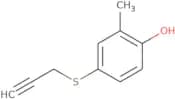
2-Methyl-4-(prop-2-yn-1-ylsulfanyl)phenol
CAS:Versatile small molecule scaffoldFórmula:C10H10OSPureza:Min. 95%Peso molecular:178.25 g/mol3-Bromo-4-methoxybenzyl Cyanide
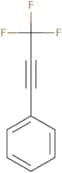
CAS:<p>3-Bromo-4-methoxybenzyl Cyanide is a desorption agent that specifically targets the ribonucleic acid (RNA) template strand of DNA and prevents the synthesis of proteins. 3-Bromo-4-methoxybenzyl Cyanide has been shown to be effective against Gram-positive bacteria and has a synergistic effect when used in combination with antibiotics such as chloramphenicol and erythromycin. This compound is also active against Gram-negative bacteria, but it is not effective against thermally resistant bacteria such as Mycobacterium smegmatis. The antibacterial activity of 3-Bromo-4-methoxybenzyl Cyanide may be due to its ability to inhibit protein synthesis by preventing the binding of aminoacyl tRNA to the ribosome.</p>Fórmula:C9H8BrNOPureza:Min. 95%Peso molecular:226.07 g/mol(3,3,3-Trifluoroprop-1-yn-1-yl)benzene
CAS:<p>(3,3,3-Trifluoroprop-1-yn-1-yl)benzene is a reaction product that can be used to inhibit the activity of metalloprotease and as an anti-cancer agent. This compound inhibits the enzyme that causes chronic kidney disease and degenerative diseases. It is a potent inhibitor of metalloprotease, which is involved in cancer progression, fatty acid synthesis and bone formation. The effective dose for this drug is between 1 and 10mg/kg body weight. It has been shown to have an asymmetric synthesis with the use of amido groups. (3,3,3-Trifluoroprop-1-yn-1-yl)benzene also has antirheumatic properties due to its ability to inhibit proteases such as matrix metalloproteinases and cathepsins.</p>Fórmula:C9H5F3Pureza:Min. 95%Peso molecular:170.13 g/mol4-Methoxybicyclo[2.2.2]octane-1-carboxylic acid
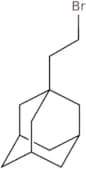
CAS:Versatile small molecule scaffoldFórmula:C10H16O3Pureza:Min. 95%Peso molecular:184.23 g/mol1-(2-Bromoethyl)-adamantane
CAS:<p>1-(2-Bromoethyl)-adamantane is a chemical intermediate that is used as a starting material for the synthesis of benzhydryl, phenoxymethyl, and phenacyl. It has been used in the production of cephalosporins and trimethylsilyl aralkyl methoxy intermediates. 1-(2-Bromoethyl)-adamantane can also be used to synthesize benzyl penicillins.</p>Fórmula:C12H19BrPureza:Min. 95%Peso molecular:243.18 g/mol2-Benzyl-2-methyl-1,3-thiazolidine
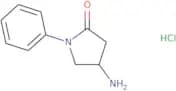
CAS:<p>Versatile small molecule scaffold</p>Fórmula:C11H12N2O4Pureza:Min. 95%Peso molecular:236.22 g/mol4-amino-1-phenylpyrrolidin-2-one hydrochloride
CAS:Versatile small molecule scaffoldFórmula:C10H13ClN2OPureza:Min. 95%Peso molecular:212.68 g/mol5-Bromo-[2,3']bipyridinyl
CAS:<p>Versatile small molecule scaffold</p>Fórmula:C10H7BrN2Pureza:Min. 95%Peso molecular:235.09 g/mol(2,4-Dichlorophenoxy)acetyl chloride
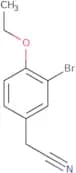
CAS:2,4-Dichlorophenoxy)acetyl chloride is a chloroacetyl chloride that can be used as an herbicide. It is soluble in organic solvents and has been reported to inhibit the growth of weeds in agricultural fields. 2,4-Dichlorophenoxy)acetyl chloride inhibits weed growth by inhibiting the synthesis of enzymes needed for photosynthesis, which results in the death of plants. The herbicide is also insoluble in water, meaning it does not leach into the soil and contaminate groundwater. 2,4-Dichlorophenoxy)acetyl chloride has been shown to be toxic to fish at high concentrations. 2,4-Dichlorophenoxy)acetyl chloride reacts with phosphorus pentoxide to form a dichlorophenyldiphenylmethane (DDPM). DDPM is an acceptor molecule that can be used as a starting point for synthesizing other molecules.Fórmula:C8H5Cl3O2Pureza:Min. 95%Peso molecular:239.49 g/mol2-(3-Bromo-4-ethoxyphenyl)acetonitrile
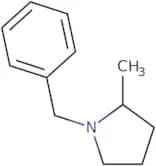
CAS:<p>Versatile small molecule scaffold</p>Fórmula:C10H10BrNOPureza:Min. 95%Peso molecular:240.1 g/mol1-Benzyl-2-methylpyrrolidine
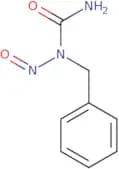
CAS:<p>1-Benzyl-2-methylpyrrolidine is a chemical reagent that is used in organic synthesis as an oxidant, dehydrogenation agent, and alkylation agent. 1-Benzyl-2-methylpyrrolidine is also used to generate amines from thioacetals and anilines. It can be used to synthesize carbonyl compounds via the oxidation of alcohols with hydroxylamine or sodium carbonate. This chemical reagent has been shown to catalyze the aromatization of benzene derivatives with Raney nickel or cyclic systems. Furthermore, it has been shown to inactivate various types of microorganisms such as bacteria and yeast cells by reacting with their enzymes.</p>Fórmula:C12H17NPureza:Min. 95%Peso molecular:175.27 g/mol1-Benzyl-1-nitrosourea
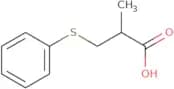
CAS:<p>1-Benzyl-1-nitrosourea is a nitrosourea alkylating agent that induces DNA methylation. It is hepatotoxic and carcinogenic in rats, but not in mice. This drug does not cause DNA methylation at high substrate concentrations, but does so at low concentrations. The carcinogenic effects of this drug have been observed in the liver, mammary glands, and other tissues. The carcinogenic activity of 1-Benzyl-1-nitrosourea has been shown to be dependent on the strain of animal used and the dose administered.</p>Fórmula:C8H9N3O2Pureza:Min. 95%Peso molecular:179.18 g/mol2-Methyl-3-(phenylsulfanyl)propanoic acid
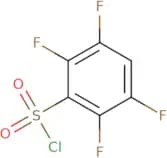
CAS:Versatile small molecule scaffoldFórmula:C10H12O2SPureza:Min. 95%Peso molecular:196.27 g/mol2,3,5,6-Tetrafluorobenzenesulfonyl chloride
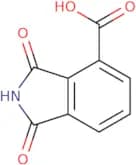
CAS:Versatile small molecule scaffoldFórmula:C6HClF4O2SPureza:Min. 95%Peso molecular:248.58 g/mol1,3-Dioxo-2,3-dihydro-1H-isoindole-4-carboxylic acid
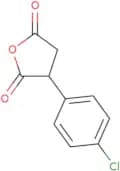
CAS:Versatile small molecule scaffoldFórmula:C9H5NO4Pureza:Min. 95%Peso molecular:191.14 g/mol3-(4-Chlorophenyl)oxolane-2,5-dione
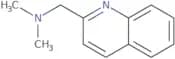
CAS:<p>3-(4-Chlorophenyl)oxolane-2,5-dione is a telechelic monomer with a hydroxyl group at one end and an alkynyl group at the other. This molecule has functional groups that can be used in polymerization reactions to create polymers. It is often used as a precursor for polyesters, polyurethanes, and polyamides. 3-(4-Chlorophenyl)oxolane-2,5-dione reacts with metal ions to form polymers that emit light when excited by light. The fatty acid component of this molecule makes it soluble in hydrocarbon solvents such as hexane and heptane. 3-(4-Chlorophenyl)oxolane-2,5-dione can also be used to produce biodegradable plastics from renewable resources such as vegetable oils or soybean oil.</p>Fórmula:C10H7ClO3Pureza:Min. 95%Peso molecular:210.61 g/molDimethyl(quinolin-2-ylmethyl)amine
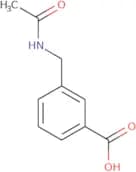
CAS:<p>Dimethyl(quinolin-2-ylmethyl)amine is a chemical compound that has shown anti-cancer activity in humans. It is a precursor of the drug quinacrine, which is used to treat some types of cancer. Dimethyl(quinolin-2-ylmethyl)amine and related compounds are believed to work by interfering with DNA synthesis, preventing the proliferation of cancer cells.</p>Fórmula:C12H14N2Pureza:Min. 95%Peso molecular:186.25 g/mol3-(Acetamidomethyl)benzoic acid
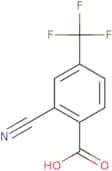
CAS:<p>Versatile small molecule scaffold</p>Fórmula:C10H11NO3Pureza:Min. 95%Peso molecular:193.2 g/mol2-Cyano-4-(trifluoromethyl)benzoic acid
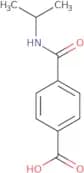
CAS:<p>Versatile small molecule scaffold</p>Fórmula:C9H4F3NO2Pureza:Min. 95%Peso molecular:215.13 g/molN-Isopropylterephthalamic acid
CAS:<p>N-Isopropylterephthalamic acid is a metabolite of terephthalic acid and is formed by the oxidation of isopropyl alcohol. The metabolism of N-isopropylterephthalamic acid in humans has been shown to be catalyzed by cytochrome P450 enzymes, which are expressed in the liver. This reaction occurs through a series of oxidation steps that convert the alcohol group to an aldehyde group and then to an acid group. The final product, N-isopropylterephthalamic acid, can be quantified using gas chromatography with electron capture detection or high performance liquid chromatography with fluorescence detection. These techniques can be used for monitoring human exposure to this metabolite.</p>Fórmula:C11H13NO3Pureza:Min. 95%Peso molecular:207.23 g/mol


![4-Methoxybicyclo[2.2.2]octane-1-carboxylic acid](/_next/image/?url=https%3A%2Fstatic.cymitquimica.com%2Fproducts%2F3D%2Fthumb-webp%2FAAA77334.webp&w=3840&q=75)

![5-Bromo-[2,3']bipyridinyl](/_next/image/?url=https%3A%2Fstatic.cymitquimica.com%2Fproducts%2F3D%2Fthumb-webp%2FAAA77453.webp&w=3840&q=75)