Building Blocks
Subcategorías de "Building Blocks"
- Ácidos borónicos y derivados del ácido borónico(5.783 productos)
- Building Blocks quirales(1.242 productos)
- Building Blocks de hidrocarburos(6.105 productos)
- Building Blocks orgánicos(61.055 productos)
Se han encontrado 205383 productos de "Building Blocks"
Spiro[4.5]decan-1-one
CAS:Spiro[4.5]decan-1-one is a synthetic drug that has been shown to have affinity for cardiac, neuropathic, and depression receptors. It also has moderate affinity for the acetylcholine receptor in the brain and acts as a stabilizer. Spiro[4.5]decan-1-one may be useful in treating Alzheimer's disease, Parkinson's disease, chronic pain, and psychosis because it can stabilize neuronal membranes and prevent cell damage caused by free radicals. This compound may also be used to treat cognitive disorders such as memory loss and attention deficit hyperactivity disorder (ADHD).
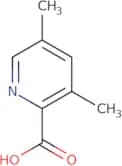
Spiro[4.5]decan-1-one is a nitrogenous compound that has been shown to have anticholinergic effects on cognition in rats. It is thought that its effects are mediated through its ability to block the action of acetylcholinesterase enzymes that break down acetylcholine at synapses in the brain.Fórmula:C10H16OPureza:Min. 95%Peso molecular:152.23 g/mol3,5-Dimethylpicolinic Acid
CAS:3,5-Dimethylpicolinic Acid is a synthetic compound that has shown antiulcer activity. This compound has been shown to inhibit the production of sulfate and nitrite, which are involved in the synthesis of gastric acid. 3,5-Dimethylpicolinic Acid also inhibits the release of hydrogen peroxide from cells and increases the synthesis of cGMP by inhibiting phosphodiesterase type IV. It may be used as an alternative to sodium nitrite for meat preservation.
Fórmula:C8H9NO2Pureza:Min. 95%Peso molecular:151.16 g/mol5H,7H-Furo[3,4-b]pyridin-7-one
CAS:5H,7H-Furo[3,4-b]pyridin-7-one is a compound that can be synthesized from anhydride and halogen. It can be prepared from cycloalkyl and chlorinating alkoxy by formulas. The high yield of this compd, which is hydrolyzed to the chloride, can be selectively chlorinated with dicarboxylic alkali. 5H,7H-Furo[3,4-b]pyridin-7-one is used as a precursor for synthesis of aralkyl.
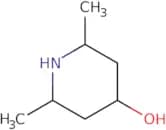
Fórmula:C7H5NO2Pureza:Min. 95%Peso molecular:135.12 g/mol2,6-Dimethylpiperidin-4-ol
CAS:Versatile small molecule scaffold
Fórmula:C7H15NOPureza:Min. 95%Peso molecular:129.2 g/mol4-Chloro-5-(1-pyrrolidinyl)-3(2H)-pyridazinone
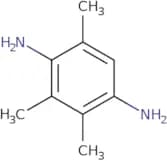
CAS:Versatile small molecule scaffoldFórmula:C8H10ClN3OPureza:Min. 95%Peso molecular:199.64 g/mol2,3,5-Trimethylbenzene-1,4-diamine
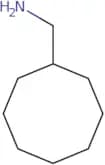
CAS:Versatile small molecule scaffoldFórmula:C9H14N2Pureza:Min. 95%Peso molecular:150.22 g/molCyclooctylmethanamine
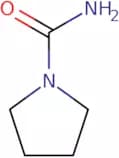
CAS:Cyclooctylmethanamine is a specific agonist of the kappa-opioid receptor. It is a pyrimidine compound that has been shown to inhibit phosphatases and hydroxylases. Cyclooctylmethanamine has also been shown to be an inhibitor of amine oxidase, which may contribute to its effects on autoimmune diseases. Cyclooctylmethanamine is used in pharmaceutical preparations, such as antimicrobial agents and pharmaceuticals, for preparative high-performance liquid chromatography (HPLC).Fórmula:C9H19NPureza:Min. 95%Peso molecular:141.25 g/molPyrrolidine-1-carboxamide
CAS:Pyrrolidine-1-carboxamide is a secondary metabolite that has been shown to have antimicrobial properties. This compound inhibits the growth of bacteria by binding to the 50S ribosomal subunit and prevents the formation of an antibiotic-inhibitor complex with the enzyme cell wall synthesis, inhibiting protein synthesis and cell division. Pyrrolidine-1-carboxamide has been shown to have antiinflammatory properties, which may be due to its inhibition of prostaglandin synthesis.Fórmula:C5H10N2OPureza:Min. 95%Peso molecular:114.15 g/molSpiro[cyclohexane-1,3'-indoline] hydrochloride
CAS:Versatile small molecule scaffoldFórmula:C13H18ClNPureza:Min. 95%Peso molecular:223.74 g/molfuro[3,4-c]pyridin-1(3H)-one
CAS:The compound furo[3,4-c]pyridin-1(3H)-one is a nature-derived compound. It is an analgesic that has been shown to be biodegradable and non-toxic. The compound interacts with the benzodiazepine binding site of the GABA receptor and has a spectrum of activity that includes antibacterial, antifungal, antiviral, and antiprotozoal properties. This compound can also be synthesized in a number of ways that produce different isomers. These structural isomers are distinguished by their ability to bind to benzodiazepine receptors.
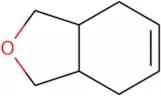
Fórmula:C7H5NO2Pureza:Min. 95%Peso molecular:135.12 g/mol1,3,3a,4,7,7a-Hexahydro-2-benzofuran
CAS:Versatile small molecule scaffold
Fórmula:C8H12OPureza:Min. 95%Peso molecular:124.18 g/molPhthalide-3-acetic acid
CAS:Phthalide-3-acetic acid is a microbial metabolite that is produced by the biotransformation of phthalides. It can be conjugated with glucuronide and excreted in urine. Phthalide-3-acetic acid is a product of the microbial metabolism of phthalides, which are compounds found in some plants and fungi. This compound has been shown to be metabolized through several pathways, including hydrolysis by esterases or glucuronidases, oxidation by cytochrome P450 enzymes, reduction by glutathione reductase, or conjugation with glucuronic acid. The compound has also been shown to inhibit the activity of human aldehyde dehydrogenase (ALDH) and formaldehyde dehydrogenase (FADH).Fórmula:C10H8O4Pureza:Min. 95%Peso molecular:192.17 g/mol3-Oxo-1,3-dihydroisobenzofuran-5-carboxylic acid
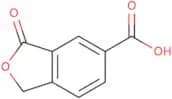
CAS:Versatile small molecule scaffoldFórmula:C9H6O4Pureza:Min. 95%Peso molecular:178.14 g/mol1,4-Dioxaspiro[4.4]nonan-2-ylmethanamine
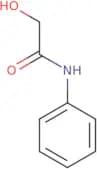
CAS:Versatile small molecule scaffoldFórmula:C8H15NO2Pureza:Min. 95%Peso molecular:157.21 g/mol2-Hydroxy-N-phenylacetamide
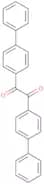
CAS:2-Hydroxy-N-phenylacetamide is a phosphoric acid that is an amide. It can be synthesized by reacting phenylacetic acid with 2-chloroethanol in the presence of sodium hydroxide and phosphoric acid. This chemical compound has electrocardiographic activity and is used as a synthon to create other drugs, such as inorganic acids, supramolecular complexes, and intermolecular hydrogen bonding compounds. 2-Hydroxy-N-phenylacetamide has been shown to lower blood pressure in clinical studies. It also prevents the formation of methemoglobin caused by exposure to nitrites or nitrates and has been shown to be effective against carboxylate ions such as potassium ion (K+).Fórmula:C8H9NO2Pureza:Min. 95%Peso molecular:151.16 g/molBis(4-phenylphenyl)ethane-1,2-dione
CAS:Versatile small molecule scaffold
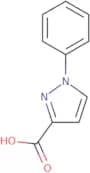
Fórmula:C26H18O2Pureza:Min. 95%Peso molecular:362.4 g/mol1-Phenyl-1H-pyrazole-3-carboxylic acid
CAS:1-Phenyl-1H-pyrazole-3-carboxylic acid is an organic compound that has a pyrazole ring. It can be synthesized by the reaction of phenylhydrazine and formamide. The amido group in the molecule is bound to the carbonyl carbon atom, which makes it a carboxylic acid. This compound is also known as a morpholine amido ester. One example of this type of compound is 1-(4-Methoxyphenyl)-1H-pyrazole-3-carboxylic acid. The analogous compound in this series is 2-(2,6-dimethylphenyl)-1H-pyrrole-3-carboxylic acid.Fórmula:C10H8N2O2Pureza:Min. 95%Peso molecular:188.18 g/mol2-(1H-Indol-2-yl)phenol
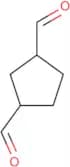
CAS:2-(1H-Indol-2-yl)phenol is a functional group that exhibits optical properties. It has a carbinol group and an acidic proton. In the excited state, it can transfer a proton to nucleophilic molecules and react with other compounds. 2-(1H-Indol-2-yl)phenol is also an important reaction product of indole synthesis. This compound has been shown to exhibit fluorescence and is a member of the phenols family.Fórmula:C14H11NOPureza:Min. 95%Peso molecular:209.24 g/molCyclopentane-1,3-dicarbaldehyde
CAS:Versatile small molecule scaffold
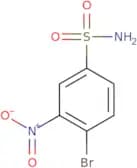
Fórmula:C7H10O2Pureza:Min. 95%Peso molecular:126.15 g/mol4-Bromo-3-nitrobenzenesulfonamide
CAS:Versatile small molecule scaffoldFórmula:C6H5BrN2O4SPureza:Min. 95%Peso molecular:281.08 g/mol
![Spiro[4.5]decan-1-one](/_next/image/?url=https%3A%2Fstatic.cymitquimica.com%2Fproducts%2F3D%2Fthumb-webp%2FEAA72891.webp&w=3840&q=75)

![5H,7H-Furo[3,4-b]pyridin-7-one](/_next/image/?url=https%3A%2Fstatic.cymitquimica.com%2Fproducts%2F3D%2Fthumb-webp%2FEAA73369.webp&w=3840&q=75)

![Spiro[cyclohexane-1,3'-indoline] hydrochloride](/_next/image/?url=https%3A%2Fstatic.cymitquimica.com%2Fproducts%2F3D%2Fthumb-webp%2FEAA74063.webp&w=3840&q=75)
![furo[3,4-c]pyridin-1(3H)-one](/_next/image/?url=https%3A%2Fstatic.cymitquimica.com%2Fproducts%2F3D%2Fthumb-webp%2FEAA74142.webp&w=3840&q=75)
![1,4-Dioxaspiro[4.4]nonan-2-ylmethanamine](/_next/image/?url=https%3A%2Fstatic.cymitquimica.com%2Fproducts%2F3D%2Fthumb-webp%2FEAA74517.webp&w=3840&q=75)