Building Blocks
Esta sección contiene productos fundamentales para la síntesis de compuestos orgánicos y biológicos. Building blocks son los materiales de partida esenciales utilizados para construir moléculas complejas a través de diversas reacciones químicas. Desempeñan un papel crítico en el descubrimiento de fármacos, la ciencia de materiales y la investigación química. En CymitQuimica, ofrecemos una gama diversa de building blocks de alta calidad para apoyar sus investigaciones innovadoras y proyectos industriales, asegurando que tenga los componentes esenciales para una síntesis exitosa.
Subcategorías de "Building Blocks"
- Ácidos borónicos y derivados del ácido borónico(5.784 productos)
- Building Blocks quirales(1.244 productos)
- Building Blocks de hidrocarburos(6.105 productos)
- Building Blocks orgánicos(61.070 productos)
Se han encontrado 205437 productos de "Building Blocks"
Ordenar por
Pureza (%)
0
100
|
0
|
50
|
90
|
95
|
100
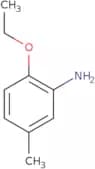
2-Ethoxy-5-methylaniline
CAS:Versatile small molecule scaffold
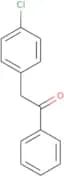
Fórmula:C9H13NOPureza:Min. 95%Peso molecular:151.21 g/mol2-(4-Chlorophenyl)acetophenone
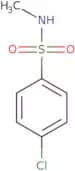
CAS:2-(4-Chlorophenyl)acetophenone is a synthetic compound that has been used in the synthesis of other compounds. It has been shown to have affinity for chloride ions and can be used as a substitute for hydrochloric acid. 2-(4-Chlorophenyl)acetophenone has been shown to react with sodium hydroxide in a stepwise manner, forming sodium chloride as an intermediate product. This reaction is believed to be due to the high nucleophilicity of chlorine ions. The molecular descriptors of this compound include four bonds, one ring, two heteroatoms, and two double bonds. This chemical also displays functional theory characteristics such as elimination and leishmania inhibition.Fórmula:C14H11ClOPureza:Min. 95%Peso molecular:230.69 g/mol4-Chloro-N-methylbenzenesulfonamide
CAS:Versatile small molecule scaffold
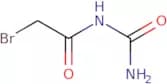
Fórmula:C7H8ClNO2SPureza:Min. 95%Peso molecular:205.66 g/mol2-Bromo-N-carbamoylacetamide
CAS:Versatile small molecule scaffoldFórmula:C3H5BrN2O2Pureza:Min. 95%Peso molecular:180.99 g/mol9-Phenyl-6,9-dihydro-1H-purin-6-one
CAS:Versatile small molecule scaffoldFórmula:C11H8N4OPureza:Min. 95%Peso molecular:212.21 g/molBis(2-chlorophenyl)methanol
CAS:Versatile small molecule scaffoldFórmula:C13H10Cl2OPureza:Min. 95%Peso molecular:253.12 g/mol4-Isopropylbenzenesulfonamide
CAS:4-Isopropylbenzenesulfonamide is a compound that belongs to the class of antifungals. It is an intramolecular inhibitor of the enzyme, target molecules, that catalyzes the formation of ergosterol in fungi. The inhibition of this enzyme leads to the accumulation of squalene and other sterols, which causes cell death. 4-Isopropylbenzenesulfonamide also has x-ray diffraction studies that have shown its ability to inhibit germination of spores from some fungi.Fórmula:C9H13NO2SPureza:Min. 95%Peso molecular:199.27 g/mol{[1-(Pyridin-3-yl)ethylidene]amino}urea
CAS:Versatile small molecule scaffold
Fórmula:C8H10N4OPureza:Min. 95%Peso molecular:178.19 g/molNitrosodioctylamine
CAS:Nitrosodioctylamine is a polycarboxylic acid that is used for the production of chlorinated hydrocarbons. It is also used as an industrial chemical and a polymerization inhibitor. Nitrosodioctylamine can be synthesized from hydrogen chloride and nitric acid, or from sodium nitrate and sulfuric acid. The polymerization inhibition activity of this compound is due to its ability to form cross-links with polyvinyl alcohol. Nitrosodioctylamine has been shown to cause cancer in rats, which may be due to its ability to bind with DNA and inhibit the synthesis of enzyme proteins. Nitrosodioctylamine has also been found to have a sealant effect on metal surfaces that are contaminated by halogen compounds such as chlorine and bromine because it reacts with these compounds to form a layer of insoluble organic material.Fórmula:C16H34N2OPureza:Min. 95%Peso molecular:270.45 g/molBismuthiol II
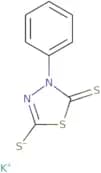
CAS:Bismuthiol II is a reagent that is used in the reaction mechanism of particle. It reacts with hydrochloric acid to form silver chloride, which can be detected by fluorescence probe. Bismuthiol II is also used as a plasma mass spectrometry (PMS) reagent, where it reacts with tellurium to form copper tellurate and bismuth tellurate. Bismuthiol II has been shown to have anti-cancer effects on cancer tissue during the extractant process. The extractant process utilizes a multi-walled carbon nanotube (MWCNT) to extract copper complexes from the tissue. This extraction process has been shown to enhance the analytical chemistry of bismuthiol II.Fórmula:C8H5KN2S3Pureza:Min. 95%Peso molecular:264.42 g/mol3-(2-Nitrophenoxy)propanoic acid
CAS:Versatile small molecule scaffoldFórmula:C9H9NO5Pureza:Min. 95%Peso molecular:211.17 g/mol4-[(Phenylamino)methyl]phenol hydrochloride
CAS:Versatile small molecule scaffoldFórmula:C13H14ClNOPureza:Min. 95%Peso molecular:235.71 g/mol1-[2-(2-Aminoethoxy)ethoxy]butane
CAS:Versatile small molecule scaffoldFórmula:C8H19NO2Pureza:Min. 95%Peso molecular:161.24 g/mol2-Hydroxy-4-(methoxymethyl)-6-methylpyridine-3-carbonitrile
CAS:This is a pyridine compound that is used in the nitration of aromatic compounds. It can be synthesized by reaction of 2-aminopyridine with nitric acid and sulfuric acid, followed by filtration and recrystallization. The experimental procedure for this compound is not currently available.
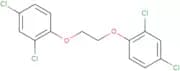
Fórmula:C9H10N2O2Pureza:Min. 95%Peso molecular:178.19 g/mol1,2-Bis(2,4-dichlorophenoxy)ethane
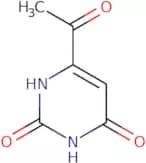
CAS:Versatile small molecule scaffoldFórmula:C14H10Cl4O2Pureza:Min. 95%Peso molecular:352 g/mol6-Acetyl-1,2,3,4-tetrahydropyrimidine-2,4-dione
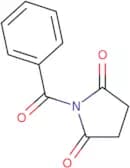
CAS:6-Acetyl-1,2,3,4-tetrahydropyrimidine-2,4-dione is a chemical compound that has two functions. One function is as a dianion that can be used to measure the hydrogen ion concentration in an aqueous solution with the pH range of 1 to 14. The second function is as an acid complex with constant K1 and K2 values. This compound is stable in the presence of acids and bases and can react with alcohols to form esters. 6-Acetyl-1,2,3,4-tetrahydropyrimidine-2,4-dione has been used in the synthesis of orotic acid from orotic acid esters.Fórmula:C6H6N2O3Pureza:Min. 95%Peso molecular:154.12 g/mol1-benzoylpyrrolidine-2,5-dione
CAS:1-Benzoylpyrrolidine-2,5-dione is a ketone that can be used as an industrial coupling agent. It is used in the synthesis of saccharin and arylketones. This reagent can be used to cleave amides and succinimide esters. 1-Benzoylpyrrolidine-2,5-dione reacts with arylsiloxanes to form functional groups on the silicon atom. In addition, this compound can be used as a substrate for organic synthesis.Fórmula:C11H9NO3Pureza:Min. 95%Peso molecular:203.2 g/mol2-[(Pyridin-3-yl)amino]acetic acid hydrochloride
CAS:Versatile small molecule scaffoldFórmula:C7H9ClN2O2Pureza:Min. 95%Peso molecular:188.61 g/mol2-[2-(Hydroxymethyl)phenyl]ethan-1-ol
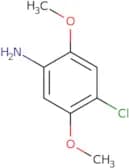
CAS:2-[2-(Hydroxymethyl)phenyl]ethan-1-ol is an antibacterial agent that belongs to the group of aryl alcohols. It is a bactericidal agent that inhibits the growth and reproduction of bacteria by binding to their DNA. 2-[2-(Hydroxymethyl)phenyl]ethan-1-ol has shown effectiveness against gram-positive and gram-negative bacteria, including Staphylococcus aureus, Streptococcus pneumoniae, Escherichia coli, Haemophilus influenzae and Bacillus subtilis. This compound has also been shown to be active against Mycobacterium tuberculosis, but not against Candida albicans or Aspergillus niger.Fórmula:C9H12O2Pureza:Min. 95%Peso molecular:152.19 g/mol4-Chloro-2,5-dimethoxyaniline
CAS:4-Chloro-2,5-dimethoxyaniline (4CMA) is a synthetic organic compound that can be used in the synthesis of dyes and pharmaceuticals. This compound is synthesized by reacting ammonium nitrate with 4-chloro-2,5-dimethoxybenzene in the presence of sodium formate. The reaction takes place in an organic solvent such as xylene or sulfoxide. The product is then reacted with methyl alcohol and alkylation agent such as hydrogen chloride to produce the desired product.Fórmula:C8H10ClNO2Pureza:Min. 95%Peso molecular:187.62 g/mol



![{[1-(Pyridin-3-yl)ethylidene]amino}urea](/_next/image/?url=https%3A%2Fstatic.cymitquimica.com%2Fproducts%2F3D%2Fthumb-webp%2FGAA33540.webp&w=3840&q=75)


![4-[(Phenylamino)methyl]phenol hydrochloride](/_next/image/?url=https%3A%2Fstatic.cymitquimica.com%2Fproducts%2F3D%2Fthumb-webp%2FGAA33784.webp&w=3840&q=75)
![1-[2-(2-Aminoethoxy)ethoxy]butane](/_next/image/?url=https%3A%2Fstatic.cymitquimica.com%2Fproducts%2F3D%2Fthumb-webp%2FGAA33853.webp&w=3840&q=75)
![2-[(Pyridin-3-yl)amino]acetic acid hydrochloride](/_next/image/?url=https%3A%2Fstatic.cymitquimica.com%2Fproducts%2F3D%2Fthumb-webp%2FGAA34528.webp&w=3840&q=75)
![2-[2-(Hydroxymethyl)phenyl]ethan-1-ol](/_next/image/?url=https%3A%2Fstatic.cymitquimica.com%2Fproducts%2F3D%2Fthumb-webp%2FGAA34600.webp&w=3840&q=75)