Building Blocks
Esta sección contiene productos fundamentales para la síntesis de compuestos orgánicos y biológicos. Building blocks son los materiales de partida esenciales utilizados para construir moléculas complejas a través de diversas reacciones químicas. Desempeñan un papel crítico en el descubrimiento de fármacos, la ciencia de materiales y la investigación química. En CymitQuimica, ofrecemos una gama diversa de building blocks de alta calidad para apoyar sus investigaciones innovadoras y proyectos industriales, asegurando que tenga los componentes esenciales para una síntesis exitosa.
Subcategorías de "Building Blocks"
- Ácidos borónicos y derivados del ácido borónico(5.786 productos)
- Building Blocks quirales(1.246 productos)
- Building Blocks de hidrocarburos(6.107 productos)
- Building Blocks orgánicos(61.079 productos)
Se han encontrado 205461 productos de "Building Blocks"
Ordenar por
Pureza (%)
0
100
|
0
|
50
|
90
|
95
|
100
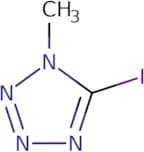
5-Iodo-1-methyl-1H-tetrazole
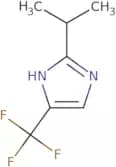
CAS:Versatile small molecule scaffoldFórmula:C2H3IN4Pureza:Min. 95%Peso molecular:209.98 g/mol2-(Propan-2-yl)-5-(trifluoromethyl)-1H-imidazole
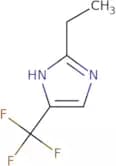
CAS:Versatile small molecule scaffoldFórmula:C7H9F3N2Pureza:Min. 95%Peso molecular:178.15 g/mol2-Ethyl-5-(trifluoromethyl)-1H-imidazole
CAS:Versatile small molecule scaffoldFórmula:C6H7F3N2Pureza:Min. 95%Peso molecular:164.13 g/mol3-[Ethyl(hydroxy)phosphoryl]but-2-enoic acid
CAS:Versatile small molecule scaffold
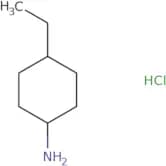
Fórmula:C6H11O4PPureza:Min. 95%Peso molecular:178.12 g/molrac-(1S,4R)-4-Ethylcyclohexan-1-amine hydrochloride
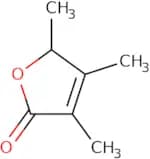
CAS:Versatile small molecule scaffoldFórmula:C8H18ClNPureza:Min. 95%Peso molecular:163.69 g/mol3,4,5-Trimethyl-2(5H)-furanone
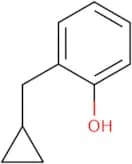
CAS:3,4,5-Trimethyl-2(5H)-furanone (3,4,5-TMF) is a compound that has been identified as a germination inhibitor. 3,4,5-TMF inhibits the germination of lettuce seeds and wheat seeds. It is speculated that this inhibition may be due to the ability of 3,4,5-TMF to inhibit regulatory enzymes in the germination process. This compound also has neuroprotective properties and may be used for the treatment of neurodegenerative diseases. 3,4,5-TMF belongs to a group of compounds called furanones which are found in plants such as Triticum aestivum and Arabidopsis thaliana. Furanones are related to other phytochemicals such as flavonoids and phenolic acids.Fórmula:C7H10O2Pureza:Min. 95%Peso molecular:126.15 g/mol2-(Cyclopropylmethyl)phenol
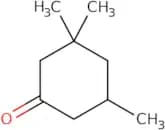
CAS:Versatile small molecule scaffoldFórmula:C10H12OPureza:Min. 95%Peso molecular:148.2 g/mol(5R)-3,3,5-Trimethylcyclohexan-1-one
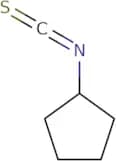
CAS:Versatile small molecule scaffoldFórmula:C9H16OPureza:Min. 95%Forma y color:Clear LiquidPeso molecular:140.22 g/molCyclopentyl isothiocyanate
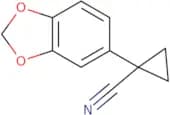
CAS:Cyclopentyl isothiocyanate (CPITC) is an organic solvent that is used as a pharmaceutical preparation. It has antiviral activity, which may be due to its ability to inhibit the serine protease of the virus. The hydroxy group on CPITC can react with the amide nitrogen of glutamine residues in protein and form an amide bond. CPITC has shown anticancer effects and inhibits the growth of cancer cells by inhibiting cell division at the G2/M phase. CPITC also has anti-inflammatory effects, which may be due to its ability to inhibit prostaglandin synthesis by blocking cyclooxygenase activity.Fórmula:C6H9NSPureza:Min. 95%Peso molecular:127.21 g/mol1-(1,3-Benzodioxol-5-yl)cyclopropanecarbonitrile
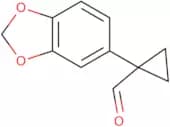
CAS:Versatile small molecule scaffoldFórmula:C11H9NO2Pureza:Min. 95%Peso molecular:187.19 g/mol1-(1,3-Dioxaindan-5-yl)cyclopropane-1-carbaldehyde
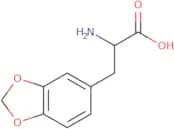
CAS:Versatile small molecule scaffoldFórmula:C11H10O3Pureza:Min. 95%Peso molecular:190.19 g/mol2-Amino-3-(1,3-dioxaindan-5-yl)propanoic acid
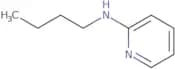
CAS:Producto controladoVersatile small molecule scaffoldFórmula:C10H11NO4Pureza:Min. 95%Peso molecular:209.2 g/molN-Butylpyridin-2-amine
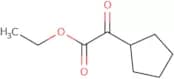
CAS:Versatile small molecule scaffoldFórmula:C9H14N2Pureza:Min. 95%Peso molecular:150.22 g/molEthyl 2-Cyclopentyl-2-oxoacetate
CAS:Ethyl 2-Cyclopentyl-2-oxoacetate is a cyanoformate with the chemical formula C5H6O4. It is used as a reagent in organic synthesis and has been shown to react with stannic chloride to form a phosphonium salt. This reaction is followed by the addition of phosphorous pentachloride and potassium benzoate, which yields the corresponding phenylmagnesium chloride. The process can be completed by adding zinc chloride, which forms the desired organometallic compound.Fórmula:C9H14O3Pureza:Min. 95%Peso molecular:170.21 g/mol3-(2-Methoxyphenyl)propanal
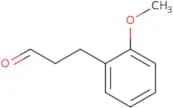
CAS:3-(2-Methoxyphenyl)propanal is a heterocyclic compound that has been shown to be an efficient modulator of population growth. It has been found to be active against mosquitoes and inhibits the activity of phosphine. 3-(2-Methoxyphenyl)propanal binds to the surface of the mosquito’s mouthparts and prevents it from feeding, leading to death. The long-term effect on mosquito populations is not yet known. 3-(2-Methoxyphenyl)propanal has also been shown to inhibit trypsin and crystal x-ray diffraction, with five-membered ligands.Fórmula:C10H12O2Pureza:Min. 95%Peso molecular:164.2 g/mol2,5,5-Trimethylcyclohexanone
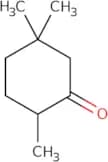
CAS:2,5,5-Trimethylcyclohexanone is a chemical that is used in the production of other chemicals. It can be produced by a reaction of formaldehyde with malic acid and ammonium formate. The reaction is catalyzed by metal surfaces such as nickel or platinum plates. Malic acid acts as a conditioner agent for the reaction system and ammonium formate functions as a catalyst. To produce 2,5,5-trimethylcyclohexanone, an organic solvent like hexane or toluene is heated to above its boiling point. When heated, the reactants are mixed together and passed over the catalyst surface at high pressure and temperature. This process produces 2,5,5-trimethylcyclohexanone in a gaseous state that can then be condensed into liquid form.Fórmula:C9H16OPureza:Min. 95%Peso molecular:140.22 g/molN-[2-(3-Methoxyphenyl)ethyl]-N-methylamine
CAS:Producto controladoVersatile small molecule scaffold
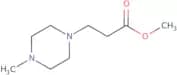
Fórmula:C10H15NOPureza:Min. 95%Peso molecular:165.23 g/mol4-Methyl-1-piperazinepropanoic acid methyl ester
CAS:Versatile small molecule scaffoldFórmula:C9H18N2O2Pureza:Min. 95%Peso molecular:186.25 g/molN-[2-(1H-Imidazol-4-yl)ethyl]guanidine sulfate
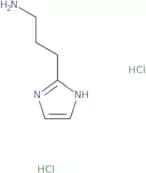
CAS:Versatile small molecule scaffoldFórmula:C6H13N5O4SPureza:Min. 95%Peso molecular:251.3 g/mol2-(3-aminopropyl)imidazole 2hcl
CAS:Versatile small molecule scaffold
Fórmula:C6H13Cl2N3Pureza:Min. 95%Peso molecular:198.09 g/mol

![3-[Ethyl(hydroxy)phosphoryl]but-2-enoic acid](/_next/image/?url=https%3A%2Fstatic.cymitquimica.com%2Fproducts%2F3D%2Fthumb-webp%2FIBA47267.webp&w=3840&q=75)
![N-[2-(3-Methoxyphenyl)ethyl]-N-methylamine](/_next/image/?url=https%3A%2Fstatic.cymitquimica.com%2Fproducts%2F3D%2Fthumb-webp%2FIBA54362.webp&w=3840&q=75)
![N-[2-(1H-Imidazol-4-yl)ethyl]guanidine sulfate](/_next/image/?url=https%3A%2Fstatic.cymitquimica.com%2Fproducts%2F3D%2Fthumb-webp%2FIBA54475.webp&w=3840&q=75)