Building Blocks
Esta sección contiene productos fundamentales para la síntesis de compuestos orgánicos y biológicos. Building blocks son los materiales de partida esenciales utilizados para construir moléculas complejas a través de diversas reacciones químicas. Desempeñan un papel crítico en el descubrimiento de fármacos, la ciencia de materiales y la investigación química. En CymitQuimica, ofrecemos una gama diversa de building blocks de alta calidad para apoyar sus investigaciones innovadoras y proyectos industriales, asegurando que tenga los componentes esenciales para una síntesis exitosa.
Subcategorías de "Building Blocks"
- Ácidos borónicos y derivados del ácido borónico(5.756 productos)
- Building Blocks quirales(1.242 productos)
- Building Blocks de hidrocarburos(6.095 productos)
- Building Blocks orgánicos(61.037 productos)
Se han encontrado 196200 productos de "Building Blocks"
Ordenar por
Pureza (%)
0
100
|
0
|
50
|
90
|
95
|
100
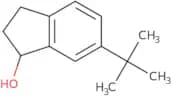
6-tert-Butyl-2,3-dihydro-1H-inden-1-ol
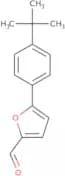
CAS:<p>Versatile small molecule scaffold</p>Fórmula:C13H18OPureza:Min. 95%Peso molecular:190.28 g/mol5-(4-tert-Butylphenyl)furan-2-carbaldehyde
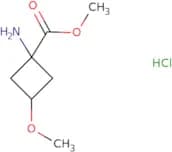
CAS:<p>Versatile small molecule scaffold</p>Fórmula:C15H16O2Pureza:Min. 95%Peso molecular:228.29 g/molMethyl 1-amino-3-methoxycyclobutane-1-carboxylate hydrochloride
CAS:<p>Versatile small molecule scaffold</p>Fórmula:C7H14ClNO3Pureza:Min. 95%Peso molecular:195.6 g/molRef: 3D-TMD05888
Producto descatalogadotert-Butyl N-benzylcarbamate
CAS:<p>Tert-Butyl N-benzylcarbamate is a synthetic compound that is being developed for the treatment of cancer. It is an analog of carmustine, a drug used for the treatment of brain tumors, and has been shown to be effective against cell lines in vitro. Tert-Butyl N-benzylcarbamate binds to DNA and inhibits protein synthesis, leading to cancer cell death. The drug also inhibits the growth of cancer cells by inhibiting chloride channels and blocking the influx of hydrogen chloride into cells. Tert-Butyl N-benzylcarbamate has not been tested in humans yet, but it has shown promising results in animal models.</p>Fórmula:C12H17NO2Pureza:Min. 95%Peso molecular:207.27 g/mol2-[(Cyclopropylmethyl)[(9H-fluoren-9-ylmethoxy)carbonyl]amino]acetic acid
CAS:<p>Versatile small molecule scaffold</p>Fórmula:C21H21NO4Pureza:Min. 95%Peso molecular:351.4 g/mol2-Methyl-4-[(1-methyl-1H-imidazol-2-yl)sulfanyl]aniline
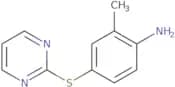
CAS:<p>Versatile small molecule scaffold</p>Fórmula:C11H13N3SPureza:Min. 95%Peso molecular:219.31 g/mol2-Methyl-4-(pyrimidin-2-ylsulfanyl)aniline
CAS:<p>Versatile small molecule scaffold</p>Fórmula:C11H11N3SPureza:Min. 95%Peso molecular:217.29 g/mol2-Hydroxy-[1,1'-biphenyl]-3-carboxylic acid
CAS:<p>2-Hydroxy-[1,1'-biphenyl]-3-carboxylic acid (2HBC) is a monomer that belongs to the group of ester compounds. It has been shown to inhibit the growth of trichophyton mentagrophytes and other fungi by forming hydrogen bonds with the enzyme activities in the cell wall. 2HBC also inhibits microbial growth by binding to enzymes such as phospholipase A2, cyclooxygenase, and lipoxygenase, which are involved in inflammatory processes. This drug also inhibits bacterial growth by binding to the ribosome, preventing protein synthesis and leading to cell death. The inhibition of microbial growth is not limited to bacteria; it also occurs in fungi and protozoa. 2HBC has been shown to be active against both extracellular and intracellular microbial infections.</p>Fórmula:C13H10O3Pureza:Min. 95%Peso molecular:214.22 g/mol2-Oxatricyclo[3.3.1.1,3,7]decane-1-carboxylic acid
CAS:<p>Versatile small molecule scaffold</p>Fórmula:C10H14O3Pureza:Min. 95%Peso molecular:182.22 g/molRef: 3D-GEA23717
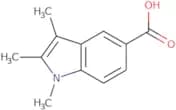
Producto descatalogado1,2,3-Trimethyl-1H-indole-5-carboxylic acid
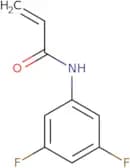
CAS:<p>Versatile small molecule scaffold</p>Fórmula:C12H13NO2Pureza:Min. 95%Peso molecular:203.24 g/molN-(3,5-Difluorophenyl)prop-2-enamide
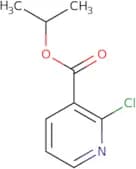
CAS:<p>Versatile small molecule scaffold</p>Fórmula:C9H7F2NOPureza:Min. 95%Peso molecular:183.15 g/molPropan-2-yl 2-chloropyridine-3-carboxylate
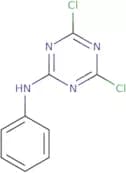
CAS:<p>Versatile small molecule scaffold</p>Fórmula:C9H10ClNO2Pureza:Min. 95%Peso molecular:199.63 g/mol4,6-Dichloro-N-phenyl-1,3,5-triazin-2-amine
CAS:<p>4,6-Dichloro-N-phenyl-1,3,5-triazin-2-amine is a reactive and labile compound that has been shown to inhibit the nuclear factor kappa B (NF-κB). It is an analog of 2,4,6,-trichlorophenyl-1,3,5-triazine. 4,6-Dichloro-N-phenylsulfonyl triazin-2 amine is a chlorinated derivative of 4,6 dichloro triazin 2 amine. The chlorine atom in the molecule may be replaced with a cyanuric or chloride group. This chemical compound is used in dyestuffs and as a precursor for other chemicals. The effect varies depending on the dose administered.</p>Fórmula:C9H6Cl2N4Pureza:Min. 95%Peso molecular:241.08 g/molMethyl 2-[4-(2-aminoethyl)phenoxy]acetate hydrochloride
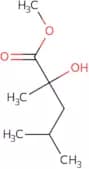
CAS:<p>Versatile small molecule scaffold</p>Fórmula:C11H16ClNO3Pureza:Min. 95%Peso molecular:245.7 g/molMethyl 2-hydroxy-2,4-dimethylpentanoate
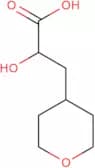
CAS:<p>Versatile small molecule scaffold</p>Fórmula:C8H16O3Pureza:Min. 95%Peso molecular:160.2 g/mol2-Hydroxy-3-(oxan-4-yl)propanoic acid
CAS:<p>Versatile small molecule scaffold</p>Fórmula:C8H14O4Pureza:Min. 95%Peso molecular:174.19 g/molRef: 3D-PCC90160
Producto descatalogado2-Bromo-3,3,3-trifluoro-1-propene
CAS:Producto controlado<p>2-Bromo-3,3,3-trifluoro-1-propene is a chemical compound that has been synthesized in an asymmetric reaction. The reactant is bromopropane and the product is 2,2,2-trifluoropropene. The methylene group on the propene molecule is activated by the nucleophilic attack of a fluoride ion from hydrogen fluoride to form a cavity with a highly strained bond. The kinetic study of this reaction revealed that the activation energy for the reaction is 42 kJ/mol. Palladium-catalyzed coupling reactions are catalyzed by palladium and require nonpolar solvents such as toluene or dichloromethane. This type of reaction has been shown to be exothermic with an isolated yield of 1%.</p>Fórmula:C3H2BrF3Pureza:Min. 95%Forma y color:Colorless PowderPeso molecular:174.95 g/mol2-Cyano-5-fluorophenol
CAS:<p>2-Cyano-5-fluorophenol is an organic compound that is used as a precursor to medicines and other chemicals. It reacts with calcium hydroxide in water to form 2-cyano-5-hydroxyfluorobenzene, which can be hydrolyzed to form 2-cyano-5-chlorofluorobenzene. This compound can also react with sodium hydroxide to produce sodium cyanate, which can be hydrolyzed to form sodium chloride and hydrogen cyanide gas. The alkali metal ions are needed for this reaction, which is why the product should not be exposed to water or moisture. 2-Cyano-5-fluorophenol has been shown to have liquid crystal properties and is used in the production of certain types of polymers. 2Cyano-5Fluorophenol crystals are also used in some medicines such as acetaminophen (paracetamol).</p>Fórmula:C7H4FNOPureza:Min. 95%Peso molecular:137.11 g/mol2-Oxa-spiro[3.3]heptan-6-ol
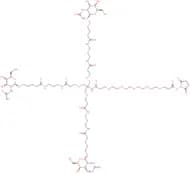
CAS:<p>Versatile small molecule scaffold</p>Fórmula:C6H10O2Pureza:Min. 95%Peso molecular:114.14 g/molTri-b-GalNAc-PEG5-NHS ester
CAS:<p>Tri-GalNAc-NHS ester is a multivalent molecule composed of three GalNAc cluster arms. It is a protein degrader and a ligand of the asialoglycoprotein receptor (ASGPR) used for the development of targeted therapies for liver diseases. The GalNAc arms enable high-affinity binding to the ASGPR on hepatocyte surfaces. The crucial functional group, N-hydroxysuccinimide (NHS) ester, is known for its ease of conjugation with various biomolecules possessing amine (NH2) groups. This biocompatible reaction strategy allows the design and development of targeted conjugates such as drug-GalNAc conjugates, siRNA delivery vehicles, or probes for ASGPR imaging in the liver.</p>Fórmula:C79H137N11O37Pureza:Min. 95%Forma y color:PowderPeso molecular:1,832.99 g/molRef: 3D-FT183733
Producto descatalogado


![2-[(Cyclopropylmethyl)[(9H-fluoren-9-ylmethoxy)carbonyl]amino]acetic acid](/_next/image/?url=https%3A%2Fstatic.cymitquimica.com%2Fproducts%2F3D%2Fthumb-webp%2FRDC30632.webp&w=3840&q=75)
![2-Methyl-4-[(1-methyl-1H-imidazol-2-yl)sulfanyl]aniline](/_next/image/?url=https%3A%2Fstatic.cymitquimica.com%2Fproducts%2F3D%2Fthumb-webp%2FFWB90851.webp&w=3840&q=75)
![2-Hydroxy-[1,1'-biphenyl]-3-carboxylic acid](/_next/image/?url=https%3A%2Fstatic.cymitquimica.com%2Fproducts%2F3D%2Fthumb-webp%2FAAA30406.webp&w=3840&q=75)
![2-Oxatricyclo[3.3.1.1,3,7]decane-1-carboxylic acid](/_next/image/?url=https%3A%2Fstatic.cymitquimica.com%2Fproducts%2F3D%2Fthumb-webp%2FGEA23717.webp&w=3840&q=75)
![Methyl 2-[4-(2-aminoethyl)phenoxy]acetate hydrochloride](/_next/image/?url=https%3A%2Fstatic.cymitquimica.com%2Fproducts%2F3D%2Fthumb-webp%2FHFA22482.webp&w=3840&q=75)


![2-Oxa-spiro[3.3]heptan-6-ol](/_next/image/?url=https%3A%2Fstatic.cymitquimica.com%2Fproducts%2F3D%2Fthumb-webp%2FNEC38108.webp&w=3840&q=75)