Building Blocks
Esta sección contiene productos fundamentales para la síntesis de compuestos orgánicos y biológicos. Building blocks son los materiales de partida esenciales utilizados para construir moléculas complejas a través de diversas reacciones químicas. Desempeñan un papel crítico en el descubrimiento de fármacos, la ciencia de materiales y la investigación química. En CymitQuimica, ofrecemos una gama diversa de building blocks de alta calidad para apoyar sus investigaciones innovadoras y proyectos industriales, asegurando que tenga los componentes esenciales para una síntesis exitosa.
Subcategorías de "Building Blocks"
- Ácidos borónicos y derivados del ácido borónico(5.778 productos)
- Building Blocks quirales(1.243 productos)
- Building Blocks de hidrocarburos(6.097 productos)
- Building Blocks orgánicos(61.048 productos)
Se han encontrado 203115 productos de "Building Blocks"
Ordenar por
Pureza (%)
0
100
|
0
|
50
|
90
|
95
|
100
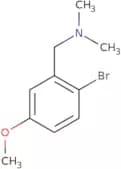
2-Bromo-5-methoxy-N,N-dimethylbenzylamine
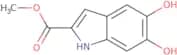
CAS:Versatile small molecule scaffoldFórmula:C10H14BrNOPureza:Min. 95%Peso molecular:244.13 g/molMethyl 5,6-dihydroxy-1H-indole-2-carboxylate
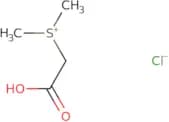
CAS:<p>Methyl 5,6-dihydroxy-1H-indole-2-carboxylate is a neutral molecule that has the potential to be used as an antioxidant. It is a substrate for the enzyme tyrosinase and can react with other molecules to form eumelanin. Methyl 5,6-dihydroxy-1H-indole-2-carboxylate reacts with reactive oxygen species (ROS) and may play an important role in the protection of cells from oxidative damage. Methyl 5,6-dihydroxy-1H-indole-2-carboxylate also has been shown to have synergistic effects with natural compounds such as dopamine and phenolic compounds. This compound can be found in natural sources such as plants and animals. The structure of this compound has been determined by chemical analysis using daltons and chromatography.</p>Fórmula:C10H9NO4Pureza:Min. 95%Peso molecular:207.18 g/molDimethylthetin chloride
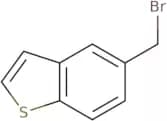
CAS:Please enquire for more information about Dimethylthetin chloride including the price, delivery time and more detailed product information at the technical inquiry form on this pageFórmula:C4H9ClO2SPureza:Min. 95%Peso molecular:156.63 g/mol5-(bromomethyl)-1-benzothiophene
CAS:<p>5-(bromomethyl)-1-benzothiophene is a biochemical that is found in the environment. It has been shown to be an antibiotic drug that binds to apolar regions of bacterial cell membranes and inhibits catalysis by binding to the enzyme's active site. This inhibition leads to the disruption of bacterial biosynthesis, which results in the death of bacteria. 5-(bromomethyl)-1-benzothiophene has been shown to have antimicrobial activity against isolates of Mycobacterium tuberculosis, Mycobacterium avium complex, and Staphylococcus aureus.</p>Fórmula:C9H7BrSPureza:Min. 95%Peso molecular:227.12 g/molBenzo[b]thiophene-4-carboxaldehyde
CAS:<p>Versatile small molecule scaffold</p>Fórmula:C9H6OSPureza:Min. 95%Peso molecular:162.21 g/molBenzo[b]thiophene-5-carbaldehyde
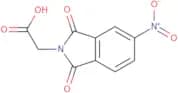
CAS:Benzo[b]thiophene-5-carbaldehyde is a cytotoxic compound that is catalyzed to produce toxic metabolites. It has an agonistic effect on the nicotinic acetylcholine receptor and can be used for the treatment of nicotine addiction. Benzo[b]thiophene-5-carbaldehyde inhibits tumor cell growth in culture by inhibiting metabolic processes, including formylation, which leads to the production of stable compounds. It also has inhibitory effects on aldehyde dehydrogenase, which is involved in the conversion of glucose into glyceraldehyde 3-phosphate. This prevents glycolysis from proceeding and leads to cell death.Fórmula:C9H6OSPureza:Min. 95%Peso molecular:162.21 g/mol(5-Nitro-1,3-dioxo-1,3-dihydro-2H-isoindol-2-yl)acetic acid
CAS:<p>Versatile small molecule scaffold</p>Fórmula:C10H6N2O6Pureza:Min. 95%Peso molecular:250.16 g/molBenzo[b]thiophene-7-carboxylic acid
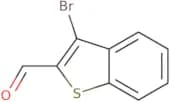
CAS:<p>Benzo[b]thiophene-7-carboxylic acid is a versatile compound that has various applications in the field of research. It is commonly used as a precursor or intermediate in the synthesis of different compounds, including carbostyril derivatives and nitro-substituted benzo[b]thiophenes. This compound has also been utilized as a fluorescent probe for detecting gamma-aminobutyric acid (GABA) receptors and studying their binding affinity.</p>Fórmula:C9H6O2SPureza:Min. 95%Peso molecular:178.21 g/mol3-bromo-1-benzothiophene-2-carbaldehyde
CAS:3-Bromo-1-benzothiophene-2-carbaldehyde (BBTA) is a ligand that has been used extensively in supramolecular chemistry. It has a strong binding constant to formyl and chloride ions, which are important in the study of fluorescence. The tautomers of this compound have been shown to be fluorescent in dimethylformamide, and it can be easily synthesized by reacting piperidine with formaldehyde. This ligand can exist as different isomeric forms depending on the substituents on the benzene ring. 3-Bromo-1-benzothiophene-2-carbaldehyde behaves as a bidentate ligand, meaning that it binds to two different sites on an atom or molecule. The functional theory for this compound is based on the interaction between its two carbonyl groups and two halides, which lead to a series of conjugated double bonds.Fórmula:C9H5BrOSPureza:Min. 95%Peso molecular:241.1 g/mol6-Phenylimidazo[2,1-b][1,3,4]thiadiazol-2-amine
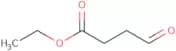
CAS:Versatile small molecule scaffoldFórmula:C10H8N4SPureza:Min. 95%Peso molecular:216.26 g/molEthyl 4-oxobutanoate
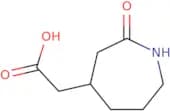
CAS:Ethyl 4-oxobutanoate is a volatile compound that belongs to the group of organic compounds. It has an unpleasant odor and taste, which may be due to its deamination. It is also classified as a glutamic acid derivative because it is synthesised from L-glutamic acid. Ethyl 4-oxobutanoate has been shown to have antibacterial properties against Gram-positive bacteria such as staphylococcus aureus and listeria monocytogenes. The antimicrobial activity of ethyl 4-oxobutanoate is related to its ability to inhibit bacterial protein synthesis by deaminating L-glutamic acid and forming an adduct with the ribosome.Fórmula:C6H10O3Pureza:Min. 95%Peso molecular:130.14 g/mol2-(2-Oxoazepan-4-yl)acetic acid
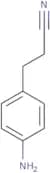
CAS:<p>Versatile small molecule scaffold</p>Fórmula:C8H13NO3Pureza:Min. 95%Peso molecular:171.19 g/mol3-(4-Aminophenyl)propanenitrile
CAS:<p>Versatile small molecule scaffold</p>Fórmula:C9H10N2Pureza:Min. 95%Peso molecular:146.19 g/mol3-(4-Aminophenyl)-1-phenylurea
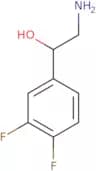
CAS:<p>Versatile small molecule scaffold</p>Fórmula:C13H13N3OPureza:Min. 95%Peso molecular:227.26 g/mol2-Amino-1-(3,4-difluorophenyl)ethan-1-ol
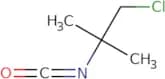
CAS:Versatile small molecule scaffoldFórmula:C8H9F2NOPureza:Min. 95%Peso molecular:173.16 g/mol1-Chloro-2-isocyanato-2-methylpropane
CAS:Versatile small molecule scaffoldFórmula:C5H8ClNOPureza:Min. 95%Peso molecular:133.57 g/mol2-(1-Carboxy-1-methylethoxy)-2-methylpropanoic acid
CAS:Versatile small molecule scaffoldFórmula:C8H14O5Pureza:Min. 95%Peso molecular:190.19 g/mol2,2-Dimethyl-3-phenyloxirane
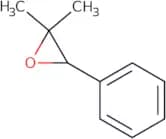
CAS:2,2-Dimethyl-3-phenyloxirane is a hydroxy substituted cyclohexene. It can be synthesized by the elimination of hydroxy groups in cyclohexane. Hydroxy groups are eliminated through reaction with ethylene oxide and phosphonic acid. The compound can be used as an intermediate for the production of some pharmaceuticals, such as adrenoreceptor agonists and alicyclic drugs. 2,2-Dimethyl-3-phenyloxirane has a chemical formula of C8H14O2. It contains 8 carbon atoms, 14 hydrogen atoms, and 2 oxygen atoms. It also has a molecular weight of 136.22 g/mol and a density of 0.86 g/cm3 at 20°C and 1 atmosphere pressure.Fórmula:C10H12OPureza:Min. 95%Peso molecular:148.2 g/mol3-(4-Methylbenzenesulfonyl)propanoic acid
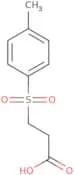
CAS:3-(4-Methylbenzenesulfonyl)propanoic acid (MBPSA) is a tosylated analog of the electrophile propanoic acid. It reacts with nucleophiles and heteroatoms to form an ionic product with a negative charge on the carbon atom adjacent to the sulfonate group. The carbonyl group in MBPSA is susceptible to nucleophilic attack by lithium, forming lithium enolate. This enolate can react with other electrophiles, such as anion or carbonyls, to form a new molecule containing the original electrophile and a sulfonate group.Fórmula:C10H12O4SPureza:Min. 95%Peso molecular:228.27 g/mol3-(4-Methylbenzenesulfonyl)propanenitrile
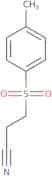
CAS:Versatile small molecule scaffoldFórmula:C10H11NO2SPureza:Min. 95%Peso molecular:209.27 g/mol

![Benzo[b]thiophene-4-carboxaldehyde](/_next/image/?url=https%3A%2Fstatic.cymitquimica.com%2Fproducts%2F3D%2Fthumb-webp%2FKAA13325.webp&w=3840&q=75)
![Benzo[b]thiophene-5-carbaldehyde](/_next/image/?url=https%3A%2Fstatic.cymitquimica.com%2Fproducts%2F3D%2Fthumb-webp%2FKAA13330.webp&w=3840&q=75)
![Benzo[b]thiophene-7-carboxylic acid](/_next/image/?url=https%3A%2Fstatic.cymitquimica.com%2Fproducts%2F3D%2Fthumb-webp%2FKAA13498.webp&w=3840&q=75)
![6-Phenylimidazo[2,1-b][1,3,4]thiadiazol-2-amine](/_next/image/?url=https%3A%2Fstatic.cymitquimica.com%2Fproducts%2F3D%2Fthumb-webp%2FKAA13664.webp&w=3840&q=75)