Building Blocks
Esta sección contiene productos fundamentales para la síntesis de compuestos orgánicos y biológicos. Building blocks son los materiales de partida esenciales utilizados para construir moléculas complejas a través de diversas reacciones químicas. Desempeñan un papel crítico en el descubrimiento de fármacos, la ciencia de materiales y la investigación química. En CymitQuimica, ofrecemos una gama diversa de building blocks de alta calidad para apoyar sus investigaciones innovadoras y proyectos industriales, asegurando que tenga los componentes esenciales para una síntesis exitosa.
Subcategorías de "Building Blocks"
- Ácidos borónicos y derivados del ácido borónico(5.778 productos)
- Building Blocks quirales(1.243 productos)
- Building Blocks de hidrocarburos(6.098 productos)
- Building Blocks orgánicos(61.046 productos)
Se han encontrado 203857 productos de "Building Blocks"
Ordenar por
Pureza (%)
0
100
|
0
|
50
|
90
|
95
|
100
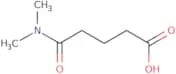
5-(Dimethylamino)-5-oxopentanoic acid
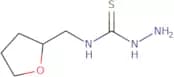
CAS:Phenylalanine is a naturally occurring amino acid that is part of the building blocks of protein. It is also a precursor for the neurotransmitter dopamine, which regulates mood and alertness. 5-(Dimethylamino)-5-oxopentanoic acid (DMAA) is an ester of phenylalanine. DMAA is used as a stimulant, appetite suppressant, decongestant, and bronchodilator. It has been found to have divalent properties in preparations with propyl, heteroatom, or phenethyl esters. DMAA may be synthesized from phenylethylamine (PEA), which is an amide of the amino acids phenylalanine and ethylamine. It may also be synthesized from methylphenylethylamine (MPEA), which is an amide of the amino acids phenylalanine and methylamine. DMAA can also be prepared by reacting propionic acid withFórmula:C7H13NO3Pureza:Min. 95%Peso molecular:159.18 g/mol4-(2-Tetrahydrofurfuryl)-3-thiosemicarbazide
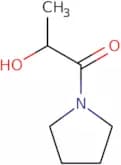
CAS:Versatile small molecule scaffoldFórmula:C6H13N3OSPureza:Min. 95%Peso molecular:175.25 g/mol(2R)-2-Hydroxy-1-(pyrrolidin-1-yl)propan-1-one
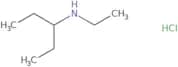
CAS:Versatile small molecule scaffoldFórmula:C7H13NO2Pureza:Min. 95%Peso molecular:143.18 g/molEthyl(pentan-3-yl)amine hydrochloride
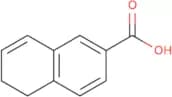
CAS:Versatile small molecule scaffoldFórmula:C7H18ClNPureza:Min. 95%Peso molecular:151.68 g/mol5,6-Dihydronaphthalene-2-carboxylic acid
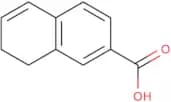
CAS:Versatile small molecule scaffoldFórmula:C11H10O2Pureza:Min. 95%Peso molecular:174.2 g/mol7,8-Dihydronaphthalene-2-carboxylic acid
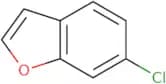
CAS:Versatile small molecule scaffoldFórmula:C11H10O2Pureza:Min. 95%Peso molecular:174.2 g/mol6-Chlorobenzofuran
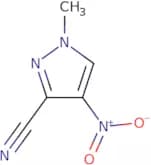
CAS:Versatile small molecule scaffoldFórmula:C8H5ClOPureza:Min. 95%Peso molecular:152.58 g/mol1-Methyl-4-nitro-1H-pyrazole-3-carbonitrile
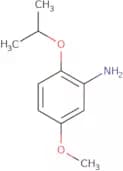
CAS:Versatile small molecule scaffoldFórmula:C5H4N4O2Pureza:Min. 95%Peso molecular:152.11 g/mol5-Methoxy-2-(propan-2-yloxy)aniline
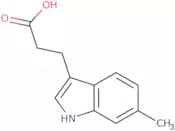
CAS:<p>5-Methoxy-2-(propan-2-yloxy)aniline is a chemical compound with the molecular formula C9H15NO. It is a methoxy, isopropoxy, and alkoxy compound that contains one methoxy group and two different alkoxy groups. 5-Methoxy-2-(propan-2-yloxy)aniline undergoes a photochemical process that leads to its elimination of water and formation of an ammonium salt. This reaction produces carbolines, which are responsible for the yellow color of 5-methoxy-2-(propan-2-yloxy)aniline. Nitrate ions can also be produced during this process.</p>Fórmula:C10H15NO2Pureza:Min. 95%Peso molecular:181.23 g/mol3-(6-Methyl-1H-indol-3-yl)propanoic acid
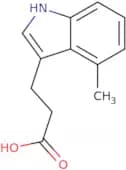
CAS:Versatile small molecule scaffoldFórmula:C12H13NO2Pureza:Min. 95%Peso molecular:203.24 g/mol3-(4-methyl-1H-indol-3-yl)propanoic Acid
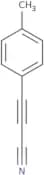
CAS:Versatile small molecule scaffoldFórmula:C12H13NO2Pureza:Min. 95%Peso molecular:203.23 g/mol3-(4-Methylphenyl)prop-2-ynenitrile
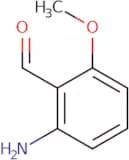
CAS:Versatile small molecule scaffoldFórmula:C10H7NPureza:Min. 95%Peso molecular:141.17 g/mol2-Amino-6-methoxybenzaldehyde
CAS:<p>Versatile small molecule scaffold</p>Fórmula:C8H9NO2Pureza:Min. 95%Peso molecular:151.16 g/mol(E)-4-Propoxycinnamic acid
CAS:<p>(E)-4-Propoxycinnamic acid is a liquid crystal compound that belongs to the class of oxalyl compounds. It is an anti-malarial drug and has been shown to have anti-malarial activity in mice. The reactivity of (E)-4-propoxycinnamic acid with chloride ions can be observed by its color change from yellow to brown.</p>Fórmula:C12H14O3Pureza:Min. 95%Peso molecular:206.24 g/mol(2E)-3-(2,3-Dihydro-1,4-benzodioxin-6-yl)prop-2-enoic acid
CAS:<p>Versatile small molecule scaffold</p>Fórmula:C11H10O4Pureza:Min. 95%Peso molecular:206.19 g/mol4-Ethyl-3-methyl-1H-pyrazol-5-amine
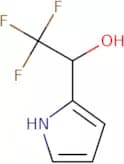
CAS:Versatile small molecule scaffoldFórmula:C6H11N3Pureza:Min. 95%Peso molecular:125.17 g/mol2,2,2-Trifluoro-1-(1H-pyrrol-2-yl)ethan-1-ol
CAS:Versatile small molecule scaffoldFórmula:C6H6F3NOPureza:Min. 95%Peso molecular:165.11 g/molImidazo[1,5-a]pyridine-8-carbaldehyde
CAS:Versatile small molecule scaffoldFórmula:C8H6N2OPureza:Min. 95%Peso molecular:146.15 g/molMethyl imidazo[1,5-a]pyridine-8-carboxylate
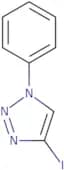
CAS:<p>Versatile small molecule scaffold</p>Fórmula:C9H8N2O2Pureza:Min. 95%Peso molecular:176.18 g/mol4-Iodo-1-phenyl-1H-1,2,3-triazole
CAS:<p>Versatile small molecule scaffold</p>Fórmula:C8H6IN3Pureza:Min. 95%Peso molecular:271.06 g/mol



![Imidazo[1,5-a]pyridine-8-carbaldehyde](/_next/image/?url=https%3A%2Fstatic.cymitquimica.com%2Fproducts%2F3D%2Fthumb-webp%2FBGA50903.webp&w=3840&q=75)
![Methyl imidazo[1,5-a]pyridine-8-carboxylate](/_next/image/?url=https%3A%2Fstatic.cymitquimica.com%2Fproducts%2F3D%2Fthumb-webp%2FBGA50902.webp&w=3840&q=75)