Building Blocks
Esta sección contiene productos fundamentales para la síntesis de compuestos orgánicos y biológicos. Building blocks son los materiales de partida esenciales utilizados para construir moléculas complejas a través de diversas reacciones químicas. Desempeñan un papel crítico en el descubrimiento de fármacos, la ciencia de materiales y la investigación química. En CymitQuimica, ofrecemos una gama diversa de building blocks de alta calidad para apoyar sus investigaciones innovadoras y proyectos industriales, asegurando que tenga los componentes esenciales para una síntesis exitosa.
Subcategorías de "Building Blocks"
- Ácidos borónicos y derivados del ácido borónico(5.778 productos)
- Building Blocks quirales(1.243 productos)
- Building Blocks de hidrocarburos(6.098 productos)
- Building Blocks orgánicos(61.057 productos)
Se han encontrado 200716 productos de "Building Blocks"
Ordenar por
Pureza (%)
0
100
|
0
|
50
|
90
|
95
|
100
8-Aminonaphthalen-1-ol hydrochloride
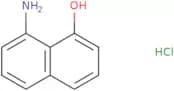
CAS:<p>Versatile small molecule scaffold</p>Fórmula:C10H10ClNOPureza:Min. 95%Peso molecular:195.64 g/mol2-(5-bromopyridin-3-yl)propan-2-ol
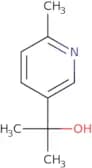
CAS:<p>Versatile small molecule scaffold</p>Fórmula:C8H10BrNOPureza:Min. 95%Peso molecular:216.08 g/mol2-(6-Methylpyridin-3-yl)propan-2-ol
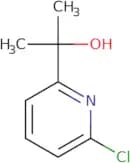
CAS:Versatile small molecule scaffoldFórmula:C9H13NOPureza:Min. 95%Peso molecular:151.21 g/mol2-(6-Chloropyridin-2-yl)propan-2-ol
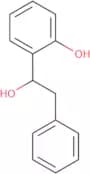
CAS:Versatile small molecule scaffoldFórmula:C8H10ClNOPureza:Min. 95%Peso molecular:171.62 g/mol2-(1-Hydroxy-2-phenylethyl)phenol
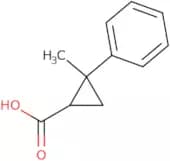
CAS:Versatile small molecule scaffoldFórmula:C14H14O2Pureza:Min. 95%Peso molecular:214.26 g/mol2-Methyl-2-phenylcyclopropane-1-carboxylic acid
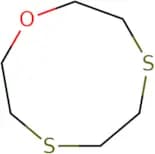
CAS:Versatile small molecule scaffoldFórmula:C11H12O2Pureza:Min. 95%Peso molecular:176.21 g/mol1,4,7-Oxadithionane
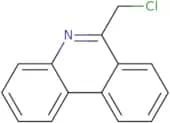
CAS:<p>Versatile small molecule scaffold</p>Fórmula:C6H12OS2Pureza:Min. 95%Peso molecular:164.3 g/mol6-(Chloromethyl)phenanthridine
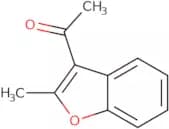
CAS:<p>6-(Chloromethyl)phenanthridine is a fatty acid that has been shown to have anti-inflammatory effects. It has also been shown to be effective in the treatment of humans and animals with musculoskeletal disorders. 6-(Chloromethyl)phenanthridine is soluble in deionized water and hydroxide solution, but insoluble in ethanol and acetone. This compound can be used as an ingredient in detergent compositions for use on clothes. It can also be used as a microcapsule coating material or as an acid catalyst in the production of soybean extract.</p>Fórmula:C14H10ClNPureza:Min. 95%Peso molecular:227.69 g/mol1-(2-Methyl-1-benzofuran-3-yl)ethan-1-one
CAS:Versatile small molecule scaffoldFórmula:C11H10O2Pureza:Min. 95%Peso molecular:174.2 g/mol2,3-Dihydro-5-hydroxybenzo[b]furan
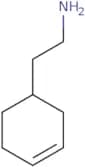
CAS:<p>2,3-Dihydro-5-hydroxybenzo[b]furan (2,3-DHBF) is a molecule that has been shown to have synergistic interaction with human polymorphonuclear leukocytes. This compound has also been found to inhibit the peroxidase-like activity and lipolytic enzymes of these cells. 2,3-DHBF may act as an antiinflammatory agent by inhibiting the production of inflammatory mediators. It also has antioxidant properties due to its ability to scavenge free radicals and protect against lipid peroxidation. The compound is soluble in organic solvents and can be synthesized from sulfonic acids and selenium compounds. 2,3-DHBF has also been found to have cytotoxic effects on heart tissue in rats.</p>Fórmula:C8H8O2Pureza:Min. 95%Peso molecular:136.15 g/mol2-(Cyclohex-3-en-1-yl)ethan-1-amine
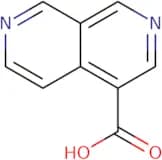
CAS:<p>Versatile small molecule scaffold</p>Fórmula:C8H15NPureza:Min. 95%Peso molecular:125.21 g/mol2,7-Naphthyridine-4-carboxylic acid
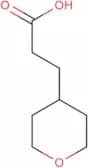
CAS:Versatile small molecule scaffoldFórmula:C9H6N2O2Pureza:Min. 95%Peso molecular:174.16 g/mol3-(Tetrahydro-2H-pyran-4-yl)propanoic acid
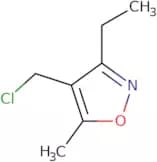
CAS:<p>Versatile small molecule scaffold</p>Fórmula:C8H14O3Pureza:Min. 95%Peso molecular:158.19 g/mol4-(Chloromethyl)-3-ethyl-5-methyl-1,2-oxazole
CAS:Versatile small molecule scaffoldFórmula:C7H10ClNOPureza:Min. 95%Peso molecular:159.61 g/molMethyl 4'-hydroxy-[1,1'-biphenyl]-4-carboxylate
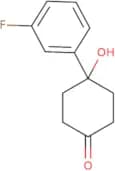
CAS:Methyl 4'-hydroxy-[1,1'-biphenyl]-4-carboxylate is a liquid crystal with a molecular weight of 244.3 g/mol. It is synthesized from benzaldehyde and 4-bromobenzaldehyde in the presence of sodium hydroxide and potassium carbonate in methanol at reflux temperature. The compound crystallizes as an asymmetric carbon atom with a biphenyl skeleton. It has been shown to be soluble in chloroform and benzene, but not in ether or acetone. The compound exhibits ferroelectric properties and has been used for the synthesis of dendrimers and supramolecular structures.Fórmula:C14H12O3Pureza:Min. 95%Peso molecular:228.24 g/mol4-(3-Fluorophenyl)-4-hydroxycyclohexan-1-one
CAS:Versatile small molecule scaffoldFórmula:C12H13FO2Pureza:Min. 95%Peso molecular:208.23 g/mol4-[3-(Trifluoromethyl)phenyl]cyclohexan-1-one
CAS:Versatile small molecule scaffoldFórmula:C13H13F3OPureza:Min. 95%Peso molecular:242.24 g/mol2-Aminothieno[2,3-d]thiazole
CAS:2-Aminothieno[2,3-d]thiazole is a heterocyclic compound that has been used as a building block in organic synthesis. It has been found to be an intermediate in the deamination of 2-aminopyrimidine and the reductive chlorination of ethyl or benzyl thiocyanate. 2-Aminothieno[2,3-d]thiazole is produced by the decarboxylation of 2-aminoacetophenone and can be oxidized to produce 2,4-diaminothiazole. The optical rotation varies with the solvent used, with values given for ethanol being [α] = -8.5° (c=0.1 in HCl) and for methanol [α] = +6.7° (c=0.1 in HCl). 2-Aminothieno[2,3-d]thiazFórmula:C5H4N2S2Pureza:Min. 95%Peso molecular:156.23 g/mol2-(Azidomethyl)benzonitrile
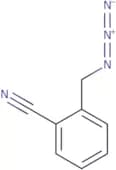
CAS:Versatile small molecule scaffoldFórmula:C8H6N4Pureza:Min. 95%Peso molecular:158.16 g/molChloromethyl cyclohexyl carbonate
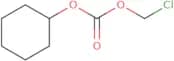
CAS:<p>Chloromethyl cyclohexyl carbonate is a new acyclic nucleoside phosphonate that has been shown to have antiviral properties. It is active against HIV strains and inhibits the production of clotting factors. Chloromethyl cyclohexyl carbonate can be used as a drug substance for treating bowel disease, hepatitis, and cancer. It also modulates syncytial cells and heterocycles. Pharmacokinetic studies on chloromethyl cyclohexyl carbonate have shown that it has high bioavailability in the small intestine and liver after oral administration. It is metabolized by tyrosine kinase, which indicates that it may interfere with other drugs such as warfarin or phenytoin. Chloromethyl cyclohexyl carbonate has been found to be effective in treating gastritis and cancer in animal models.</p>Fórmula:C8H13ClO3Pureza:Min. 95%Peso molecular:192.64 g/mol

![2,3-Dihydro-5-hydroxybenzo[b]furan](/_next/image/?url=https%3A%2Fstatic.cymitquimica.com%2Fproducts%2F3D%2Fthumb-webp%2FQBA49252.webp&w=3840&q=75)
![Methyl 4'-hydroxy-[1,1'-biphenyl]-4-carboxylate](/_next/image/?url=https%3A%2Fstatic.cymitquimica.com%2Fproducts%2F3D%2Fthumb-webp%2FQBA50141.webp&w=3840&q=75)
![4-[3-(Trifluoromethyl)phenyl]cyclohexan-1-one](/_next/image/?url=https%3A%2Fstatic.cymitquimica.com%2Fproducts%2F3D%2Fthumb-webp%2FQBA50393.webp&w=3840&q=75)
![2-Aminothieno[2,3-d]thiazole](/_next/image/?url=https%3A%2Fstatic.cymitquimica.com%2Fproducts%2F3D%2Fthumb-webp%2FQBA50756.webp&w=3840&q=75)