Building Blocks
Esta sección contiene productos fundamentales para la síntesis de compuestos orgánicos y biológicos. Building blocks son los materiales de partida esenciales utilizados para construir moléculas complejas a través de diversas reacciones químicas. Desempeñan un papel crítico en el descubrimiento de fármacos, la ciencia de materiales y la investigación química. En CymitQuimica, ofrecemos una gama diversa de building blocks de alta calidad para apoyar sus investigaciones innovadoras y proyectos industriales, asegurando que tenga los componentes esenciales para una síntesis exitosa.
Subcategorías de "Building Blocks"
- Ácidos borónicos y derivados del ácido borónico(5.778 productos)
- Building Blocks quirales(1.243 productos)
- Building Blocks de hidrocarburos(6.097 productos)
- Building Blocks orgánicos(61.047 productos)
Se han encontrado 203293 productos de "Building Blocks"
Ordenar por
Pureza (%)
0
100
|
0
|
50
|
90
|
95
|
100
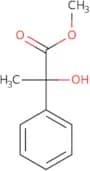
Methyl 2-hydroxy-2-phenylpropanoate
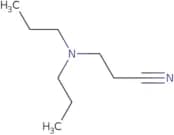
CAS:<p>Methyl 2-hydroxy-2-phenylpropanoate is an organic compound that contains a nitrogen atom. It is the product of the reaction between Grignard reagent and alkynyl group. This reactive chemical can be used in agricultural chemistry as a fungicide. Methyl 2-hydroxy-2-phenylpropanoate also has a functional group and can be used as an analog for other compounds, such as oxazolidinones and alkynyl amines. Methyl 2-hydroxy-2-phenylpropanoate may be synthesized by reacting methyl 2-chloroacetoacetate with hydroxylamine. The nitrogen atoms on this molecule are important for the formation of bonds with other molecules, which is why it is so reactive. Methyl 2-hydroxy-2-phenylpropanoate has been shown to inhibit collagen production in plants and to have receptor activity against fungi.</p>Fórmula:C10H12O3Pureza:Min. 95%Peso molecular:180.2 g/mol3-(Dipropylamino)propanenitrile
CAS:Versatile small molecule scaffoldFórmula:C9H18N2Pureza:Min. 95%Peso molecular:154.25 g/molRef: 3D-VAA73311
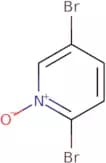
1g798,00€5gA consultar10gA consultar100mg202,00€250mg310,00€500mgA consultar2500mg1.155,00€2,5-Dibromopyridine 1-oxide
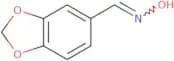
CAS:<p>Versatile small molecule scaffold</p>Fórmula:C5H3Br2NOPureza:Min. 95%Peso molecular:252.89 g/molN-(1,3-Dioxaindan-5-ylmethylidene)hydroxylamine
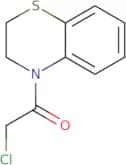
CAS:Producto controladoN-(1,3-Dioxaindan-5-ylmethylidene)hydroxylamine is a chemical compound that is used as an intermediate in the synthesis of other compounds. It has been shown to increase tyrosinase activity and inhibit tyrosinase production in vitro. N-(1,3-Dioxaindan-5-ylmethylidene)hydroxylamine is also an aldoxime, which reacts with aluminium to form an insoluble aluminium hydroxide precipitate. This reaction can be used to precipitate aluminum from solution. Reaction with sodium carbonate forms an insoluble sodium carbonate precipitate, which can be useful for removing residual aluminum after precipitation. The reaction of N-(1,3-dioxaindan-5-ylmethylidene)hydroxylamine with propionate or methyl ethyl chloride produces a polymerized product and piperonal respectively. Reaction of this compound with benzoic acid yields theFórmula:C8H7NO3Pureza:Min. 95%Peso molecular:165.15 g/mol4-(Chloroacetyl)-3,4-dihydro-2H-1,4-benzothiazine
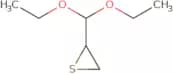
CAS:<p>Versatile small molecule scaffold</p>Fórmula:C10H10ClNOSPureza:Min. 95%Peso molecular:227.71 g/mol2-(Diethoxymethyl)thiirane
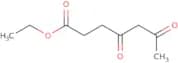
CAS:Versatile small molecule scaffoldFórmula:C7H14O2SPureza:Min. 95%Peso molecular:162.25 g/molEthyl 4,6-dioxoheptanoate
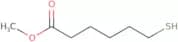
CAS:<p>Versatile small molecule scaffold</p>Fórmula:C9H14O4Pureza:Min. 95%Peso molecular:186.2 g/molMethyl 6-sulfanylhexanoate
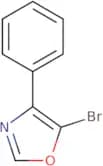
CAS:Methyl 6-sulfanylhexanoate (MSH) is a diphenylacetylene derivative that has been shown to be able to form a chemical bond with gold nanoparticles. MSH can be synthesized by the reaction of sulfur, ammonia, and methyl alcohol in an ionic liquid, followed by phase transfer catalytic reduction. This compound has been shown to act as a functional group for the synthesis of amides and sulfides. MSH also has the ability to absorb infrared light due to its thiolate functional group. In addition, MSH is able to function as a hydrogen-bonding donor or acceptor in chemical reactions, which can be useful for sensors or indicator compounds.Fórmula:C7H14O2SPureza:Min. 95%Peso molecular:162.25 g/mol5-Bromo-4-phenyl-1,3-oxazole
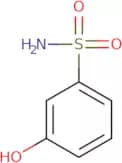
CAS:<p>5-Bromo-4-phenyl-1,3-oxazole is a marine sponge metabolite that has been found to have a 5-membered dihedral ring with a bromine and phenyl group. It is an organic compound that is used as a chemical building block in the synthesis of other compounds called multidrugs. The anticancer activity of 5-bromo-4-phenyl-1,3-oxazole has been demonstrated by chemists in the laboratory. This molecule has also been shown to be active against cancer cells in organisms such as rats and mice. 5-Bromo-4-phenyl-1,3 -oxazole is not effective against all types of cancer, but it has shown efficacy against certain cancers such as those found in the breast and colon.</p>Fórmula:C9H6BrNOPureza:Min. 95%Peso molecular:224.05 g/mol3-Hydroxybenzene-1-sulfonamide
CAS:Versatile small molecule scaffoldFórmula:C6H7NO3SPureza:Min. 95%Peso molecular:173.19 g/mol1-[(2-Chloroethyl)sulfanyl]-4-methylbenzene
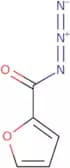
CAS:Versatile small molecule scaffoldFórmula:C9H11ClSPureza:Min. 95%Peso molecular:186.7 g/molFuran-2-carbonyl azide
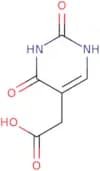
CAS:<p>Furan-2-carbonyl azide is an azide with a hydroxyl group that is synthesized by the reaction of ethylene diamine and methyl ethyl carbonyl chloride. Furan-2-carbonyl azide has been shown to be a potent immunosuppressant in rats, inhibiting the proliferation of T cells and B cells in vitro. It also causes cardiac arrhythmia in mice. Furan-2-carbonyl azide can be used for the synthesis of other compounds through cross-coupling reactions or as a reagent for phosphite formation.</p>Fórmula:C5H3N3O2Pureza:Min. 95%Peso molecular:137.1 g/mol(2,4-Dioxo-1,2,3,4-tetrahydro-5-pyrimidinyl)acetic acid
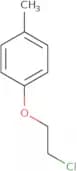
CAS:<p>Versatile small molecule scaffold</p>Fórmula:C6H6N2O4Pureza:Min. 95%Peso molecular:170.12 g/mol1-(2-Chloroethoxy)-4-methylbenzene
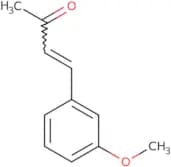
CAS:<p>Versatile small molecule scaffold</p>Fórmula:C9H11ClOPureza:Min. 95%Peso molecular:170.63 g/mol4-(3-Methoxyphenyl)but-3-en-2-one
CAS:<p>Versatile small molecule scaffold</p>Fórmula:C11H12O2Pureza:Min. 95%Peso molecular:176.21 g/mol2-Methoxyphenylisocyanide
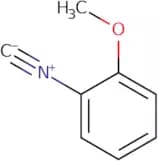
CAS:2-Methoxyphenylisocyanide is a functional group that is used as a ligand in coordination chemistry. It can be synthesized by reacting phenylisocyanide with formaldehyde and potassium hydroxide. 2-Methoxyphenylisocyanide is a molecule that can coordinate to metal ions such as copper, zinc, nickel, palladium, and platinum. The reaction solution of 2-methoxyphenylisocyanide with hydrogen chloride produces an acid molecule. This chemical has demonstrated the ability to enhance the activity of myeloid-derived suppressor cells in mice injected with cancer cells via a supramolecular interaction between the 2-methoxyphenylisocyanide and the myeloid cell membrane.Fórmula:C8H7NOPureza:Min. 95%Peso molecular:133.14 g/mol2-Formyl-6-methylbenzoic acid
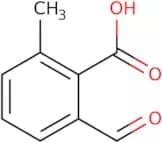
CAS:2-Formyl-6-methylbenzoic acid is an additive that is used in organic chemistry. It can be used as a reactant to form isoindolinones, which are tetracyclic and tricyclic compounds. This product is efficient and can be used for the synthesis of bromides and catalysts. 2-Formyl-6-methylbenzoic acid has been shown to react with hydrazides to produce allyl compounds. This chemical also reacts with bromides or catalysts to produce chemistry, such as organic chemistry.Fórmula:C9H8O3Pureza:Min. 95%Peso molecular:164.16 g/mol1-Bromo-3-(4-methoxyphenyl)propan-2-one
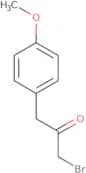
CAS:Versatile small molecule scaffoldFórmula:C10H11BrO2Pureza:Min. 95%Peso molecular:243.1 g/mol2-Amino-3,6-dibromobenzoic acid
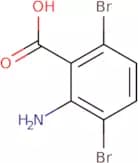
CAS:<p>Versatile small molecule scaffold</p>Fórmula:C7H5Br2NO2Pureza:Min. 95%Peso molecular:294.93 g/mol

![1-[(2-Chloroethyl)sulfanyl]-4-methylbenzene](/_next/image/?url=https%3A%2Fstatic.cymitquimica.com%2Fproducts%2F3D%2Fthumb-webp%2FVAA76171.webp&w=3840&q=75)