Building Blocks
Esta sección contiene productos fundamentales para la síntesis de compuestos orgánicos y biológicos. Building blocks son los materiales de partida esenciales utilizados para construir moléculas complejas a través de diversas reacciones químicas. Desempeñan un papel crítico en el descubrimiento de fármacos, la ciencia de materiales y la investigación química. En CymitQuimica, ofrecemos una gama diversa de building blocks de alta calidad para apoyar sus investigaciones innovadoras y proyectos industriales, asegurando que tenga los componentes esenciales para una síntesis exitosa.
Subcategorías de "Building Blocks"
- Ácidos borónicos y derivados del ácido borónico(5.778 productos)
- Building Blocks quirales(1.243 productos)
- Building Blocks de hidrocarburos(6.098 productos)
- Building Blocks orgánicos(61.046 productos)
Se han encontrado 203857 productos de "Building Blocks"
Ordenar por
Pureza (%)
0
100
|
0
|
50
|
90
|
95
|
100
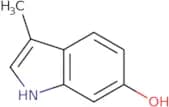
3-Methyl-1H-indol-6-ol
CAS:<p>3-Methyl-1H-indol-6-ol is a metabolite of estrone sulfate, which is produced by the activity of cytochrome P450 enzymes. It has been shown to be an effective inhibitor of chemical reactions in urine samples and primary cells. 3-Methyl-1H-indol-6-ol also has a role in the metabolism of estrogens and may play a part in the development of symptoms such as those seen in human liver disease or testicular cancer. 3-Methylindole can be found as an endogenous metabolite in schizophrenic patients and is known to inhibit constitutive androstane receptor (CAR) activity, which regulates gene expression and cellular growth.</p>Fórmula:C9H9NOPureza:Min. 95%Peso molecular:147.18 g/mol3,4-Dihydrobenzo[e][1,3]oxazin-2-one
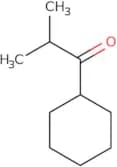
CAS:<p>3,4-Dihydrobenzo[e][1,3]oxazin-2-one is an organic compound that is used as a catalyst in the synthesis of pharmaceuticals. It reacts with halides and alkali metal to form quaternary ammonium salts. This reaction can be represented by the following scheme:</p>Fórmula:C8H7NO2Pureza:Min. 95%Peso molecular:149.15 g/mol1-Cyclohexyl-2-methylpropan-1-one
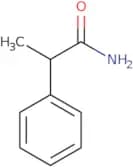
CAS:<p>Versatile small molecule scaffold</p>Fórmula:C10H18OPureza:Min. 95%Peso molecular:154.25 g/mol2-Phenylpropanamide
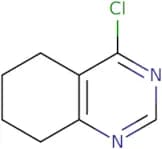
CAS:<p>2-Phenylpropanamide is an amide that has been shown to have anti-inflammatory activity in a variety of animal models. It is also a metalloprotease inhibitor and suppresses the release of inflammatory cytokines. 2-Phenylpropanamide has shown some efficacy against cancer in human cell lines, and inhibits the production of the enzyme acetylcholinesterase. This drug also binds to adenosine A3 receptors, which are involved in inflammatory processes. 2-Phenylpropanamide has antioxidant properties, as it can scavenge radicals and inhibit hydroxyl radical formation. 2-Phenylpropanamide also has a high affinity for magnesium ions, which may explain its long elimination half-life after oral administration.</p>Fórmula:C9H11NOPureza:Min. 95%Peso molecular:149.19 g/mol4-Chloro-5,6,7,8-tetrahydroquinazoline
CAS:<p>Versatile small molecule scaffold</p>Fórmula:C8H9ClN2Pureza:Min. 95%Peso molecular:168.62 g/mol5-Formyl-2-methylfuran-3-carboxylic acid
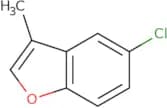
CAS:Versatile small molecule scaffoldFórmula:C7H6O4Pureza:Min. 95%Peso molecular:154.12 g/mol5-Chloro-3-methylbenzofuran
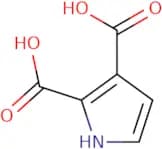
CAS:<p>5-Chloro-3-methylbenzofuran is a condensation product of 5-chloro-2,4-dinitrobenzene and 3-methylbenzoic acid. It is an antimicrobial agent that belongs to the thiazolidinone class of anticonvulsant drugs. This compound has been shown to have antitubercular activity and has been used in the treatment of Mycobacterium tuberculosis. 5-Chloro-3-methylbenzofuran also has anticonvulsant effects and can be used for the treatment of epilepsy.</p>Fórmula:C9H7OClPureza:Min. 95%Peso molecular:166.6 g/mol1H-Pyrrole-2,3-dicarboxylic acid
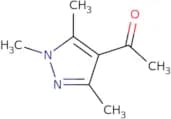
CAS:<p>1H-Pyrrole-2,3-dicarboxylic acid is a naturally occurring organic compound that is an important building block for the synthesis of melanin. It has been shown to inhibit tyrosinase activity and to be cytotoxic at high concentrations. 1H-Pyrrole-2,3-dicarboxylic acid has also been used as a model system for skin cancer and hydrochloric acid has been shown to have a protective effect on the morphology of 1H-pyrrole-2,3-dicarboxylic acid crystals.</p>Fórmula:C6H5NO4Pureza:Min. 95%Peso molecular:155.11 g/mol1-(1,3,5-Trimethyl-1H-pyrazol-4-yl)ethanone
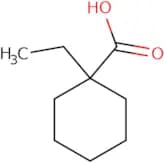
CAS:Versatile small molecule scaffoldFórmula:C8H12N2OPureza:Min. 95%Peso molecular:152.2 g/mol1-Ethylcyclohexane-1-carboxylic acid
CAS:1-Ethylcyclohexane-1-carboxylic acid is an organic compound that is a monocarboxylic acid. It is a liquid at room temperature and has a boiling point of 110°C. 1-Ethylcyclohexane-1-carboxylic acid can be used as an inhibitor for tissue plasminogen activator, which is a protease that activates plasminogen to break down fibrin. 1-Ethylcyclohexane-1-carboxylic acid inhibits the activity of this enzyme, preventing clot lysis and promoting blood coagulation. 1-Ethylcyclohexane-1-carboxylic acid also has been shown to be cytotoxic to mammalian cells in culture, but not to bacterial cells.Fórmula:C9H16O2Pureza:Min. 95%Peso molecular:156.22 g/mol2-azaspiro[4.4]nonane-1,3-dione
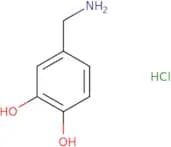
CAS:<p>2-Azaspiro[4.4]nonane-1,3-dione is a linker that is used in the synthesis of active derivatives of drugs. It has pharmacological and physicochemical properties that are similar to those of methylene. 2-Azaspiro[4.4]nonane-1,3-dione is used as an analytical standard for rp-hplc analysis and x-ray structural analysis. It can be used to synthesize pentylenetetrazole and imine derivatives for anticonvulsant properties, which have been shown to have properties similar to those of phenytoin.</p>Fórmula:C8H11NO2Pureza:Min. 95%Peso molecular:153.18 g/mol4-(Aminomethyl)-1,2-benzenediol hydrochloride
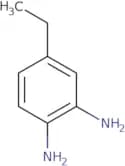
CAS:<p>4-(Aminomethyl)-1,2-benzenediol hydrochloride is a potent inhibitor of monoamine neurotransmitter synthesis. It has been shown to inhibit the polymerase chain reaction (PCR) and is effective in the preparation of samples for PCR analysis. 4-(Aminomethyl)-1,2-benzenediol hydrochloride is chemically stable and has an electrochemical detector that can be used in its detection. This chemical also inhibits the incorporation of thymidine into DNA during DNA synthesis, leading to a decrease in DNA synthesis. The monoclonal antibody technique has been used to detect this compound in human serum and tissue biopsies.</p>Fórmula:C7H10ClNO2Pureza:Min. 95%Peso molecular:175.61 g/mol4-Ethylbenzene-1,2-diamine
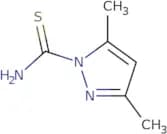
CAS:Versatile small molecule scaffoldFórmula:C8H12N2Pureza:Min. 95%Peso molecular:136.19 g/mol3,5-Dimethyl-1H-pyrazole-1-carbothioamide
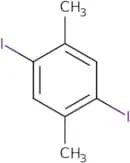
CAS:3,5-Dimethyl-1H-pyrazole-1-carbothioamide (DMPC) is a nitrogen-containing compound that has been shown to have high cytotoxic effects on leukemia cells. DMPC interacts with cisplatin and thiosemicarbazide, both of which are inorganic molecules that have been used as chemotherapeutic drugs for the treatment of cancer. DMPC is an amide with two nitrogen atoms and a conformational vibrational frequency at 4.6 MHz. It is also a ligand for the cytotoxic effect of cisplatin and thiosemicarbazide.Fórmula:C6H9N3SPureza:Min. 95%Peso molecular:155.22 g/mol1,4-Diiodo-2,5-dimethylbenzene
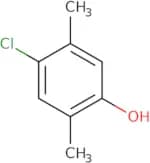
CAS:<p>1,4-Diiodo-2,5-dimethylbenzene is an iodide that can be used in the industrialization of iodine. It can be prepared from bicyclopropylidene and nitrosobenzene by coupling with a carbonyl group. The yield of this reaction is high and the product is stable. 1,4-Diiodo-2,5-dimethylbenzene can also be prepared by palladium-catalyzed cross coupling or a Diels–Alder reaction between 2,5-dimethylaniline and 3-(bromomethyl)cyclobutane. This process yields only one regioisomer because there are no other reactive groups on the ring to form a second regioisomeric product.</p>Fórmula:C8H8I2Pureza:Min. 95%Peso molecular:357.96 g/mol4-Chloro-2,5-dimethylphenol
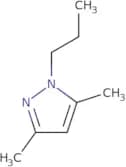
CAS:<p>4-Chloro-2,5-dimethylphenol is a phenolic compound that is used as an intermediate in the synthesis of other organic compounds. It has low ph and can form adducts with methanol at high ph. 4-Chloro-2,5-dimethylphenol can be reacted with hydrogen chloride to produce the corresponding chloride or with a coupling agent to produce the corresponding imine. 4-Chloro-2,5-dimethylphenol can also be used as an elimination agent.</p>Fórmula:C8H9ClOPureza:Min. 95%Peso molecular:156.61 g/mol3,5-Dimethyl-1-propyl-1H-pyrazole
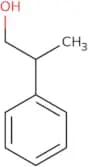
CAS:<p>Versatile small molecule scaffold</p>Fórmula:C8H14N2Pureza:Min. 95%Peso molecular:138.21 g/mol2-Phenyl-1-propanol
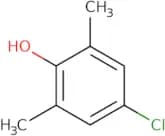
CAS:<p>2-Phenyl-1-propanol is a molecule with a hydroxyl group at the 2 position and a phenyl group at the 1 position. It is used as a film-forming polymer in coatings, adhesives, and elastomers. It is also used as an ingredient in glycol ethers, fatty acids, and enolate anions. 2-Phenyl-1-propanol has been shown to be synthesized by oxidative dehydrogenation of benzaldehyde and acetophenone. This reaction mechanism has been shown using chromatographic methods on two different solvents: one polar (water) and one nonpolar (tetrahydrofuran). The reaction proceeds with the formation of an enolate anion intermediate that reacts with water to form the alcohol product. The hydration process can be catalyzed by either sodium or potassium salts. The phase transition temperature for this compound is between -30°C and 60°</p>Fórmula:C9H12OPureza:Min. 95%Peso molecular:136.19 g/mol4-Chloro-2,6-dimethylphenol
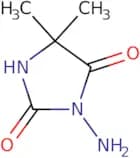
CAS:<p>4-Chloro-2,6-dimethylphenol is a reactive molecule that is found in the environment and can be produced by the human body. It is an antimicrobial agent that reversibly binds to nucleophilic sites on peroxidases and other enzymes, thereby blocking their activity. 4-Chloro-2,6-dimethylphenol inhibits enzymatic reactions in bacteria by reacting with the hydroxyl group of enzymes such as catalase and glutathione reductase. This agent has been shown to have an effect on human pathogens such as Staphylococcus aureus and Escherichia coli.</p>Fórmula:C8H9ClOPureza:Min. 95%Peso molecular:156.61 g/mol3-Amino-5,5-dimethylimidazolidine-2,4-dione
CAS:Versatile small molecule scaffoldFórmula:C5H9N3O2Pureza:Min. 95%Peso molecular:143.14 g/mol

![3,4-Dihydrobenzo[e][1,3]oxazin-2-one](/_next/image/?url=https%3A%2Fstatic.cymitquimica.com%2Fproducts%2F3D%2Fthumb-webp%2FBAA12585.webp&w=3840&q=75)

![2-azaspiro[4.4]nonane-1,3-dione](/_next/image/?url=https%3A%2Fstatic.cymitquimica.com%2Fproducts%2F3D%2Fthumb-webp%2FBAA12495.webp&w=3840&q=75)