Building Blocks
Subcategorías de "Building Blocks"
- Ácidos borónicos y derivados del ácido borónico(5.780 productos)
- Building Blocks quirales(1.239 productos)
- Building Blocks de hidrocarburos(6.100 productos)
- Building Blocks orgánicos(61.005 productos)
Se han encontrado 205234 productos de "Building Blocks"
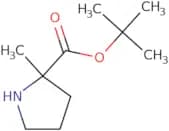
tert-Butyl 2-methylpyrrolidine-2-carboxylate
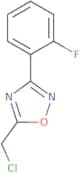
CAS:Versatile small molecule scaffoldFórmula:C10H19NO2Pureza:Min. 95%Peso molecular:185.26 g/mol5-(Chloromethyl)-3-(2-fluorophenyl)-1,2,4-oxadiazole
CAS:Versatile small molecule scaffold
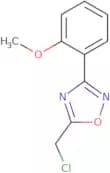
Fórmula:C9H6ClFN2OPureza:Min. 95%Peso molecular:212.61 g/mol5-(Chloromethyl)-3-(2-methoxyphenyl)-1,2,4-oxadiazole
CAS:Versatile small molecule scaffold
Fórmula:C10H9ClN2O2Pureza:Min. 95%Peso molecular:224.64 g/mol2-(Chloromethyl)-[1,3]thiazolo[5,4-b]pyridine
CAS:Versatile small molecule scaffold
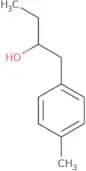
Fórmula:C7H5ClN2SPureza:Min. 95%Peso molecular:184.65 g/mol1-(4-Methylphenyl)butan-2-ol
CAS:Versatile small molecule scaffold
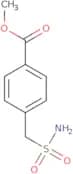
Fórmula:C11H16OPureza:Min. 95%Peso molecular:164.24 g/molMethyl 4-(Sulfamoylmethyl)benzoate
CAS:Versatile small molecule scaffold
Fórmula:C9H11NO4SPureza:Min. 95%Peso molecular:229.25 g/mol2-(Cyclohexylmethyl)butanoic Acid
CAS:2-(Cyclohexylmethyl)butanoic Acid is a mu-opioid receptor agonist that binds to the opioid receptor. It has been shown to have a solid form, which can be administered orally or intravenously. 2-(Cyclohexylmethyl)butanoic Acid is used in the treatment of acute and chronic pain, as well as post-operative bowel dysfunction. It has an antagonistic effect on the opioid receptors, which prevents it from inducing opioid-induced bowel dysfunction. The hydrochloride salt of this drug is available for oral administration.
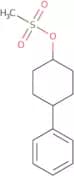
Fórmula:C11H20O2Pureza:Min. 95%Peso molecular:184.27 g/mol4-Phenylcyclohexyl methanesulfonate
CAS:Versatile small molecule scaffold
Fórmula:C13H18O3SPureza:Min. 95%Peso molecular:254.35 g/molDecahydrocyclohepta[C]pyrrole
CAS:Decahydrocyclohepta[C]pyrrole is a nitrogen-containing heterocycle that contains 5 hydrogen atoms and 10 carbon atoms. It has been shown to have modulatory effects on the 5-HT receptors, which are involved in the regulation of the nervous system. Decahydrocyclohepta[C]pyrrole binds to these receptors and inhibits their response to serotonin, a neurotransmitter that plays an important role in the modulation of mood, appetite, sleep, memory, learning, and temperature regulation. This drug has also been shown to have a protective effect against nerve cell damage induced by neurotoxins such as quinolinic acid or kainic acid.
Fórmula:C9H17NPureza:Min. 95%Peso molecular:139.24 g/mol3-Hydrazinyl-8-methyl-8-azabicyclo[3.2.1]octane dihydrochloride
CAS:Versatile small molecule scaffoldFórmula:C8H19Cl2N3Pureza:Min. 95%Peso molecular:228.16 g/molRef: 3D-KEA40691
Producto descatalogado2-Chloro-6-(pyrrolidin-1-yl)benzaldehyde
CAS:Versatile small molecule scaffold
Fórmula:C11H12ClNOPureza:Min. 95%Peso molecular:209.67 g/mol5-(Methoxycarbonyl)bicyclo[3.2.1]octane-1-carboxylic acid
CAS:Versatile small molecule scaffold
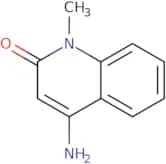
Fórmula:C11H16O4Pureza:Min. 95%Peso molecular:212.24 g/mol4-Amino-1-methyl-1,2-dihydroquinolin-2-one
CAS:Versatile small molecule scaffoldFórmula:C10H10N2OPureza:Min. 95%Peso molecular:174.2 g/mol4,5-Diodoveratrole
CAS:4,5-Diodoveratrole is a ligand that binds to tylophorine. It has been shown to be an interlinked molecule in electrochemical methods and can be detected by voltammetry. 4,5-Diodoveratrole has been used as a fluorescent sensor for methyl groups and is also able to cross-couple with methoxy groups. This molecule also forms functional groups on the devices of electrochemical biosensors.
Fórmula:C8H8I2O2Pureza:Min. 95%Peso molecular:389.96 g/mol[3-(Dimethylamino)propyl]urea hydrochloride
CAS:Versatile small molecule scaffoldFórmula:C6H16ClN3OPureza:Min. 95%Peso molecular:181.66 g/mol3-[(E)-2-Nitroethenyl]thiophene
CAS:Versatile small molecule scaffold
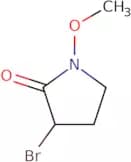
Fórmula:C6H5NO2SPureza:Min. 95%Peso molecular:155.18 g/mol3-Bromo-1-methoxypyrrolidin-2-one
CAS:3-Bromo-1-methoxypyrrolidin-2-one is a halogenated alkynyl compound that is used as an anti-inflammatory agent. It is a phenylcyclizing agent that reacts with an alkoxy group to form an alkyne and a cyclic ether. The cyclic ether then undergoes nucleophilic attack by an adjacent hydroxyl group, resulting in the formation of an oxetane ring. 3-Bromo-1-methoxypyrrolidin-2-one has been shown to have anti-inflammatory activities in mice and rats by inhibiting the production of inflammatory cytokines such as TNF, IL1β, and IL6.
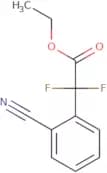
Fórmula:C5H8BrNO2Pureza:Min. 95%Peso molecular:194.03 g/molEthyl 2-(2-cyanophenyl)-2,2-difluoroacetate
CAS:Versatile small molecule scaffold
Fórmula:C11H9F2NO2Pureza:Min. 95%Peso molecular:225.19 g/mol4-[[3-(4,4,5,5-tetramethyl-1,3,2-dioxaborolan-2-yl)phenyl]methyl]-1,4-thiazinane 1,1-dioxide
CAS:Versatile small molecule scaffold
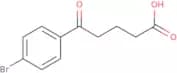
Fórmula:C17H26BNO4SPureza:Min. 95%Peso molecular:351.3 g/mol5-(4-Bromophenyl)-5-oxovaleric acid
CAS:5-(4-Bromophenyl)-5-oxovaleric acid is a molecule that has been synthesized to be used as a cancer drug. It is an amide derivative of the natural compound valproic acid and is being developed for the treatment of cancers, such as leukemia and melanoma. 5-(4-Bromophenyl)-5-oxovaleric acid has been shown to inhibit the function of integrin, which plays a role in cell adhesion and migration, with potential applications in wound healing.
The molecule has also been shown to have chemokine binding properties and may be useful in the treatment of diseases where chemokines are involved, such as HIV or AIDS. This compound also binds to CCR5 receptor and inhibits HIV entry into cells. The molecule has also been shown to antagonize survivin, an antiapoptotic protein that protects cells from undergoing apoptosis and prevents tumor suppression. The affinity of 5-(4-bromophenylFórmula:C11H11BrO3Pureza:Min. 95%Peso molecular:271.12 g/mol

![2-(Chloromethyl)-[1,3]thiazolo[5,4-b]pyridine](/_next/image/?url=https%3A%2Fstatic.cymitquimica.com%2Fproducts%2F3D%2Fthumb-webp%2FKEA70435.webp&w=3840&q=75)

![Decahydrocyclohepta[C]pyrrole](/_next/image/?url=https%3A%2Fstatic.cymitquimica.com%2Fproducts%2F3D%2Fthumb-webp%2FKEA42128.webp&w=3840&q=75)
![3-Hydrazinyl-8-methyl-8-azabicyclo[3.2.1]octane dihydrochloride](/_next/image/?url=https%3A%2Fstatic.cymitquimica.com%2Fproducts%2F3D%2Fthumb-webp%2FKEA40691.webp&w=3840&q=75)

![5-(Methoxycarbonyl)bicyclo[3.2.1]octane-1-carboxylic acid](/_next/image/?url=https%3A%2Fstatic.cymitquimica.com%2Fproducts%2F3D%2Fthumb-webp%2FKEA37127.webp&w=3840&q=75)

![[3-(Dimethylamino)propyl]urea hydrochloride](/_next/image/?url=https%3A%2Fstatic.cymitquimica.com%2Fproducts%2F3D%2Fthumb-webp%2FKEA18134.webp&w=3840&q=75)
![3-[(E)-2-Nitroethenyl]thiophene](/_next/image/?url=https%3A%2Fstatic.cymitquimica.com%2Fproducts%2F3D%2Fthumb-webp%2FKEA14352.webp&w=3840&q=75)
![4-[[3-(4,4,5,5-tetramethyl-1,3,2-dioxaborolan-2-yl)phenyl]methyl]-1,4-thiazinane 1,1-dioxide](/_next/image/?url=https%3A%2Fstatic.cymitquimica.com%2Fproducts%2F3D%2Fthumb-webp%2FKDC23437.webp&w=3840&q=75)