Building Blocks
Subcategorías de "Building Blocks"
- Ácidos borónicos y derivados del ácido borónico(5.780 productos)
- Building Blocks quirales(1.241 productos)
- Building Blocks de hidrocarburos(6.100 productos)
- Building Blocks orgánicos(61.017 productos)
Se han encontrado 205265 productos de "Building Blocks"
4-Fluoro-1-(2-phenoxyethyl)-1H-1,3-benzodiazole-2-thiol
CAS:Versatile small molecule scaffold
Fórmula:C15H13FN2OSPureza:Min. 95%Peso molecular:288.3 g/molN-Benzyl-4-fluoro-2-methoxyaniline
CAS:Versatile small molecule scaffold
Fórmula:C14H14FNOPureza:Min. 95%Peso molecular:231.26 g/mol4-(5,6,7,8-Tetrahydronaphthalen-2-yloxy)butanoic acid
CAS:Producto controladoVersatile small molecule scaffold
Fórmula:C14H18O3Pureza:Min. 95%Peso molecular:234.29 g/mol2-{1-[(4-Oxo-3,4-dihydroquinazolin-2-yl)methyl]pyrrolidin-2-yl}acetic acid
CAS:Versatile small molecule scaffold
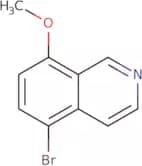
Fórmula:C15H17N3O3Pureza:Min. 95%Peso molecular:287.31 g/mol5-Bromo-8-methoxyisoquinoline
CAS:Versatile small molecule scaffold
Fórmula:C10H8BrNOPureza:Min. 95%Peso molecular:238.08 g/mol1-Oxa-3,9-diazaspiro[5.5]undecan-2-one
CAS:1-Oxa-3,9-diazaspiro[5.5]undecan-2-one is a carbamate that has shown to be an antagonist of the androgen receptor. In vitro studies show that 1-Oxa-3,9-diazaspiro[5.5]undecan-2-one inhibits the proliferation of cells in hyperproliferative disorders. This compound has been shown to have antiviral effects against herpes simplex virus type 1 (HSV1) and 2 (HSV2). The antiviral potency of this drug is increased by template mutation in the viral genome.
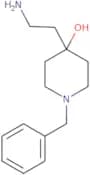
Fórmula:C8H14N2O2Pureza:Min. 95%Forma y color:PowderPeso molecular:170.21 g/mol4-(2-Aminoethyl)-1-benzylpiperidin-4-ol
CAS:Versatile small molecule scaffoldFórmula:C14H22N2OPureza:Min. 95%Peso molecular:234.34 g/molRef: 3D-ECA98101
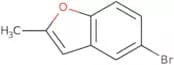
Producto descatalogado5-Bromo-2-methyl-1-benzofuran
CAS:5-Bromo-2-methyl-1-benzofuran is a phenyl ring with a furan moiety. The molecule has an average length of 1.5 Å and contains dihedral angles that are close to 90°. 5-Bromo-2-methyl-1-benzofuran is stabilized by two substituents on the phenyl ring, which are methyl groups on the benzene rings. This molecule can form hydrogen bonds with water molecules, as well as other polar molecules such as alcohols and acids. The crystal structure of this molecule is also stabilized by interactions between the phenyl and benzofuran moieties.
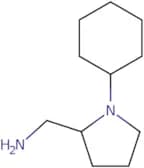
Fórmula:C9H7BrOPureza:Min. 95%Peso molecular:211.05 g/mol(1-Cyclohexylpyrrolidin-2-yl)methanamine
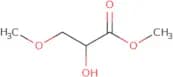
CAS:Versatile small molecule scaffoldFórmula:C11H22N2Pureza:Min. 95%Peso molecular:182.31 g/molMethyl 2-hydroxy-3-methoxypropanoate
CAS:Versatile small molecule scaffold
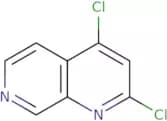
Fórmula:C5H10O4Pureza:Min. 95%Peso molecular:134.13 g/mol2,4-dichloro-1,7-naphthyridine
CAS:Versatile small molecule scaffold
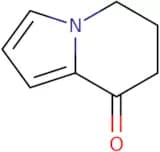
Fórmula:C8H4Cl2N2Pureza:Min. 95%Peso molecular:199 g/mol5,6,7,8-Tetrahydroindolizin-8-one
CAS:Versatile small molecule scaffold
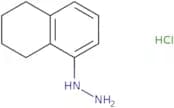
Fórmula:C8H9NOPureza:Min. 95%Peso molecular:135.16 g/mol(5,6,7,8-Tetrahydronaphthalen-1-yl)hydrazine hydrochloride
CAS:Versatile small molecule scaffold
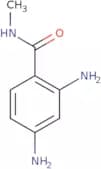
Fórmula:C10H15ClN2Pureza:Min. 95%Peso molecular:198.69 g/mol2,4-Diamino-N-methylbenzamide
CAS:Versatile small molecule scaffold
Fórmula:C8H11N3OPureza:Min. 95%Peso molecular:165.19 g/molRef: 3D-ECA88417
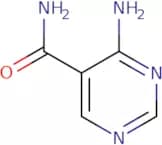
Producto descatalogado4-aminopyrimidine-5-carboxamide
CAS:4-Aminopyrimidine-5-carboxamide is an amide that is synthesized from the reaction of eosinophil and amine. This compound inhibits transcription in a dose-dependent manner, with a high potency for iminium and amines, but not primary amines. 4-Aminopyrimidine-5-carboxamide is orally bioavailable and has shown to be effective in animal models. The compound has been optimized for oral administration and has shown to produce good yields. 4-Aminopyrimidine-5-carboxamide also possesses transcription factor inhibitory activity against interleukin, which may provide therapeutic benefit for inflammatory disorders.
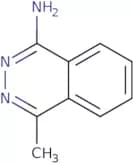
Fórmula:C5H6N4OPureza:Min. 95%Peso molecular:138.13 g/mol4-Methylphthalazin-1-amine
CAS:4-Methylphthalazin-1-amine is a heteroaromatic compound that can be synthesized by cyclization of phenacyl bromides and bromoacetates. It has been found in Australian plants and may have a role in the development of schizophrenia. 4-Methylphthalazin-1-amine is not soluble in water, but it can be dissolved in solvents such as acetone or ethanol. It is also insoluble in most organic solvents.
Fórmula:C9H9N3Pureza:Min. 95%Peso molecular:159.19 g/molRef: 3D-EAA77685
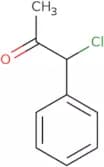
Producto descatalogado1-Chloro-1-phenylpropan-2-one
CAS:1-Chloro-1-phenylpropan-2-one is an exploratory compound that has been deployed as a mechanistic probe to probe the radical mechanism of aldehydes. It has been shown that 1-chloro-1-phenylpropan-2-one can be used to generate fluorescent compounds and study the fluorescence, UV radiation, and radical mechanism of aldehydes. This molecule also has the ability to react with electron rich compounds such as aziridines to form chiral products. The substituent on this molecule will affect its biological activity.
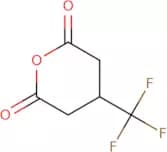
Fórmula:C9H9ClOPureza:Min. 95%Peso molecular:168.62 g/mol4-(Trifluoromethyl)oxane-2,6-dione
CAS:Versatile small molecule scaffold
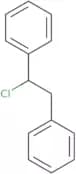
Fórmula:C6H5F3O3Pureza:Min. 95%Peso molecular:182.1 g/mol(2-Chloro-2-phenylethyl)benzene
CAS:2-Chloro-2-phenylethylbenzene is an organic compound that is used in the synthesis of other compounds. It is produced by reacting a chlorinated benzene with an alkali, such as sodium hydroxide, potassium hydroxide, or lithium hydroxide. The reaction produces a mixture of 2-chloro-2-phenylethylbenzene and phenylhydroxyethane. This compound can be converted to 2-chloro-2-(piperidin-1-yl)ethanol by refluxing it with morpholine in methanol and then adding amides such as piperidine or pyrrolidine. The resulting product can be alkylated with carbon tetrachloride to produce 2-chloro-2-(4'-methylphenoxy)ethanol. This compound can also be reduced to give 2-(4'-methylphenoxy)ethanol by heating it with sodium bor
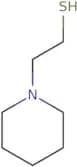
Fórmula:C14H13ClPureza:Min. 95%Peso molecular:216.7 g/mol2-(Piperidin-1-yl)ethane-1-thiol
CAS:Versatile small molecule scaffold
Fórmula:C7H15NSPureza:Min. 95%Peso molecular:145.27 g/mol


![2-{1-[(4-Oxo-3,4-dihydroquinazolin-2-yl)methyl]pyrrolidin-2-yl}acetic acid](/_next/image/?url=https%3A%2Fstatic.cymitquimica.com%2Fproducts%2F3D%2Fthumb-webp%2FECC26632.webp&w=3840&q=75)
![1-Oxa-3,9-diazaspiro[5.5]undecan-2-one](/_next/image/?url=https%3A%2Fstatic.cymitquimica.com%2Fproducts%2F3D%2Fthumb-webp%2FECA98111.webp&w=3840&q=75)