Building Blocks
Subcategorías de "Building Blocks"
- Ácidos borónicos y derivados del ácido borónico(5.784 productos)
- Building Blocks quirales(1.244 productos)
- Building Blocks de hidrocarburos(6.105 productos)
- Building Blocks orgánicos(61.070 productos)
Se han encontrado 205437 productos de "Building Blocks"
4-Phenylpiperidin-3-yl]methanol
CAS:Versatile small molecule scaffold
Fórmula:C12H17NOPureza:Min. 95%Peso molecular:191.27 g/molRef: 3D-FEA81273
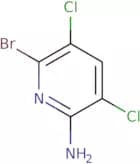
Producto descatalogado6-Bromo-3,5-dichloropyridin-2-amine
CAS:Versatile small molecule scaffold
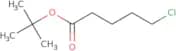
Fórmula:C5H3BrCl2N2Pureza:Min. 95%Peso molecular:241.9 g/moltert-Butyl 5-chloropentanoate
CAS:Versatile small molecule scaffold
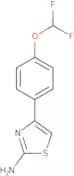
Fórmula:C9H17ClO2Pureza:Min. 95%Peso molecular:192.68 g/mol4-(4-Difluoromethoxy-phenyl)-thiazol-2-ylamine
CAS:Versatile small molecule scaffoldFórmula:C10H8F2N2OSPureza:Min. 95%Peso molecular:242.24 g/mol1,2,5,6,7,8-Hexahydroazocin-2-one
CAS:Versatile small molecule scaffold
Fórmula:C7H11NOPureza:Min. 95%Peso molecular:125.17 g/molRef: 3D-FEA49514
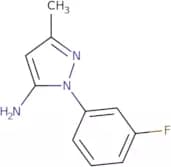
Producto descatalogado1-(3-Fluorophenyl)-3-methyl-1H-pyrazol-5-amine
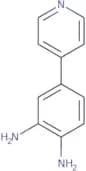
CAS:Versatile small molecule scaffoldFórmula:C10H10FN3Pureza:Min. 95%Peso molecular:191.2 g/mol4-(Pyridin-4-yl)benzene-1,2-diamine
CAS:Versatile small molecule scaffold
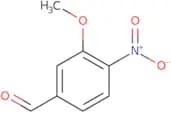
Fórmula:C11H11N3Pureza:Min. 95%Peso molecular:185.22 g/mol3-methoxy-4-nitrobenzaldehyde
CAS:3-Methoxy-4-nitrobenzaldehyde (3MNB) is a biomolecular that is used to study nucleophilic substitutions. It has been shown to inhibit the growth of cells in culture, specifically those with fatty acid amides. 3MNB inhibits the synthesis of β-amyloid, a protein associated with Alzheimer's disease. 3MNB also has potent inhibitory activity on chloride channels and phenylhydrazone binding sites, which are targets for antipsychotic drugs. 3MNB inhibits the production of sh-sy5y cells and piperazine binding sites in the brain. The inhibition of these sites leads to an improvement in memory and learning ability.
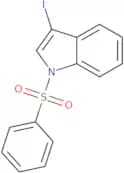
Fórmula:C8H7NO4Pureza:Min. 95%Peso molecular:181.1 g/mol3-Iodo-1-(phenylsulfonyl)indole
CAS:3-Iodo-1-(phenylsulfonyl)indole (3-ISI) is a ligand that is used to crystallize metal ions. 3-ISI binds to metal ions through interactions with the halide ion. The 3-ISI molecule has two phenylsulfonyl groups and one iodine atom, which are the sites of coordination to metal ions. Friedel-Crafts acylation reactions use 3-ISI as a ligand because it does not react with the catalyst or acid, but can be easily replaced by other ligands during the reaction. Parameters for determining its structure include X-ray crystallography, NMR spectroscopy, IR spectroscopy, and elemental analysis. The chloride anion in 3-ISI is able to form hydrogen bonds with other chloride anions in order to stabilize its structure.
3-ISI can be synthesized by reacting iodides with benzyl bromide and phosphorous pentFórmula:C14H10INO2SPureza:Min. 95%Peso molecular:383.21 g/molRef: 3D-FDA36014
Producto descatalogado(2S)-3-(Boc-amino)-2-amino-1-propanol
CAS:Versatile small molecule scaffold
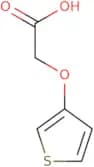
Fórmula:C8H18N2O3Pureza:Min. 95%Peso molecular:190.24 g/mol2-(Thiophen-3-yloxy)acetic acid
CAS:Versatile small molecule scaffold
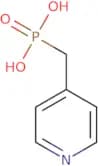
Fórmula:C6H6O3SPureza:Min. 95%Peso molecular:158.18 g/mol4-Pyridylmethylphosphonic acid
CAS:4-Pyridylmethylphosphonic acid is an inorganic compound that is a ligand for the metal Ruthenium. It is used in organic synthesis as a photosensitizer and a potentiometric titrant. The ligand binds to the metal through one or more of its oxygen atoms, forming a coordination complex. The bond cleavage reaction occurs when the molecule absorbs light of sufficient energy, causing it to break into two parts. 4-Pyridylmethylphosphonic acid is not very soluble in water and is therefore used as an electrolyte in potentiometric titrations. The pH of the solution will change depending on the concentration of the acid. 4-Pyridylmethylphosphonic acid can also be used as a catalyst for certain organic reactions such as esterification and transesterification reactions.
Fórmula:C6H8NO3PPureza:Min. 95%Peso molecular:173.11 g/mol4-[(1H-Pyrazol-1-yl)methyl]phenol
CAS:4-[(1H-Pyrazol-1-yl)methyl]phenol (4PMP) is an inhibitor of dopamine beta-hydroxylase that has been studied in assays with dopamine and noradrenaline. It has been shown to activate both noradrenaline and dopamine receptors, and can be used as a tool for the study of blood pressure regulation. 4PMP also increases reactive oxygen species production, which may be due to its ability to react with cyanide ions. The binding of 4PMP to the enzyme is reversible and competitive. The pH profile of 4PMP has also been studied, with a range from 2 to 5.4. Kinetic studies have shown that the reaction rate for 4PMP is best described by a Michaelis-Menten kinetic model, with a Km value of 0.03 mM and Vmax value of 9.3 μM/min for dopamine β-hydroxylase inhibition. There are
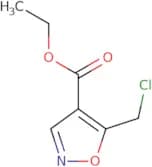
Fórmula:C10H10N2OPureza:Min. 95%Peso molecular:174.2 g/molEthyl 5-(chloromethyl)-1,2-oxazole-4-carboxylate
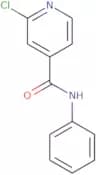
CAS:Versatile small molecule scaffoldFórmula:C7H8ClNO3Pureza:Min. 95%Peso molecular:189.59 g/mol2-Chloro-N-phenylisonicotinamide
CAS:Versatile small molecule scaffold
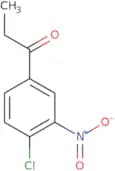
Fórmula:C12H9ClN2OPureza:Min. 95%Peso molecular:232.67 g/mol1-(4-Chloro-3-nitrophenyl)propan-1-one
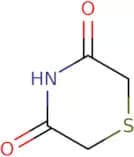
CAS:Versatile small molecule scaffoldFórmula:C9H8ClNO3Pureza:Min. 95%Peso molecular:213.62 g/molThiomorpholine-3,5-dione
CAS:Thiomorpholine-3,5-dione is a chemical compound that has an x-ray crystal structure. It was first synthesized in 1892 and was the first organic molecule with a herringbone molecular geometry to be discovered. Thiomorpholine-3,5-dione is used as a precursor for dyes, pharmaceuticals, and other organic compounds.
Fórmula:C4H5NO2SPureza:Min. 95%Peso molecular:131.16 g/molEthyl 5-(bromomethyl)-1,2,3-thiadiazole-4-carboxylate
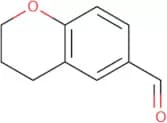
CAS:Versatile small molecule scaffoldFórmula:C6H7BrN2O2SPureza:Min. 95%Peso molecular:251.1 g/molChroman-6-carbaldehyde
CAS:Chroman-6-carbaldehyde is a chemical compound that has been shown to have antidiabetic and antifungal activity. It is synthesized by reductive amination of chroman-6-carboxylic acid with an amine (e.g., piperazine) in the presence of sodium cyanoborohydride. Chroman-6-carbaldehyde inhibits lipase activity, which can decrease the blood glucose level in diabetic patients, and also has antibacterial properties. This compound is one of the active compounds found in a strain of fungus Penicillium sp., which was isolated from soil samples collected in the city of Kolkata, India. Chroman-6-carbaldehyde is fluorescent and can be detected using fluorescence spectroscopy and high performance liquid chromatography (HPLC).
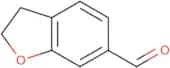
Fórmula:C10H10O2Pureza:Min. 95%Peso molecular:162.19 g/mol2,3-dihydrobenzofuran-6-carbaldehyde
CAS:Versatile small molecule scaffold
Fórmula:C9H8O2Pureza:Min. 95%Peso molecular:148.16 g/mol
![4-Phenylpiperidin-3-yl]methanol](/_next/image/?url=https%3A%2Fstatic.cymitquimica.com%2Fproducts%2F3D%2Fthumb-webp%2FFEA81273.webp&w=3840&q=75)



![4-[(1H-Pyrazol-1-yl)methyl]phenol](/_next/image/?url=https%3A%2Fstatic.cymitquimica.com%2Fproducts%2F3D%2Fthumb-webp%2FFDA20009.webp&w=3840&q=75)