Building Blocks
Subcategorías de "Building Blocks"
- Ácidos borónicos y derivados del ácido borónico(5.780 productos)
- Building Blocks quirales(1.241 productos)
- Building Blocks de hidrocarburos(6.100 productos)
- Building Blocks orgánicos(61.024 productos)
Se han encontrado 205297 productos de "Building Blocks"
Ethyl 1,2,3,4-tetrahydroquinoline-6-carboxylate
CAS:Versatile small molecule scaffold
Fórmula:C12H15NO2Pureza:Min. 95%Peso molecular:205.25 g/molCyclobutyl Phenyl Ketone
CAS:Cyclobutyl Phenyl Ketone is an unsaturated ketone that belongs to the class of aliphatic hydrocarbons. It is used in vitro assays as a receptor binding agent. Cyclobutyl Phenyl Ketone can bind to the benzodiazepine site on GABA-A receptors, which are a type of neurotransmitter receptor found in the central nervous system. Cyclobutyl Phenyl Ketone has been shown to be effective in treating chronic bronchitis due to its ability to inhibit chloride ion uptake by human lung cells. This compound has also been shown to be effective for treating bladder cancer due to its function as a hydrogen chloride scavenger and nitro group donor. Cyclobutyl Phenyl Ketone can be synthesized from ethyl formate, through a Friedel-Crafts reaction with hydrogen chloride, followed by carbonyl reduction with sodium borohydride. The asymmetric synthesis of this compound requires a simple modification in the starting material,
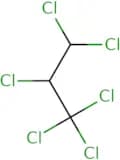
Fórmula:C11H12OPureza:Min. 95%Peso molecular:160.22 g/mol1,1,1,2,3,3-Hexachloropropane
CAS:1,1,1,2,3,3-Hexachloropropane is a fluorinated hydrocarbon that is used as a catalyst in the fluorination of organic compounds. The reaction is highly selective and only produces one stereoisomer (e.g., 1-fluoropropane). This product can be used as a conditioner for gas streams or a diluent for liquid phase reactions. Hexachloropropane also reacts with hydrogen chloride to produce fluorides and chlorides. The reaction selectivity of this product is high because it does not react with other substances such as water or ammonia.
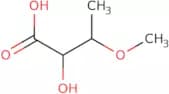
Fórmula:C3H2Cl6Pureza:Min. 95%Peso molecular:250.8 g/mol2-Hydroxy-3-methoxybutanoic acid
CAS:Versatile small molecule scaffold
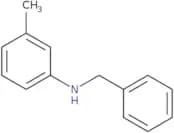
Fórmula:C5H10O4Pureza:Min. 95%Peso molecular:134.13 g/molN-Benzyl-3-methylaniline
CAS:Versatile small molecule scaffold
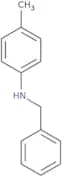
Fórmula:C14H15NPureza:Min. 95%Peso molecular:197.27 g/molN-Benzyl-4-methylaniline
CAS:N-Benzyl-4-methylaniline is a mesoporous material with a high surface area that can be used as a solid acid catalyst. It has been shown to have excellent catalytic properties for the synthesis of quinoline derivatives from trans-stilbene and anilines. The immobilized N-benzyl-4-methylaniline is a novel material that can be used in various applications, such as as an uv detector or proton donor.
Fórmula:C14H15NPureza:Min. 95%Peso molecular:197.27 g/mol2,5-Dichlorobenzenesulfonyl Chloride
CAS:2,5-Dichlorobenzenesulfonyl Chloride is a chemical compound that binds to the G protein-coupled receptor. It has been shown to stabilize the receptor and inhibit angiogenic process. 2,5-Dichlorobenzenesulfonyl Chloride has been shown to have anticancer activity against human glioma cells in vitro and in vivo. It also inhibits hydrogen bonding interactions with the receptor which may be important for cancer treatment.
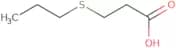
2,5-Dichlorobenzenesulfonyl Chloride is soluble in chloroform and acetone but not water or ethanol. The solubility of this compound can be improved by adding a solvent such as benzene or dichloromethane.Fórmula:C6H3Cl3O2SPureza:Min. 95%Peso molecular:245.51 g/mol3-(Propylsulfanyl)propanoic acid
CAS:Versatile small molecule scaffold
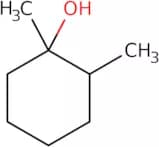
Fórmula:C6H12O2SPureza:Min. 95%Peso molecular:148.23 g/mol1,2-Dimethylcyclohexan-1-ol
CAS:1,2-Dimethylcyclohexan-1-ol is a hydroxylated phenolic compound that has been shown to inhibit the production of inflammatory cytokines. It also inhibits the activity of carboxylesterases and aminopeptidases in vitro, which may be due to its acidic nature. This drug is used to treat autoimmune diseases such as rheumatoid arthritis, psoriasis, and multiple sclerosis. 1,2-Dimethylcyclohexan-1-ol can be synthesized from hydroxybenzene and formaldehyde with hydrochloric acid as a reaction intermediate. It reacts with trifluoroacetic acid to produce an intermediate that is soluble in water. This compound is also susceptible to oxidation by air or light.
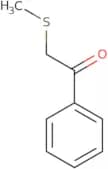
Fórmula:C8H16OPureza:Min. 95%Peso molecular:128.21 g/mol2-(Methylsulfanyl)-1-phenylethan-1-one
CAS:2-(Methylsulfanyl)-1-phenylethan-1-one is a sulfoxide that was synthesized by the photoelectron transfer of methylsulfane. It is an electron acceptor, which can be reduced to the corresponding sulfide or sulfone. It has been shown to react with carbonyl groups and thioacetals, forming triazole derivatives. The molecule has been found to have affinity for aluminium surfaces and has a strong interaction with the carbonyl group.
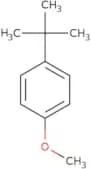
Fórmula:C9H10OSPureza:Min. 95%Peso molecular:166.24 g/mol4-tert-Butylanisole
CAS:4-tert-Butylanisole is an amide that has been shown to undergo conformational changes upon irradiation with light. The photochemical cleavage of the amide bond occurs with a quantum yield of 0.4 and produces a diphenyl ether and an acetonitrile derivative. This reaction mechanism has been proposed in order to explain the formation of a nitro group in the molecule, which is responsible for its labile nature. Labile molecules are those that can easily undergo decomposition or change their structure due to external influences, such as heat or light. 4-tert-Butylanisole also undergoes reductive elimination reactions when treated with ethyl bromoacetate, which leads to the formation of labile products as well.
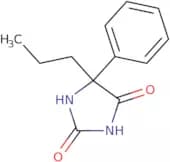
Fórmula:C11H16OPureza:Min. 95%Peso molecular:164.25 g/mol5-Phenyl-5-propylimidazolidine-2,4-dione
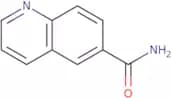
CAS:Versatile small molecule scaffoldFórmula:C12H14N2O2Pureza:Min. 95%Peso molecular:218.25 g/molQuinoline-6-carboxamide
CAS:Quinoline-6-carboxamide is a drug that binds to the CB2 receptor and inhibits cancer cell proliferation. It has been shown to be effective in inhibiting human cervical carcinoma cells, as well as hydroxy group corrosion inhibitors. Quinoline-6-carboxamide also inhibits the growth of diabetic neuropathy and acts as an amide skeleton binder in binding experiments. The compound has been shown to have anti-inflammatory effects in animal models of pain, acting through the metabotropic glutamate receptor. Quinoline-6-carboxamide also blocks herpes simplex virus replication, which may be due to its ability to inhibit viral DNA synthesis.
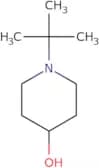
Fórmula:C10H8N2OPureza:Min. 95%Peso molecular:172.19 g/mol1-tert-Butylpiperidin-4-ol
CAS:1-tert-Butylpiperidin-4-ol is a chemical compound that is used as a model drug. It is injected into the muscle to calibrate a signal and extract spatial information. The nitroxyl radical has been shown to have radical scavenging activity, and liposomal encapsulation of the drug may be an effective way to deliver it to cells in the body. 1-tert-Butylpiperidin-4-ol has been shown to have lipophilic properties, which would allow it to cross the blood brain barrier more easily than other drugs with hydrophilic properties.
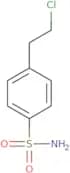
Fórmula:C9H19NOPureza:Min. 95%Peso molecular:157.26 g/mol4-(2-Chloroethyl)benzene-1-sulfonamide
CAS:Versatile small molecule scaffold
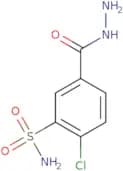
Fórmula:C8H10ClNO2SPureza:Min. 95%Peso molecular:219.69 g/mol2-Chloro-5-(hydrazinecarbonyl)benzene-1-sulfonamide
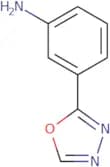
CAS:2-Chloro-5-(hydrazidecarbonyl)benzene-1-sulfonamide is an aliphatic aldehyde that is used to synthesize other chemicals. It can be synthesized from the condensation of 2-chloroacetaldehyde with hydrazine and formaldehyde in the presence of a base. This compound has been shown to have diuretic and saluretic properties, which are due to its ability to increase urine flow by inhibiting reabsorption of sodium ions in the kidney tubules. 2-Chloro-5-(hydrazidecarbonyl)benzene-1-sulfonamide is soluble in alcohols and dioxane, but insoluble in water. This compound hydrolyzes in acidic conditions, so it cannot be stored for long periods without protection from moisture.Fórmula:C7H8ClN3O3SPureza:Min. 95%Peso molecular:249.68 g/mol3-(1,3,4-Oxadiazol-2-yl)aniline
CAS:Versatile small molecule scaffold
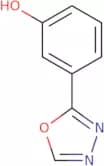
Fórmula:C8H7N3OPureza:Min. 95%Peso molecular:161.16 g/mol3-(1,3,4-Oxadiazol-2-yl)phenol
CAS:Versatile small molecule scaffold
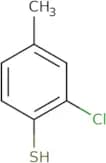
Fórmula:C8H6N2O2Pureza:Min. 95%Peso molecular:162.15 g/mol2-Chloro-4-methylbenzenethiol
CAS:Versatile small molecule scaffold
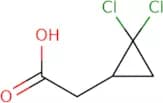
Fórmula:C7H7ClSPureza:Min. 95%Peso molecular:158.65 g/mol2-(2,2-Dichlorocyclopropyl)acetic acid
CAS:Versatile small molecule scaffold
Fórmula:C5H6Cl2O2Pureza:Min. 95%Peso molecular:169 g/mol