Building Blocks
Esta sección contiene productos fundamentales para la síntesis de compuestos orgánicos y biológicos. Building blocks son los materiales de partida esenciales utilizados para construir moléculas complejas a través de diversas reacciones químicas. Desempeñan un papel crítico en el descubrimiento de fármacos, la ciencia de materiales y la investigación química. En CymitQuimica, ofrecemos una gama diversa de building blocks de alta calidad para apoyar sus investigaciones innovadoras y proyectos industriales, asegurando que tenga los componentes esenciales para una síntesis exitosa.
Subcategorías de "Building Blocks"
- Ácidos borónicos y derivados del ácido borónico(5.778 productos)
- Building Blocks quirales(1.243 productos)
- Building Blocks de hidrocarburos(6.098 productos)
- Building Blocks orgánicos(61.046 productos)
Se han encontrado 203857 productos de "Building Blocks"
Ordenar por
Pureza (%)
0
100
|
0
|
50
|
90
|
95
|
100
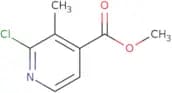
Methyl 2-chloro-3-methylisonicotinate
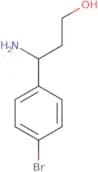
CAS:Versatile small molecule scaffoldFórmula:C8H8ClNO2Pureza:Min. 95%Peso molecular:185.61 g/mol3-Amino-3-(4-bromo-phenyl)-propan-1-ol
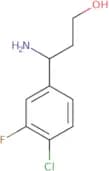
CAS:Versatile small molecule scaffoldFórmula:C9H12BrNOPureza:Min. 95%Peso molecular:230.1 g/mol3-Amino-3-(4-chloro-3-fluorophenyl)propan-1-ol
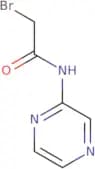
CAS:Versatile small molecule scaffoldFórmula:C9H11ClFNOPureza:Min. 95%Peso molecular:203.64 g/mol2-Bromo-N-(pyrazin-2-yl)acetamide
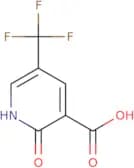
CAS:Versatile small molecule scaffoldFórmula:C6H6BrN3OPureza:Min. 95%Peso molecular:216.04 g/mol2-Oxo-5-(trifluoromethyl)-1,2-dihydropyridine-3-carboxylic acid
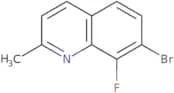
CAS:Versatile small molecule scaffoldFórmula:C7H4F3NO3Pureza:Min. 95%Peso molecular:207.11 g/mol7-Bromo-8-fluoro-2-methylquinoline
CAS:Versatile small molecule scaffoldFórmula:C10H7BrFNPureza:Min. 95%Peso molecular:240.07 g/mol3-Bromo-1-[2-(trifluoromethyl)phenyl]pyrrolidin-2-one
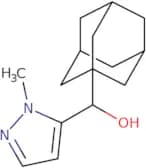
CAS:Versatile small molecule scaffoldFórmula:C11H9BrF3NOPureza:Min. 95%Peso molecular:308.09 g/molAdamantan-1-yl(1-methyl-1H-pyrazol-5-yl)methanol
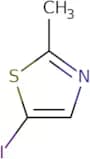
CAS:Versatile small molecule scaffoldFórmula:C15H22N2OPureza:Min. 95%Peso molecular:246.35 g/mol5-Iodo-2-methyl-1,3-thiazole
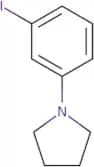
CAS:Versatile small molecule scaffoldFórmula:C4H4INSPureza:Min. 95%Peso molecular:225.05 g/mol1-(3-Iodophenyl)pyrrolidine
CAS:Versatile small molecule scaffoldFórmula:C10H12INPureza:Min. 95%Peso molecular:273.11 g/mol4-[(3-Cyclopentyl-1,2,4-oxadiazol-5-yl)methyl]piperidine hydrochloride
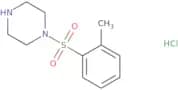
CAS:Versatile small molecule scaffoldFórmula:C13H22ClN3OPureza:Min. 95%Peso molecular:271.78 g/mol1-(2-Methylbenzenesulfonyl)piperazine hydrochloride
CAS:Versatile small molecule scaffoldFórmula:C11H17ClN2O2SPureza:Min. 95%Peso molecular:276.78 g/mol2-[(Piperazin-1-yl)methyl]-4H-pyrido[1,2-a]pyrimidin-4-one dihydrochloride
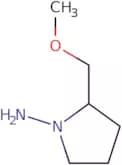
CAS:Versatile small molecule scaffoldFórmula:C13H18Cl2N4OPureza:Min. 95%Peso molecular:317.21 g/mol2-(Methoxymethyl)pyrrolidin-1-amine
CAS:2-(Methoxymethyl)pyrrolidin-1-amine is a chiral, organocerium compound that can be used to synthesize enantiopure amines. The deamination reaction of 2-(methoxymethyl)pyrrolidin-1-amine yields two products: an amino acid and a primary alcohol. This reaction was rationalized by the use of kinetic isotope effects and enantioselectivity studies. The selectivity for the amino acid product is dependent on both the nucleophilicity of the substrate as well as steric hindrance from the methyl group. 2-(Methoxymethyl)pyrrolidin-1-amine has been shown to be neuroprotective in animal models of Parkinson's disease, Alzheimer's disease, and Huntington's disease.Fórmula:C6H14N2OPureza:Min. 95%Peso molecular:130.19 g/mol1-(Pyridin-4-yl)piperidin-4-amine
CAS:Versatile small molecule scaffoldFórmula:C10H15N3Pureza:Min. 95%Peso molecular:177.25 g/mol3-Hydroxy-2,3,4,5-tetrahydro-1H-1-benzazepin-2-one
CAS:Versatile small molecule scaffoldFórmula:C10H11NO2Pureza:Min. 95%Peso molecular:177.2 g/molN1-(2-Methoxyethyl)-1,3-propanediamine
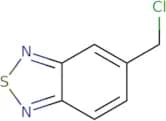
CAS:Versatile small molecule scaffoldFórmula:C6H16N2OPureza:Min. 95%Peso molecular:132.2 g/mol5-(Chloromethyl)-2,1,3-benzothiadiazole
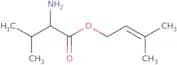
CAS:Versatile small molecule scaffoldFórmula:C7H5ClN2SPureza:Min. 95%Peso molecular:184.65 g/mol3-Methylbut-2-en-1-yl (2S)-2-amino-3-methylbutanoate
CAS:Versatile small molecule scaffoldFórmula:C10H19NO2Pureza:Min. 95%Peso molecular:185.26 g/molN-Methyl-4-sulfanylbenzamide
CAS:<p>N-Methyl-4-sulfanylbenzamide is an organometallic compound with optical properties that are sensitive to electron transfer. This sensitivity can be used for diagnosis of cancer, as well as for organometallic strategies in the treatment of cancer. NMSBA is a peptidic molecule that is able to bind to oncoproteins and inhibit their function. It has been shown to have optical properties that are surface-enhanced Raman (SE-Raman) active, which may allow its use in fabricating devices for cellular applications.</p>Fórmula:C8H9NOSPureza:Min. 95%Peso molecular:167.23 g/mol

![3-Bromo-1-[2-(trifluoromethyl)phenyl]pyrrolidin-2-one](/_next/image/?url=https%3A%2Fstatic.cymitquimica.com%2Fproducts%2F3D%2Fthumb-webp%2FMGC41717.webp&w=3840&q=75)
![4-[(3-Cyclopentyl-1,2,4-oxadiazol-5-yl)methyl]piperidine hydrochloride](/_next/image/?url=https%3A%2Fstatic.cymitquimica.com%2Fproducts%2F3D%2Fthumb-webp%2FMGD18817.webp&w=3840&q=75)
![2-[(Piperazin-1-yl)methyl]-4H-pyrido[1,2-a]pyrimidin-4-one dihydrochloride](/_next/image/?url=https%3A%2Fstatic.cymitquimica.com%2Fproducts%2F3D%2Fthumb-webp%2FMGD72411.webp&w=3840&q=75)