Building Blocks
Subcategorías de "Building Blocks"
- Ácidos borónicos y derivados del ácido borónico(5.774 productos)
- Building Blocks quirales(1.237 productos)
- Building Blocks de hidrocarburos(6.098 productos)
- Building Blocks orgánicos(60.970 productos)
Se han encontrado 205134 productos de "Building Blocks"
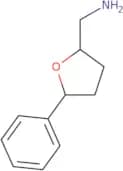
(5-Phenyloxolan-2-yl)methanamine
CAS:Versatile small molecule scaffold
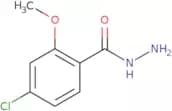
Fórmula:C11H15NOPureza:Min. 95%Peso molecular:177.24 g/mol4-Chloro-2-methoxybenzohydrazide
CAS:Versatile small molecule scaffold
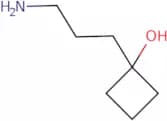
Fórmula:C8H9ClN2O2Pureza:Min. 95%Peso molecular:200.62 g/mol1-(3-Aminopropyl)cyclobutan-1-ol
CAS:Versatile small molecule scaffold
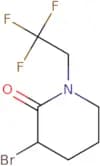
Fórmula:C7H15NOPureza:Min. 95%Peso molecular:129.2 g/mol3-Bromo-1-(2,2,2-trifluoroethyl)piperidin-2-one
CAS:Versatile small molecule scaffold
Fórmula:C7H9BrF3NOPureza:Min. 95%Peso molecular:260.05 g/mol3-Bromo-1-(prop-2-en-1-yl)pyrrolidin-2-one
CAS:Versatile small molecule scaffold
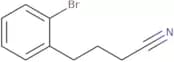
Fórmula:C7H10BrNOPureza:Min. 95%Peso molecular:204.06 g/mol4-(2-Bromophenyl)butanenitrile
CAS:Versatile small molecule scaffold
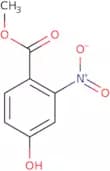
Fórmula:C10H10BrNPureza:Min. 95%Peso molecular:224.1 g/molMethyl 4-hydroxy-2-nitrobenzoate
CAS:Methyl 4-hydroxy-2-nitrobenzoate is a mesogenic compound that is optically active. It has been shown to form lamellar, mesogenic, and liquid crystal structures. Methyl 4-hydroxy-2-nitrobenzoate has also been used as a monomer in the synthesis of polymeric materials, such as silicone rubber and polyurethane.
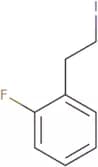
Fórmula:C8H7NO5Pureza:Min. 95%Peso molecular:197.14 g/mol1-Fluoro-2-(2-iodoethyl)benzene
CAS:Versatile small molecule scaffold
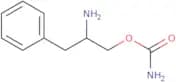
Fórmula:C8H8FIPureza:Min. 95%Peso molecular:250.05 g/mol2-Amino-3-phenylpropyl carbamate
CAS:Producto controladoSolriamfetol is a solvate form of 2-Amino-3-phenylpropyl carbamate hydrochloride. It is a carbamate with the chemical formula CH2CHN(C5H5)CO2H and is used as an insecticide. The solvate form is prepared by dissolving solriamfetol in water. Solriamfetol is soluble in water, ethanol, acetone, chloroform, and ether. Solriamfetol hydrochloride is a white to off-white powder that has a molecular weight of 273.7 g/mol and has a solubility in water of approximately 1g/L at room temperature.
Fórmula:C10H14N2O2Pureza:Min. 95%Peso molecular:194.23 g/mol7-Oxa-1-azaspiro[3.5]nonan-2-one
CAS:Versatile small molecule scaffold
Fórmula:C7H11NO2Pureza:Min. 95%Peso molecular:141.17 g/mol1-Azaspiro[3.4]octan-2-one
CAS:Versatile small molecule scaffold
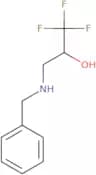
Fórmula:C7H11NOPureza:Min. 95%Peso molecular:125.17 g/mol3-(Benzylamino)-1,1,1-trifluoropropan-2-ol
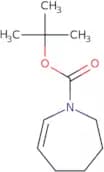
CAS:Versatile small molecule scaffoldFórmula:C10H12F3NOPureza:Min. 95%Peso molecular:219.2 g/mol1-Boc-2,3,4,5-Tetrahydroazepine
CAS:Versatile small molecule scaffold
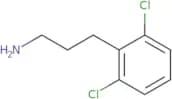
Fórmula:C11H19NO2Pureza:Min. 95%Peso molecular:197.27 g/mol3-(2,6-Dichlorophenyl)propan-1-amine
CAS:Versatile small molecule scaffold
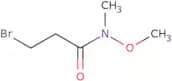
Fórmula:C9H11Cl2NPureza:Min. 95%Peso molecular:204.09 g/mol3-Bromo-N-methoxy-N-methyl-propanamide
CAS:Versatile small molecule scaffold
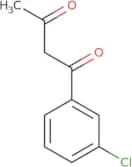
Fórmula:C5H10BrNO2Pureza:Min. 95%Peso molecular:196.04 g/mol1-(3-Chlorophenyl)butane-1,3-dione
CAS:Versatile small molecule scaffold
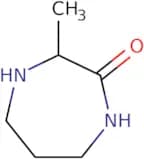
Fórmula:C10H9ClO2Pureza:Min. 95%Peso molecular:196.63 g/mol(3S)-3-Methyl-1,4-diazepan-2-one
CAS:Versatile small molecule scaffold
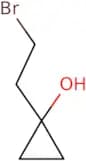
Fórmula:C6H12N2OPureza:Min. 95%Peso molecular:128.17 g/mol1-(2-Bromoethyl)cyclopropan-1-ol
CAS:Versatile small molecule scaffold
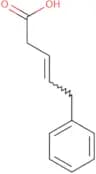
Fórmula:C5H9BrOPureza:Min. 95%Peso molecular:165.03 g/mol(3E)-5-Phenylpent-3-enoic acid
CAS:Versatile small molecule scaffold
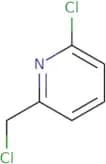
Fórmula:C11H12O2Pureza:Min. 95%Peso molecular:176.21 g/mol2-Chloro-6-(chloromethyl)pyridine
CAS:2-Chloro-6-(chloromethyl)pyridine (2C6CP) is a chloride precursor that can be used for the synthesis of metal chlorides, such as copper chlorides. 2C6CP is synthesized by reacting thionyl chloride with the substituted pyridine under anhydrous conditions at -78°C. The resultant 2C6CP is then hydrolyzed to produce the desired chloride.
2C6CP has been shown to act as a ligand in coordination chemistry. It was first synthesized by reacting 3-chloropyridine with thionyl chloride and then hydrolyzing it to 2-chloropyridine. This method was later modified to use 4-chlorobenzoyl chloride instead of 3-chloropyridine, producing 2,4-dichloropyridine.Fórmula:C6H5Cl2NPureza:Min. 95%Peso molecular:162.02 g/mol


![7-Oxa-1-azaspiro[3.5]nonan-2-one](/_next/image/?url=https%3A%2Fstatic.cymitquimica.com%2Fproducts%2F3D%2Fthumb-webp%2FDHA24292.webp&w=3840&q=75)
![1-Azaspiro[3.4]octan-2-one](/_next/image/?url=https%3A%2Fstatic.cymitquimica.com%2Fproducts%2F3D%2Fthumb-webp%2FDHA24270.webp&w=3840&q=75)