


Building Blocks
Subcategorías de "Building Blocks"
- Ácidos borónicos y derivados del ácido borónico(5.783 productos)
- Building Blocks quirales(1.242 productos)
- Building Blocks de hidrocarburos(6.105 productos)
- Building Blocks orgánicos(61.055 productos)
Se han encontrado 205383 productos de "Building Blocks"
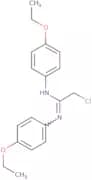
2-Chloro-N,N'-bis(4-ethoxyphenyl)ethanimidamide
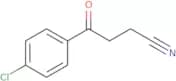
CAS:Versatile small molecule scaffoldFórmula:C18H21ClN2O2Pureza:Min. 95%Peso molecular:332.8 g/mol4-(4-Chlorophenyl)-4-oxobutanenitrile
CAS:Versatile small molecule scaffold
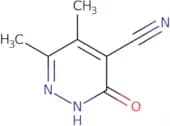
Fórmula:C10H8ClNOPureza:Min. 95%Peso molecular:193.63 g/mol5,6-dimethyl-3-oxo-2,3-dihydropyridazine-4-carbonitrile
CAS:Versatile small molecule scaffold
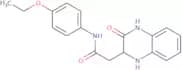
Fórmula:C7H7N3OPureza:Min. 95%Peso molecular:149.14 g/molN-(4-Ethoxyphenyl)-2-(3-oxo-1,2,3,4-tetrahydroquinoxalin-2-yl)acetamide
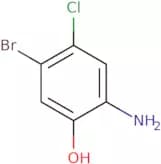
CAS:Versatile small molecule scaffoldFórmula:C18H19N3O3Pureza:Min. 95%Peso molecular:325.4 g/mol2-Amino-5-bromo-4-chlorophenol
CAS:Versatile small molecule scaffold
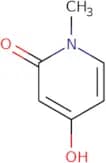
Fórmula:C6H5BrClNOPureza:Min. 95%Peso molecular:222.47 g/mol4-Hydroxy-1-methyl-2-pyridone
CAS:Versatile small molecule scaffold
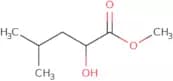
Fórmula:C6H7NO2Pureza:Min. 95%Peso molecular:125.13 g/molMethyl 2-hydroxy-4-methylvalerate
CAS:Methyl 2-hydroxy-4-methylvalerate is an organic compound that belongs to the class of fatty acids. It is a colorless liquid with a fruity odor. Methyl 2-hydroxy-4-methylvalerate has been shown to inhibit the formation of reactive oxygen species and has antioxidant potential. It also inhibits bone resorption, which may be due to its ability to reduce levels of isobutyric acid in rats and humans. Methyl 2-hydroxy-4-methylvalerate has been found in tropical fruits such as mangoes, durians, and papayas.
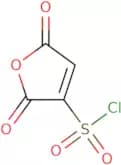
Fórmula:C7H14O3Pureza:Min. 95%Peso molecular:146.18 g/mol2,5-Dioxo-2,5-dihydrofuran-3-sulfonyl chloride
CAS:Versatile small molecule scaffold
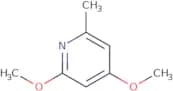
Fórmula:C4HClO5SPureza:Min. 95%Peso molecular:196.57 g/mol2,4-Dimethoxy-6-methylpyridine
CAS:Versatile small molecule scaffold
Fórmula:C8H11NO2Pureza:Min. 95%Peso molecular:153.18 g/mol2-Chloro-3-[(2S)-1-methylpyrrolidin-2-yl]pyridine
CAS:Versatile small molecule scaffold
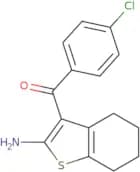
Fórmula:C10H13ClN2Pureza:Min. 95%Peso molecular:196.67 g/molT62
CAS:T62 is a chemical element that belongs to the group of rare-earth metals. It is used in a variety of different industries, such as for the manufacture of magnets and batteries. T62 has been shown to be an effective inhibitor of bacterial ubiquitin ligases, which are enzymes that regulate protein degradation by attaching ubiquitin molecules to proteins. T62 has also been shown to inhibit chronic pain in animal models due to its ability to inhibit adenosine receptors. This drug has shown efficacy in treating bladder cancer and hematopoietic disorders.
Fórmula:C15H14ClNOSPureza:Min. 95%Peso molecular:291.8 g/mol2-(4-Chlorophenyl)cyclopentan-1-one
CAS:Versatile small molecule scaffold
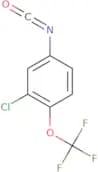
Fórmula:C11H11ClOPureza:Min. 95%Peso molecular:194.66 g/mol2-Chloro-4-isocyanato-1-(trifluoromethoxy)benzene
CAS:Versatile small molecule scaffold
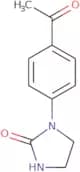
Fórmula:C8H3ClF3NO2Pureza:Min. 95%Peso molecular:237.56 g/mol1-(4-Acetylphenyl)imidazolidin-2-one
CAS:Versatile small molecule scaffold
Fórmula:C11H12N2O2Pureza:Min. 95%Peso molecular:204.22 g/mol2-[4-(2-Methoxyphenyl)piperazin-1-yl]ethan-1-amine
CAS:Versatile small molecule scaffold
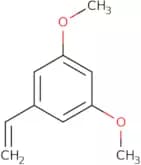
Fórmula:C13H21N3OPureza:Min. 95%Peso molecular:235.33 g/mol1-Ethenyl-3,5-dimethoxybenzene
CAS:1-Ethenyl-3,5-dimethoxybenzene is a monomer that can be used for anionic polymerization. This monomer is characterized by its high yield, which is consistent with the predictable conformation of the phenyl ring and the symmetric nature of the magnetic resonance spectra. The 1-ethenyl-3,5-dimethoxybenzene molecule has an anionic charge. It is also known to have a phenolic group, which provides ultraviolet absorption properties. The temperature range for this monomer's transition ranges from -20°C to 100°C.
Fórmula:C10H12O2Pureza:Min. 95%Peso molecular:164.2 g/mol4,6-Dimethylheptan-3-one
CAS:Versatile small molecule scaffold
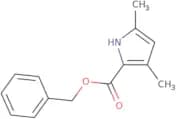
Fórmula:C9H18OPureza:Min. 95%Peso molecular:142.2 g/molBenzyl 3,5-dimethylpyrrole-2-carboxylate
CAS:Producto controladoBenzyl 3,5-dimethylpyrrole-2-carboxylate is an enol ether that is stabilized by hydrogen bonds. This compound has a polymeric structure and forms dimers and dimers. The chains of the molecule are stabilized by hydrogen bonds. It has a carbonyl group and a carbonyl group that form hydrogen bonds with each other. There are also hydrogen bonding interactions between the benzyl chain and the acetyl groups present in the molecule. Benzyl 3,5-dimethylpyrrole-2-carboxylate is a part of the class of compounds known as polymeric ketones or polyketones, which are characterized by their chains of repeating units.
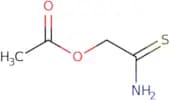
Fórmula:C14H15NO2Pureza:Min. 95%Peso molecular:229.27 g/molCarbamothioylmethyl acetate
CAS:Versatile small molecule scaffold
Fórmula:C4H7NO2SPureza:Min. 95%Peso molecular:133.17 g/mol3-[(3-Aminopropyl)amino]-1-propanol
CAS:3-[(3-Aminopropyl)amino]-1-propanol is a complex chemical compound. It is a convergent synthesis and has the potential to be used in the field of chemistry, where it can be used to create new molecules with complex structures. 3-[(3-Aminopropyl)amino]-1-propanol can also be used to synthesize dendrons and dendrimers, which are highly symmetrical and designed architectures that have been shown to have orthogonal reactivity.
Fórmula:C6H16N2OPureza:Min. 95%Peso molecular:132.21 g/mol

![2-Chloro-3-[(2S)-1-methylpyrrolidin-2-yl]pyridine](/_next/image/?url=https%3A%2Fstatic.cymitquimica.com%2Fproducts%2F3D%2Fthumb-webp%2FQBA31689.webp&w=3840&q=75)
![2-[4-(2-Methoxyphenyl)piperazin-1-yl]ethan-1-amine](/_next/image/?url=https%3A%2Fstatic.cymitquimica.com%2Fproducts%2F3D%2Fthumb-webp%2FQBA25548.webp&w=3840&q=75)

![3-[(3-Aminopropyl)amino]-1-propanol](/_next/image/?url=https%3A%2Fstatic.cymitquimica.com%2Fproducts%2F3D%2Fthumb-webp%2FQBA22615.webp&w=3840&q=75)