Building Blocks
Subcategorías de "Building Blocks"
- Ácidos borónicos y derivados del ácido borónico(5.778 productos)
- Building Blocks quirales(1.243 productos)
- Building Blocks de hidrocarburos(6.098 productos)
- Building Blocks orgánicos(61.038 productos)
Se han encontrado 205191 productos de "Building Blocks"
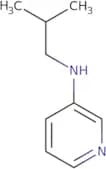
N-(2-Methylpropyl)pyridin-3-amine
CAS:Versatile small molecule scaffold
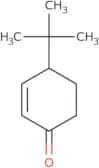
Fórmula:C9H14N2Pureza:Min. 95%Peso molecular:150.22 g/mol4-tert-Butylcyclohex-2-en-1-one
CAS:Versatile small molecule scaffold
Fórmula:C10H16OPureza:Min. 95%Peso molecular:152.23 g/molRef: 3D-AAA93707
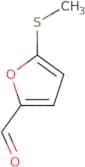
Producto descatalogado5-(Methylsulfanyl)furan-2-carbaldehyde
CAS:Versatile small molecule scaffold
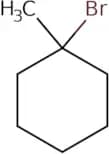
Fórmula:C6H6O2SPureza:Min. 95%Peso molecular:142.18 g/mol1-Bromo-1-methylcyclohexane
CAS:1-Bromo-1-methylcyclohexane is a monomolecular gas that is used as an intermediate in organic synthesis. It reacts with halides to form cyclopentyl derivatives. This reaction has been shown to be faster than the corresponding reaction of 1-bromocyclohexane with chlorides or bromides. The rate of this reaction may be due to the polarizability and conformational changes of the molecule upon substitution by a methyl group. 1-Bromo-1-methylcyclohexane is also an ionizing reagent, which means it can cause electrophilic reactions to occur on other molecules. It has been found that the solvent effect on this product can affect its reactivity, with solvents such as water having more of an effect than solvents such as benzene. 1-Bromo-1-methylcyclohexane has been shown to interact with other compounds in both transfer and complex
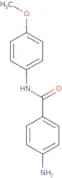
Fórmula:C7H13BrPureza:Min. 95%Peso molecular:177.08 g/mol4-Amino-n-(4-methoxyphenyl)benzamide
CAS:4-Amino-N-(4-methoxyphenyl)benzamide is a catalytic sulfamate that has been optimized for use in the synthesis of benzimidazole derivatives. 4-Amino-N-(4-methoxyphenyl)benzamide is used as a reagent for the preparation of aldehydes from sulfamic acid and various types of carboxylic acids. The reaction mechanism involves nucleophilic attack by the hydroxyl group from the sulfamate on the carbonyl carbon atom to form an intermediate, which then reacts with water to release hydrogen sulfate and form a new double bond.
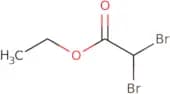
Fórmula:C14H14N2O2Pureza:Min. 95%Peso molecular:242.27 g/molAcetic acid, dibromo-, ethyl ester
CAS:Acetic acid, dibromo-, ethyl ester is a reactive molecule that can be used as a nucleophilic substituent. It has hydroxyl group and ruthenium complex. It is a particle that can be used in the production of monoclonal antibodies. Acetic acid, dibromo-, ethyl ester also has viscosity and polycarboxylic acid. This chemical reacts with β-unsaturated ketones to form polymerization initiator. Acetic acid, dibromo-, ethyl ester also has carbonyl group and monoclonal antibodies. Acetic acid, dibromo-, ethyl ester can be conjugated with ethyl bromoacetate to produce conjugates.
Fórmula:C4H6Br2O2Pureza:Min. 95%Peso molecular:245.9 g/mol2-[(3-Nitrophenyl)formamido]acetic acid
CAS:2-[(3-Nitrophenyl)formamido]acetic acid (2NPA) is a modifying agent that has been used in the modification of carboxyl groups. It can react with nucleophiles to form adducts and with carbodiimides to form ureas. 2NPA reacts with amino acids, peptides, and other nitrogenous compounds at their carboxyl groups to form ester or amide bonds. The nature of the residues after modification varies depending on the nature of the carboxyl group that was modified.
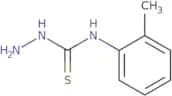
Fórmula:C9H8N2O5Pureza:Min. 95%Peso molecular:224.17 g/mol4-(2-Methylphenyl)-3-thiosemicarbazide
CAS:4-(2-Methylphenyl)-3-thiosemicarbazide is a crystalline solid that belongs to the group of benzoic acid derivatives. It has an orthorhombic crystal structure, with a yellow color. The crystals are measured at room temperature, and it has an atomic weight of 197.11 g/mol. 4-(2-Methylphenyl)-3-thiosemicarbazide is stable in air and in solution, but decomposes at temperatures above 250°C. This compound has been studied by using X-ray diffraction measurements and Bruker parameters. Its isotropic radiation is recorded at the following wavelength: 1.5418 Å (1).
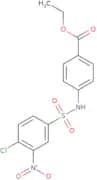
Fórmula:C8H11N3SPureza:Min. 95%Peso molecular:181.26 g/molEthyl 4-(4-chloro-3-nitrobenzenesulfonamido)benzoate
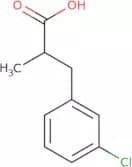
CAS:Versatile small molecule scaffoldFórmula:C15H13ClN2O6SPureza:Min. 95%Peso molecular:384.8 g/mol3-(3-Chlorophenyl)-2-methylpropanoic acid
CAS:Versatile small molecule scaffoldFórmula:C10H11ClO2Pureza:Min. 95%Peso molecular:198.64 g/mol4,5,6,7-Tetrahydropyrazolo[1,5-a]pyrazine dihydrochloride
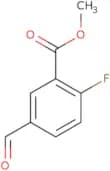
CAS:Versatile small molecule scaffoldFórmula:C6H11Cl2N3Pureza:Min. 95%Peso molecular:196.08 g/molMethyl 2-fluoro-5-formylbenzoate
CAS:Versatile small molecule scaffold
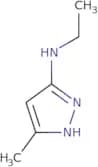
Fórmula:C9H7FO3Pureza:Min. 95%Peso molecular:182.15 g/molN-Ethyl-5-methyl-1H-pyrazol-3-amine
CAS:Versatile small molecule scaffold
Fórmula:C6H11N3Pureza:Min. 95%Peso molecular:125.17 g/molN-(3-Methoxyphenyl)prop-2-enamide
CAS:Versatile small molecule scaffold
Fórmula:C10H11NO2Pureza:Min. 95%Peso molecular:177.2 g/mol4-(1,3-Dioxaindan-5-yloxy)-5-bromopyrimidine
CAS:Versatile small molecule scaffold
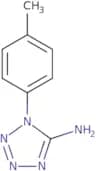
Fórmula:C11H7BrN2O3Pureza:Min. 95%Peso molecular:295.09 g/mol1-(4-Methylphenyl)-1H-1,2,3,4-tetrazol-5-amine
CAS:Versatile small molecule scaffold
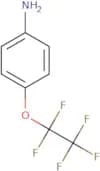
Fórmula:C8H9N5Pureza:Min. 95%Peso molecular:175.19 g/mol4-(Perfluoroethoxy)aniline
CAS:Versatile small molecule scaffold
Fórmula:C8H6F5NOPureza:Min. 95%Peso molecular:227.13 g/mol(5R)-5-(Aminomethyl)-1,3-oxazolidin-2-one HCl ee
CAS:Versatile small molecule scaffold
Fórmula:C4H9ClN2O2Pureza:Min. 95%Peso molecular:152.58 g/mol1,3-Dimethyl-1H-thieno[2,3-c]pyrazole hydrochloride
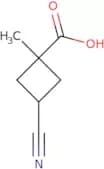
CAS:Versatile small molecule scaffoldFórmula:C7H9ClN2SPureza:Min. 95%Peso molecular:188.68 g/mol3-Cyano-1-methylcyclobutane-1-carboxylic acid
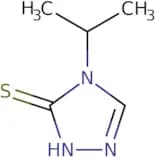
CAS:Versatile small molecule scaffoldFórmula:C7H9NO2Pureza:Min. 95%Peso molecular:139.15 g/mol4-(Propan-2-yl)-4H-1,2,4-triazole-3-thiol
CAS:Versatile small molecule scaffoldFórmula:C5H9N3SPureza:Min. 95%Peso molecular:143.21 g/mol2-Methylsulfonylthiophene
CAS:2-Methylsulfonylthiophene is a modulating agent that can inhibit the activity of carbonic anhydrase, adenosine receptors and 5-membered heteroaryl. It has been shown to have affinity for CB1 receptor antagonists and is used to treat cardiovascular diseases. 2-Methylsulfonylthiophene also inhibits the enzymatic activity of anhydrase in the eye, which leads to suppression of intraocular pressure (IOP). The drug also has anti-glaucoma effects by reducing the production of aqueous humour. 2-Methylsulfonylthiophene is used as a dyestuff intermediate and as an organic solvent.
Fórmula:C5H6O2S2Pureza:Min. 95%Peso molecular:162.23 g/molCyclopropyl(3,4-dimethylphenyl)methanone
CAS:Cyclopropyl(3,4-dimethylphenyl)methanone (CPM) is a synthetic cannabinoid that has been shown to have similar effects to the natural cannabinoids found in cannabis. CPM binds to and activates the CB2 receptor, which is found on cells of the immune system, brain, and other organs. It has been studied for its ability to reduce glioma tumor growth in mice by inhibiting glutamate release. The molecular modeling study showed that CPM binds to the receptor with a geometry similar to other CB2 agonists like JWH-133. In addition, CPM inhibits locomotor activity in rats and has been shown to produce some symptoms of anxiety in mice. A receptor knockout study with mice showed that CPM can bind to CB2 receptors without activating them. X-ray diffraction data indicated that CPM is an achiral molecule with an idealized molecular geometry of "s".
Fórmula:C12H14OPureza:Min. 95%Peso molecular:174.24 g/mol1,9,10,11,12,12-Hexachloro-5-oxatetracyclo[7.2.1.0²,⁸.0⁴,⁶]dodec-10-ene-3,7-dione
CAS:Versatile small molecule scaffoldFórmula:C11H4Cl6O3Pureza:Min. 95%Peso molecular:396.9 g/molN-[3-(Dimethylamino)propyl]-2-hydroxybenzamide
CAS:Versatile small molecule scaffoldFórmula:C12H18N2O2Pureza:Min. 95%Peso molecular:222.28 g/mol2-[Ethyl(propan-2-yl)amino]ethan-1-ol
CAS:Producto controladoVersatile small molecule scaffold
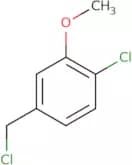
Fórmula:C7H17NOPureza:Min. 95%Peso molecular:131.22 g/mol1-Chloro-4-(chloromethyl)-2-methoxybenzene
CAS:Versatile small molecule scaffold
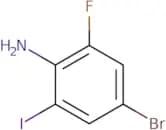
Fórmula:C8H8Cl2OPureza:Min. 95%Peso molecular:191.05 g/mol4-Bromo-2-fluoro-6-iodoaniline
CAS:Versatile small molecule scaffold
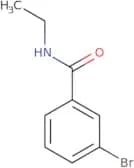
Fórmula:C6H4BrFINPureza:Min. 95%Peso molecular:315.91 g/mol3-Bromo-N-ethylbenzamide
CAS:Versatile small molecule scaffold
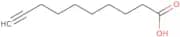
Fórmula:C9H10BrNOPureza:Min. 95%Peso molecular:228.09 g/molDec-9-ynoic acid
CAS:Dec-9-ynoic acid is a synthetic fatty acid that is a precursor to several biologically important substances. It is labile and easily oxidized by air, light, or heat. Dec-9-ynoic acid has been shown to be a central metabolic intermediate for the biosynthesis of polyunsaturated fatty acids. It can also be converted into linolenic acid, which is an essential fatty acid that cannot be synthesized by humans. Dec-9-ynoic acid exists in two geometric isomers: cis and trans. The cis form exhibits kinetic properties that are different from the trans form. Dec-9-ynoic acid has been studied as a potential treatment for human diseases such as diabetes mellitus type 2, Parkinson's disease, Alzheimer's disease, schizophrenia, and depression.
Fórmula:C10H16O2Pureza:Min. 95%Peso molecular:168.23 g/molN-[(Quinolin-8-yl)methyl]methanesulfonamide
CAS:Versatile small molecule scaffold
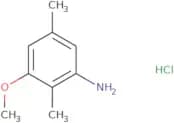
Fórmula:C11H12N2O2SPureza:Min. 95%Peso molecular:236.29 g/mol3-Methoxy-2,5-dimethylaniline hydrochloride
CAS:Versatile small molecule scaffold
Fórmula:C9H14ClNOPureza:Min. 95%Peso molecular:187.66 g/molRef: 3D-LJB55559
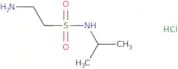
Producto descatalogado2-Amino-N-(propan-2-yl)ethane-1-sulfonamide hydrochloride
CAS:Versatile small molecule scaffold
Fórmula:C5H15ClN2O2SPureza:Min. 95%Peso molecular:202.7 g/mol3-[(3-Methoxypropyl)carbamoyl]propanoic acid
CAS:Versatile small molecule scaffold
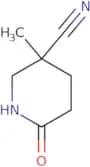
Fórmula:C8H15NO4Pureza:Min. 95%Peso molecular:189.21 g/mol3-Methyl-6-oxopiperidine-3-carbonitrile
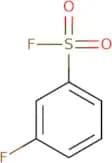
CAS:Versatile small molecule scaffoldFórmula:C7H10N2OPureza:Min. 95%Peso molecular:138.17 g/mol3-Fluorobenzene-1-sulfonyl fluoride
CAS:3-Fluorobenzene-1-sulfonyl fluoride is a chemical compound that can be used as a catalyst to synthesize organic compounds. It is a colorless liquid, which is soluble in water and organic solvents. This catalyst has been shown to be more efficient than the traditional catalysts, such as tetraphenylphosphonium chloride, potassium fluoride or sodium borohydride. 3-Fluorobenzene-1-sulfonyl fluoride also reacts with nitro groups to produce dinitro compounds, which are valuable synthetic intermediates for the production of dyes and pharmaceuticals. The synthesis of this compound can be carried out in high yields with stoichiometric amounts of reactants.
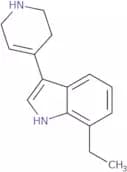
Fórmula:C6H4F2O2SPureza:Min. 95%Peso molecular:178.16 g/mol7-Ethyl-3-(1,2,3,6-tetrahydropyridin-4-yl)-1H-indole
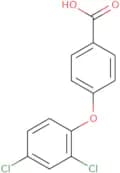
CAS:Versatile small molecule scaffoldFórmula:C15H18N2Pureza:Min. 95%Peso molecular:226.32 g/mol4-(2,4-Dichlorophenoxy)benzoic acid
CAS:Versatile small molecule scaffold
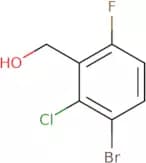
Fórmula:C13H8Cl2O3Pureza:Min. 95%Peso molecular:283.1 g/mol3-Bromo-2-chloro-6-fluorobenzyl alcohol
CAS:Versatile small molecule scaffold
Fórmula:C7H5BrClFOPureza:Min. 95%Peso molecular:239.47 g/molRef: 3D-JWC62856
Producto descatalogadorac-(3R,4R)-3-Hydroxy-4-[(2-phenylethyl)amino]-1lambda6-thiolane-1,1-dione
CAS:Versatile small molecule scaffold
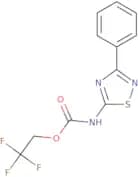
Fórmula:C12H17NO3SPureza:Min. 95%Peso molecular:255.34 g/mol2,2,2-Trifluoroethyl N-(3-phenyl-1,2,4-thiadiazol-5-yl)carbamate
CAS:Versatile small molecule scaffold
Fórmula:C11H8F3N3O2SPureza:Min. 95%Peso molecular:303.26 g/mol2-Chloro-4-methoxy-7-methyl-7H-pyrrolo[2,3-d]pyrimidine
CAS:Versatile small molecule scaffold
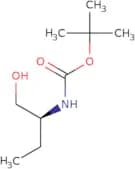
Fórmula:C8H8ClN3OPureza:Min. 95%Peso molecular:197.62 g/molN-Boc-(S)-(ˆ’)-2-amino-1-butanol
CAS:Versatile small molecule scaffold
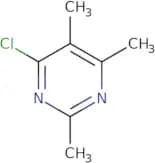
Fórmula:C9H19NO3Pureza:Min. 95%Peso molecular:189.25 g/mol4-Chloro-2,5,6-trimethylpyrimidine
CAS:Versatile small molecule scaffold
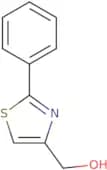
Fórmula:C7H9ClN2Pureza:Min. 95%Peso molecular:156.61 g/mol4-(Hydroxymethyl)-2-phenyl-1,3-thiazole
CAS:4-(Hydroxymethyl)-2-phenyl-1,3-thiazole is a versatile compound that has various applications in research and chemical synthesis. It is commonly used as a building block for the synthesis of organic compounds, including antibodies and research chemicals. This compound has been found to exhibit potent antiangiogenic properties, making it valuable in the field of cancer research. Additionally, 4-(Hydroxymethyl)-2-phenyl-1,3-thiazole can be used as a precursor in the synthesis of important pharmaceuticals such as cephalosporins and taxol. Its unique structure allows for diverse chemical reactions, making it an essential tool for chemists and researchers alike. Whether you're working on developing new drugs or exploring novel chemical reactions, 4-(Hydroxymethyl)-2-phenyl-1,3-thiazole is an indispensable compound that will help drive your scientific endeavors forward.
Fórmula:C10H9NOSPureza:Min. 95%Peso molecular:191.25 g/mol(4-Chlorophenyl)({8-methyl-8-azabicyclo[3.2.1]octan-3-yl})methanamine
CAS:Versatile small molecule scaffold
Fórmula:C15H21ClN2Pureza:Min. 95%Peso molecular:264.79 g/molRef: 3D-ITC29319
Producto descatalogado2-(Benzylamino)-1-[3-(difluoromethoxy)phenyl]ethan-1-ol
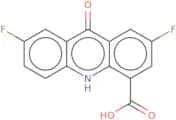
CAS:Versatile small molecule scaffoldFórmula:C16H17F2NO2Pureza:Min. 95%Peso molecular:293.31 g/mol2,7-Difluoro-9-oxo-9,10-dihydroacridine-4-carboxylic acid
CAS:Versatile small molecule scaffold
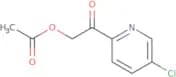
Fórmula:C14H7F2NO3Pureza:Min. 95%Peso molecular:275.2 g/mol2-(5-Chloropyridin-2-yl)-2-oxoethyl acetate
CAS:Versatile small molecule scaffold
Fórmula:C9H8ClNO3Pureza:Min. 95%Peso molecular:213.62 g/molRef: 3D-XWC38084
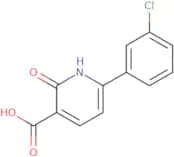
Producto descatalogado6-(3-Chlorophenyl)-2-oxo-1,2-dihydropyridine-3-carboxylic Acid
CAS:Versatile small molecule scaffoldFórmula:C12H8ClNO3Pureza:Min. 95%Peso molecular:249.65 g/mol8-Phenyl-1-oxa-3-azaspiro[4.5]dec-2-en-2-amine
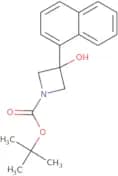
CAS:Versatile small molecule scaffoldFórmula:C14H18N2OPureza:Min. 95%Peso molecular:230.31 g/moltert-Butyl 3-hydroxy-3-(naphthalen-1-yl)azetidine-1-carboxylate
CAS:Versatile small molecule scaffold
Fórmula:C18H21NO3Pureza:Min. 95%Peso molecular:299.4 g/mol(1R)-1-(1H-Imidazol-2-yl)ethan-1-amine dihydrochloride
CAS:Versatile small molecule scaffold
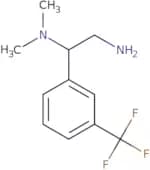
Fórmula:C5H11Cl2N3Pureza:Min. 95%Peso molecular:184.06 g/molN*1*,N*1*-Dimethyl-1-(3-trifluoromethyl-phenyl)-ethane-1,2-diamine
CAS:Versatile small molecule scaffoldFórmula:C11H15F3N2Pureza:Min. 95%Peso molecular:232.25 g/molrac-[(2R,5S)-5-Phenyloxolan-2-yl]methanamine hydrochloride
CAS:Versatile small molecule scaffold
Fórmula:C11H16ClNOPureza:Min. 95%Peso molecular:213.7 g/molRef: 3D-HXC89108
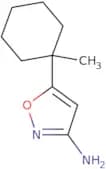
Producto descatalogado5-(1-Methylcyclohexyl)-1,2-oxazol-3-amine
CAS:Versatile small molecule scaffoldFórmula:C10H16N2OPureza:Min. 95%Peso molecular:180.2 g/molRef: 3D-VSC16818
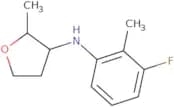
Producto descatalogadoN-(3-Fluoro-2-methylphenyl)-2-methyloxolan-3-amine
CAS:Versatile small molecule scaffold
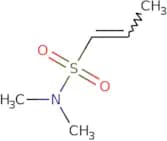
Fórmula:C12H16FNOPureza:Min. 95%Peso molecular:209.26 g/molN,N-Dimethylprop-1-ene-1-sulfonamide
CAS:Versatile small molecule scaffold
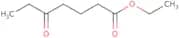
Fórmula:C5H11NO2SPureza:Min. 95%Peso molecular:149.2 g/molEthyl 5-oxoheptanoate
CAS:Ethyl 5-oxoheptanoate is a clear, colorless liquid that can be synthesized by reacting benzene with acetone. The synthesis of ethyl 5-oxoheptanoate is an example of a Friedel-Crafts reaction. This chemical is soluble in organic solvents such as acetone and cyclohexane and has low toxicity. It can be used as a reagent for the preparation of esters from alcohols, phenols, or carboxylic acids. Ethyl 5-oxoheptanoate can also be used to prepare resorcinol, which is a precursor to polymers and dyes, by hydrogenation of the molecule. Preparative methods are often used to produce this product because it has limited solubility in water.
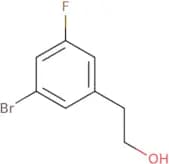
Fórmula:C9H16O3Pureza:Min. 95%Peso molecular:172.22 g/mol2-(3-Bromo-5-fluorophenyl)ethanol
CAS:Versatile small molecule scaffold
Fórmula:C8H8BrFOPureza:Min. 95%Peso molecular:219.05 g/mol2-Methyl-3-[2-(morpholin-4-yl)ethoxy]phenol
CAS:Versatile small molecule scaffold
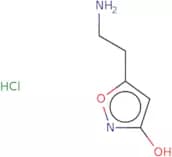
Fórmula:C13H19NO3Pureza:Min. 95%Peso molecular:237.29 g/mol5-(2-Aminoethyl)-1,2-oxazol-3-ol hydrochloride
CAS:Versatile small molecule scaffold
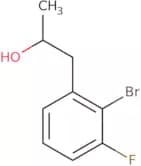
Fórmula:C5H9ClN2O2Pureza:Min. 95%Peso molecular:164.6 g/mol1-(2-Bromo-3-fluorophenyl)propan-2-ol
CAS:Versatile small molecule scaffoldFórmula:C9H10BrFOPureza:Min. 95%Peso molecular:233.08 g/molRef: 3D-UFC04202
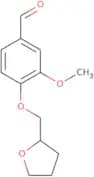
Producto descatalogado3-Methoxy-4-(tetrahydro-furan-2-ylmethoxy)-benzaldehyde
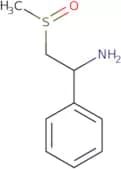
CAS:Versatile small molecule scaffoldFórmula:C13H16O4Pureza:Min. 95%Peso molecular:236.26 g/mol2-Methanesulfinyl-1-phenylethan-1-amine
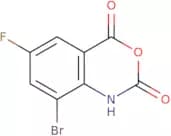
CAS:Versatile small molecule scaffoldFórmula:C9H13NOSPureza:Min. 95%Peso molecular:183.27 g/mol8-Bromo-6-fluoro-2,4-dihydro-1H-3,1-benzoxazine-2,4-dione
CAS:Versatile small molecule scaffold
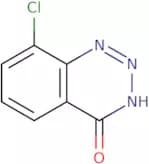
Fórmula:C8H3BrFNO3Pureza:Min. 95%Peso molecular:260.02 g/mol8-Chloro-3,4-dihydro-1,2,3-benzotriazin-4-one
CAS:Versatile small molecule scaffold
Fórmula:C7H4ClN3OPureza:Min. 95%Peso molecular:181.58 g/molRef: 3D-TAA34345
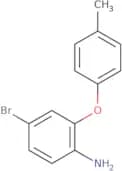
Producto descatalogado4-Bromo-2-(4-methylphenoxy)aniline
CAS:Versatile small molecule scaffold
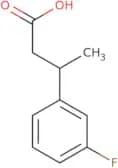
Fórmula:C13H12BrNOPureza:Min. 95%Peso molecular:278.14 g/mol3-(3-Fluorophenyl)butanoic acid
CAS:Versatile small molecule scaffold
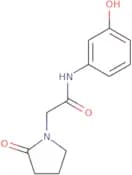
Fórmula:C10H11FO2Pureza:Min. 95%Peso molecular:182.19 g/molN-(3-Hydroxyphenyl)-2-(2-oxopyrrolidin-1-yl)acetamide
CAS:Producto controladoN-(3-Hydroxyphenyl)-2-(2-oxopyrrolidin-1-yl)acetamide is a research tool that is used as an activator or ligand to study the function of receptors, ion channels and other proteins. It binds to cell surface receptors and activates them by mimicking the endogenous ligands. This compound has been shown to be a high purity reagent with protein interactions.Fórmula:C12H14N2O3Pureza:Min. 95%Peso molecular:234.25 g/mol(1S)-1-(Oxan-4-yl)ethan-1-ol
CAS:Versatile small molecule scaffold
Fórmula:C7H14O2Pureza:Min. 95%Peso molecular:130.18 g/molRef: 3D-SMC98537
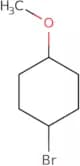
Producto descatalogado1-Bromo-4-methoxycyclohexane
CAS:Versatile small molecule scaffold
Fórmula:C7H13BrOPureza:Min. 95%Peso molecular:193.08 g/molMethyl[(3-propyl-1,2-oxazol-5-yl)methyl]amine
CAS:Versatile small molecule scaffold
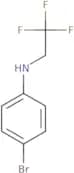
Fórmula:C8H14N2OPureza:Min. 95%Peso molecular:154.21 g/mol4-bromo-N-(2,2,2-trifluoroethyl)aniline
CAS:Versatile small molecule scaffold
Fórmula:C8H7BrF3NPureza:Min. 95%Peso molecular:254 g/molrac-(1R,5S)-4-Oxaspiro[bicyclo[3.2.0]heptane-6,1'-cyclopentane]-7-one, cis
CAS:Versatile small molecule scaffold
Fórmula:C10H14O2Pureza:Min. 95%Peso molecular:166.2 g/molRef: 3D-HCD80674
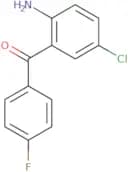
Producto descatalogado4-Chloro-2-(4-fluorobenzoyl)aniline
CAS:Versatile small molecule scaffold
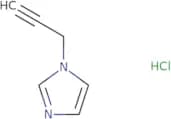
Fórmula:C13H9ClFNOPureza:Min. 95%Peso molecular:249.67 g/mol1-(Prop-2-yn-1-yl)-1H-imidazole hydrochloride
CAS:Versatile small molecule scaffoldFórmula:C6H7ClN2Pureza:Min. 95%Peso molecular:142.58 g/moltert-Butyl 4-methoxy-3,10-diazabicyclo[4.3.1]dec-3-ene-10-carboxylate
CAS:Versatile small molecule scaffoldFórmula:C14H24N2O3Pureza:Min. 95%Peso molecular:268.4 g/molRef: 3D-FSD25605
Producto descatalogado2-(Sulfanylmethyl)-4H-pyrido[1,2-a]pyrimidin-4-one
CAS:Versatile small molecule scaffold
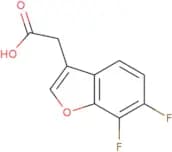
Fórmula:C9H8N2OSPureza:Min. 95%Peso molecular:192.24 g/mol2-(6,7-Difluoro-1-benzofuran-3-yl)acetic acid
CAS:Versatile small molecule scaffold
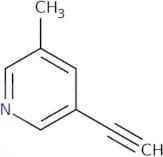
Fórmula:C10H6F2O3Pureza:Min. 95%Peso molecular:212.15 g/mol3-Ethynyl-5-methylpyridine
CAS:Versatile small molecule scaffold
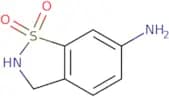
Fórmula:C8H7NPureza:Min. 95%Peso molecular:117.15 g/mol1,1-Dioxo-2,3-dihydro-1,2-benzothiazol-6-amine
CAS:Versatile small molecule scaffold
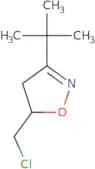
Fórmula:C7H8N2O2SPureza:Min. 95%Peso molecular:184.22 g/mol3-tert-Butyl-5-(chloromethyl)-4,5-dihydro-1,2-oxazole
CAS:Versatile small molecule scaffoldFórmula:C8H14ClNOPureza:Min. 95%Peso molecular:175.65 g/mol4'-N-Piperidinophenyl acetylene
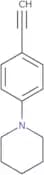
CAS:Versatile small molecule scaffold
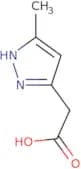
Fórmula:C13H15NPureza:Min. 95%Peso molecular:185.27 g/mol2-(5-Methyl-1H-pyrazol-3-yl)acetic acid
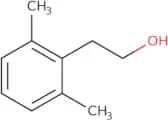
CAS:Versatile small molecule scaffoldFórmula:C6H8N2O2Pureza:Min. 95%Peso molecular:140.14 g/mol2-(2,6-Dimethylphenyl)ethan-1-ol
CAS:2-(2,6-Dimethylphenyl)ethan-1-ol is a racemic mixture of two compounds with the same molecular formula. The two enantiomers have different chemical properties and can be separated by specific techniques such as chromatography. 2-(2,6-Dimethylphenyl)ethan-1-ol is an ether that is made from methylmalonic acid and ethylene oxide. It is hydrolysed to release methylmalonyl chloride or demethylated to produce methyl ether acetate. This compound has been used in the synthesis of various esters and sesquiterpenoids.
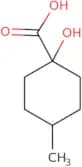
Fórmula:C10H14OPureza:Min. 95%Peso molecular:150.22 g/mol1-Hydroxy-4-methylcyclohexane-1-carboxylic acid
CAS:Versatile small molecule scaffold
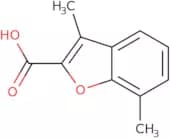
Fórmula:C8H14O3Pureza:Min. 95%Peso molecular:158.19 g/mol3,7-Dimethyl-1-benzofuran-2-carboxylic acid
CAS:Versatile small molecule scaffold
Fórmula:C11H10O3Pureza:Min. 95%Peso molecular:190.19 g/mol6-(4-{[(9H-Fluoren-9-yl)methoxy]carbonyl}piperazin-1-yl)pyridazine-3-carboxylic acid
CAS:Versatile small molecule scaffold
Fórmula:C24H22N4O4Pureza:Min. 95%Peso molecular:430.5 g/molRef: 3D-QID29084
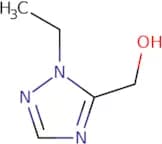
Producto descatalogado(1-Ethyl-1H-1,2,4-triazol-5-yl)methanol
CAS:Versatile small molecule scaffold
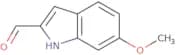
Fórmula:C5H9N3OPureza:Min. 95%Peso molecular:127.14 g/mol6-Methoxy-1H-indole-2-carbaldehyde
CAS:Versatile small molecule scaffold
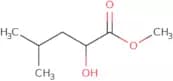
Fórmula:C10H9NO2Pureza:Min. 95%Peso molecular:175.18 g/molMethyl 2-hydroxy-4-methylvalerate
CAS:Methyl 2-hydroxy-4-methylvalerate is an organic compound that belongs to the class of fatty acids. It is a colorless liquid with a fruity odor. Methyl 2-hydroxy-4-methylvalerate has been shown to inhibit the formation of reactive oxygen species and has antioxidant potential. It also inhibits bone resorption, which may be due to its ability to reduce levels of isobutyric acid in rats and humans. Methyl 2-hydroxy-4-methylvalerate has been found in tropical fruits such as mangoes, durians, and papayas.
Fórmula:C7H14O3Pureza:Min. 95%Peso molecular:146.18 g/mol8-Fluoro-3-methyl-1,2,3,4-tetrahydroquinoline hydrochloride
CAS:Versatile small molecule scaffold
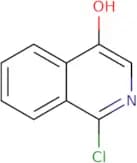
Fórmula:C10H13ClFNPureza:Min. 95%Peso molecular:201.67 g/mol1-Chloroisoquinolin-4-ol
CAS:1-Chloroisoquinolin-4-ol is a phenylpyrimidine with anti-inflammatory properties. It is used in the treatment of sensitivity and mediated diseases, such as osteoarthritis, rheumatoid arthritis, and ankylosing spondylitis. 1-Chloroisoquinolin-4-ol inhibits the enzymatic activity of matrix metalloproteinases (MMPs), which are enzymes that break down collagen and other proteins in the body. The inhibition of MMPs by 1-chloroisoquinolin-4-ol leads to reduced inflammation and pain. This compound is also an effective inhibitor of the activities of chloride channels involved in acid secretion by cells in the stomach lining, thus inhibiting acid production. 1-Chloroisoquinolin-4-ol has been shown to have anticholesterolemic effects on liver cells due to its ability to inhibit cholesterol synthesis through inhibition of HMG CoA
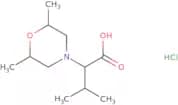
Fórmula:C9H6ClNOPureza:Min. 95%Peso molecular:179.6 g/mol2-(2,6-Dimethylmorpholin-4-yl)-3-methylbutanoic acid hydrochloride
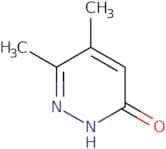
CAS:Versatile small molecule scaffoldFórmula:C11H22ClNO3Pureza:Min. 95%Peso molecular:251.75 g/mol5,6-Dimethylpyridazin-3(2H)-one
CAS:Versatile small molecule scaffold
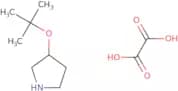
Fórmula:C6H8N2OPureza:Min. 95%Peso molecular:124.14 g/mol(3S)-3-(tert-Butoxy)pyrrolidine, oxalic acid
CAS:Versatile small molecule scaffold
Fórmula:C10H19NO5Pureza:Min. 95%Peso molecular:233.26 g/mol3-(3-Amino-1H-pyrazol-1-yl)pyrrolidin-2-one
CAS:Versatile small molecule scaffold
Fórmula:C7H10N4OPureza:Min. 95%Peso molecular:166.18 g/molRef: 3D-NKD27328
Producto descatalogado6-bromoimidazo[1,2-a]pyrazin-2-amine
CAS:Versatile small molecule scaffold
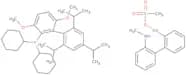
Fórmula:C6H5BrN4Pureza:Min. 95%Peso molecular:213 g/molBrettPhos Pd G4
CAS:BrettPhos Pd G4 is a versatile polymer used in various research applications. It is commonly used in the field of organic chemistry as a catalyst for reactions involving epoxy chloropropane, clofarabine, iminostilbene, glycine, kavalactone, phenylboronic acid, carbamazepine, and other compounds. This polymer acts as a powerful catalyst and facilitates the synthesis of complex molecules by promoting efficient chemical transformations. Additionally, BrettPhos Pd G4 is known for its inhibitory effects on certain enzymes and can be used as an inhibitor in biochemical studies. Its unique properties make it an essential tool for researchers in the field of organic chemistry and beyond.
Fórmula:C49H68NO5PPdSPureza:Min. 95%Peso molecular:920.53 g/mol1-(2-aminoethyl)cyclopropane-1-carboxylic acid hydrochloride
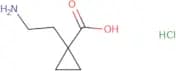
CAS:Versatile small molecule scaffold
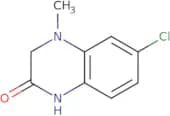
Fórmula:C6H12ClNO2Pureza:Min. 95%Peso molecular:165.62 g/mol6-Chloro-4-methyl-1,2,3,4-tetrahydroquinoxalin-2-one
CAS:Versatile small molecule scaffoldFórmula:C9H9ClN2OPureza:Min. 95%Peso molecular:196.63 g/mol3-Benzyl-3-azabicyclo[3.1.1]heptane-6-carboxylic acid hydrochloride
CAS:Versatile small molecule scaffold
Fórmula:C14H18ClNO2Pureza:Min. 95%Peso molecular:267.75 g/molN-{[2-(Trifluoromethyl)phenyl]methyl}oxetan-3-amine
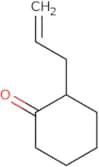
CAS:Versatile small molecule scaffoldFórmula:C11H12F3NOPureza:Min. 95%Peso molecular:231.21 g/mol2-Allylcyclohexanone
CAS:2-Allylcyclohexanone is an unsaturated ketone that is synthesized by the ring-opening of allyl cyclohexane carboxylate with sodium hydroxide. It can be used as a chemical intermediate for the synthesis of other compounds. 2-Allylcyclohexanone can also be used to react with hydroxide solution to produce a salt and an alcohol. The hydroxide solution can act as a base, reducing the carbonyl group in the presence of an acid to form the corresponding alcohol. This reaction is stereoselective because it only occurs when there are two different groups on adjacent carbons.
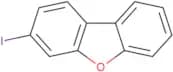
2-Allylcyclohexanone has been shown to inhibit non-nucleoside reverse transcriptase inhibitors (NNRTIs) such as nevirapine, efavirenz, and delavirdine. In addition, it has been found to have functional groups that are capable of reactingFórmula:C9H14OPureza:Min. 95%Peso molecular:138.21 g/mol3-Iododibenzofuran
CAS:3-Iododibenzofuran is a fluorescent compound that has been used as a probe for the study of neutral endopeptidase activity. The compound is characterized by a high degree of thermal stability and an inhibitory potency at pH 7.0 that is approximately 3 orders of magnitude greater than that of the active site inhibitor, anthracene. 3-Iododibenzofuran can be synthesized using chemoenzymatic methods, with efficiencies and profiles that are similar to those obtained in the conventional method. This probe can also be used to investigate the functional role of proteins in living cells or tissues.
3-Iodobenzofuran has been shown to have pressor effects in rats and can cause tetrazole (a type of explosive) to detonate when heated, which makes it unsuitable for use in devices such as explosives or pyrotechnics.Fórmula:C12H7IOPureza:Min. 95%Peso molecular:294.09 g/molRef: 3D-FAA89629
Producto descatalogado5-(3H-Pyrazol-3-ylidene)-1,2,4-triazolidine-3-thione
CAS:Versatile small molecule scaffold
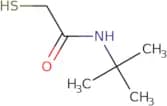
Fórmula:C5H5N5SPureza:Min. 95%Peso molecular:167.19 g/molN-tert-Butyl-2-sulfanylacetamide
CAS:Versatile small molecule scaffold
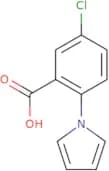
Fórmula:C6H13NOSPureza:Min. 95%Peso molecular:147.2 g/mol5-Chloro-2-(1H-pyrrol-1-yl)benzoic acid
CAS:Versatile small molecule scaffoldFórmula:C11H8ClNO2Pureza:Min. 95%Forma y color:PowderPeso molecular:221.64 g/molN-(4-Chlorophenyl)aminosulfonamide
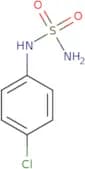
CAS:Versatile small molecule scaffold
Fórmula:C6H7ClN2O2SPureza:Min. 95%Peso molecular:206.65 g/mol3-Ethenylbenzonitrile
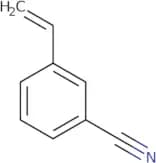
CAS:3-Ethenylbenzonitrile is an organic compound that can be prepared by photolysis of 2-bromobenzonitrile in the presence of a nonpolar solvent. It is also synthesized by laser induced exciplex reaction between benzene and ethylene. 3-Ethenylbenzonitrile has a conformation that is dependent on the polarity of the solvent. In polar solvents, it adopts a bent structure while in nonpolar solvents, it adopts a linear structure. The molecule undergoes cyclobutane formation and then reacts with electron acceptors such as cations to form intermediates. These intermediates react with other molecules to form products.
Fórmula:C9H7NPureza:Min. 95%Peso molecular:129.16 g/mol2-(4-Nitro-1H-imidazol-1-yl)acetamide
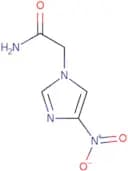
CAS:Versatile small molecule scaffold
Fórmula:C5H6N4O3Pureza:Min. 95%Peso molecular:170.13 g/mol3-[(Pyridin-4-yl)methyl]-1,2,4-oxadiazol-5-amine
CAS:Versatile small molecule scaffold
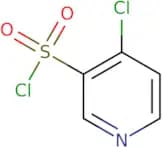
Fórmula:C8H8N4OPureza:Min. 95%Peso molecular:176.18 g/mol4-chloropyridine-3-sulfonyl chloride
CAS:4-Chloropyridine-3-sulfonyl chloride is a thrombin inhibitor that has been discovered through the use of in vitro screening methods. It is a small molecule with lipophilic properties and oral bioavailability. This compound inhibits thrombin by binding to the active site of the enzyme, which prevents the formation of an enzyme-thrombin complex. The discovery was made using a pharmacophore-based approach and further modifications were made to improve its potency and increase its lipophilicity. This compound also exhibits an acceptable level of bioavailability in vivo, which may be due to its high solubility in water.Fórmula:C5H3Cl2NO2SPureza:Min. 95%Peso molecular:212.1 g/mol4-(2-Amino-4-methylpentanoyl)piperazin-2-one
CAS:Versatile small molecule scaffold
Fórmula:C10H19N3O2Pureza:Min. 95%Peso molecular:213.28 g/mol1-(Butane-1-sulfonyl)piperidine-2-carboxylic acid
CAS:Versatile small molecule scaffoldFórmula:C10H19NO4SPureza:Min. 95%Peso molecular:249.33 g/molN'-(3-Hydroxyphenyl)-N,N-dimethylsulfamide
CAS:Versatile small molecule scaffold
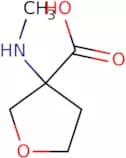
Fórmula:C8H12N2O3SPureza:Min. 95%Peso molecular:216.26 g/mol3-(Methylamino)oxolane-3-carboxylic acid
CAS:Versatile small molecule scaffold
Fórmula:C6H11NO3Pureza:Min. 95%Peso molecular:145.16 g/molRef: 3D-RDC12146
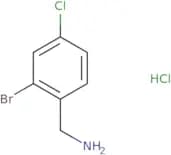
Producto descatalogado(2-Bromo-4-chlorophenyl)methanamine hydrochloride
CAS:Versatile small molecule scaffold
Fórmula:C7H8BrCl2NPureza:Min. 95%Peso molecular:256.95 g/mol2-(1-Methylazetidin-3-yl)ethan-1-amine dihydrochloride
CAS:Versatile small molecule scaffold
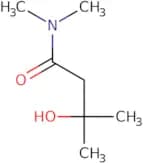
Fórmula:C6H16Cl2N2Pureza:Min. 95%Peso molecular:187.11 g/mol3-Hydroxy-N,N,3-trimethylbutanamide
CAS:3-Hydroxy-N,N,3-trimethylbutanamide is a liquid at room temperature. It is an additive that can be used in the production of nitrocellulose and as a preservative for nitrate film. 3-Hydroxy-N,N,3-trimethylbutanamide decomposes on exposure to UV light to form nitric oxide. It is also used as a photoinitiator in the synthesis of polymers by free radical polymerization reactions. The liquid composition can be thermally treated to produce stable silver nanoparticles.
Fórmula:C7H15NO2Pureza:Min. 95%Peso molecular:145.2 g/molRef: 3D-LCA66547
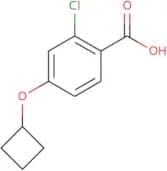
Producto descatalogado2-Chloro-4-cyclobutoxybenzoic acid
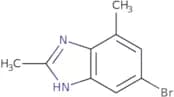
CAS:Versatile small molecule scaffoldFórmula:C11H11ClO3Pureza:Min. 95%Peso molecular:226.65 g/mol5-Bromo-2,7-dimethyl-1H-1,3-benzodiazole
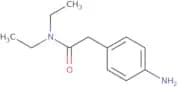
CAS:Versatile small molecule scaffoldFórmula:C9H9BrN2Pureza:Min. 95%Peso molecular:225.08 g/mol2-(4-Aminophenyl)-N,N-diethylacetamide
CAS:Versatile small molecule scaffoldFórmula:C12H18N2OPureza:Min. 95%Peso molecular:206.28 g/mol3-(4-Aminopiperidin-1-yl)propanoic acid dihydrochloride
CAS:Versatile small molecule scaffold
Fórmula:C8H18Cl2N2O2Pureza:Min. 95%Peso molecular:245.14 g/molRef: 3D-LIC70652
Producto descatalogado2-{4-[2-(Pyrrolidin-1-yl)ethoxy]phenyl}ethan-1-amine dihydrochloride
CAS:Versatile small molecule scaffold
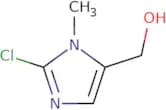
Fórmula:C14H24Cl2N2OPureza:Min. 95%Peso molecular:307.3 g/mol(2-Chloro-1-methyl-1H-imidazol-5-yl)methanol
CAS:Versatile small molecule scaffoldFórmula:C5H7ClN2OPureza:Min. 95%Peso molecular:146.57 g/mol4,5-Dibromo-3-methoxythiophene-2-carboxylic acid
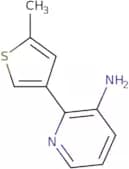
CAS:Versatile small molecule scaffoldFórmula:C6H4Br2O3SPureza:Min. 95%Peso molecular:315.97 g/mol2-(5-Methylthiophen-3-yl)pyridin-3-amine
CAS:Versatile small molecule scaffold
Fórmula:C10H10N2SPureza:Min. 95%Peso molecular:190.27 g/moltert-Butyl 3-amino-2-(oxan-4-yl)propanoate
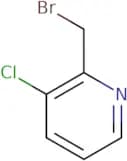
CAS:Versatile small molecule scaffoldFórmula:C12H23NO3Pureza:Min. 95%Peso molecular:229.3 g/mol2-(bromomethyl)-3-chloropyridine
CAS:Versatile small molecule scaffold
Fórmula:C6H5BrClNPureza:Min. 95%Peso molecular:206.47 g/mol2-Cyclopropylbenzaldehyde
CAS:Versatile small molecule scaffold
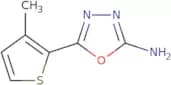
Fórmula:C10H10OPureza:Min. 95%Peso molecular:146.19 g/mol5-(3-Methylthiophen-2-yl)-1,3,4-oxadiazol-2-amine
CAS:5-(3-Methylthiophen-2-yl)-1,3,4-oxadiazol-2-amine is a ligand that binds to the ion channels in cells and activates them. It is used as a research tool in pharmacology and protein interactions. 5-(3-Methylthiophen-2-yl)-1,3,4-oxadiazol-2-amine has been shown to activate potassium channels by interacting with the receptor site. This ligand was also shown to inhibit cell growth by binding to the antibody site of the receptor. 5-(3-Methylthiophen-2-yl)-1,3,4--oxadiazol-2--amine has been shown to have a high purity of 99%.
Fórmula:C7H7N3OSPureza:Min. 95%Peso molecular:181.22 g/mol6-(2-Methylpropanoyl)-4H,7H-[1,2,4]triazolo[1,5-a]pyrimidin-7-one
CAS:Versatile small molecule scaffold
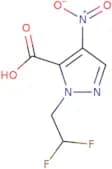
Fórmula:C9H10N4O2Pureza:Min. 95%Peso molecular:206.2 g/mol1-(2,2-Difluoroethyl)-4-nitro-1H-pyrazole-5-carboxylic acid
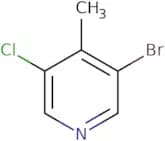
CAS:Versatile small molecule scaffoldFórmula:C6H5F2N3O4Pureza:Min. 95%Peso molecular:221.12 g/mol3-Bromo-5-chloro-4-methylpyridine
CAS:Versatile small molecule scaffold
Fórmula:C6H5BrClNPureza:Min. 95%Peso molecular:206.47 g/mol[3-(Oxan-4-yl)pyrrolidin-3-yl]methanol hydrochloride
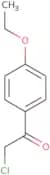
CAS:Versatile small molecule scaffoldFórmula:C10H20ClNO2Pureza:Min. 95%Peso molecular:221.7 g/mol2-Chloro-1-(4-ethoxyphenyl)ethan-1-one
CAS:2-Chloro-1-(4-ethoxyphenyl)ethan-1-one is a hydrocarbon radical that is used as a vitamin and in the synthesis of other molecules. This molecule has a covalent bond between the two chlorine atoms and one carbon atom. The hydrocarbon radical is also present in many hydrocarbons.
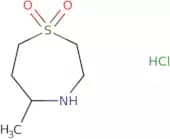
Fórmula:C10H11ClO2Pureza:Min. 95%Peso molecular:198.64 g/mol5-Methyl-1,4-thiazepane-1,1-dione hydrochloride
CAS:Versatile small molecule scaffold
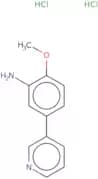
Fórmula:C6H14ClNO2SPureza:Min. 95%Peso molecular:199.7 g/mol2-Methoxy-5-(pyridin-3-yl)aniline dihydrochloride
CAS:Versatile small molecule scaffold
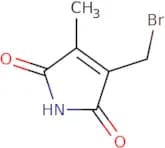
Fórmula:C12H14Cl2N2OPureza:Min. 95%Peso molecular:273.2 g/mol3-(Bromomethyl)-4-methyl-2,5-dihydro-1H-pyrrole-2,5-dione
CAS:Versatile small molecule scaffold
Fórmula:C6H6BrNO2Pureza:Min. 95%Peso molecular:204.02 g/molRef: 3D-IIA33370
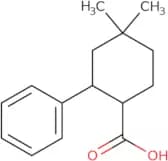
Producto descatalogado4,4-Dimethyl-2-phenylcyclohexane-1-carboxylic acid
CAS:Versatile small molecule scaffold
Fórmula:C15H20O2Pureza:Min. 95%Peso molecular:232.32 g/mol3,5-Dihydro-2H-thieno[2,3-c]pyrrole 1,1-dioxide
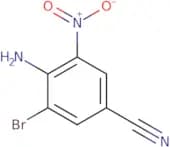
CAS:Versatile small molecule scaffoldFórmula:C6H7NO2SPureza:Min. 95%Peso molecular:157.19 g/mol4-Amino-3-bromo-5-nitrobenzonitrile
CAS:Versatile small molecule scaffold
Fórmula:C7H4BrN3O2Pureza:Min. 95%Peso molecular:242.03 g/mol4-Methyl-1,2-oxazolidin-4-ol hydrochloride
CAS:Versatile small molecule scaffold
Fórmula:C4H10ClNO2Pureza:Min. 95%Peso molecular:139.6 g/molRef: 3D-XLD15344
Producto descatalogado3-(Hydroxymethyl)-1,2,3,4-tetrahydroquinoxalin-2-one
CAS:Versatile small molecule scaffold
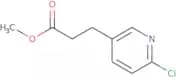
Fórmula:C9H10N2O2Pureza:Min. 95%Peso molecular:178.19 g/molMethyl 3-(6-chloropyridin-3-yl)propanoate
CAS:Versatile small molecule scaffold
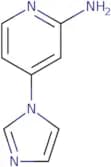
Fórmula:C9H10ClNO2Pureza:Min. 95%Peso molecular:199.63 g/mol4-(1H-Imidazol-1-yl)pyridin-2-amine
CAS:Versatile small molecule scaffold
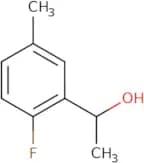
Fórmula:C8H8N4Pureza:Min. 95%Peso molecular:160.18 g/mol1-(2-Fluoro-5-methylphenyl)ethan-1-ol
CAS:Versatile small molecule scaffoldFórmula:C9H11FOPureza:Min. 95%Peso molecular:154.18 g/mol1,3-Dioxo-2,3-dihydro-1H-isoindol-2-yl 2-[4-(2-methylpropyl)phenyl]propanoate
CAS:Versatile small molecule scaffold
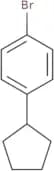
Fórmula:C21H21NO4Pureza:Min. 95%Peso molecular:351.4 g/mol1-Bromo-4-cyclopentylbenzene
CAS:1-Bromo-4-cyclopentylbenzene (1-BCPB) is a chlorinated aromatic compound that can be synthesized by reacting 1-bromo-4-chlorobenzene and cyclopentylmagnesium bromide. The reaction sequence begins with the addition of hydrochloric acid to the first reactant, followed by magnesium chloride and ether. The mixture is heated to produce a liquid solution of ethylhexyloxy pyridine, which reacts with the second reactant in a sequence that leads to the desired product. 1-BCPB is used as an intermediate in organic synthesis. It has been shown to have moderate interaction with paraldehyde and pyridinium salts at room temperature, but it does not react with cycloalkyls or pyridinium salts at elevated temperatures.
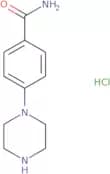
Fórmula:C11H13BrPureza:Min. 95%Peso molecular:225.13 g/mol4-(Piperazin-1-yl)benzamide hydrochloride
CAS:Versatile small molecule scaffoldFórmula:C11H16ClN3OPureza:Min. 95%Peso molecular:241.72 g/mol(4-Aminopyridin-2-yl)methanol
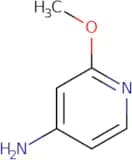
CAS:Versatile small molecule scaffold
Fórmula:C6H8N2OPureza:Min. 95%Peso molecular:124.14 g/mol5,5,6,6,6-Pentafluorohexan-1-ol
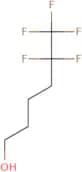
CAS:Versatile small molecule scaffold
Fórmula:C6H9F5OPureza:Min. 95%Peso molecular:192.13 g/molMethyl 6-Bromo-2-oxo-2,3-dihydro-1H-indole-4-carboxylate
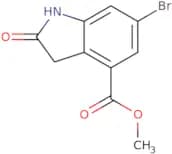
CAS:Versatile small molecule scaffoldFórmula:C10H8NO3BrPureza:Min. 95%Peso molecular:270.07 g/molJMS-17-2
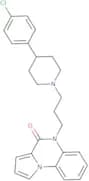
CAS:JMS-17-2 is a small molecule that was shown to have a potent and selective inhibitory effect on the production of chemokines in cancer cells. It blocks the interaction between CXCL12 and its receptor, CXCR4. This interaction is important for normal bone tissue development and function, as well as for chemotaxis and metastasis of cancer cells. JMS-17-2 has been shown to prevent tumor growth in animal models by inhibiting angiogenesis, or the formation of new blood vessels to supply nutrients to tumors. The drug also inhibits tumor growth by decreasing the number of primary tumors, reducing bone lesions, and inhibiting the progression of pancreatic cancer. Clinical trials are currently being conducted to assess the efficacy of JMS-17-2 in humans with advanced solid tumors.
Fórmula:C25H26ClN3OPureza:Min. 95%Peso molecular:419.95 g/mol[(2-Bromo-5-methoxyphenyl)methyl](methyl)amine
CAS:Versatile small molecule scaffold
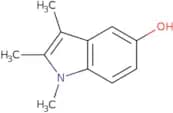
Fórmula:C9H12BrNOPureza:Min. 95%Peso molecular:230.1 g/mol1,2,3-Trimethyl-1H-indol-5-ol
CAS:Versatile small molecule scaffold
Fórmula:C11H13NOPureza:Min. 95%Peso molecular:175.23 g/molRef: 3D-IJB19354
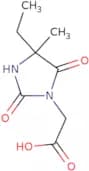
Producto descatalogado(4-Ethyl-4-methyl-2,5-dioxo-imidazolidin-1-yl)-acetic acid
CAS:Versatile small molecule scaffold
Fórmula:C8H12N2O4Pureza:Min. 95%Peso molecular:200.2 g/mol1-[(Benzyloxy)carbonyl]-3-fluoropyrrolidine-3-carboxylic acid
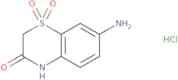
CAS:Versatile small molecule scaffoldFórmula:C13H14FNO4Pureza:Min. 95%Peso molecular:267.25 g/mol7-amino-2H-1,4-benzothiazin-3(4H)-one 1,1-dioxide hydrochloride
CAS:Versatile small molecule scaffold
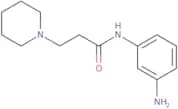
Fórmula:C8H9ClN2O3SPureza:Min. 95%Peso molecular:248.69 g/molN-(3-Aminophenyl)-3-(piperidin-1-yl)propanamide
CAS:Versatile small molecule scaffoldFórmula:C14H21N3OPureza:Min. 95%Peso molecular:247.34 g/mol5-(Trifluoromethyl)-1,4-diazepane
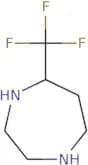
CAS:Versatile small molecule scaffold
Fórmula:C6H11F3N2Pureza:Min. 95%Peso molecular:168.16 g/molrac-(1R,2R)-2-(Benzyloxy)cyclohexan-1-ol
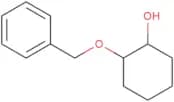
CAS:Versatile small molecule scaffold
Fórmula:C13H18O2Pureza:Min. 95%Peso molecular:206.28 g/mol[3-Bromo-4-(morpholin-4-yl)phenyl]methanol
CAS:Versatile small molecule scaffold
Fórmula:C11H14BrNO2Pureza:Min. 95%Peso molecular:272.14 g/molN-(1-Benzyl-3-phenylpyrrolidin-3-yl)acetamide
CAS:Versatile small molecule scaffoldFórmula:C19H22N2OPureza:Min. 95%Peso molecular:294.4 g/mol1-[2-(Propan-2-yloxy)ethyl]cyclopropan-1-amine hydrochloride
CAS:Versatile small molecule scaffoldFórmula:C8H18ClNOPureza:Min. 95%Peso molecular:179.69 g/molRef: 3D-PZC01648
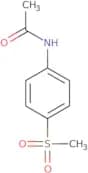
Producto descatalogado4'-(Methylsulfonyl)acetanilide
CAS:4'-(Methylsulfonyl)acetanilide is an organic compound that has been shown to have antibacterial and antiviral activity. It targets the benzene nucleus, and inhibits the synthesis of nucleic acids by inhibiting the enzyme ribonucleotide reductase. 4'-(Methylsulfonyl)acetanilide also inhibits viral replication, by binding to the active site of a viral protein (a DNA polymerase), which blocks the incorporation of nucleotides into the virus's DNA. In addition, 4'-(methylsulfonyl)acetanilide is an anti-helminthic agent, as it can inhibit worm motility and kill larvae in vitro. The structure-activity relationships between this molecule and other benzimidazole derivatives were analysed in order to identify new potential drugs for treating diseases caused by viruses or parasites.
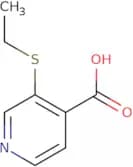
Fórmula:C9H11NO3SPureza:Min. 95%Peso molecular:213.26 g/mol3-(Ethylsulfanyl)pyridine-4-carboxylic acid
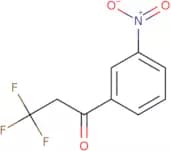
CAS:Versatile small molecule scaffoldFórmula:C8H9NO2SPureza:Min. 95%Peso molecular:183.23 g/mol3,3,3-Trifluoro-1-(3-nitrophenyl)propan-1-one
CAS:Versatile small molecule scaffoldFórmula:C9H6F3NO3Pureza:Min. 95%Peso molecular:233.14 g/mol2-(2-{[(9H-Fluoren-9-yl)methoxy]carbonyl}-1,2,3,4-tetrahydroisoquinolin-1-yl)acetic acid
CAS:Versatile small molecule scaffoldFórmula:C26H23NO4Pureza:Min. 95%Peso molecular:413.5 g/molRef: 3D-QWA48355
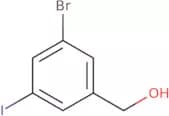
Producto descatalogado(3-bromo-5-iodophenyl)methanol
CAS:Versatile small molecule scaffold
Fórmula:C7H6BrIOPureza:Min. 95%Peso molecular:312.9 g/mol5-[(2,4-Difluorophenyl)methyl]-4-methyl-1,3-thiazol-2-amine hydrobromide
CAS:Versatile small molecule scaffold
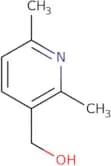
Fórmula:C11H11BrF2N2SPureza:Min. 95%Peso molecular:321.19 g/mol(2,6-Dimethylpyridin-3-yl)methanol
CAS:Versatile small molecule scaffold
Fórmula:C8H11NOPureza:Min. 95%Peso molecular:137.18 g/mol(7S,8aS)-7-Fluoro-octahydropyrrolo[1,2-a]pyrazine dihydrochloride
CAS:Versatile small molecule scaffold
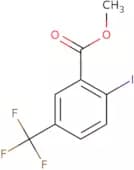
Fórmula:C7H15Cl2FN2Pureza:Min. 95%Peso molecular:217.11 g/molMethyl 2-iodo-5-(trifluoromethyl)benzoate
CAS:Versatile small molecule scaffold
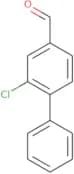
Fórmula:C9H6F3IO2Pureza:Min. 95%Peso molecular:330.04 g/mol3-Chloro-4-phenylbenzaldehyde
CAS:Versatile small molecule scaffold
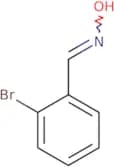
Fórmula:C13H9ClOPureza:Min. 95%Peso molecular:216.66 g/mol2-Bromobenzaldoxime
CAS:2-Bromobenzaldoxime is a biologically active molecule that has been shown to have significant physiological activities. It is an aldehyde, which is metabolized by the liver or kidneys into the corresponding alcohol, 2-bromoethanol. 2-Bromobenzaldoxime has been shown to be synthesized from diethyl ether and potassium phosphate in the presence of amino acids. The reaction proceeds with dehydration of the intermediate bromohydrin to form an aldoxime. This molecule can be used as a pharmaceutical drug for various diseases such as diabetes mellitus, hypertension, and inflammation.
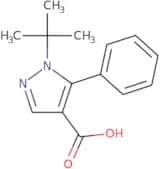
Fórmula:C7H6BrNOPureza:Min. 95%Peso molecular:200.03 g/mol1-tert-Butyl-5-phenyl-1H-pyrazole-4-carboxylic acid
CAS:Versatile small molecule scaffold
Fórmula:C14H16N2O2Pureza:Min. 95%Peso molecular:244.29 g/mol3-(Aminomethyl)-2,2-difluoropentane hydrochloride
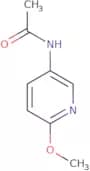
CAS:Versatile small molecule scaffoldFórmula:C6H14ClF2NPureza:Min. 95%Peso molecular:173.6 g/molN-(6-Methoxypyridin-3-yl)acetamide
CAS:Versatile small molecule scaffold
Fórmula:C8H10N2O2Pureza:Min. 95%Peso molecular:166.18 g/mol1,3-Diazaspiro[4.4]nonane-2,4-dione
CAS:1,3-Diazaspiro[4.4]nonane-2,4-dione (1) is a new fungicide that was shown to have fungicidal activity in vitro against the grapevine pathogens Plasmopara viticola and Plasmopara obducens. This compound has been isolated from the plant Express erythroxylum coca (Erythroxylum coca). The compound belongs to the class of diaza spiro compounds and is a member of a family of diaza spiro compounds with antifungal activity. One possible mode of action for 1 is that it inhibits the synthesis of DNA by binding to bacterial DNA gyrase.
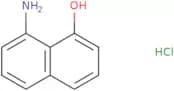
Fórmula:C7H10N2O2Pureza:Min. 95%Peso molecular:154.17 g/mol8-Aminonaphthalen-1-ol hydrochloride
CAS:Versatile small molecule scaffold
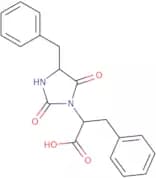
Fórmula:C10H10ClNOPureza:Min. 95%Peso molecular:195.64 g/mol2-(4-Benzyl-2,5-dioxoimidazolidin-1-yl)-3-phenylpropanoic acid
CAS:Versatile small molecule scaffoldFórmula:C19H18N2O4Pureza:Min. 95%Peso molecular:338.4 g/mol4-[2-(2-Methylphenyl)ethyl]piperidine
CAS:Versatile small molecule scaffold
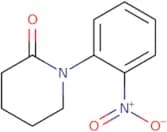
Fórmula:C14H21NPureza:Min. 95%Peso molecular:203.32 g/mol2-Piperidinone, 1-(2-nitrophenyl)-
CAS:Versatile small molecule scaffold
Fórmula:C11H12N2O3Pureza:Min. 95%Peso molecular:220.22 g/mol3-Hydroxy-5-methylpyridine
CAS:3-Hydroxy-5-methylpyridine (3HMP) is a chemical substance that has been classified as an amine. It is a product of the metabolism of purines, which are nitrogenous bases found in DNA and RNA. 3HMP is produced by aerogenic bacteria (such as Enterobacter), and can be used to estimate the number of these bacteria present in water samples. 3HMP has been shown to have antiviral properties against influenza virus, and can be used as a biomarker for the presence of other viruses in animals. 3HMP also has mineralization properties, which have been studied extensively, particularly with regards to pancreatic disease.
Fórmula:C6H7NOPureza:Min. 95%Forma y color:PowderPeso molecular:109.13 g/molRef: 3D-FH16174
Producto descatalogado4-Chloro-2-hydroxy-6-methylphenylboronic acid
CAS:Versatile small molecule scaffoldFórmula:C7H8BClO3Pureza:Min. 95%Peso molecular:186.4 g/mol2-Bromo-3,3,3-trifluoro-1-propene
CAS:Producto controlado2-Bromo-3,3,3-trifluoro-1-propene is a chemical compound that has been synthesized in an asymmetric reaction. The reactant is bromopropane and the product is 2,2,2-trifluoropropene. The methylene group on the propene molecule is activated by the nucleophilic attack of a fluoride ion from hydrogen fluoride to form a cavity with a highly strained bond. The kinetic study of this reaction revealed that the activation energy for the reaction is 42 kJ/mol. Palladium-catalyzed coupling reactions are catalyzed by palladium and require nonpolar solvents such as toluene or dichloromethane. This type of reaction has been shown to be exothermic with an isolated yield of 1%.
Fórmula:C3H2BrF3Pureza:Min. 95%Forma y color:Colorless PowderPeso molecular:174.95 g/mol4,5-Dihydroxy-2,3-Pentanedione
CAS:4,5-Dihydroxy-2,3-pentanedione is a carbonyl compound that is the product of the oxidation of ascorbic acid. It is used in wastewater treatment and has antimicrobial properties against infectious diseases. This compound has been shown to inhibit protein synthesis by binding to the ribosome and preventing the formation of peptide bonds between amino acids. 4,5-Dihydroxy-2,3-pentanedione has also been shown to bind to plasma proteins, which may be due to its acyl chain structure. 4,5-Dihydroxy-2,3-pentanedione can be synthesized in a catalytic mechanism that involves dehydroascorbic acid and molecular oxygen.
Fórmula:C5H8O4Pureza:Min. 95%Forma y color:PowderPeso molecular:132.11 g/molRef: 3D-FD180770
Producto descatalogadoPiperyline
CAS:Piperyline is an alkanoic acid that has shown to be effective against skin cancer. It also has antimicrobial properties, which may be due to its ability to bind metal ions and form polymeric compounds. Piperyline inhibits microbial growth by inhibiting the synthesis of proteins and nucleic acids. The antimicrobial activity is related to its cationic polymerization with hydroxyl groups, which forms a structure that can inhibit microbial enzymes and disrupt microbial cell membranes. This compound also interacts with the skin's natural lipids, making it difficult for microorganisms to attach and grow on the skin. Piperyline is synthesized in organic chemistry laboratories as an amide precursor of other pharmaceuticals such as penicillin.
Fórmula:C16H17NO3Pureza:Min. 95%Peso molecular:271.31 g/mol

![2-[(3-Nitrophenyl)formamido]acetic acid](/_next/image/?url=https%3A%2Fstatic.cymitquimica.com%2Fproducts%2F3D%2Fthumb-webp%2FAAA61710.webp&w=3840&q=75)
![4,5,6,7-Tetrahydropyrazolo[1,5-a]pyrazine dihydrochloride](/_next/image/?url=https%3A%2Fstatic.cymitquimica.com%2Fproducts%2F3D%2Fthumb-webp%2FQGA89407.webp&w=3840&q=75)



![1,3-Dimethyl-1H-thieno[2,3-c]pyrazole hydrochloride](/_next/image/?url=https%3A%2Fstatic.cymitquimica.com%2Fproducts%2F3D%2Fthumb-webp%2FNKD07503.webp&w=3840&q=75)


![1,9,10,11,12,12-Hexachloro-5-oxatetracyclo[7.2.1.0²,⁸.0⁴,⁶]dodec-10-ene-3,7-dione](/_next/image/?url=https%3A%2Fstatic.cymitquimica.com%2Fproducts%2F3D%2Fthumb-webp%2FNBA66780.webp&w=3840&q=75)
![N-[3-(Dimethylamino)propyl]-2-hydroxybenzamide](/_next/image/?url=https%3A%2Fstatic.cymitquimica.com%2Fproducts%2F3D%2Fthumb-webp%2FNBA39443.webp&w=3840&q=75)
![2-[Ethyl(propan-2-yl)amino]ethan-1-ol](/_next/image/?url=https%3A%2Fstatic.cymitquimica.com%2Fproducts%2F3D%2Fthumb-webp%2FCAA89361.webp&w=3840&q=75)
![N-[(Quinolin-8-yl)methyl]methanesulfonamide](/_next/image/?url=https%3A%2Fstatic.cymitquimica.com%2Fproducts%2F3D%2Fthumb-webp%2FLJC51797.webp&w=3840&q=75)
![3-[(3-Methoxypropyl)carbamoyl]propanoic acid](/_next/image/?url=https%3A%2Fstatic.cymitquimica.com%2Fproducts%2F3D%2Fthumb-webp%2FLGA78591.webp&w=3840&q=75)
![rac-(3R,4R)-3-Hydroxy-4-[(2-phenylethyl)amino]-1lambda6-thiolane-1,1-dione](/_next/image/?url=https%3A%2Fstatic.cymitquimica.com%2Fproducts%2F3D%2Fthumb-webp%2FJHD90934.webp&w=3840&q=75)
![2-Chloro-4-methoxy-7-methyl-7H-pyrrolo[2,3-d]pyrimidine](/_next/image/?url=https%3A%2Fstatic.cymitquimica.com%2Fproducts%2F3D%2Fthumb-webp%2FJDA95534.webp&w=3840&q=75)
![(4-Chlorophenyl)({8-methyl-8-azabicyclo[3.2.1]octan-3-yl})methanamine](/_next/image/?url=https%3A%2Fstatic.cymitquimica.com%2Fproducts%2F3D%2Fthumb-webp%2FITC29319.webp&w=3840&q=75)
![2-(Benzylamino)-1-[3-(difluoromethoxy)phenyl]ethan-1-ol](/_next/image/?url=https%3A%2Fstatic.cymitquimica.com%2Fproducts%2F3D%2Fthumb-webp%2FXWC80204.webp&w=3840&q=75)
![8-Phenyl-1-oxa-3-azaspiro[4.5]dec-2-en-2-amine](/_next/image/?url=https%3A%2Fstatic.cymitquimica.com%2Fproducts%2F3D%2Fthumb-webp%2FIJC02845.webp&w=3840&q=75)

![rac-[(2R,5S)-5-Phenyloxolan-2-yl]methanamine hydrochloride](/_next/image/?url=https%3A%2Fstatic.cymitquimica.com%2Fproducts%2F3D%2Fthumb-webp%2FHXC89108.webp&w=3840&q=75)
![2-Methyl-3-[2-(morpholin-4-yl)ethoxy]phenol](/_next/image/?url=https%3A%2Fstatic.cymitquimica.com%2Fproducts%2F3D%2Fthumb-webp%2FUTB37022.webp&w=3840&q=75)

![Methyl[(3-propyl-1,2-oxazol-5-yl)methyl]amine](/_next/image/?url=https%3A%2Fstatic.cymitquimica.com%2Fproducts%2F3D%2Fthumb-webp%2FSMB51964.webp&w=3840&q=75)
![rac-(1R,5S)-4-Oxaspiro[bicyclo[3.2.0]heptane-6,1'-cyclopentane]-7-one, cis](/_next/image/?url=https%3A%2Fstatic.cymitquimica.com%2Fproducts%2F3D%2Fthumb-webp%2FHCD80674.webp&w=3840&q=75)
![tert-Butyl 4-methoxy-3,10-diazabicyclo[4.3.1]dec-3-ene-10-carboxylate](/_next/image/?url=https%3A%2Fstatic.cymitquimica.com%2Fproducts%2F3D%2Fthumb-webp%2FFSD25605.webp&w=3840&q=75)
![2-(Sulfanylmethyl)-4H-pyrido[1,2-a]pyrimidin-4-one](/_next/image/?url=https%3A%2Fstatic.cymitquimica.com%2Fproducts%2F3D%2Fthumb-webp%2FRQB69641.webp&w=3840&q=75)
![6-(4-{[(9H-Fluoren-9-yl)methoxy]carbonyl}piperazin-1-yl)pyridazine-3-carboxylic acid](/_next/image/?url=https%3A%2Fstatic.cymitquimica.com%2Fproducts%2F3D%2Fthumb-webp%2FQID29084.webp&w=3840&q=75)


![6-bromoimidazo[1,2-a]pyrazin-2-amine](/_next/image/?url=https%3A%2Fstatic.cymitquimica.com%2Fproducts%2F3D%2Fthumb-webp%2FDUB86138.webp&w=3840&q=75)
![3-Benzyl-3-azabicyclo[3.1.1]heptane-6-carboxylic acid hydrochloride](/_next/image/?url=https%3A%2Fstatic.cymitquimica.com%2Fproducts%2F3D%2Fthumb-webp%2FQZB52581.webp&w=3840&q=75)
![N-{[2-(Trifluoromethyl)phenyl]methyl}oxetan-3-amine](/_next/image/?url=https%3A%2Fstatic.cymitquimica.com%2Fproducts%2F3D%2Fthumb-webp%2FPDC89412.webp&w=3840&q=75)

![3-[(Pyridin-4-yl)methyl]-1,2,4-oxadiazol-5-amine](/_next/image/?url=https%3A%2Fstatic.cymitquimica.com%2Fproducts%2F3D%2Fthumb-webp%2FYZB21426.webp&w=3840&q=75)




![2-{4-[2-(Pyrrolidin-1-yl)ethoxy]phenyl}ethan-1-amine dihydrochloride](/_next/image/?url=https%3A%2Fstatic.cymitquimica.com%2Fproducts%2F3D%2Fthumb-webp%2FHHC68177.webp&w=3840&q=75)



![6-(2-Methylpropanoyl)-4H,7H-[1,2,4]triazolo[1,5-a]pyrimidin-7-one](/_next/image/?url=https%3A%2Fstatic.cymitquimica.com%2Fproducts%2F3D%2Fthumb-webp%2FUND37382.webp&w=3840&q=75)
![[3-(Oxan-4-yl)pyrrolidin-3-yl]methanol hydrochloride](/_next/image/?url=https%3A%2Fstatic.cymitquimica.com%2Fproducts%2F3D%2Fthumb-webp%2FUND37404.webp&w=3840&q=75)
![3,5-Dihydro-2H-thieno[2,3-c]pyrrole 1,1-dioxide](/_next/image/?url=https%3A%2Fstatic.cymitquimica.com%2Fproducts%2F3D%2Fthumb-webp%2FPZB71706.webp&w=3840&q=75)

![1,3-Dioxo-2,3-dihydro-1H-isoindol-2-yl 2-[4-(2-methylpropyl)phenyl]propanoate](/_next/image/?url=https%3A%2Fstatic.cymitquimica.com%2Fproducts%2F3D%2Fthumb-webp%2FQKD88961.webp&w=3840&q=75)
amine](/_next/image/?url=https%3A%2Fstatic.cymitquimica.com%2Fproducts%2F3D%2Fthumb-webp%2FSFB28908.webp&w=3840&q=75)
![1-[(Benzyloxy)carbonyl]-3-fluoropyrrolidine-3-carboxylic acid](/_next/image/?url=https%3A%2Fstatic.cymitquimica.com%2Fproducts%2F3D%2Fthumb-webp%2FHHC68043.webp&w=3840&q=75)
![[3-Bromo-4-(morpholin-4-yl)phenyl]methanol](/_next/image/?url=https%3A%2Fstatic.cymitquimica.com%2Fproducts%2F3D%2Fthumb-webp%2FUSC85031.webp&w=3840&q=75)

![1-[2-(Propan-2-yloxy)ethyl]cyclopropan-1-amine hydrochloride](/_next/image/?url=https%3A%2Fstatic.cymitquimica.com%2Fproducts%2F3D%2Fthumb-webp%2FPZC01648.webp&w=3840&q=75)
![2-(2-{[(9H-Fluoren-9-yl)methoxy]carbonyl}-1,2,3,4-tetrahydroisoquinolin-1-yl)acetic acid](/_next/image/?url=https%3A%2Fstatic.cymitquimica.com%2Fproducts%2F3D%2Fthumb-webp%2FQWA48355.webp&w=3840&q=75)
![5-[(2,4-Difluorophenyl)methyl]-4-methyl-1,3-thiazol-2-amine hydrobromide](/_next/image/?url=https%3A%2Fstatic.cymitquimica.com%2Fproducts%2F3D%2Fthumb-webp%2FVWC49324.webp&w=3840&q=75)
![(7S,8aS)-7-Fluoro-octahydropyrrolo[1,2-a]pyrazine dihydrochloride](/_next/image/?url=https%3A%2Fstatic.cymitquimica.com%2Fproducts%2F3D%2Fthumb-webp%2FHXC93968.webp&w=3840&q=75)

![1,3-Diazaspiro[4.4]nonane-2,4-dione](/_next/image/?url=https%3A%2Fstatic.cymitquimica.com%2Fproducts%2F3D%2Fthumb-webp%2FAAA69951.webp&w=3840&q=75)
![4-[2-(2-Methylphenyl)ethyl]piperidine](/_next/image/?url=https%3A%2Fstatic.cymitquimica.com%2Fproducts%2F3D%2Fthumb-webp%2FEBB66297.webp&w=3840&q=75)