


Building Blocks
Esta sección contiene productos fundamentales para la síntesis de compuestos orgánicos y biológicos. Building blocks son los materiales de partida esenciales utilizados para construir moléculas complejas a través de diversas reacciones químicas. Desempeñan un papel crítico en el descubrimiento de fármacos, la ciencia de materiales y la investigación química. En CymitQuimica, ofrecemos una gama diversa de building blocks de alta calidad para apoyar sus investigaciones innovadoras y proyectos industriales, asegurando que tenga los componentes esenciales para una síntesis exitosa.
Subcategorías de "Building Blocks"
- Ácidos borónicos y derivados del ácido borónico(5.756 productos)
- Building Blocks quirales(1.242 productos)
- Building Blocks de hidrocarburos(6.095 productos)
- Building Blocks orgánicos(61.055 productos)
Se han encontrado 199650 productos de "Building Blocks"
Ordenar por
Pureza (%)
0
100
|
0
|
50
|
90
|
95
|
100
5-Oxa-12-azadispiro[3.1.4{6}.3{4}]tridecane hydrochloride
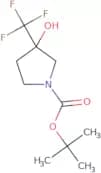
CAS:<p>Versatile small molecule scaffold</p>Fórmula:C11H20ClNOPureza:Min. 95%Peso molecular:217.7 g/moltert-Butyl 3-hydroxy-3-(trifluoromethyl)pyrrolidine-1-carboxylate
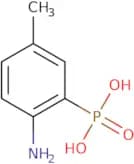
CAS:<p>Versatile small molecule scaffold</p>Fórmula:C10H16F3NO3Pureza:Min. 95%Peso molecular:255.23 g/mol(2-Amino-5-methylphenyl)phosphonic acid
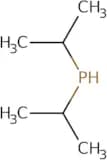
CAS:<p>Versatile small molecule scaffold</p>Fórmula:C7H10NO3PPureza:Min. 95%Peso molecular:187.13 g/molDiisopropylphosphine, 10wt.% in hexane
CAS:<p>Please enquire for more information about Diisopropylphosphine, 10wt.% in hexane including the price, delivery time and more detailed product information at the technical inquiry form on this page</p>Fórmula:C6H15PPureza:Min. 95%Peso molecular:118.16 g/molRef: 3D-VAA49153
Producto descatalogadoMethyl 2-formyl-4,5-dimethoxybenzoate
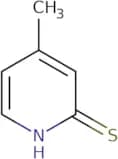
CAS:<p>Versatile small molecule scaffold</p>Fórmula:C11H12O5Pureza:Min. 95%Peso molecular:224.21 g/mol4-Methylpyridine-2-thiol
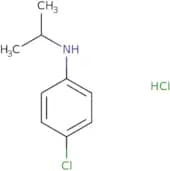
CAS:<p>4-Methylpyridine-2-thiol is a ligand that binds to metal ions. It has been shown to be an effective photoelectron scavenger for mercury and lead, as well as a wide variety of other metals. 4-Methylpyridine-2-thiol is also an important monomer in the preparation of polymers and resins. This ligand has been used in the synthesis of compounds with cyclic structures and hydrochloric acid, as well as being crystallized with x-ray crystallography. The properties of this ligand have been studied by voltammetry, spectroscopies, and crystallography. 4-Methylpyridine-2-thiol interacts with chloride ions in acetonitrile to form a salt called methylpyridinium chloride.</p>Fórmula:C6H7NSPureza:Min. 95%Peso molecular:125.19 g/mol4-Chloro-N-(propan-2-yl)aniline hydrochloride
CAS:<p>Versatile small molecule scaffold</p>Fórmula:C9H13Cl2NPureza:Min. 95%Peso molecular:206.11 g/mol7-Hydroxy-3,4-dimethyl-2,3-dihydro-1H-inden-1-one
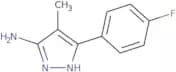
CAS:<p>Versatile small molecule scaffold</p>Fórmula:C11H12O2Pureza:Min. 95%Peso molecular:176.21 g/mol5-(4-Fluoro-phenyl)-4-methyl-2H-pyrazol-3-ylamine
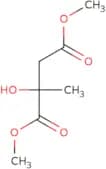
CAS:<p>Versatile small molecule scaffold</p>Fórmula:C10H10FN3Pureza:Min. 95%Peso molecular:191.2 g/mol1,4-Dimethyl 2-hydroxy-2-methylbutanedioate
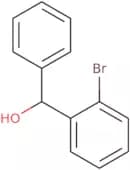
CAS:<p>1,4-Dimethyl 2-hydroxy-2-methylbutanedioate is an allylating agent that modifies the amino acid lysine residues in proteins. It has been shown to be effective in the treatment of skin lesions caused by Staphylococcus aureus and other bacteria because it inhibits bacterial growth through an antimicrobial effect. 1,4-Dimethyl 2-hydroxy-2-methylbutanedioate also has been used as a precursor for the synthesis of vitamin D3. This compound is metabolized in mammalian cells to form cysteamine, which is further converted to S-(1,4-dimethylpentadienoyl)cysteamine (DMPE). The resulting product can be used as a functional group on collagen or malic acid. 1,4-Dimethyl 2-hydroxy-2-methylbutanedioate also is used for modifications of mucocutaneous tissues such as skin and oral muc</p>Fórmula:C7H12O5Pureza:Min. 95%Peso molecular:176.17 g/mol(2-Bromophenyl)(phenyl)methanol
CAS:<p>The synthesis of (2-bromophenyl)(phenyl)methanol is accomplished by the reaction of an aldehyde with bromine followed by an alkylation with magnesium. The product is obtained as a racemic mixture of enantiomers with a chiral center, which can be resolved by fractional crystallization or other separation methods. This method has been shown to be efficient for the synthesis of alcohols and carbinols, and stereogenic reactions.</p>Fórmula:C13H11OBrPureza:Min. 95%Peso molecular:263.12 g/mol[1-(1-Amino-2-methylpropyl)cyclopent-3-en-1-yl]methanol hydrochloride
CAS:<p>Versatile small molecule scaffold</p>Fórmula:C10H20ClNOPureza:Min. 95%Peso molecular:205.72 g/moltert-Butyl 1',5',6',7'-tetrahydrospiro[azetidine-3,4'-imidazo[4,5-c]pyridine]-1-carboxylate
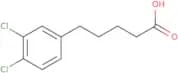
CAS:<p>Versatile small molecule scaffold</p>Fórmula:C13H20N4O2Pureza:Min. 95%Peso molecular:264.32 g/mol5-(3,4-Dichlorophenyl)pentanoic acid
CAS:<p>Versatile small molecule scaffold</p>Fórmula:C11H12Cl2O2Pureza:Min. 95%Peso molecular:247.11 g/mol4-Chloro-2-methyl-5-nitroaniline
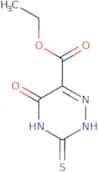
CAS:<p>4-Chloro-2-methyl-5-nitroaniline is an organic compound with the chemical formula C6H4ClNO2. It is a nitro derivative of aniline. 4-Chloro-2-methyl-5-nitroaniline is a white solid that is soluble in water, alcohols, and ethers. It has a melting point around 206 °C and decomposes at temperatures over 350 °C. This compound can be obtained by reacting hydroxylamine with nitrous acid and chlorinating 2,5-dimethylaniline. The sequence of reactions can be summarized as follows: hydroxy group to nitro group, nitro group to methyl group, methyl group to acetyl or acetylamino, acetyl or acetylamino to acetylation or methylation, transformation from hydroxyl group to amino group and esterification from acid hydrazide to acid group.</p>Fórmula:C7H7ClN2O2Pureza:Min. 95%Peso molecular:186.59 g/molEthyl 5-oxo-3-thioxo-2H-1,2,4-triazine-6-carboxylate
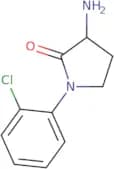
CAS:<p>Ethyl 5-oxo-3-thioxo-2H-1,2,4-triazine-6-carboxylate is an acid ethyl ester of the triazine compound ethyl 3,5,6,7,8,-tetrahydro-2H-[1]benzothiopyran-2,4(3H)-dione. It has been shown to inhibit bacterial growth by binding to the enzyme ribonucleotide reductase.</p>Fórmula:C6H7N3O3SPureza:Min. 95%Peso molecular:201.21 g/mol3-Amino-1-(2-chlorophenyl)pyrrolidin-2-one
CAS:<p>Versatile small molecule scaffold</p>Fórmula:C10H11ClN2OPureza:Min. 95%Peso molecular:210.66 g/mol(2S,5S)-1-{[(9H-Fluoren-9-yl)methoxy]carbonyl}-5-phenylpyrrolidine-2-carboxylic acid
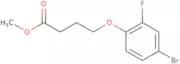
CAS:<p>Versatile small molecule scaffold</p>Fórmula:C26H23NO4Pureza:Min. 95%Peso molecular:413.5 g/molMethyl 4-(4-bromo-2-fluorophenoxy)butanoate
CAS:Producto controlado<p>Versatile small molecule scaffold</p>Fórmula:C11H12BrFO3Pureza:Min. 95%Peso molecular:291.11 g/moltert-Butyl 6,6-dioxo-6λ6-thia-2,7-diazaspiro[3.4]octane-2-carboxylate
CAS:<p>Versatile small molecule scaffold</p>Fórmula:C10H18N2O4SPureza:Min. 95%Peso molecular:262.3 g/mol2,6-Dichloro-N'-hydroxybenzene-1-carboximidamide
CAS:<p>Versatile small molecule scaffold</p>Fórmula:C7H6Cl2N2OPureza:Min. 95%Peso molecular:205.04 g/mol2-(4,5-Dichloro-2-nitrophenyl)-4,4,5,5-tetramethyl-1,3,2-dioxaborolane
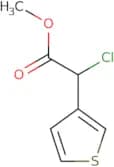
CAS:<p>Versatile small molecule scaffold</p>Fórmula:C12H14BCl2NO4Pureza:Min. 95%Peso molecular:317.96 g/molMethyl 2-chloro-2-(thiophen-3-yl)acetate
CAS:<p>Versatile small molecule scaffold</p>Fórmula:C7H7ClO2SPureza:Min. 95%Peso molecular:190.65 g/mol7-Chloro-5-fluoro-1,3-benzoxazole-2-thiol
CAS:<p>Versatile small molecule scaffold</p>Fórmula:C7H3ClFNOSPureza:Min. 95%Peso molecular:203.62 g/molN-[1-(Furan-2-yl)ethyl]pyridin-2-amine
CAS:<p>Versatile small molecule scaffold</p>Fórmula:C11H12N2OPureza:Min. 95%Peso molecular:188.23 g/mol7-Iodo-5h-Pyrrolo[2,3-B]Pyrazine
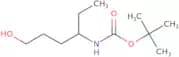
CAS:<p>Versatile small molecule scaffold</p>Fórmula:C6H4N3IPureza:Min. 95%Peso molecular:245.02 g/moltert-Butyl 6-hydroxyhexan-3-ylcarbamate
CAS:<p>Versatile small molecule scaffold</p>Fórmula:C11H23NO3Pureza:Min. 95%Peso molecular:217.31 g/mol6-(Difluoromethyl)pyrimidine-2,4(1H,3H)-dione
CAS:<p>Versatile small molecule scaffold</p>Fórmula:C5H4F2N2O2Pureza:Min. 95%Peso molecular:162.09 g/mol1-({2-Methyl-5H,6H,7H,8H-imidazo[1,2-a]pyridin-3-yl}methyl)piperazine
CAS:<p>Versatile small molecule scaffold</p>Fórmula:C13H22N4Pureza:Min. 95%Peso molecular:234.34 g/mol5-Chloro-2-(1H-pyrrol-1-yl)aniline
CAS:<p>Versatile small molecule scaffold</p>Fórmula:C10H9ClN2Pureza:Min. 95%Peso molecular:192.64 g/mol6-Amino-1-(phenylsulfanyl)hexan-1-one hydrochloride
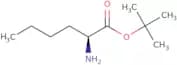
CAS:<p>Versatile small molecule scaffold</p>Fórmula:C12H18ClNOSPureza:Min. 95%Peso molecular:259.8 g/moltert-butyl (2S)-2-aminohexanoate
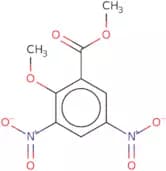
CAS:<p>Tert-butyl (2S)-2-aminohexanoate is an intermediate that is used in the synthesis of glycine by the reaction of benzyl bromide and tert-butyl amine. The stereospecifically incorporated tert-butyl group has a high degree of enantioselectivity, which makes this intermediate useful in the synthesis of glycine. Tert-butyl (2S)-2-aminohexanoate can be synthesized using lithium diisopropylamide and a tertiary amine as an alkylating agent.</p>Fórmula:C10H21NO2Pureza:Min. 95%Peso molecular:187.3 g/molMethyl 2-methoxy-3,5-dinitrobenzoate
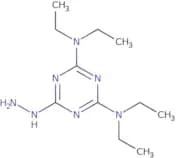
CAS:<p>Versatile small molecule scaffold</p>Fórmula:C9H8N2O7Pureza:Min. 95%Peso molecular:256.2 g/molN2,N2,N4,N4-Tetraethyl-6-hydrazinylidene-3,6-dihydro-1,3,5-triazine-2,4-diamine
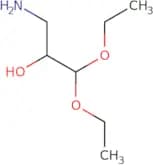
CAS:<p>Tetrodotoxin is a potent neurotoxin that blocks the transfer of nerve impulses. It is used as a pharmacological treatment for diseases of the urinary tract such as bladder and urethral spasms, bladder dysfunction, and urinary retention. Tetrodotoxin can also be used for the treatment of other conditions that affect the target tissue such as stenosis or cavity. This drug has been shown to be beneficial in autoimmune diseases, inflammatory diseases, and infections. Tetrodotoxin is implanted into the body through devices such as catheters or balloons to treat these conditions. The drug has anticholinergic properties which may cause side effects like dry mouth, blurred vision, difficulty urinating, and dizziness.</p>Fórmula:C11H23N7Pureza:Min. 95%Peso molecular:253.35 g/mol3-Amino-1,1-diethoxypropan-2-ol
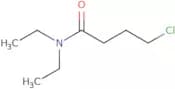
CAS:<p>Versatile small molecule scaffold</p>Fórmula:C7H17NO3Pureza:Min. 95%Peso molecular:163.21 g/mol4-Chloro-N,N-diethyl-butyramide
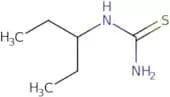
CAS:<p>Versatile small molecule scaffold</p>Fórmula:C8H16ClNOPureza:Min. 95%Peso molecular:177.67 g/mol(Pentan-3-yl)thiourea
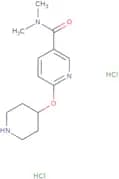
CAS:<p>Versatile small molecule scaffold</p>Fórmula:C6H14N2SPureza:Min. 95%Peso molecular:146.26 g/molN,N-Dimethyl-6-(piperidin-4-yloxy)pyridine-3-carboxamide dihydrochloride
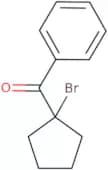
CAS:<p>Versatile small molecule scaffold</p>Fórmula:C13H21Cl2N3O2Pureza:Min. 95%Peso molecular:322.2 g/mol(1-Bromocyclopentyl)(phenyl)methanone
CAS:<p>Versatile small molecule scaffold</p>Fórmula:C12H13BrOPureza:Min. 95%Peso molecular:253.13 g/mol3-[(4-Methylphenyl)methyl]azetidine hydrochloride
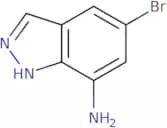
CAS:<p>Versatile small molecule scaffold</p>Fórmula:C11H16ClNPureza:Min. 95%Peso molecular:197.7 g/mol7-Amino-5-bromo-1H-indazole
CAS:<p>Versatile small molecule scaffold</p>Fórmula:C7H6N3BrPureza:Min. 95%Peso molecular:212.04 g/mol2,4-Dimethyl-5-[4-(trifluoromethyl)phenyl]pyrimidine
CAS:<p>Versatile small molecule scaffold</p>Fórmula:C13H11F3N2Pureza:Min. 95%Peso molecular:252.23 g/molRef: 3D-LAC75867
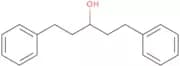
Producto descatalogado1,5-Diphenylpentan-3-ol
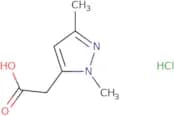
CAS:<p>Flindersia laevicarpa is a small tree native to Australia. The leaves of the tree are used for medicinal purposes and contain 1,5-diphenylpentan-3-ol. Flindersia laevicarpa has been shown to have anti-inflammatory and antioxidant properties, as well as an ability to inhibit platelet aggregation.</p>Fórmula:C17H20OPureza:Min. 95%Peso molecular:240.34 g/mol2-(1,3-Dimethyl-1H-pyrazol-5-yl)acetic acid hydrochloride
CAS:<p>Versatile small molecule scaffold</p>Fórmula:C7H11ClN2O2Pureza:Min. 95%Peso molecular:190.6 g/molrac-tert-Butyl N-[(3R,4S)-4-(4-fluorophenyl)pyrrolidin-3-yl]carbamate
CAS:<p>Versatile small molecule scaffold</p>Fórmula:C15H21FN2O2Pureza:Min. 95%Peso molecular:280.34 g/mol3-Morpholin-4-ylmethyl-2,3-dihydro-1H-indole
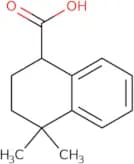
CAS:<p>Versatile small molecule scaffold</p>Fórmula:C13H18N2OPureza:Min. 95%Peso molecular:218.29 g/mol4,4-Dimethyl-1,2,3,4-tetrahydronaphthalene-1-carboxylic acid
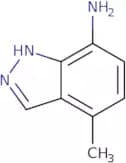
CAS:<p>Versatile small molecule scaffold</p>Fórmula:C13H16O2Pureza:Min. 95%Peso molecular:204.26 g/mol4-Methyl-1H-indazol-7-amine
CAS:<p>Versatile small molecule scaffold</p>Fórmula:C8H9N3Pureza:Min. 95%Peso molecular:147.18 g/mol3-Boc-3-azabicyclo[3.2.1]octan-8-amine
CAS:<p>Versatile small molecule scaffold</p>Fórmula:C12H22N2O2Pureza:Min. 95%Peso molecular:226.32 g/mol2-Bromo-3,3,3-trifluoro-1-propene
CAS:Producto controlado<p>2-Bromo-3,3,3-trifluoro-1-propene is a chemical compound that has been synthesized in an asymmetric reaction. The reactant is bromopropane and the product is 2,2,2-trifluoropropene. The methylene group on the propene molecule is activated by the nucleophilic attack of a fluoride ion from hydrogen fluoride to form a cavity with a highly strained bond. The kinetic study of this reaction revealed that the activation energy for the reaction is 42 kJ/mol. Palladium-catalyzed coupling reactions are catalyzed by palladium and require nonpolar solvents such as toluene or dichloromethane. This type of reaction has been shown to be exothermic with an isolated yield of 1%.</p>Fórmula:C3H2BrF3Pureza:Min. 95%Forma y color:Colorless PowderPeso molecular:174.95 g/mol
![5-Oxa-12-azadispiro[3.1.4{6}.3{4}]tridecane hydrochloride](/_next/image/?url=https%3A%2Fstatic.cymitquimica.com%2Fproducts%2F3D%2Fthumb-webp%2FTPD51274.webp&w=3840&q=75)



![[1-(1-Amino-2-methylpropyl)cyclopent-3-en-1-yl]methanol hydrochloride](/_next/image/?url=https%3A%2Fstatic.cymitquimica.com%2Fproducts%2F3D%2Fthumb-webp%2FJBD31750.webp&w=3840&q=75)
![tert-Butyl 1',5',6',7'-tetrahydrospiro[azetidine-3,4'-imidazo[4,5-c]pyridine]-1-carboxylate](/_next/image/?url=https%3A%2Fstatic.cymitquimica.com%2Fproducts%2F3D%2Fthumb-webp%2FJBD31615.webp&w=3840&q=75)

![(2S,5S)-1-{[(9H-Fluoren-9-yl)methoxy]carbonyl}-5-phenylpyrrolidine-2-carboxylic acid](/_next/image/?url=https%3A%2Fstatic.cymitquimica.com%2Fproducts%2F3D%2Fthumb-webp%2FUYB95360.webp&w=3840&q=75)
![tert-Butyl 6,6-dioxo-6λ6-thia-2,7-diazaspiro[3.4]octane-2-carboxylate](/_next/image/?url=https%3A%2Fstatic.cymitquimica.com%2Fproducts%2F3D%2Fthumb-webp%2FAVD27336.webp&w=3840&q=75)
![N-[1-(Furan-2-yl)ethyl]pyridin-2-amine](/_next/image/?url=https%3A%2Fstatic.cymitquimica.com%2Fproducts%2F3D%2Fthumb-webp%2FFPA83374.webp&w=3840&q=75)
![7-Iodo-5h-Pyrrolo[2,3-B]Pyrazine](/_next/image/?url=https%3A%2Fstatic.cymitquimica.com%2Fproducts%2F3D%2Fthumb-webp%2FPKB45126.webp&w=3840&q=75)

![1-({2-Methyl-5H,6H,7H,8H-imidazo[1,2-a]pyridin-3-yl}methyl)piperazine](/_next/image/?url=https%3A%2Fstatic.cymitquimica.com%2Fproducts%2F3D%2Fthumb-webp%2FCHC38025.webp&w=3840&q=75)


![3-[(4-Methylphenyl)methyl]azetidine hydrochloride](/_next/image/?url=https%3A%2Fstatic.cymitquimica.com%2Fproducts%2F3D%2Fthumb-webp%2FFDD54017.webp&w=3840&q=75)
![2,4-Dimethyl-5-[4-(trifluoromethyl)phenyl]pyrimidine](/_next/image/?url=https%3A%2Fstatic.cymitquimica.com%2Fproducts%2F3D%2Fthumb-webp%2FLAC75867.webp&w=3840&q=75)
![rac-tert-Butyl N-[(3R,4S)-4-(4-fluorophenyl)pyrrolidin-3-yl]carbamate](/_next/image/?url=https%3A%2Fstatic.cymitquimica.com%2Fproducts%2F3D%2Fthumb-webp%2FDQC54964.webp&w=3840&q=75)

![3-Boc-3-azabicyclo[3.2.1]octan-8-amine](/_next/image/?url=https%3A%2Fstatic.cymitquimica.com%2Fproducts%2F3D%2Fthumb-webp%2FFDC76351.webp&w=3840&q=75)
