Building Blocks
Esta sección contiene productos fundamentales para la síntesis de compuestos orgánicos y biológicos. Building blocks son los materiales de partida esenciales utilizados para construir moléculas complejas a través de diversas reacciones químicas. Desempeñan un papel crítico en el descubrimiento de fármacos, la ciencia de materiales y la investigación química. En CymitQuimica, ofrecemos una gama diversa de building blocks de alta calidad para apoyar sus investigaciones innovadoras y proyectos industriales, asegurando que tenga los componentes esenciales para una síntesis exitosa.
Subcategorías de "Building Blocks"
- Ácidos borónicos y derivados del ácido borónico(5.756 productos)
- Building Blocks quirales(1.242 productos)
- Building Blocks de hidrocarburos(6.095 productos)
- Building Blocks orgánicos(61.037 productos)
Se han encontrado 196200 productos de "Building Blocks"
Ordenar por
Pureza (%)
0
100
|
0
|
50
|
90
|
95
|
100
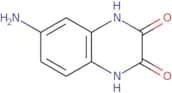
6-Aminoquinoxaline-2,3(1H,4H)-dione
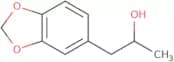
CAS:<p>Versatile small molecule scaffold</p>Fórmula:C8H7N3O2Pureza:Min. 95%Peso molecular:177.16 g/mol1-(1,3-Dioxaindan-5-yl)propan-2-ol
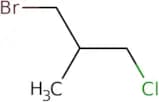
CAS:Producto controlado<p>1-(1,3-Dioxaindan-5-yl)propan-2-ol is an intermediate in the synthesis of the drug 1-(1,3-dioxan-5-yl)propan-2-ol. It is extracted from the reaction mixture by removing the organic solvent and drying with anhydrous magnesium sulfate. The product can be used as a starting material for synthesizing 1-(1,3-dioxan-5-yl)propan-2-ol. It has been shown to have good antiinflammatory effects in vivo.</p>Fórmula:C10H12O3Pureza:Min. 95%Peso molecular:180.2 g/mol1-Bromo-3-chloro-2-methylpropane
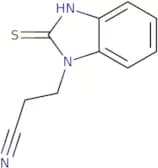
CAS:<p>1-Bromo-3-chloro-2-methylpropane is a halocarbon that is used as a reagent in organic synthesis. It has been used in the synthesis of pharmaceuticals such as acetaminophen and ibuprofen, as well as other compounds. It is also used to study the properties of halocarbons, including thermal conductivity and isomerism. The reactions are typically carried out using a Grignard reagent, which reacts with the bromide ion to form an organobromine compound. The reaction can be done experimentally or in the laboratory.</p>Fórmula:C4H8BrClPureza:Min. 95%Peso molecular:171.46 g/mol3-(2-Sulfanyl-1H-1,3-benzodiazol-1-yl)propanenitrile
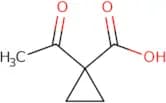
CAS:<p>Versatile small molecule scaffold</p>Fórmula:C10H9N3SPureza:Min. 95%Peso molecular:203.27 g/mol1-Acetylcyclopropane-1-carboxylic acid
CAS:<p>1-Acetylcyclopropane-1-carboxylic acid is a dicarboxylic acid that is produced by the alkylation of chloride with triethylbenzylammonium. It can be used to produce cyclopropanol, which can undergo an annulation reaction to form cyclopropylcarbinols. 1-Acetylcyclopropane-1-carboxylic acid has been shown to undergo rearrangement reactions in the presence of sodium hydroxide, and has been shown to be a good substrate for nucleophilic substitution reactions. This chemical also undergoes esterification with alcohols to form esters.</p>Fórmula:C6H8O3Pureza:Min. 95%Peso molecular:128.13 g/mol2-(3,4-Dichlorophenyl)-2,2-difluoroethan-1-amine hydrochloride
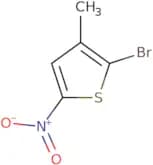
CAS:<p>Versatile small molecule scaffold</p>Fórmula:C8H8Cl3F2NPureza:Min. 95%Peso molecular:262.5 g/mol2-Bromo-3-methyl-5-nitrothiophene
CAS:<p>2-Bromo-3-methyl-5-nitrothiophene is an organic compound that reacts with nucleophiles, such as amines, to form adducts. It is also a ring-opening reaction of 2-nitrothiophene and oxidative deamination of aliphatic amines. This reactant is analogous to other compounds, such as 3-methylthiophene and 2,4,6-trinitrobenzene.</p>Fórmula:C5H4BrNO2SPureza:Min. 95%Peso molecular:222.06 g/mol2-Bromothiophene-3-carbonitrile
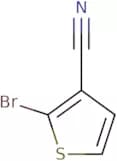
CAS:<p>Versatile small molecule scaffold</p>Fórmula:C5H2BrNSPureza:Min. 95%Peso molecular:188.04 g/molBis(diisopropylamino)chlorophosphine
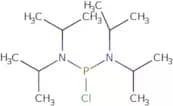
CAS:<p>Bis(diisopropylamino)chlorophosphine is a phosphorylating agent that binds to the polymerase active site of the hepatitis C virus (HCV) NS5B protein. It is a promising anti-HCV drug candidate for the treatment of chronic hepatitis C infections. Bis(diisopropylamino)chlorophosphine has been shown to be effective in inhibiting HCV replication in vitro and in vivo, with no significant toxicity. Bis(diisopropylamino)chlorophosphine has also been shown to be an excellent probe for detecting HCV RNA in clinical samples by fluorescence microscopy. This compound has been successfully used in a phase I clinical trial and is currently undergoing phase II clinical development.</p>Fórmula:C12H28ClN2PPureza:Min. 95%Peso molecular:266.79 g/mol2-(3-Nitro-4-oxo-1,4-dihydropyridin-1-yl)acetic acid
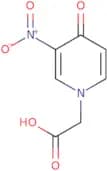
CAS:<p>Versatile small molecule scaffold</p>Fórmula:C7H6N2O5Pureza:Min. 95%Peso molecular:198.13 g/molN-Methyl-N-(4-sulfamoylphenyl)acetamide
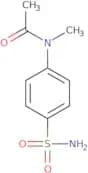
CAS:<p>Versatile small molecule scaffold</p>Fórmula:C9H12N2O3SPureza:Min. 95%Peso molecular:228.27 g/molrac-(9R,10S)-2-Azatricyclo[9.4.0.0,3,8]pentadeca-1(15),3,5,7,11,13-hexaene-9,10-diol
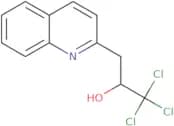
CAS:<p>Versatile small molecule scaffold</p>Fórmula:C14H13NO2Pureza:Min. 95%Peso molecular:227.26 g/mol1,1,1-Trichloro-3-(quinolin-2-yl)propan-2-ol
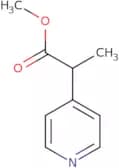
CAS:<p>Versatile small molecule scaffold</p>Fórmula:C12H10Cl3NOPureza:Min. 95%Peso molecular:290.6 g/molMethyl 2-(pyridin-4-yl)propanoate
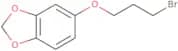
CAS:<p>Versatile small molecule scaffold</p>Fórmula:C9H11NO2Pureza:Min. 95%Peso molecular:165.19 g/mol5-(3-Bromopropoxy)-1,3-dioxaindane
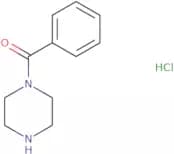
CAS:<p>Versatile small molecule scaffold</p>Fórmula:C10H11BrO3Pureza:Min. 95%Peso molecular:259.1 g/mol1-Benzoylpiperazine hydrochloride
CAS:<p>1-Benzoylpiperazine hydrochloride (1BP) is an antiviral prodrug that has been shown to inhibit HIV infection. It is a prodrug of benzylpiperazine, which inhibits viral replication by blocking the reverse transcriptase enzyme. 1BP is an amido derivative that is converted to benzylpiperazine in vivo, and then nitroreduced to form a reactive intermediate that binds irreversibly to the active site of the reverse transcriptase enzyme. This prevents the polymerization of viral DNA and formation of new viral particles. The drug also inhibits some strains of influenza A virus, herpes simplex virus type 2, and vaccinia virus. 1BP has antiviral activity against HIV-1, HIV-2, influenza A virus (strains H1N1 and H3N2), herpes simplex virus type 2, and vaccinia virus. It also has anti-inflammatory effects in vitro</p>Fórmula:C11H14N2O·HClPureza:Min. 95%Peso molecular:226.7 g/mol2-(4-Benzoyl-1-piperazinyl)ethanol
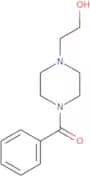
CAS:<p>Versatile small molecule scaffold</p>Fórmula:C13H18N2O2Pureza:Min. 95%Peso molecular:234.3 g/mol1-(Quinolin-8-yl)ethanone
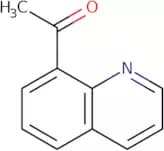
CAS:<p>Versatile small molecule scaffold</p>Fórmula:C11H9NOPureza:Min. 95%Peso molecular:171.2 g/mol4-Sulfamoylbenzene-1-carbothioamide
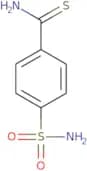
CAS:<p>Versatile small molecule scaffold</p>Fórmula:C7H8N2O2S2Pureza:Min. 95%Peso molecular:216.3 g/mol4-(Methylsulfamoyl)benzene-1-carbothioamide
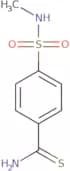
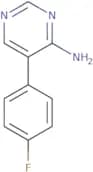
CAS:<p>Versatile small molecule scaffold</p>Fórmula:C8H10N2O2S2Pureza:Min. 95%Peso molecular:230.3 g/mol5-(4-Fluorophenyl)pyrimidin-4-amine
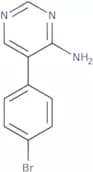
CAS:<p>Versatile small molecule scaffold</p>Fórmula:C10H8FN3Pureza:Min. 95%Peso molecular:189.19 g/mol5-(4-Bromophenyl)pyrimidin-4-amine
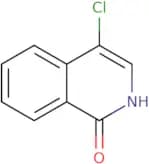
CAS:<p>Versatile small molecule scaffold</p>Fórmula:C10H8BrN3Pureza:Min. 95%Peso molecular:250.09 g/mol4-Chloro-1(2H)-isoquinolone
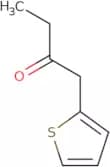
CAS:<p>Versatile small molecule scaffold</p>Fórmula:C9H6ClNOPureza:Min. 95%Peso molecular:179.6 g/mol1-(Thiophen-2-yl)butan-2-one
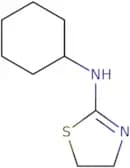
CAS:<p>Versatile small molecule scaffold</p>Fórmula:C8H10OSPureza:Min. 95%Peso molecular:154.23 g/molN-Cyclohexyl-4,5-dihydro-1,3-thiazol-2-amine
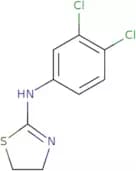
CAS:<p>Versatile small molecule scaffold</p>Fórmula:C9H16N2SPureza:Min. 95%Peso molecular:184.3 g/molN-(3,4-Dichlorophenyl)-4,5-dihydro-1,3-thiazol-2-amine
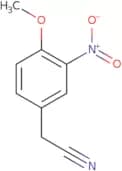
CAS:<p>Versatile small molecule scaffold</p>Fórmula:C9H8Cl2N2SPureza:Min. 95%Peso molecular:247.14 g/mol2-(4-Methoxy-3-nitrophenyl)acetonitrile
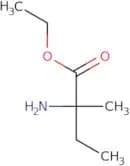
CAS:<p>Versatile small molecule scaffold</p>Fórmula:C9H8N2O3Pureza:Min. 95%Peso molecular:192.17 g/molEthyl 2-amino-2-methylbutanoate
CAS:<p>Ethyl 2-amino-2-methylbutanoate is a type of chemical compound that belongs to the group of organic compounds called esters. It has been shown to be a potential anti-cancer drug that inhibits DNA replication and induces apoptosis in cancer cells. Ethyl 2-amino-2-methylbutanoate has also been shown to have an effect on the histone lysine residues, which are important for cell proliferation and differentiation. Animal studies have suggested that this compound may also protect against breast cancer, with the ability to reduce tumor growth by inhibiting the production of estrogen receptors in mammary glands. The anticancer activity of Ethyl 2-amino-2-methylbutanoate is due to its ability to inhibit diltiazem hydrochloride, which is an enzyme involved in the synthesis of DNA and RNA.</p>Fórmula:C7H15NO2Pureza:Min. 95%Peso molecular:145.2 g/mol4-phenyl-1H-imidazole-2-carbaldehyde
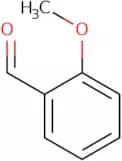
CAS:<p>Versatile small molecule scaffold</p>Fórmula:C10H7N2OPureza:Min. 95%Peso molecular:171.17 g/mol2-Methoxybenzaldehyde-d3
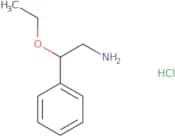
CAS:<p>Versatile small molecule scaffold</p>Fórmula:C8H8O2Pureza:Min. 95%Peso molecular:139.17 g/mol2-Ethoxy-2-phenylethan-1-amine hydrochloride
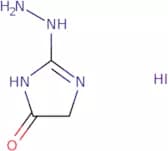
CAS:Producto controlado<p>Versatile small molecule scaffold</p>Fórmula:C10H16ClNOPureza:Min. 95%Peso molecular:201.69 g/mol2-Hydrazinyl-4,5-dihydro-1H-imidazol-5-one hydroiodide
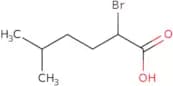
CAS:<p>Versatile small molecule scaffold</p>Fórmula:C3H7IN4OPureza:Min. 95%Peso molecular:242.02 g/mol2-Bromo-5-methylhexanoic acid
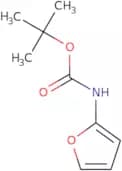
CAS:<p>Versatile small molecule scaffold</p>Fórmula:C7H13BrO2Pureza:Min. 95%Peso molecular:209.08 g/moltert-Butyl N-(2-furyl)carbamate
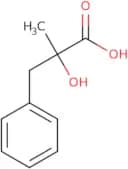
CAS:<p>Versatile small molecule scaffold</p>Fórmula:C9H13NO3Pureza:Min. 95%Peso molecular:183.21 g/mol2-Hydroxy-2-methyl-3-phenylpropanoic acid
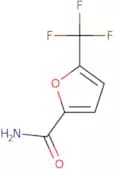
CAS:<p>2-Hydroxy-2-methyl-3-phenylpropanoic acid is a chlorinating agent that can be used as a cancer drug. It is one of the active substances in the plant didemnin, which has shown anticancer effects. 2-Hydroxy-2-methyl-3-phenylpropanoic acid reacts with oxindole to form 2,4,5,6,7 tetrahydrooxindole and 2,4,5,6 tetrahydrodideoxyoxindole. The chlorination reaction is catalyzed by corynebacterium glutamicum and produces epoxides. The epoxide ring opens under physiological conditions and reacts with hydroxyl groups on other molecules to form chlorohydrins or hydroxylamines.</p>Fórmula:C10H12O3Pureza:Min. 95%Peso molecular:180.2 g/mol5-(Trifluoromethyl)furan-2-carboxamide
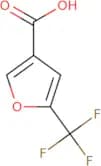
CAS:<p>Versatile small molecule scaffold</p>Fórmula:C6H4F3NO2Pureza:Min. 95%Peso molecular:179.1 g/mol5-(Trifluoromethyl)furan-3-carboxylic acid
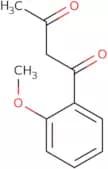
CAS:<p>Versatile small molecule scaffold</p>Fórmula:C6H3F3O3Pureza:Min. 95%Peso molecular:180.08 g/mol1-(2-Methoxyphenyl)butane-1,3-dione
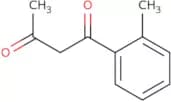
CAS:<p>Versatile small molecule scaffold</p>Fórmula:C11H12O3Pureza:Min. 95%Peso molecular:192.21 g/mol1-o-Tolylbutane-1,3-dione
CAS:<p>Versatile small molecule scaffold</p>Fórmula:C11H12O2Pureza:Min. 95%Peso molecular:176.21 g/mol8-Methoxy-1,4-dioxaspiro[4.5]decane
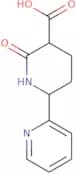
CAS:<p>Versatile small molecule scaffold</p>Fórmula:C9H16O3Pureza:Min. 95%Peso molecular:172.22 g/mol2-Oxo-6-(2-pyridinyl)-1,2-dihydro-3-pyridinecarboxylic acid
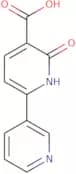
CAS:<p>Versatile small molecule scaffold</p>Fórmula:C11H8N2O3Pureza:Min. 95%Peso molecular:216.19 g/mol2-Oxo-6-(pyridin-3-yl)-1,2-dihydropyridine-3-carboxylic acid
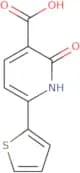
CAS:<p>Versatile small molecule scaffold</p>Fórmula:C11H8N2O3Pureza:Min. 95%Peso molecular:216.19 g/mol2-Oxo-6-(thiophen-2-yl)-1,2-dihydropyridine-3-carboxylic acid
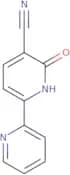
CAS:<p>Versatile small molecule scaffold</p>Fórmula:C10H7NO3SPureza:Min. 95%Peso molecular:221.23 g/mol2-Oxo-6-(2-pyridinyl)-1,2-dihydro-3-pyridinecarbonitrile
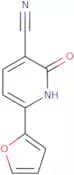
CAS:<p>Versatile small molecule scaffold</p>Fórmula:C11H7N3OPureza:Min. 95%Peso molecular:197.19 g/mol6-(2-Furyl)-2-oxo-1,2-dihydro-3-pyridinecarbonitrile
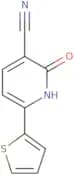
CAS:<p>Versatile small molecule scaffold</p>Fórmula:C10H6N2O2Pureza:Min. 95%Peso molecular:186.17 g/mol2-Oxo-6-(thiophen-2-yl)-1,2-dihydropyridine-3-carbonitrile
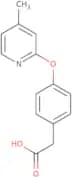
CAS:<p>Versatile small molecule scaffold</p>Fórmula:C10H6N2OSPureza:Min. 95%Peso molecular:202.23 g/mol2-(4-((4-Methylpyridin-2-yl)oxy)phenyl)acetic acid
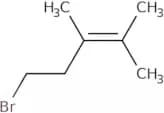
CAS:<p>Versatile small molecule scaffold</p>Fórmula:C14H13NO3Pureza:Min. 95%Peso molecular:243.26 g/mol5-Bromo-2,3-dimethylpent-2-ene
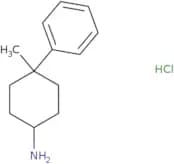
CAS:<p>5-Bromo-2,3-dimethylpent-2-ene (5BDMPE) is a novel chlorinating agent that produces bromine radicals through the process of homolysis. It is an effective chlorinating agent for organic synthesis and has been shown to be selective with respect to the functional groups present in the starting material. 5BDMPE has been shown to react with pyridine rings and to form alkoxides, which are highly reactive intermediates that can lead to kinetic or mechanistic studies. 5BDMPE is an activating reagent that stabilizes amines by converting them into their corresponding amides. This property makes it a useful chemical in organic synthesis.</p>Fórmula:C7H13BrPureza:Min. 95%Peso molecular:177.08 g/mol4-Methyl-4-phenylcyclohexan-1-amine hydrochloride
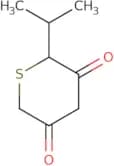
CAS:<p>Versatile small molecule scaffold</p>Fórmula:C13H20ClNPureza:Min. 95%Peso molecular:225.76 g/mol2-(Propan-2-yl)thiane-3,5-dione
CAS:<p>Versatile small molecule scaffold</p>Fórmula:C8H12O2SPureza:Min. 95%Peso molecular:172.25 g/mol7-Benzyl-5,6-dimethyl-7H-pyrrolo[2,3-d]pyrimidin-4-amine
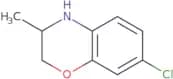
CAS:<p>Versatile small molecule scaffold</p>Fórmula:C15H16N4Pureza:Min. 95%Peso molecular:252.31 g/mol7-Chloro-3-methyl-3,4-dihydro-2H-1,4-benzoxazine
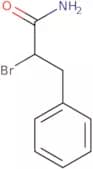
CAS:<p>Versatile small molecule scaffold</p>Fórmula:C9H10ClNOPureza:Min. 95%Peso molecular:183.63 g/mol2-Bromo-3-phenylpropanamide
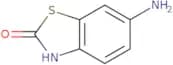
CAS:<p>Versatile small molecule scaffold</p>Fórmula:C9H10BrNOPureza:Min. 95%Peso molecular:228.09 g/mol6-Amino-3H-benzothiazol-2-one
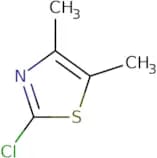
CAS:<p>6-Amino-3H-benzothiazol-2-one is a benzothiazolone that has been shown to be an effective stimulator and yields of 3-nitrobenzaldehyde. The compound has also been shown to have antihelmintic activity, with the best results when combined with other drugs. 6-Amino-3H-benzothiazol-2-one is a pharmacophore that can be used as a starting material for the synthesis of other benzothiazole derivatives. It has been shown to produce an elemental analysis in ethanol and 2,6,8,-trimethylpyridine.</p>Fórmula:C7H6N2OSPureza:Min. 95%Peso molecular:166.2 g/mol2-Chloro-4,5-dimethyl-1,3-thiazole
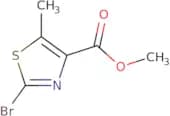
CAS:<p>Versatile small molecule scaffold</p>Fórmula:C5H6NSClPureza:Min. 95%Peso molecular:147.62 g/molMethyl 2-bromo-5-methylthiazole-4-carboxylate
CAS:<p>Versatile small molecule scaffold</p>Fórmula:C6H6BrNO2SPureza:Min. 95%Peso molecular:236.09 g/mol4-[4-(Chlorosulfonyl)-2-methylphenoxy]butanoic acid
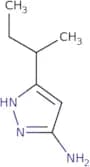
CAS:Producto controlado<p>Versatile small molecule scaffold</p>Fórmula:C11H13ClO5SPureza:Min. 95%Peso molecular:292.74 g/mol3-(Butan-2-yl)-1H-pyrazol-5-amine
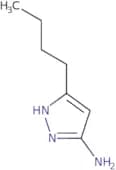
CAS:<p>Versatile small molecule scaffold</p>Fórmula:C7H13N3Pureza:Min. 95%Peso molecular:139.2 g/mol3-Butyl-1H-pyrazol-5-amine
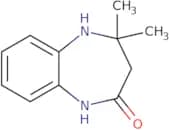
CAS:<p>3-Butyl-1H-pyrazol-5-amine is a cytotoxic agent that has been shown to inhibit the proliferation of glioblastoma cells in vitro. The drug is an analog of pyrazolopyrimidinone, which is a prodrug that can be activated by cytochrome P450 enzymes. In this study, 3-butyl-1H-pyrazol-5-amine was found to be a potent and selective inhibitor of cancer cell proliferation. It also exhibits greater stability than pyrazolopyrimidinone, making it more suitable for clinical trials. This prodrug derivative has been synthesized and its prodrug derivatives have been generated with different activation chemistries to allow for the selective delivery of cytotoxic agents to cancer cells.</p>Fórmula:C7H13N3Pureza:Min. 95%Peso molecular:139.2 g/mol4,4-Dimethyl-2,3,4,5-tetrahydro-1H-1,5-benzodiazepin-2-one
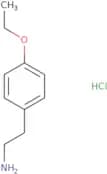
CAS:<p>Versatile small molecule scaffold</p>Fórmula:C11H14N2OPureza:Min. 95%Peso molecular:190.24 g/mol2-(4-Ethoxyphenyl)ethanamine HCl
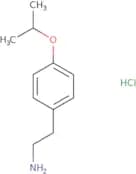
CAS:Producto controlado<p>Versatile small molecule scaffold</p>Fórmula:C10H16ClNOPureza:Min. 95%Peso molecular:201.69 g/mol2-(4-Isopropoxyphenyl)ethylamine HCl
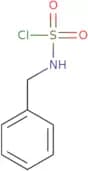
CAS:Producto controlado<p>Versatile small molecule scaffold</p>Fórmula:C11H18ClNOPureza:Min. 95%Peso molecular:215.72 g/molN-Benzylsulfamoyl chloride
CAS:<p>N-Benzylsulfamoyl chloride is an inhibitor of the enzyme, racemase. This inhibitor has been shown to be active against a variety of hyperproliferative diseases. N-Benzylsulfamoyl chloride inhibits the production of cell proteins and can be used for the treatment of mycoses and thioether-related disorders. It also has cytoprotective activity in liver cells and neuronal cells, which may be due to its ability to inhibit carboxyalkylases.</p>Fórmula:C7H8ClNO2SPureza:Min. 95%Peso molecular:205.66 g/mol6-Chloro-3-(4-methylphenyl)-[1,2,4]triazolo[4,3-b]pyridazine
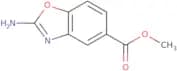
CAS:<p>Versatile small molecule scaffold</p>Fórmula:C12H9ClN4Pureza:Min. 95%Peso molecular:244.68 g/molMethyl 2-amino-1,3-benzoxazole-5-carboxylate
CAS:<p>Versatile small molecule scaffold</p>Fórmula:C9H8N2O3Pureza:Min. 95%Peso molecular:192.17 g/mol2-[4-(6-Chloropyridazin-3-yl)piperazin-1-yl]ethan-1-ol
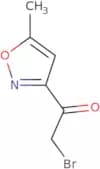
CAS:<p>Versatile small molecule scaffold</p>Fórmula:C10H15ClN4OPureza:Min. 95%Peso molecular:242.7 g/mol2-Bromo-1-(5-methyl-1,2-oxazol-3-yl)ethan-1-one
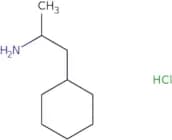
CAS:<p>Versatile small molecule scaffold</p>Fórmula:C6H6BrNO2Pureza:Min. 95%Peso molecular:204.02 g/mol(2S)-1-Cyclohexylpropan-2-amine hydrochloride
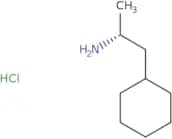
CAS:<p>Versatile small molecule scaffold</p>Fórmula:C9H20ClNPureza:Min. 95%Peso molecular:177.71 g/mol(2R)-1-Cyclohexylpropan-2-amine hydrochloride
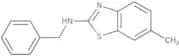
CAS:<p>Versatile small molecule scaffold</p>Fórmula:C9H20ClNPureza:Min. 95%Peso molecular:177.7 g/molN-Benzyl-6-methyl-1,3-benzothiazol-2-amine
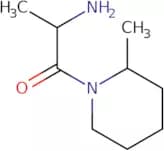
CAS:<p>Versatile small molecule scaffold</p>Fórmula:C15H14N2SPureza:Min. 95%Peso molecular:254.4 g/mol2-Amino-1-(2-methylpiperidin-1-yl)propan-1-one
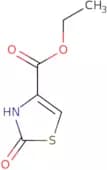
CAS:Producto controlado<p>Versatile small molecule scaffold</p>Fórmula:C9H18N2OPureza:Min. 95%Peso molecular:170.25 g/molEthyl 2-hydroxy-1,3-thiazole-4-carboxylate
CAS:<p>Versatile small molecule scaffold</p>Fórmula:C6H7NO3SPureza:Min. 95%Peso molecular:173.19 g/mol2-(Carbamoylmethoxy)benzoic acid
CAS:<p>Versatile small molecule scaffold</p>Fórmula:C9H9NO4Pureza:Min. 95%Peso molecular:195.17 g/molo-[3-(Dimethylamino)propyl]hydroxylamine dihydrochloride
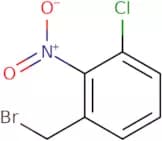
CAS:<p>o-[3-(Dimethylamino)propyl]hydroxylamine dihydrochloride is a drug used to treat cardiovascular disorders. It is a prodrug that is metabolized in the body to form hydroxylamine, which has affinity for c1-6 alkyl groups. The hydroxyl group on the heterocycle of o-[3-(Dimethylamino)propyl]hydroxylamine dihydrochloride also has biological properties. This drug is an inhibitor of monoamine oxidase and may reduce the risk of heart disease by lowering blood pressure and decreasing cholesterol levels. The stereoisomers of this compound are used for the treatment of hypertension. The benzyl group on o-[3-(Dimethylamino)propyl]hydroxylamine dihydrochloride may be responsible for its ability to inhibit monoamine oxidase A and B, as well as other enzymes involved in cardiovascular diseases.</p>Fórmula:C5H16Cl2N2OPureza:Min. 95%Peso molecular:191.1 g/mol3-Chloro-2-nitrobenzyl bromide
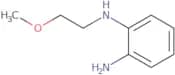
CAS:<p>Versatile small molecule scaffold</p>Fórmula:C7H5BrClNO2Pureza:Min. 95%Peso molecular:250.48 g/molN1-(2-Methoxyethyl)benzene-1,2-diamine
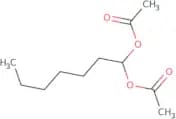
CAS:<p>Versatile small molecule scaffold</p>Fórmula:C9H14N2OPureza:Min. 95%Peso molecular:166.22 g/mol1-(Acetyloxy)heptyl acetate
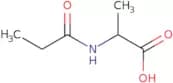
CAS:<p>1-(Acetyloxy)heptyl acetate is an organic compound that has the molecular formula CH3COOC7H15. It is a colorless liquid with boiling point of 174°C at 1 mmHg. This compound is used as a solvent, and it is also used in the synthesis of some pharmaceuticals. The melting point of 1-(acetyloxy)heptyl acetate varies depending on the temperature because this compound exists as two polymorphs. The compound can be activated by heating to temperatures above 145°C, which will cause it to form hydrogen bonds with water molecules. One of the major uses for 1-(acetyloxy)heptyl acetate is as an excipient in tablets and capsules. The most common use for this substance is in pharmaceuticals that are taken orally and require solvents or solubilizers to dissolve other components such as inactive ingredients, active ingredients, or colors.</p>Fórmula:C11H20O4Pureza:Min. 95%Peso molecular:216.27 g/mol(2S)-2-Propanamidopropanoic acid
CAS:<p>(2S)-2-Propanamidopropanoic acid is a non-protein amino acid that is used in the synthesis of peptides. It has an acidic side chain and can be reacted with amines to form a beta-amide linkage. These reactions are catalyzed by enzymes such as proteases and thiols. This compound has been shown to inhibit the activity of proteases, which may be due to its ability to compete for binding sites on the enzyme. The equilibrium constant for this reaction is 1.5 x 10^9 M^(-1).</p>Fórmula:C6H11NO3Pureza:Min. 95%Peso molecular:145.16 g/molMethyl 2-[(3-aminophenyl)formamido]acetate
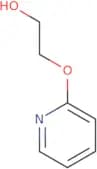
CAS:<p>Versatile small molecule scaffold</p>Fórmula:C10H12N2O3Pureza:Min. 95%Peso molecular:208.21 g/mol2-(Pyridin-2-yloxy)ethan-1-ol
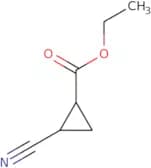
CAS:<p>Versatile small molecule scaffold</p>Fórmula:C7H9NO2Pureza:Min. 95%Peso molecular:139.15 g/molethyl 2-cyanocyclopropane-1-carboxylate
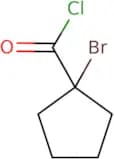
CAS:<p>Ethyl 2-cyanocyclopropane-1-carboxylate is a reactive chemical reagent that can be used to synthesize a variety of compounds. It is an aliphatic compound with a carbonyl group at the end of the molecule and belongs to a class of compounds called chlorohydrins. Ethyl 2-cyanocyclopropane-1-carboxylate has been used as an organoindium compound for the synthesis of stilbene derivatives. It can also be used to synthesize chlorinated alkenes, oxiranes, and other cyclopropanes. Ethyl 2-cyanocyclopropane-1-carboxylate can react with alcohols or phenols in presence of acid to form acetals or ketals, respectively.</p>Fórmula:C7H9NO2Pureza:Min. 95%Peso molecular:139.15 g/mol1-Bromocyclopentane-1-carbonyl chloride
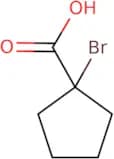
CAS:<p>Versatile small molecule scaffold</p>Fórmula:C6H8BrClOPureza:Min. 95%Peso molecular:211.48 g/mol1-Bromocyclopentane-1-carboxylic acid
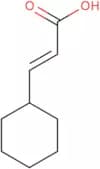
CAS:<p>Cyclopentane-1,2-dicarboxylic acid is an organic compound with the molecular formula C5H8O4. The molecule consists of a cyclopentane ring and two carboxylic acid groups. Cyclopentane-1,2-dicarboxylic acid can be synthesized by an intramolecular cyclization reaction between a 1-bromocyclopentane and a chalcone. This reagent can also be used to synthesize other compounds such as phenoxyethanol, an enolate, and organozinc compounds.</p>Fórmula:C6H9BrO2Pureza:Min. 95%Peso molecular:193.04 g/mol(E)-3-Cyclohexylacrylic acid
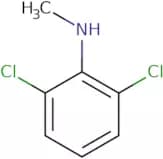
CAS:<p>(E)-3-Cyclohexylacrylic acid is an antibacterial agent that inhibits the growth of bacteria by binding to the 50S ribosomal subunit. It binds to bacterial 16S ribosomal RNA and inhibits protein synthesis, leading to cell death by inhibiting the production of proteins vital for cell division. (E)-3-Cyclohexylacrylic acid has been shown to be effective against methicillin-resistant Staphylococcus aureus (MRSA) and Clostridium perfringens, although is not active against acid-fast bacteria such as Mycobacterium tuberculosis or Mycobacterium avium complex. This compound also has anticancer activity, which may be due to its ability to inhibit topoisomerase II activity in cells.</p>Fórmula:C9H14O2Pureza:Min. 95%Peso molecular:154.21 g/mol2,6-Dichloro-N-methylaniline
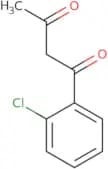
CAS:<p>Versatile small molecule scaffold</p>Fórmula:C7H7Cl2NPureza:Min. 95%Peso molecular:176.04 g/mol1-(2-Chlorophenyl)-1,3-butanedione
CAS:<p>Versatile small molecule scaffold</p>Fórmula:C10H9O2ClPureza:Min. 95%Peso molecular:196.63 g/mol7H,8H-Imidazo[1,5-a]pyrazin-8-one
CAS:<p>7H,8H-Imidazo[1,5-a]pyrazin-8-one is a potent and selective inhibitor of the bromodomain family. Bromodomains are protein domains found in many proteins that have been implicated in regulating gene expression, DNA repair, and protein degradation. Inhibiting this domain leads to decreased proliferation of tumor cells. 7H,8H-Imidazo[1,5-a]pyrazin-8-one has also shown potential as an anti-neurodegenerative agent by inhibiting the enzyme acetylcholinesterase. This compound is active against cancerous cell lines and is crystalline with a polymorphic form that can be used for medicine production.</p>Fórmula:C6H5N3OPureza:Min. 95%Peso molecular:135.12 g/mol8-chloroimidazo[1,5-a]pyrazine
CAS:<p>8-Chloroimidazo[1,5-a]pyrazine is a potent insulin-like growth factor-I receptor (IGF-IR) inhibitor with potential therapeutic use for type II diabetes. It was found to inhibit IGF-I induced activation of the IR and downstream signaling pathways in a dose dependent manner. 8-Chloroimidazo[1,5-a]pyrazine inhibited IGF-I induced mitogenesis in human colon cancer cells and showed antiangiogenic activity in nude mice bearing xenografts of human colon cancer cells.</p>Fórmula:C6H4ClN3Pureza:Min. 95%Peso molecular:153.57 g/mol4-(Propan-2-yl)benzene-1,2-diamine
CAS:<p>Versatile small molecule scaffold</p>Fórmula:C9H14N2Pureza:Min. 95%Peso molecular:150.22 g/molFuro[3,2-b]pyridine-5-carboxylic acid
CAS:<p>Versatile small molecule scaffold</p>Fórmula:C8H5NO3Pureza:Min. 95%Peso molecular:163.13 g/molThieno[3,2-b]pyridine-5-carboxylic acid
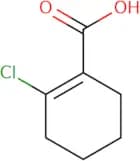
CAS:<p>Versatile small molecule scaffold</p>Fórmula:C8H5NO2SPureza:Min. 95%Peso molecular:179.2 g/mol2-Chlorocyclohex-1-ene-1-carboxylic acid
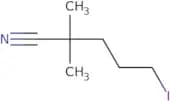
CAS:<p>2-Chlorocyclohex-1-ene-1-carboxylic acid is a synthetic compound that has been used as a reactant for the production of phthalic anhydride. The reaction mechanism begins with the formation of isocyanide, which reacts with benzoic acid to form an intermediate benzoyl isocyanide. This intermediate reacts with the acetic acid to produce 2-chlorocyclohexanecarboxylic acid, which in turn undergoes hydrolysis to give phthalic anhydride.</p>Fórmula:C7H9ClO2Pureza:Min. 95%Peso molecular:160.6 g/mol5-Iodo-2,2-dimethylpentanenitrile
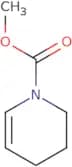
CAS:<p>Versatile small molecule scaffold</p>Fórmula:C7H12INPureza:Min. 95%Peso molecular:237.08 g/molMethyl 1,2,3,4-tetrahydropyridine-1-carboxylate
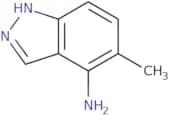
CAS:<p>Versatile small molecule scaffold</p>Fórmula:C7H11NO2Pureza:Min. 95%Peso molecular:141.17 g/mol5-Methyl-1H-indazol-4-amine
CAS:<p>5-Methyl-1H-indazol-4-amine is a tyrosine kinase inhibitor that has been shown to be potent in inhibiting the activity of various types of tyrosine kinases. It has good oral pharmacokinetics and is not metabolized by the liver. 5-Methyl-1H-indazol-4-amine binds to the ATP site on the enzyme and prevents phosphorylation, which inhibits cell proliferation and growth. This agent also inhibits DNA synthesis, protein synthesis, and phosphoinositide turnover in cells. 5-Methyl-1H-indazol-4-amine is an orally active inhibitor of tyrosine kinases with good oral pharmacokinetics and does not require metabolic activation by the liver. This agent may be used for the treatment of cancer or other diseases associated with uncontrolled cell growth.</p>Fórmula:C8H9N3Pureza:Min. 95%Peso molecular:147.18 g/mol2-[[4-(Boc-amino)methyl]phenoxy]acetic acid
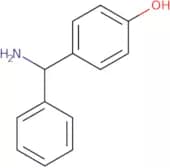
CAS:<p>Versatile small molecule scaffold</p>Fórmula:C14H19NO5Pureza:Min. 95%Peso molecular:281.3 g/molα-(4-hydroxyphenyl)benzylamine
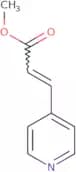
CAS:<p>Versatile small molecule scaffold</p>Fórmula:C13H13NOPureza:Min. 95%Peso molecular:199.25 g/mol(E)-Methyl 3-(pyridin-4-yl)acrylate
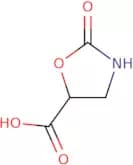
CAS:<p>Versatile small molecule scaffold</p>Fórmula:C9H9NO2Pureza:Min. 95%Peso molecular:163.17 g/mol(5S)-2-Oxo-1,3-oxazolidine-5-carboxylic acid
CAS:<p>Versatile small molecule scaffold</p>Fórmula:C4H5NO4Pureza:Min. 95%Peso molecular:131.09 g/mol2-[(1-Phenylpropyl)amino]ethan-1-ol
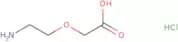
CAS:<p>Versatile small molecule scaffold</p>Fórmula:C11H17NOPureza:Min. 95%Peso molecular:179.26 g/mol2-(2-Aminoethoxy)acetic acid hydrochloride
CAS:<p>Versatile small molecule scaffold</p>Fórmula:C4H10ClNO3Pureza:Min. 95%Peso molecular:155.58 g/mol4-[(4-Fluorophenyl)methoxy]piperidine
CAS:<p>Versatile small molecule scaffold</p>Fórmula:C12H16FNOPureza:Min. 95%Peso molecular:209.26 g/mol4-[(2-Methylphenyl)methoxy]piperidine
CAS:<p>Versatile small molecule scaffold</p>Fórmula:C13H19NOPureza:Min. 95%Peso molecular:205.3 g/mol4-[(2-Methoxyphenyl)methoxy]piperidine hydrochloride
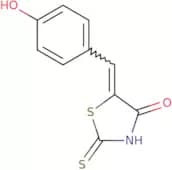
CAS:<p>Versatile small molecule scaffold</p>Fórmula:C13H20ClNO2Pureza:Min. 95%Peso molecular:257.75 g/mol(E)-5-(4-Hydroxybenzylidene)-2-mercaptothiazol-4(5H)-one
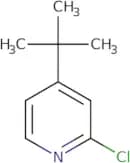
CAS:<p>Versatile small molecule scaffold</p>Fórmula:C10H7NO2S2Pureza:Min. 95%Peso molecular:237.3 g/mol4-(tert-Butyl)-2-chloropyridine
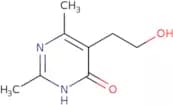
CAS:<p>4-(tert-Butyl)-2-chloropyridine is a ligand that has been used in the synthesis of a number of boronic acids and quinoline derivatives. It is also useful in cross-coupling reactions, which are nucleophilic substitution reactions involving two partners, such as an organometallic reagent and an organic halide or pseudohalide. The linker can be any group that connects the two partners together for these reactions. 4-(tert-Butyl)-2-chloropyridine is stable under acidic conditions, making it an excellent choice for coupling with amines to produce amides.</p>Fórmula:C9H12ClNPureza:Min. 95%Peso molecular:169.65 g/mol5-(2-Hydroxyethyl)-2,6-dimethylpyrimidin-4-ol
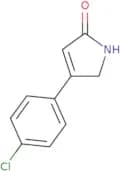
CAS:<p>Versatile small molecule scaffold</p>Fórmula:C8H12N2O2Pureza:Min. 95%Peso molecular:168.19 g/mol4-(4-Chlorophenyl)-2,5-dihydro-1H-pyrrol-2-one
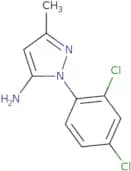
CAS:<p>Versatile small molecule scaffold</p>Fórmula:C10H8ClNOPureza:Min. 95%Peso molecular:193.63 g/mol1-(2,4-Dichlorophenyl)-3-methyl-1H-pyrazol-5-amine
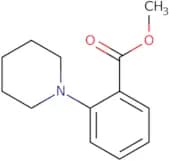
CAS:<p>Versatile small molecule scaffold</p>Fórmula:C10H9Cl2N3Pureza:Min. 95%Peso molecular:242.1 g/molMethyl 2-(piperidin-1-yl)benzoate
CAS:<p>Versatile small molecule scaffold</p>Fórmula:C13H17NO2Pureza:Min. 95%Peso molecular:219.28 g/mol8-Bromooct-1-yne
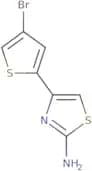
CAS:<p>8-Bromooct-1-yne has a chiral carbon and is therefore optically active. It has a boiling point of about 44 degrees Celsius, and it is soluble in ether and chloroform but not in water. The compound is stable at temperatures up to 130 degrees Celsius, and it is soluble in benzene and acetone but not in acetone. 8-Bromooct-1-yne has an optical rotation of +10.5 degrees. The molecule can be monosubstituted with a hydrogen atom or halogen atom, which changes the optical properties of the molecule. 8-Bromooct-1-yne has dichroism when viewed under polarized light, which means that the molecule absorbs light differently when it is rotated by 90° compared to when it is rotated by 0°. The compound's fluorescence emission maxima are at 488 nm and 514 nm. 8-Bromooct-1-yne's con</p>Fórmula:C8H13BrPureza:Min. 95%Peso molecular:189.09 g/mol4-(4-Bromothiophen-2-yl)-1,3-thiazol-2-amine
CAS:<p>Versatile small molecule scaffold</p>Fórmula:C7H5BrN2S2Pureza:Min. 95%Peso molecular:261.2 g/mol4-(3-Bromo-2-thienyl)-1,3-thiazol-2-amine
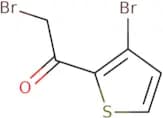
CAS:<p>Versatile small molecule scaffold</p>Fórmula:C7H5BrN2S2Pureza:Min. 95%Peso molecular:261.2 g/mol2-Bromo-1-(3-bromo-2-thienyl)-1-ethanone
CAS:<p>Versatile small molecule scaffold</p>Fórmula:C6H4Br2OSPureza:Min. 95%Peso molecular:283.98 g/mol6-Acetyl-1H-indole-2-carboxylic acid
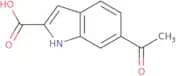
CAS:<p>Versatile small molecule scaffold</p>Fórmula:C11H9NO3Pureza:Min. 95%Peso molecular:203.19 g/molMethyl 7-bromo-4-methoxy-1H-indole-2-carboxylate
CAS:<p>Versatile small molecule scaffold</p>Fórmula:C11H10BrNO3Pureza:Min. 95%Peso molecular:284.11 g/mol2-(2,4-Difluorophenyl)ethan-1-ol
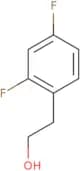
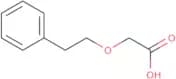
CAS:<p>Versatile small molecule scaffold</p>Fórmula:C8H8F2OPureza:Min. 95%Peso molecular:158.14 g/mol2-(2-Phenylethoxy)acetic acid
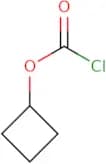
CAS:<p>2-(2-Phenylethoxy)acetic acid is an oleylethanolamide that has been shown to have antibacterial activity. It has been shown to activate lysosomal hydrolases and inhibit the growth of bacterial cells. 2-(2-Phenylethoxy)acetic acid also inhibits the synthesis of inflammatory molecules, such as leukotrienes, prostaglandins, and cytokines. This drug is a potent inhibitor of phospholipase A2 and can be used for the treatment of inflammatory diseases.</p>Fórmula:C10H12O3Pureza:Min. 95%Peso molecular:180.2 g/molCyclobutyl carbonochloridate
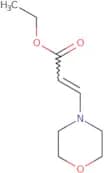
CAS:<p>Versatile small molecule scaffold</p>Fórmula:C5H7ClO2Pureza:Min. 95%Peso molecular:134.56 g/molEthyl (2E)-3-(morpholin-4-yl)prop-2-enoate
CAS:<p>Versatile small molecule scaffold</p>Fórmula:C9H15NO3Pureza:Min. 95%Peso molecular:185.22 g/mol4-Iodo-3-(methoxymethoxy)pyridine
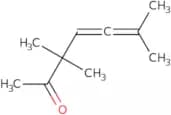
CAS:<p>Versatile small molecule scaffold</p>Fórmula:C7H8INO2Pureza:Min. 95%Peso molecular:265.05 g/mol3,3,6-Trimethylhepta-4,5-dien-2-one
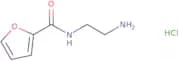
CAS:<p>Versatile small molecule scaffold</p>Fórmula:C10H16OPureza:Min. 95%Peso molecular:152.23 g/molN-(Aza(1,3-dioxoindan-2-ylidene)methyl)-4-pyridylformamide
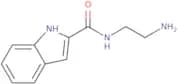
CAS:<p>Versatile small molecule scaffold</p>Fórmula:C15H9N3O3Pureza:Min. 95%Peso molecular:279.25 g/molFuran-2-carboxylic acid (2-amino-ethyl)-amidehydrochloride
CAS:<p>Versatile small molecule scaffold</p>Fórmula:C7H11ClN2O2Pureza:Min. 95%Peso molecular:190.63 g/molN-(2-Aminoethyl)-1H-indole-2-carboxamide
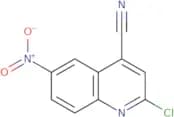
CAS:<p>Versatile small molecule scaffold</p>Fórmula:C11H13N3OPureza:Min. 95%Peso molecular:203.24 g/mol2-Chloro-6-nitroquinoline-4-carbonitrile
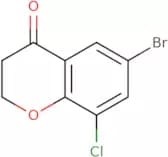
CAS:<p>Versatile small molecule scaffold</p>Fórmula:C10H4ClN3O2Pureza:Min. 95%Peso molecular:233.61 g/mol6-Bromo-8-chloro-3,4-dihydro-2H-1-benzopyran-4-one
CAS:<p>Versatile small molecule scaffold</p>Fórmula:C9H6BrClO2Pureza:Min. 95%Peso molecular:261.5 g/molN-[(4-Ethoxy-3-methoxyphenyl)methylidene]hydroxylamine
CAS:<p>Versatile small molecule scaffold</p>Fórmula:C10H13NO3Pureza:Min. 95%Peso molecular:195.21 g/mol1-Methyl-2-[(1-methyl-1H-pyrrol-2-yl)methyl]-1H-pyrrole
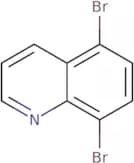
CAS:<p>Versatile small molecule scaffold</p>Fórmula:C11H14N2Pureza:Min. 95%Peso molecular:174.24 g/mol5,8-Dibromoquinoline
CAS:<p>5,8-Dibromoquinoline is a synthetic trisubstituted quinoline derivative that has been shown to form frameworks with nitrogen atoms. It has been synthesized from 2-hydroxyphenylacetic acid, which upon dehydration gives the corresponding n-oxide. 5,8-Dibromoquinoline forms an acidic solution in water and an alkaline solution in ethanol. 5,8-Dibromoquinoline can be hydrolysed by both acidic and alkaline conditions to produce 2,4-dichlorobenzene and 2-bromophenol. The reaction is stereoselective with the formation of only one product.</p>Fórmula:C9H5Br2NPureza:Min. 95%Peso molecular:286.95 g/molTrimethyl(trifluoromethyl)silane
CAS:<p>Please enquire for more information about Trimethyl(trifluoromethyl)silane including the price, delivery time and more detailed product information at the technical inquiry form on this page</p>Fórmula:C4H9F3SiPureza:Min. 95%Peso molecular:142.19 g/mol1,2,3,4-Tetrahydronaphthalene-2-carbaldehyde
CAS:<p>Versatile small molecule scaffold</p>Fórmula:C11H12OPureza:Min. 95%Peso molecular:160.21 g/mol2-Ethynyl-5-methylthiophene
CAS:<p>Versatile small molecule scaffold</p>Fórmula:C7H6SPureza:Min. 95%Peso molecular:122.19 g/mol2-Ethynyl-3-methylthiophene
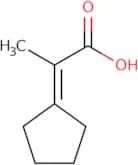
CAS:<p>Versatile small molecule scaffold</p>Fórmula:C7H6SPureza:Min. 95%Peso molecular:122.19 g/mol2-Cyclopentylidenepropanoic acid
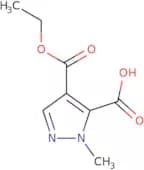
CAS:<p>Versatile small molecule scaffold</p>Fórmula:C8H12O2Pureza:Min. 95%Peso molecular:140.18 g/mol4-(Ethoxycarbonyl)-1-methyl-1H-pyrazole-5-carboxylic acid
CAS:<p>Versatile small molecule scaffold</p>Fórmula:C8H10N2O4Pureza:Min. 95%Peso molecular:198.18 g/mol2-Methyl-2H,6H,7H-pyrazolo[3,4-d]pyridazin-7-one
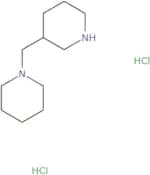
CAS:<p>Versatile small molecule scaffold</p>Fórmula:C6H6N4OPureza:Min. 95%Peso molecular:150.1 g/mol1-(3-Piperidinylmethyl)piperidine dihydrochloride
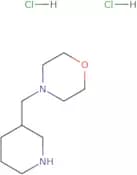
CAS:<p>Versatile small molecule scaffold</p>Fórmula:C11H24Cl2N2Pureza:Min. 95%Peso molecular:255.22 g/mol4-(Piperidin-3-ylmethyl)morpholine dihydrochloride
CAS:<p>Versatile small molecule scaffold</p>Fórmula:C10H22Cl2N2OPureza:Min. 95%Peso molecular:257.2 g/mol2-(3-Bromophenyl)propan-1-ol
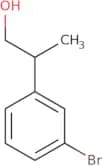
CAS:<p>Versatile small molecule scaffold</p>Fórmula:C9H11BrOPureza:Min. 95%Peso molecular:215.09 g/mol2-(4-Bromophenyl)propan-1-ol
CAS:<p>Versatile small molecule scaffold</p>Fórmula:C9H11BrOPureza:Min. 95%Peso molecular:215.09 g/mol1-(5-Chloropentyl)-1H-1,3-benzodiazole hydrochloride
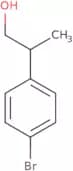
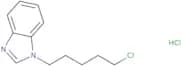
CAS:<p>Versatile small molecule scaffold</p>Fórmula:C12H16Cl2N2Pureza:Min. 95%Peso molecular:259.17 g/mol3-[2-(methoxycarbonyl)phenyl]propanoic acid
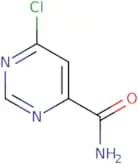
CAS:<p>Versatile small molecule scaffold</p>Fórmula:C11H12O4Pureza:Min. 95%Peso molecular:208.2 g/mol6-Chloropyrimidine-4-carboxamide
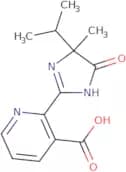
CAS:<p>Versatile small molecule scaffold</p>Fórmula:C5H4ClN3OPureza:Min. 95%Peso molecular:157.56 g/molImazapyr
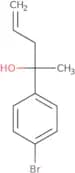
CAS:<p>Imazapyr is a herbicide that inhibits the activity of acetolactate synthase, an enzyme essential for plant growth. Imazapyr binds to the active site of acetolactate synthase and forms a stable complex with the enzyme, thereby inhibiting its activity. Imazapyr has been shown to have a low toxicity in mammals and is not absorbed through skin or lungs. This herbicide is also toxic to plants and fish, as it inhibits their growth by disrupting photosynthesis. Imazapyr does not bind to DNA, thus it does not induce mutations in bacterial chromosomes.</p>Fórmula:C13H15N3O3Pureza:Min. 95%Peso molecular:261.28 g/mol2-(4-Bromophenyl)pent-4-en-2-ol
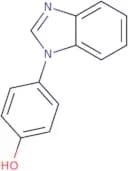
CAS:<p>Versatile small molecule scaffold</p>Fórmula:C11H13BrOPureza:Min. 95%Peso molecular:241.12 g/mol4-(1H-1,3-Benzodiazol-1-yl)phenol
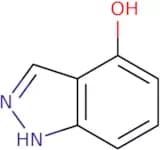
CAS:<p>Versatile small molecule scaffold</p>Fórmula:C13H10N2OPureza:Min. 95%Peso molecular:210.23 g/mol1H-Indazol-4-ol
CAS:<p>1H-Indazol-4-ol is a synthetic chemical with the molecular formula CHNO. It is the chloride, nitro, diammonium, enamine, divalent, methyl ester, acrylonitrile, polyethylene terephthalate and anion form of 1H-indazole. 1H-Indazol-4-ol is used in the synthesis of aminonaphthalenes and triazoles. The polymerization reaction for the production of cellulose acetate is also catalyzed by 1H-indazole. This chemical has been shown to have anion properties in solvents such as water and alcohols.</p>Fórmula:C7H6N2OPureza:Min. 95%Peso molecular:134.14 g/mol1-[(Benzyloxy)methyl]-4-bromobenzene
CAS:<p>Versatile small molecule scaffold</p>Fórmula:C14H13BrOPureza:Min. 95%Peso molecular:277.16 g/mol2,3-Dihydrospiro[indene-1,3'-pyrrolidine]-2',5'-dione
CAS:<p>Versatile small molecule scaffold</p>Fórmula:C12H11NO2Pureza:Min. 95%Peso molecular:201.22 g/mol1,3-Dihydrospiro[indene-2,3'-pyrrolidine]-2',5'-dione
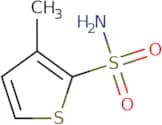
CAS:<p>Versatile small molecule scaffold</p>Fórmula:C12H11NO2Pureza:Min. 95%Peso molecular:201.22 g/mol3-Methylthiophene-2-sulfonamide
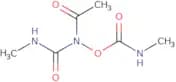
CAS:<p>Versatile small molecule scaffold</p>Fórmula:C5H7NO2S2Pureza:Min. 95%Peso molecular:177.2 g/molN-(Methylcarbamoyl)acetamido N-methylcarbamate
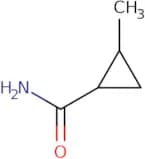
CAS:<p>N-(Methylcarbamoyl)acetamido N-methylcarbamate (NMCA) is a novel anti-cancer compound that selectively binds to the CB2 receptor. NMCA has been shown to inhibit the growth of cancer cells in vitro and in vivo, as well as reduce the size of bowel tumors. It also has a beneficial effect on cardiac function. The mechanism of action is not completely understood, but it may be due to binding to the CB2 receptor and blocking the activation of other receptors such as TNF-α. NMCA can be formulated into biocompatible polymers that are suitable for drug delivery. Furthermore, this compound can be used for treating inflammatory bowel disease and renal cell cancer.</p>Fórmula:C6H11N3O4Pureza:Min. 95%Peso molecular:189.17 g/mol2-Methylcyclopropanecarboxamide
CAS:<p>2-Methylcyclopropanecarboxamide is a compound that has been shown to have anticoagulant properties. It binds to the active site of coagulation factor Xa and inhibits its activity, thereby preventing blood clots from forming. 2-Methylcyclopropanecarboxamide has also been shown to be an immunosuppressant, demonstrating a decrease in antibody response and reduced intestinal inflammation in mice. This drug has potential use as an anti-inflammatory agent or for the treatment of autoimmune diseases.</p>Fórmula:C5H9NOPureza:Min. 95%Peso molecular:99.13 g/mol2-[(4-Bromophenyl)methanesulfinyl]acetic acid
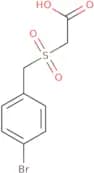
CAS:<p>Versatile small molecule scaffold</p>Fórmula:C9H9BrO3SPureza:Min. 95%Peso molecular:277.14 g/mol2-(4-Bromobenzylsulfonyl)acetic acid
CAS:<p>Versatile small molecule scaffold</p>Fórmula:C9H9BrO4SPureza:Min. 95%Peso molecular:293.14 g/molEthyl 7-Bromo-2-methylimidazo[1,2-a]pyridine-3-carboxylate
CAS:<p>Versatile small molecule scaffold</p>Fórmula:C11H11BrN2O2Pureza:Min. 95%Peso molecular:283.12 g/mol6-Bromo-2-methylimidazo[1,2-a]pyridine-3-carboxylic acid
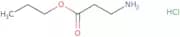
CAS:<p>Versatile small molecule scaffold</p>Fórmula:C9H7BrN2O2Pureza:Min. 95%Peso molecular:255.07 g/molPropyl 3-aminopropanoate hydrochloride
CAS:<p>Versatile small molecule scaffold</p>Fórmula:C6H14ClNO2Pureza:Min. 95%Peso molecular:167.63 g/mol[4-(Thien-2-yl)phenyl]methanol
CAS:<p>Versatile small molecule scaffold</p>Fórmula:C11H10OSPureza:Min. 95%Peso molecular:190.26 g/mol2-[4-(Bromomethyl)phenyl]thiophene
CAS:<p>Versatile small molecule scaffold</p>Fórmula:C11H9BrSPureza:Min. 95%Peso molecular:253.16 g/mol5-Chlorobicyclo[4.2.0]octa-1,3,5-trien-7-one
CAS:<p>Versatile small molecule scaffold</p>Fórmula:C8H5ClOPureza:Min. 95%Peso molecular:152.58 g/mol6-[(Hydroxyimino)methyl]-2-oxo-1,2-dihydropyridine-3-carbonitrile
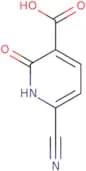
CAS:<p>Versatile small molecule scaffold</p>Fórmula:C7H5N3O2Pureza:Min. 95%Peso molecular:163.13 g/mol6-Cyano-1,2-dihydro-2-oxo-3-pyridinecarboxylic acid
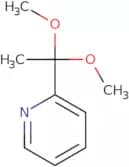
CAS:<p>Versatile small molecule scaffold</p>Fórmula:C7H4N2O3Pureza:Min. 95%Peso molecular:164.12 g/mol2-(1,1-Dimethoxyethyl)pyridine
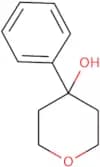
CAS:<p>Versatile small molecule scaffold</p>Fórmula:C9H13NO2Pureza:Min. 95%Peso molecular:167.2 g/mol4-Phenyl-tetrahydro-pyran-4-ol
CAS:<p>Versatile small molecule scaffold</p>Fórmula:C11H14O2Pureza:Min. 95%Peso molecular:178.23 g/mol6-Trifluoromethyl-benzo[D]isoxazol-3-ylamine
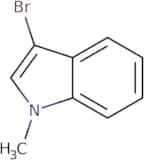
CAS:<p>Versatile small molecule scaffold</p>Fórmula:C8H5F3N2OPureza:Min. 95%Peso molecular:202.13 g/mol3-bromo-1-methyl-1H-indole
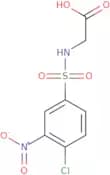
CAS:<p>3-bromo-1-methyl-1H-indole is a chemical compound with the molecular formula C8H7BrN. It can be prepared by reacting 1,3-dimethylindole with bromine in the presence of potassium carbonate and palladium chloride. 3-Bromo-1-methyl-1H-indole has been used to synthesize tetramers of 1,3,5,7,9,11,13,15-(2)naphthacenecarboxylic acid. This compound has also been used as a lithiation reagent for substituted anilines and benzamides. The substituents on the indole ring allow for cyclic reactivity and functional groups that are reactive towards hydrolysis or lithiation. 3bromo 1methyl 1H indole is an example of a heterocyclic compound because it contains two rings. The first ring consists of five carbons</p>Fórmula:C9H8BrNPureza:Min. 95%Peso molecular:210.07 g/mol2-(4-Chloro-3-nitrobenzenesulfonamido)acetic acid
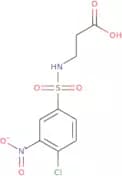
CAS:<p>2-(4-Chloro-3-nitrobenzenesulfonamido)acetic acid is a fluorinated monosaccharide that is synthesized from 2,4-dichloro-3 nitrobenzenesulfonic acid and acetic anhydride. It has been used in the synthesis of oligosaccharides, complex carbohydrates, and glycosylations. This chemical has been shown to be effective as a methylating agent for sugars and carbohydrates. It is also used in click chemistry modifications and has CAS number 81473-65-6.</p>Fórmula:C8H7ClN2O6SPureza:Min. 95%Peso molecular:294.67 g/mol3-(4-Chloro-3-nitrobenzenesulfonamido)propanoic acid
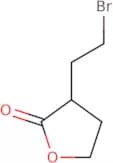
CAS:<p>Versatile small molecule scaffold</p>Fórmula:C9H9ClN2O6SPureza:Min. 95%Peso molecular:308.7 g/mol3-(2-Bromoethyl)oxolan-2-one
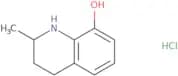
CAS:<p>Versatile small molecule scaffold</p>Fórmula:C6H9BrO2Pureza:Min. 95%Peso molecular:193.04 g/mol2-Methyl-1,2,3,4-tetrahydroquinolin-8-ol
CAS:<p>Versatile small molecule scaffold</p>Fórmula:C10H14ClNOPureza:Min. 95%Peso molecular:199.68 g/mol2-Chloro-N-[(4-propoxyphenyl)methyl]acetamide
CAS:<p>Versatile small molecule scaffold</p>Fórmula:C12H16ClNO2Pureza:Min. 95%Peso molecular:241.71 g/mol[(Pent-4-en-1-yloxy)methyl]benzene
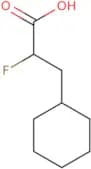
CAS:<p>[(Pent-4-en-1-yloxy)methyl]benzene is an ester that is used in the synthesis of other compounds. It is produced by the catalytic cleavage of sulfoxides and interacts with a variety of ligands. [(Pent-4-en-1-yloxy)methyl]benzene can be used as a precursor to allylic esters, which are important in organic synthesis because they are often more reactive than their parent olefin. It has been shown to undergo allylic oxidation and allylic esters, which are important reactions in organic chemistry. Allylic oxidation involves the addition of oxygen to an unsaturated carbon atom, while allylic esters involve the addition of an alcohol to an unsaturated carbon atom. This functionalization process is useful for making molecules that contain two different types of functional groups.</p>Fórmula:C12H16OPureza:Min. 95%Peso molecular:176.25 g/mol3-Cyclohexyl-2-fluoropropanoic acid
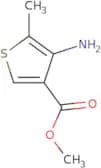
CAS:<p>Versatile small molecule scaffold</p>Fórmula:C9H15FO2Pureza:Min. 95%Peso molecular:174.21 g/molMethyl 4-amino-5-methylthiophene-3-carboxylate
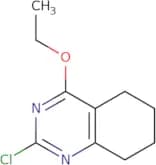
CAS:<p>Methyl 4-amino-5-methylthiophene-3-carboxylate (AMTC) is a synthetic inhibitor of the enzyme acetyl-coa carboxylase. AMTC is used as a research tool to study the role of acetyl-coa carboxylase in plants and animals. In Arabidopsis, AMTC inhibits the synthesis of fatty acids, leading to reduced seed oil content. It also inhibits transcarboxylase in wheat, which causes an accumulation of acetate. AMTC is synthesized by reacting methyl 4-nitrobenzoate with thieno[2,3,-c]pyrazole in the presence of palladium(II) chloride and potassium carbonate. The product undergoes hydrogenation to give AMTC.</p>Fórmula:C7H9NO2SPureza:Min. 95%Peso molecular:171.22 g/mol2-Chloro-4-ethoxy-5,6,7,8-tetrahydroquinazoline
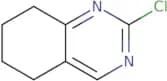
CAS:<p>Versatile small molecule scaffold</p>Fórmula:C10H13ClN2OPureza:Min. 95%Peso molecular:212.67 g/mol2-chloro-5,6,7,8-tetrahydroquinazoline
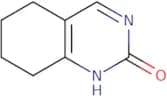
CAS:<p>Versatile small molecule scaffold</p>Fórmula:C8H9ClN2Pureza:Min. 95%Peso molecular:168.62 g/mol1,2,5,6,7,8-Hexahydroquinazolin-2-one
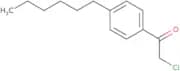
CAS:<p>Quinazolone is an organic compound that can be classified as a hydrocarbon, aliphatic hydrocarbon, or a radical. It has been used in the production of benzyl, growth regulators and biocides. Quinazolone is also used for plant growth and is effective against some fungi such as Penicillium notatum.</p>Fórmula:C8H10N2OPureza:Min. 95%Peso molecular:150.18 g/mol2-Chloro-1-(4-hexylphenyl)ethan-1-one
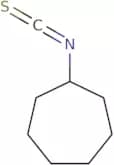
CAS:<p>Versatile small molecule scaffold</p>Fórmula:C14H19ClOPureza:Min. 95%Peso molecular:238.75 g/molCycloheptyl isothiocyanate
CAS:<p>Cycloheptyl isothiocyanate is a 1-4c alkyl, azaheterocycle, isothiocyanate that has been shown to be stereoselective. It binds to the sulfur atom of thiols and sulfonylureas, preventing the formation of the reactive intermediate that leads to their hydrolysis. This property can be used for the synthesis of ensembles and aralkyls. Cycloheptyl isothiocyanate also binds to alkenyl groups, which may be useful in synthesizing cycloalkyls or haloalkyls.</p>Fórmula:C8H13NSPureza:Min. 95%Peso molecular:155.26 g/mol3-Amino-4-iodo-1H-pyrazole
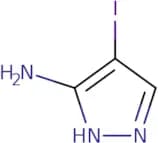
CAS:<p>3-Amino-4-iodo-1H-pyrazole is a heterocyclic organic compound consisting of an imidazole ring with a pyrazole ring fused at the 2 and 5 positions. It is an analog of pyridazine. The crystal structure of 3-amino-4-iodo-1H-pyrazole has been determined to be orthorhombic, with space group Pnam2. The compound has a number of reactions, including nucleophilic addition, hydroxylation, and nitration. This heterocyclic compound is reactive and can serve as a monofunctional reagent in multiple reactions. 3-Amino-4-iodo-1H-pyrazole is used in the synthesis of other related compounds like 6-(3′,5′ -diamino)imidazo[2,1]benzothiazoles.</p>Fórmula:C3H4IN3Pureza:Min. 95%Peso molecular:208.99 g/mol5-Bromo-2-methylsulfanylpyrimidin-4-ol
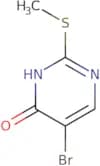
CAS:<p>Versatile small molecule scaffold</p>Fórmula:C5H5BrN2OSPureza:Min. 95%Peso molecular:221.07 g/mol2-Methyl-4-(4-methylphenyl)butan-2-amine
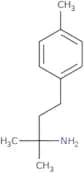
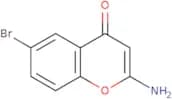
CAS:<p>Versatile small molecule scaffold</p>Fórmula:C12H19NPureza:Min. 95%Peso molecular:177.29 g/mol2-Amino-6-bromo-4H-chromen-4-one
CAS:<p>Versatile small molecule scaffold</p>Fórmula:C9H6BrNO2Pureza:Min. 95%Peso molecular:240.05 g/mol2-[(2-Bromophenyl)formamido]acetic acid
CAS:<p>2-[(2-Bromophenyl)formamido]acetic acid is a bile salt that is used to treat liver disease. It is a prodrug of taurocholic acid, which is a naturally occurring bile salt that is essential for the digestion of dietary fats. 2-[(2-Bromophenyl)formamido]acetic acid has been shown to have a constant rate of hydrolysis and can be used as an alternative to taurocholic acid in cases where the latter cannot be metabolized due to genetic defects or enzyme deficiencies. This drug also has the ability to neutralize staphylococcus by converting it into hippuric acid, which can then be excreted from the body via urine. 2-[(2-Bromophenyl)formamido]acetic acid does not undergo any reactions with other drugs, making it ideal for patients who are taking other medications for unrelated conditions.</p>Fórmula:C9H8BrNO3Pureza:Min. 95%Peso molecular:258.07 g/molTricyclo[7.1.1.0,2,7]undeca-2,4,6-trien-8-ol
CAS:<p>Versatile small molecule scaffold</p>Fórmula:C11H12OPureza:Min. 95%Peso molecular:160.2 g/molTricyclo[7.1.1.0,2,7]undeca-2,4,6-triene-8-carboxylic acid
CAS:<p>Versatile small molecule scaffold</p>Fórmula:C12H12O2Pureza:Min. 95%Peso molecular:188.2 g/molTricyclo[7.1.1.0,2,7]undeca-2,4,6-trien-8-amine
CAS:<p>Versatile small molecule scaffold</p>Fórmula:C11H13NPureza:Min. 95%Peso molecular:159.23 g/mol4-tert-Butyl-1,3-thiazole-5-carboxylic acid
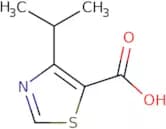
CAS:<p>Versatile small molecule scaffold</p>Fórmula:C8H11NO2SPureza:Min. 95%Peso molecular:185.25 g/mol4-(Propan-2-yl)-1,3-thiazole-5-carboxylic acid
CAS:<p>Versatile small molecule scaffold</p>Fórmula:C7H9NO2SPureza:Min. 95%Peso molecular:171.22 g/molmethyl 2-bromo-4-methylthiazole-5-carboxylate
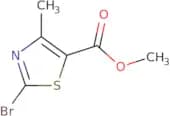
CAS:<p>Versatile small molecule scaffold</p>Fórmula:C6H6BrNO2SPureza:Min. 95%Peso molecular:236.08 g/molN-Benzyl-1-methyl-1H-pyrazol-3-amine
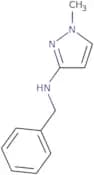
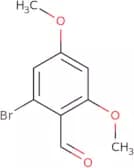
CAS:<p>Versatile small molecule scaffold</p>Fórmula:C11H13N3Pureza:Min. 95%Peso molecular:187.24 g/mol2-Bromo-4,6-dimethoxybenzaldehyde
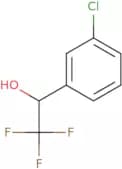
CAS:<p>2-Bromo-4,6-dimethoxybenzaldehyde is an arylation reagent that reacts with nucleophilic substrates (e.g., amines) through the formation of a covalent bond. 2-Bromo-4,6-dimethoxybenzaldehyde is used as an efficient way to synthesize halides and functional groups for research purposes. This compound has also been shown to have antibacterial activity against Staphylococcus aureus and methicillin resistant Staphylococcus aureus. 2-Bromo-4,6-dimethoxybenzaldehyde is synthesized by the reaction of styrene with bromine in the presence of base. It is also used in the synthesis of flavones, which are natural products found in plants that have anti-inflammatory properties.</p>Fórmula:C9H9BrO3Pureza:Min. 95%Peso molecular:245.07 g/mol1-(3-Chlorophenyl)-2,2,2-trifluoroethanol
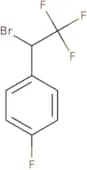
CAS:<p>Versatile small molecule scaffold</p>Fórmula:C8H6ClF3OPureza:Min. 95%Peso molecular:210.58 g/mol1-(1-Bromo-2,2,2-trifluoroethyl)-4-fluorobenzene
CAS:<p>Versatile small molecule scaffold</p>Fórmula:C8H5BrF4Pureza:Min. 95%Peso molecular:257.02 g/mol2-Methoxy-N-(4-methylbenzenesulfonyl)benzamide
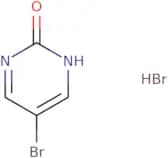
CAS:<p>Versatile small molecule scaffold</p>Fórmula:C15H15NO4SPureza:Min. 95%Peso molecular:305.3 g/mol5-Bromopyrimidin-2(1H)-one hydrobromide
CAS:<p>Versatile small molecule scaffold</p>Fórmula:C4H4Br2N2OPureza:Min. 95%Peso molecular:255.9 g/mol3,6-Dithiabicyclo[3.1.0]hexane-3,3-dione
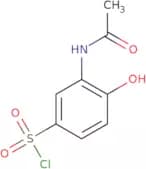
CAS:<p>Versatile small molecule scaffold</p>Fórmula:C4H6O2S2Pureza:Min. 95%Peso molecular:150.2 g/mol3-Acetamido-4-hydroxybenzene-1-sulfonyl chloride
CAS:<p>Versatile small molecule scaffold</p>Fórmula:C8H8ClNO4SPureza:Min. 95%Peso molecular:249.67 g/mol

![rac-(9R,10S)-2-Azatricyclo[9.4.0.0,3,8]pentadeca-1(15),3,5,7,11,13-hexaene-9,10-diol](/_next/image/?url=https%3A%2Fstatic.cymitquimica.com%2Fproducts%2F3D%2Fthumb-webp%2FGCA21173.webp&w=3840&q=75)
![8-Methoxy-1,4-dioxaspiro[4.5]decane](/_next/image/?url=https%3A%2Fstatic.cymitquimica.com%2Fproducts%2F3D%2Fthumb-webp%2FGCA29299.webp&w=3840&q=75)
![7-Benzyl-5,6-dimethyl-7H-pyrrolo[2,3-d]pyrimidin-4-amine](/_next/image/?url=https%3A%2Fstatic.cymitquimica.com%2Fproducts%2F3D%2Fthumb-webp%2FGCA34453.webp&w=3840&q=75)
![4-[4-(Chlorosulfonyl)-2-methylphenoxy]butanoic acid](/_next/image/?url=https%3A%2Fstatic.cymitquimica.com%2Fproducts%2F3D%2Fthumb-webp%2FGCA35914.webp&w=3840&q=75)
![6-Chloro-3-(4-methylphenyl)-[1,2,4]triazolo[4,3-b]pyridazine](/_next/image/?url=https%3A%2Fstatic.cymitquimica.com%2Fproducts%2F3D%2Fthumb-webp%2FGCA38342.webp&w=3840&q=75)
![2-[4-(6-Chloropyridazin-3-yl)piperazin-1-yl]ethan-1-ol](/_next/image/?url=https%3A%2Fstatic.cymitquimica.com%2Fproducts%2F3D%2Fthumb-webp%2FGCA39287.webp&w=3840&q=75)

![o-[3-(Dimethylamino)propyl]hydroxylamine dihydrochloride](/_next/image/?url=https%3A%2Fstatic.cymitquimica.com%2Fproducts%2F3D%2Fthumb-webp%2FGCA42532.webp&w=3840&q=75)
![Methyl 2-[(3-aminophenyl)formamido]acetate](/_next/image/?url=https%3A%2Fstatic.cymitquimica.com%2Fproducts%2F3D%2Fthumb-webp%2FGCA44569.webp&w=3840&q=75)
![7H,8H-Imidazo[1,5-a]pyrazin-8-one](/_next/image/?url=https%3A%2Fstatic.cymitquimica.com%2Fproducts%2F3D%2Fthumb-webp%2FGCA46821.webp&w=3840&q=75)
![8-chloroimidazo[1,5-a]pyrazine](/_next/image/?url=https%3A%2Fstatic.cymitquimica.com%2Fproducts%2F3D%2Fthumb-webp%2FGCA46823.webp&w=3840&q=75)

![Furo[3,2-b]pyridine-5-carboxylic acid](/_next/image/?url=https%3A%2Fstatic.cymitquimica.com%2Fproducts%2F3D%2Fthumb-webp%2FGCA47391.webp&w=3840&q=75)
![Thieno[3,2-b]pyridine-5-carboxylic acid](/_next/image/?url=https%3A%2Fstatic.cymitquimica.com%2Fproducts%2F3D%2Fthumb-webp%2FGCA47392.webp&w=3840&q=75)
![2-[[4-(Boc-amino)methyl]phenoxy]acetic acid](/_next/image/?url=https%3A%2Fstatic.cymitquimica.com%2Fproducts%2F3D%2Fthumb-webp%2FGDA12340.webp&w=3840&q=75)
![2-[(1-Phenylpropyl)amino]ethan-1-ol](/_next/image/?url=https%3A%2Fstatic.cymitquimica.com%2Fproducts%2F3D%2Fthumb-webp%2FGDA13369.webp&w=3840&q=75)
![4-[(4-Fluorophenyl)methoxy]piperidine](/_next/image/?url=https%3A%2Fstatic.cymitquimica.com%2Fproducts%2F3D%2Fthumb-webp%2FGDA15135.webp&w=3840&q=75)
![4-[(2-Methylphenyl)methoxy]piperidine](/_next/image/?url=https%3A%2Fstatic.cymitquimica.com%2Fproducts%2F3D%2Fthumb-webp%2FGDA15151.webp&w=3840&q=75)
![4-[(2-Methoxyphenyl)methoxy]piperidine hydrochloride](/_next/image/?url=https%3A%2Fstatic.cymitquimica.com%2Fproducts%2F3D%2Fthumb-webp%2FGDA15157.webp&w=3840&q=75)





![N-[(4-Ethoxy-3-methoxyphenyl)methylidene]hydroxylamine](/_next/image/?url=https%3A%2Fstatic.cymitquimica.com%2Fproducts%2F3D%2Fthumb-webp%2FGDA25953.webp&w=3840&q=75)
![1-Methyl-2-[(1-methyl-1H-pyrrol-2-yl)methyl]-1H-pyrrole](/_next/image/?url=https%3A%2Fstatic.cymitquimica.com%2Fproducts%2F3D%2Fthumb-webp%2FGDA26387.webp&w=3840&q=75)


![2-Methyl-2H,6H,7H-pyrazolo[3,4-d]pyridazin-7-one](/_next/image/?url=https%3A%2Fstatic.cymitquimica.com%2Fproducts%2F3D%2Fthumb-webp%2FGDA30593.webp&w=3840&q=75)
![3-[2-(methoxycarbonyl)phenyl]propanoic acid](/_next/image/?url=https%3A%2Fstatic.cymitquimica.com%2Fproducts%2F3D%2Fthumb-webp%2FGDA32974.webp&w=3840&q=75)
![1-[(Benzyloxy)methyl]-4-bromobenzene](/_next/image/?url=https%3A%2Fstatic.cymitquimica.com%2Fproducts%2F3D%2Fthumb-webp%2FGDA39527.webp&w=3840&q=75)
![2,3-Dihydrospiro[indene-1,3'-pyrrolidine]-2',5'-dione](/_next/image/?url=https%3A%2Fstatic.cymitquimica.com%2Fproducts%2F3D%2Fthumb-webp%2FGDA40216.webp&w=3840&q=75)
![1,3-Dihydrospiro[indene-2,3'-pyrrolidine]-2',5'-dione](/_next/image/?url=https%3A%2Fstatic.cymitquimica.com%2Fproducts%2F3D%2Fthumb-webp%2FGDA40221.webp&w=3840&q=75)
![2-[(4-Bromophenyl)methanesulfinyl]acetic acid](/_next/image/?url=https%3A%2Fstatic.cymitquimica.com%2Fproducts%2F3D%2Fthumb-webp%2FGDA43133.webp&w=3840&q=75)
![Ethyl 7-Bromo-2-methylimidazo[1,2-a]pyridine-3-carboxylate](/_next/image/?url=https%3A%2Fstatic.cymitquimica.com%2Fproducts%2F3D%2Fthumb-webp%2FGDA43856.webp&w=3840&q=75)
![6-Bromo-2-methylimidazo[1,2-a]pyridine-3-carboxylic acid](/_next/image/?url=https%3A%2Fstatic.cymitquimica.com%2Fproducts%2F3D%2Fthumb-webp%2FGDA43857.webp&w=3840&q=75)
![[4-(Thien-2-yl)phenyl]methanol](/_next/image/?url=https%3A%2Fstatic.cymitquimica.com%2Fproducts%2F3D%2Fthumb-webp%2FGDA44344.webp&w=3840&q=75)
![2-[4-(Bromomethyl)phenyl]thiophene](/_next/image/?url=https%3A%2Fstatic.cymitquimica.com%2Fproducts%2F3D%2Fthumb-webp%2FGDA44346.webp&w=3840&q=75)
![5-Chlorobicyclo[4.2.0]octa-1,3,5-trien-7-one](/_next/image/?url=https%3A%2Fstatic.cymitquimica.com%2Fproducts%2F3D%2Fthumb-webp%2FGDA44763.webp&w=3840&q=75)
![6-[(Hydroxyimino)methyl]-2-oxo-1,2-dihydropyridine-3-carbonitrile](/_next/image/?url=https%3A%2Fstatic.cymitquimica.com%2Fproducts%2F3D%2Fthumb-webp%2FGDA45061.webp&w=3840&q=75)
![6-Trifluoromethyl-benzo[D]isoxazol-3-ylamine](/_next/image/?url=https%3A%2Fstatic.cymitquimica.com%2Fproducts%2F3D%2Fthumb-webp%2FGDA46591.webp&w=3840&q=75)
![2-Chloro-N-[(4-propoxyphenyl)methyl]acetamide](/_next/image/?url=https%3A%2Fstatic.cymitquimica.com%2Fproducts%2F3D%2Fthumb-webp%2FGDA49408.webp&w=3840&q=75)
![[(Pent-4-en-1-yloxy)methyl]benzene](/_next/image/?url=https%3A%2Fstatic.cymitquimica.com%2Fproducts%2F3D%2Fthumb-webp%2FGDA51874.webp&w=3840&q=75)
![2-[(2-Bromophenyl)formamido]acetic acid](/_next/image/?url=https%3A%2Fstatic.cymitquimica.com%2Fproducts%2F3D%2Fthumb-webp%2FGDA56883.webp&w=3840&q=75)
![Tricyclo[7.1.1.0,2,7]undeca-2,4,6-trien-8-ol](/_next/image/?url=https%3A%2Fstatic.cymitquimica.com%2Fproducts%2F3D%2Fthumb-webp%2FGDA56916.webp&w=3840&q=75)
![Tricyclo[7.1.1.0,2,7]undeca-2,4,6-triene-8-carboxylic acid](/_next/image/?url=https%3A%2Fstatic.cymitquimica.com%2Fproducts%2F3D%2Fthumb-webp%2FGDA56920.webp&w=3840&q=75)
![Tricyclo[7.1.1.0,2,7]undeca-2,4,6-trien-8-amine](/_next/image/?url=https%3A%2Fstatic.cymitquimica.com%2Fproducts%2F3D%2Fthumb-webp%2FGDA56922.webp&w=3840&q=75)

![3,6-Dithiabicyclo[3.1.0]hexane-3,3-dione](/_next/image/?url=https%3A%2Fstatic.cymitquimica.com%2Fproducts%2F3D%2Fthumb-webp%2FGDA59182.webp&w=3840&q=75)