Building Blocks
Esta sección contiene productos fundamentales para la síntesis de compuestos orgánicos y biológicos. Building blocks son los materiales de partida esenciales utilizados para construir moléculas complejas a través de diversas reacciones químicas. Desempeñan un papel crítico en el descubrimiento de fármacos, la ciencia de materiales y la investigación química. En CymitQuimica, ofrecemos una gama diversa de building blocks de alta calidad para apoyar sus investigaciones innovadoras y proyectos industriales, asegurando que tenga los componentes esenciales para una síntesis exitosa.
Subcategorías de "Building Blocks"
- Ácidos borónicos y derivados del ácido borónico(5.778 productos)
- Building Blocks quirales(1.243 productos)
- Building Blocks de hidrocarburos(6.098 productos)
- Building Blocks orgánicos(61.057 productos)
Se han encontrado 200716 productos de "Building Blocks"
Ordenar por
Pureza (%)
0
100
|
0
|
50
|
90
|
95
|
100
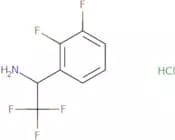
1-(2,3-Difluorophenyl)-2,2,2-trifluoroethan-1-amine hydrochloride
CAS:<p>Versatile small molecule scaffold</p>Fórmula:C8H7ClF5NPureza:Min. 95%Peso molecular:247.59 g/molRef: 3D-LIC71369
Producto descatalogado[1-(Oxan-2-yl)cyclobutyl]methanamine
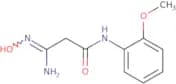
CAS:<p>Versatile small molecule scaffold</p>Fórmula:C10H19NOPureza:Min. 95%Peso molecular:169.26 g/mol2-(N'-Hydroxycarbamimidoyl)-N-(2-methoxyphenyl)acetamide
CAS:<p>Versatile small molecule scaffold</p>Fórmula:C10H13N3O3Pureza:Min. 95%Peso molecular:223.23 g/mol3-Chloro-N-methyl-2-nitroaniline
CAS:<p>3-Chloro-N-methyl-2-nitroaniline is an antibiotic that belongs to the group of quinolone antibiotics. It has a broad spectrum against Gram-positive and Gram-negative bacteria, including methicillin resistant Staphylococcus aureus (MRSA) and Pseudomonas aeruginosa. 3-Chloro-N-methyl-2-nitroaniline binds to bacterial DNA gyrase and topoisomerase IV, as well as human DNA gyrase and topoisomerase II, inhibiting their activity. This leads to cell death by interfering with the production of proteins vital for cell division. The optimal parameters for this drug have been found using isothermal titration calorimetry on the enzyme gyrase in the presence of different concentrations of 3CMA. Pharmacological targets for this drug include DNA gyrase and topoisomerase IV.</p>Fórmula:C7H7ClN2O2Pureza:Min. 95%Peso molecular:186.59 g/mol1-(tert-butyl)-1H-1,2,3-triazole-4-carboxylic acid
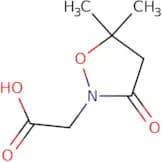
CAS:<p>Versatile small molecule scaffold</p>Fórmula:C7H11N3O2Pureza:Min. 95%Peso molecular:169.18 g/mol2-(5,5-Dimethyl-3-oxo-1,2-oxazolidin-2-yl)acetic acid
CAS:<p>Versatile small molecule scaffold</p>Fórmula:C7H11NO4Pureza:Min. 95%Peso molecular:173.17 g/mol2-Bromo-5H,6H,7H-pyrrolo[1,2-a]imidazole-3-carboxylic acid
CAS:<p>Versatile small molecule scaffold</p>Fórmula:C7H7BrN2O2Pureza:Min. 95%Peso molecular:231.05 g/molRef: 3D-JWC40097
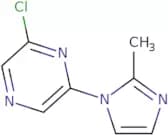
Producto descatalogado2-Chloro-6-(2-methyl-1H-imidazol-1-yl)pyrazine
CAS:<p>Versatile small molecule scaffold</p>Fórmula:C8H7ClN4Pureza:Min. 95%Peso molecular:194.62 g/mol4-Bromo-2-(tert-butyl)thiazole
CAS:<p>Versatile small molecule scaffold</p>Fórmula:C7H10BrNSPureza:Min. 95%Peso molecular:220.13 g/molRef: 3D-JNB23821
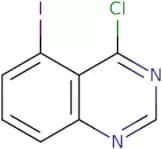
Producto descatalogado4-Chloro-5-iodoquinazoline
CAS:<p>Versatile small molecule scaffold</p>Fórmula:C8H4ClIN2Pureza:Min. 95%Peso molecular:290.49 g/molRef: 3D-JNB23713
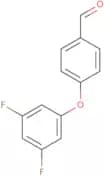
Producto descatalogado4-(3,5-Difluorophenoxy)benzaldehyde
CAS:<p>Versatile small molecule scaffold</p>Fórmula:C13H8F2O2Pureza:Min. 95%Peso molecular:234.2 g/molMethyl 2-aminobenzo[d]thiazole-5-carboxylate
CAS:<p>Versatile small molecule scaffold</p>Fórmula:C9H8N2O2SPureza:Min. 95%Peso molecular:208.24 g/molMethyl 4,7-difluoro-1-benzothiophene-2-carboxylate
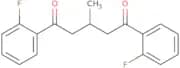
CAS:<p>Versatile small molecule scaffold</p>Fórmula:C10H6F2O2SPureza:Min. 95%Peso molecular:228.22 g/mol1,5-Bis(2-fluorophenyl)-3-methylpentane-1,5-dione
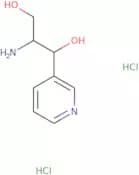
CAS:<p>Versatile small molecule scaffold</p>Fórmula:C18H16F2O2Pureza:Min. 95%Peso molecular:302.3 g/mol2-Amino-1-(pyridin-3-yl)propane-1,3-diol dihydrochloride
CAS:<p>Versatile small molecule scaffold</p>Fórmula:C8H14Cl2N2O2Pureza:Min. 95%Peso molecular:241.11 g/molPotassium 2-{2-[(2-cyclopropylethyl)amino]-1,3-thiazol-4-yl}acetate
CAS:<p>Versatile small molecule scaffold</p>Fórmula:C10H13KN2O2SPureza:Min. 95%Peso molecular:264.39 g/molRef: 3D-JHD97170
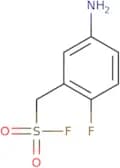
Producto descatalogado(5-Amino-2-fluorophenyl)methanesulfonyl fluoride
CAS:<p>Versatile small molecule scaffold</p>Fórmula:C7H7F2NO2SPureza:Min. 95%Peso molecular:207.2 g/mol3-{[4-(Aminomethyl)phenyl]methyl}imidazolidine-2,4-dione hydrochloride
CAS:<p>Versatile small molecule scaffold</p>Fórmula:C11H14ClN3O2Pureza:Min. 95%Peso molecular:255.7 g/mol1-[(1-Aminobutan-2-yl)oxy]-3-methylbenzene hydrochloride
CAS:<p>Versatile small molecule scaffold</p>Fórmula:C11H18ClNOPureza:Min. 95%Peso molecular:215.72 g/molRef: 3D-JFC42976
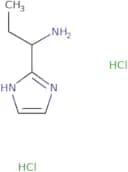
Producto descatalogado1-(1H-Imidazol-2-yl)propan-1-amine dihydrochloride
CAS:<p>Versatile small molecule scaffold</p>Fórmula:C6H13Cl2N3Pureza:Min. 95%Peso molecular:198.09 g/molRef: 3D-JFC42975
Producto descatalogado5-fluoro-7-methyl-1,2-benzisothiazol-3(2H)-one 1,1-dioxide
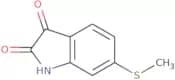
CAS:<p>Versatile small molecule scaffold</p>Fórmula:C8H6FNO3SPureza:Min. 95%Peso molecular:215.2 g/mol6-(Methylsulfanyl)-2,3-dihydro-1H-indole-2,3-dione
CAS:<p>Versatile small molecule scaffold</p>Fórmula:C9H7NO2SPureza:Min. 95%Peso molecular:193.22 g/molQuinoline-5-carbonitrile
CAS:<p>Quinoline-5-carbonitrile is a cyanide compound that can be used in the synthesis of heterocyclic compounds. The reaction between quinoline and 5-cyanovaleric acid produces 6-nitroquinoline, which is then converted to dimethyl sulfoxide by alcoholysis. This reaction product can then be used to synthesize an amide or nucleophile. Quinoline-5-carbonitrile reacts with potassium in the presence of bifunctional hydrazide to produce a cyanide ion, which can be hydrolyzed by an acid to release hydrogen cyanide gas. This experiment has been shown as a model for reactions involving cyano compounds.</p>Fórmula:C10H6N2Pureza:Min. 95%Peso molecular:154.17 g/mol1-(Chloromethoxy)-4-fluorobenzene
CAS:<p>Versatile small molecule scaffold</p>Fórmula:C7H6ClFOPureza:Min. 95%Peso molecular:160.57 g/mol1-Amino-7,7-dimethylbicyclo[2.2.1]heptan-2-one hydrochloride
CAS:<p>Versatile small molecule scaffold</p>Fórmula:C9H16ClNOPureza:Min. 95%Peso molecular:189.7 g/mol4-Chloro-2-methyl-5-nitroaniline
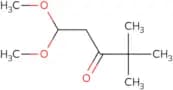
CAS:<p>4-Chloro-2-methyl-5-nitroaniline is an organic compound with the chemical formula C6H4ClNO2. It is a nitro derivative of aniline. 4-Chloro-2-methyl-5-nitroaniline is a white solid that is soluble in water, alcohols, and ethers. It has a melting point around 206 °C and decomposes at temperatures over 350 °C. This compound can be obtained by reacting hydroxylamine with nitrous acid and chlorinating 2,5-dimethylaniline. The sequence of reactions can be summarized as follows: hydroxy group to nitro group, nitro group to methyl group, methyl group to acetyl or acetylamino, acetyl or acetylamino to acetylation or methylation, transformation from hydroxyl group to amino group and esterification from acid hydrazide to acid group.</p>Fórmula:C7H7ClN2O2Pureza:Min. 95%Peso molecular:186.59 g/mol1,1-Dimethoxy-4,4-dimethylpentan-3-one
CAS:<p>Versatile small molecule scaffold</p>Fórmula:C9H18O3Pureza:Min. 95%Peso molecular:174.24 g/mol3-Iodobenzene-1,2-diamine
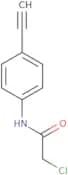
CAS:<p>Versatile small molecule scaffold</p>Fórmula:C6H7IN2Pureza:Min. 95%Peso molecular:234.04 g/mol2-Chloro-N-(4-ethynylphenyl)acetamide
CAS:<p>Versatile small molecule scaffold</p>Fórmula:C10H8ClNOPureza:Min. 95%Peso molecular:193.63 g/moltert-Butyl 1H,2H,3H,4H,5H,6H-pyrrolo[3,4-c]pyrrole-2-carboxylate hydrochloride
CAS:<p>Versatile small molecule scaffold</p>Fórmula:C11H19ClN2O2Pureza:Min. 95%Peso molecular:246.73 g/mol[5-(Methoxymethyl)-1,2-oxazol-3-yl]methanesulfonyl chloride
CAS:<p>Versatile small molecule scaffold</p>Fórmula:C6H8ClNO4SPureza:Min. 95%Peso molecular:225.65 g/mol(2S)-Chroman-2-carboxylic acid
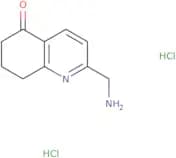
CAS:<p>Versatile small molecule scaffold</p>Fórmula:C10H10O3Pureza:Min. 95%Peso molecular:178.18 g/mol2-(Aminomethyl)-5,6,7,8-tetrahydroquinolin-5-one dihydrochloride
CAS:<p>Versatile small molecule scaffold</p>Fórmula:C10H14Cl2N2OPureza:Min. 95%Peso molecular:249.13 g/molRef: 3D-HHC68135
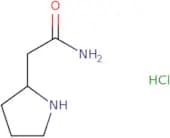
Producto descatalogado2-(Pyrrolidin-2-yl)acetamide hydrochloride
CAS:<p>Versatile small molecule scaffold</p>Fórmula:C6H13ClN2OPureza:Min. 95%Peso molecular:164.63 g/molRef: 3D-HHC68100
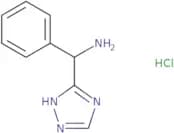
Producto descatalogadoPhenyl(4H-1,2,4-triazol-3-yl)methanamine hydrochloride
CAS:<p>Versatile small molecule scaffold</p>Fórmula:C9H11ClN4Pureza:Min. 95%Peso molecular:210.66 g/molrac-tert-Butyl N-{[(3aR,7aR)-octahydropyrano[3,4-c]pyrrol-7a-yl]methyl}carbamate
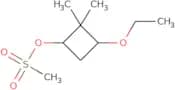
CAS:<p>Versatile small molecule scaffold</p>Fórmula:C13H24N2O3Pureza:Min. 95%Peso molecular:256.3 g/molrac-(1R,3S)-3-Ethoxy-2,2-dimethylcyclobutyl methanesulfonate
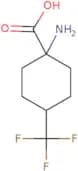
CAS:<p>Versatile small molecule scaffold</p>Fórmula:C9H18O4SPureza:Min. 95%Peso molecular:222.3 g/mol(1S,4S)-Rel-1-amino-4-(trifluoromethyl)cyclohexane-1-carboxylic acid
CAS:<p>Versatile small molecule scaffold</p>Fórmula:C8H12F3NO2Pureza:Min. 95%Peso molecular:211.18 g/molRef: 3D-HCD24898
Producto descatalogado2-Methyl-[1,2,4]triazolo[1,5-a]pyridin-6-amine
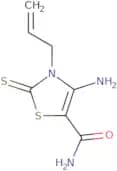
CAS:<p>Versatile small molecule scaffold</p>Fórmula:C7H8N4Pureza:Min. 95%Peso molecular:148.17 g/mol3-Allyl-4-amino-2-thioxo-2,3-dihydro-thiazole-5-carboxylic acid amide
CAS:<p>Versatile small molecule scaffold</p>Fórmula:C7H9N3OS2Pureza:Min. 95%Peso molecular:215.3 g/molMethyl 2-bromo-3-(4-chlorophenyl)propanoate
CAS:<p>Versatile small molecule scaffold</p>Fórmula:C10H10BrClO2Pureza:Min. 95%Peso molecular:277.54 g/mol5-Methanesulfonylfuran-2-carbaldehyde
CAS:<p>Versatile small molecule scaffold</p>Fórmula:C6H6O4SPureza:Min. 95%Peso molecular:174.18 g/molDecahydronaphthalene-4a-carboxylic acid
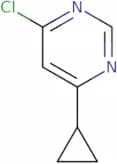
CAS:<p>Versatile small molecule scaffold</p>Fórmula:C11H18O2Pureza:Min. 95%Peso molecular:182.3 g/mol4-chloro-6-cyclopropylpyrimidine
CAS:<p>Versatile small molecule scaffold</p>Fórmula:C7H7ClN2Pureza:Min. 95%Peso molecular:154.6 g/mol3-[(3-Fluorophenyl)sulfanyl]-2-hydroxy-2-methylpropanoic acid
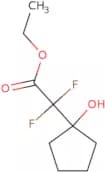
CAS:<p>Versatile small molecule scaffold</p>Fórmula:C10H11FO3SPureza:Min. 95%Peso molecular:230.26 g/molEthyl 2,2-difluoro-2-(1-hydroxycyclopentyl)acetate
CAS:<p>Versatile small molecule scaffold</p>Fórmula:C9H14F2O3Pureza:Min. 95%Peso molecular:208.2 g/mol5H,6H,7H,8H-[1,2,4]Triazolo[1,5-a]pyridin-6-amine
CAS:<p>Versatile small molecule scaffold</p>Fórmula:C6H10N4Pureza:Min. 95%Peso molecular:138.17 g/mol2-[Bis(2-methoxyethyl)amino]-5-methylbenzoic acid
CAS:<p>Versatile small molecule scaffold</p>Fórmula:C14H21NO4Pureza:Min. 95%Peso molecular:267.32 g/mol2-Chloro-N-[(3-methylthiophen-2-yl)methyl]acetamide
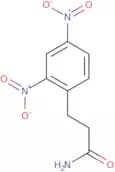
CAS:<p>Versatile small molecule scaffold</p>Fórmula:C8H10ClNOSPureza:Min. 95%Peso molecular:203.69 g/mol3-(2,4-Dinitrophenyl)propanamide
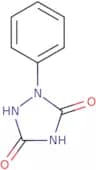
CAS:<p>Versatile small molecule scaffold</p>Fórmula:C9H9N3O5Pureza:Min. 95%Peso molecular:239.18 g/mol1-Phenyl-1,2,4-triazolidine-3,5-dione
CAS:<p>1-Phenyl-1,2,4-triazolidine-3,5-dione is a molecule that can be used for biological purposes. It has the chemical formula of C6H4N2O3 and a molecular weight of 180.14 g/mol. The hydrogen bonds between the hydroxyl group and the skeleton are strong enough to keep the molecule in shape. The molecule is thermally developable; it can be developed after exposure to heat or light. 1-Phenyl-1,2,4-triazolidine-3,5-dione has been shown to react with silver ions and metal surfaces such as aluminum and titanium oxide. This compound may also be useful for coatings that are reactive to light or heat because it will form a film when exposed to either one.</p>Fórmula:C8H7N3O2Pureza:Min. 95%Peso molecular:177.16 g/mol(1-Bromocyclopentyl)(phenyl)methanone
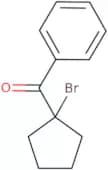
CAS:<p>Versatile small molecule scaffold</p>Fórmula:C12H13BrOPureza:Min. 95%Peso molecular:253.13 g/mol5,6,7,8-Tetrahydro-2-naphthalenylboronic acid
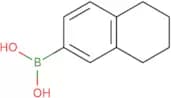
CAS:<p>Versatile small molecule scaffold</p>Fórmula:C10H13BO2Pureza:Min. 95%Peso molecular:176.02 g/mol5-(Difluoromethyl)pyridine-2-carbaldehyde
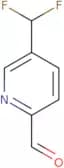
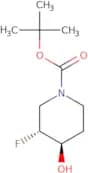
CAS:<p>Versatile small molecule scaffold</p>Fórmula:C7H5F2NOPureza:Min. 95%Peso molecular:157.12 g/moltrans-1-BOC-3-Fluoro-4-hydroxypiperidine
CAS:<p>Versatile small molecule scaffold</p>Fórmula:C10H18FNO3Pureza:Min. 95%Peso molecular:219.26 g/mol1-(3-Methylbenzyl)-1H-pyrazolo[3,4-d]pyrimidin-4-amine
CAS:<p>Versatile small molecule scaffold</p>Fórmula:C13H13N5Pureza:Min. 95%Peso molecular:239.28 g/mol1-[(4-Methoxyphenyl)methyl]imidazolidine-2,4,5-trione
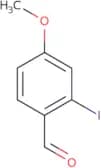
CAS:<p>Versatile small molecule scaffold</p>Fórmula:C11H10N2O4Pureza:Min. 95%Peso molecular:234.21 g/mol2-Iodo-4-methoxybenzaldehyde
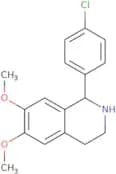
CAS:<p>2-Iodo-4-methoxybenzaldehyde is a chiral compound that can be synthesized through an intramolecular, stereoselective cyclic annulation reaction. The key step in this process is the arylation of 2-iodo-4-methoxybenzaldehyde with ethyl bromide. This compound can also be synthesized by reacting 2-iodobenzoic acid with formaldehyde in the presence of a base. In addition, 2-Iodo-4-methoxybenzaldehyde can be produced by the sequence of nitrogen substitution and tricyclic annulation.</p>Fórmula:C8H7IO2Pureza:Min. 95%Peso molecular:262.04 g/mol1-(4-Chlorophenyl)-6,7-dimethoxy-1,2,3,4-tetrahydroisoquinoline
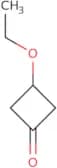
CAS:<p>Versatile small molecule scaffold</p>Fórmula:C17H18ClNO2Pureza:Min. 95%Peso molecular:303.8 g/mol3-Ethoxycyclobutan-1-one
CAS:<p>Versatile small molecule scaffold</p>Fórmula:C6H10O2Pureza:Min. 95%Peso molecular:114.14 g/mol2-Hydroxy-4-(phenylmethoxy)benzoic Acid Methyl Ester
CAS:<p>2-Hydroxy-4-(phenylmethoxy)benzoic Acid Methyl Ester is a benzene derivative that inhibits the binding of xanthones to the benzene ring in a variety of ways. This compound is formed by reacting phenol with methyl benzoate in the presence of acid and heat. The low energy ligand inhibits the binding of xanthones to benzene by forming hydrogen bonds, covalent bonds, or van der Waals forces with the anion. 2-Hydroxy-4-(phenylmethoxy)benzoic acid methyl ester has shown anti-inflammatory properties, which may be due to its ability to inhibit leukocyte adhesion at inflammatory sites.</p>Fórmula:C15H14O4Pureza:Min. 95%Peso molecular:258.27 g/moltert-Butyl (4aS,7aS)-octahydro-1H-pyrrolo[3,4-b]pyridine-6-carboxylate
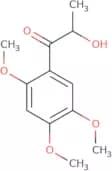
CAS:<p>Versatile small molecule scaffold</p>Fórmula:C12H22N2O2Pureza:Min. 95%Peso molecular:226.32 g/mol(2R)-2-Hydroxy-1-(2,4,5-trimethoxyphenyl)propan-1-one
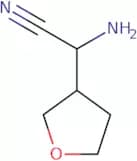
CAS:<p>(2R)-2-Hydroxy-1-(2,4,5-trimethoxyphenyl)propan-1-one is an efficient method for the synthesis of adenosine. This method is based on a cyclic reaction with trimethoxybenzene and yields 2 moles of adenosine per mole of trimethoxybenzene. The reaction time is short and the yield is high. This synthetic route has been used to produce large quantities of adenosine for use in pharmacological studies. (2R)-2-Hydroxy-1-(2,4,5-trimethoxyphenyl)propan-1-one can be used as an enantiomer for the synthesis of other compounds. It was also shown that nitrite mediates this reaction</p>Fórmula:C12H16O5Pureza:Min. 95%Peso molecular:240.25 g/mol2-Amino-2-(oxolan-3-yl)acetonitrile
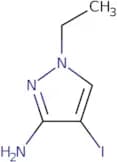
CAS:<p>Versatile small molecule scaffold</p>Fórmula:C6H10N2OPureza:Min. 95%Peso molecular:126.16 g/mol1-Ethyl-4-iodo-1H-pyrazol-3-amine
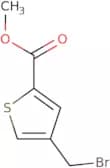
CAS:<p>Versatile small molecule scaffold</p>Fórmula:C5H8IN3Pureza:Min. 95%Peso molecular:237.04 g/molMethyl 4-(bromomethyl)thiophene-2-carboxylate
CAS:<p>Versatile small molecule scaffold</p>Fórmula:C7H7BrO2SPureza:Min. 95%Peso molecular:235.1 g/mol1-(4-Methylphenyl)-1H,4H,5H-pyrazolo[3,4-d]pyrimidin-4-one
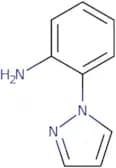
CAS:<p>Versatile small molecule scaffold</p>Fórmula:C12H10N4OPureza:Min. 95%Peso molecular:226.23 g/mol1-(2-Aminophenyl)-1H-pyrazole
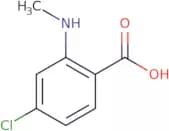
CAS:<p>1-(2-Aminophenyl)-1H-pyrazole is a chemical compound that is used in the synthesis of other compounds. It can be produced by various reactions from benzyl chloride and ammonia. The reactivity of 1-(2-aminophenyl)-1H-pyrazole has been studied using single crystal X-ray diffraction. This technique was used to determine the structure and reaction pathway of this molecule as well as to study its catalytic properties. 1-(2-Aminophenyl)-1H-pyrazole is a ligand that binds to metal ions, such as aluminium, in order to form complexes with different functional groups.</p>Fórmula:C9H9N3Pureza:Min. 95%Peso molecular:159.19 g/mol4-Chloro-2-(methylamino)benzoic acid
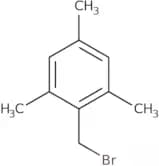
CAS:<p>Versatile small molecule scaffold</p>Fórmula:C8H8ClNO2Pureza:Min. 95%Peso molecular:185.61 g/mol2-Bromomethyl-1,3,5-trimethylbenzene
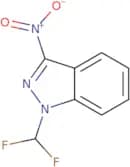
CAS:<p>2-Bromomethyl-1,3,5-trimethylbenzene is a semivolatile organic compound with a bromophenol functional group. It has been shown to react with malic acid and pyridine ring to form two isomers. The reaction rate of this compound is higher at lower temperatures than at higher temperatures. It has been shown to be a ligand that binds metal ions and reacts with them electrochemically. 2-Bromomethyl-1,3,5-trimethylbenzene has also been used as an intermediate in the synthesis of trisaccharide ligands for coordination chemistry studies.</p>Fórmula:C10H13BrPureza:Min. 95%Peso molecular:213.11 g/mol1-(Difluoromethyl)-3-nitro-1H-indazole
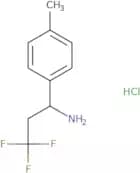
CAS:<p>Versatile small molecule scaffold</p>Fórmula:C8H5F2N3O2Pureza:Min. 95%Peso molecular:213.14 g/mol3,3,3-Trifluoro-1-(4-methylphenyl)propan-1-amine hydrochloride
CAS:<p>Versatile small molecule scaffold</p>Fórmula:C10H13ClF3NPureza:Min. 95%Peso molecular:239.66 g/mol4-(Methylamino)oxane-4-carboxylic acid hydrochloride
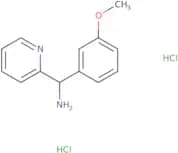
CAS:<p>Versatile small molecule scaffold</p>Fórmula:C7H14ClNO3Pureza:Min. 95%Peso molecular:195.64 g/mol(3-Methoxyphenyl)(pyridin-2-yl)methanamine dihydrochloride
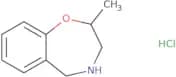
CAS:<p>Versatile small molecule scaffold</p>Fórmula:C13H16Cl2N2OPureza:Min. 95%Peso molecular:287.18 g/mol2-Methyl-2,3,4,5-tetrahydro-1,4-benzoxazepine hydrochloride
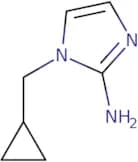
CAS:<p>Versatile small molecule scaffold</p>Fórmula:C10H14ClNOPureza:Min. 95%Peso molecular:199.68 g/mol1-(Cyclopropylmethyl)-1H-imidazol-2-amine
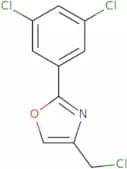
CAS:<p>Versatile small molecule scaffold</p>Fórmula:C7H11N3Pureza:Min. 95%Peso molecular:137.18 g/mol4-(Chloromethyl)-2-(3,5-dichlorophenyl)-1,3-oxazole
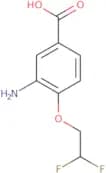
CAS:<p>Versatile small molecule scaffold</p>Fórmula:C10H6Cl3NOPureza:Min. 95%Peso molecular:262.5 g/mol3-Amino-4-(2,2-difluoroethoxy)benzoic acid
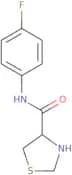
CAS:<p>Versatile small molecule scaffold</p>Fórmula:C9H9F2NO3Pureza:Min. 95%Peso molecular:217.17 g/molN-(4-Fluorophenyl)-1,3-thiazolidine-4-carboxamide
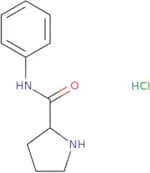
CAS:<p>Versatile small molecule scaffold</p>Fórmula:C10H11FN2OSPureza:Min. 95%Peso molecular:226.27 g/molN-Phenylpyrrolidine-2-carboxamide hydrochloride
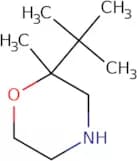
CAS:<p>Versatile small molecule scaffold</p>Fórmula:C11H15ClN2OPureza:Min. 95%Peso molecular:226.7 g/mol2-tert-Butyl-2-methylmorpholine
CAS:<p>Versatile small molecule scaffold</p>Fórmula:C9H19NOPureza:Min. 95%Peso molecular:157.25 g/molRef: 3D-DMC62244
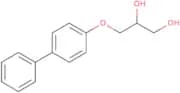
Producto descatalogado(2S)-3-(4-Phenylphenoxy)propane-1,2-diol
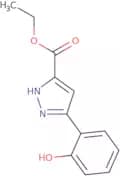
CAS:<p>Versatile small molecule scaffold</p>Fórmula:C15H16O3Pureza:Min. 95%Peso molecular:244.3 g/molEthyl 5-(2-hydroxyphenyl)-1H-pyrazole-3-carboxylate
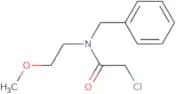
CAS:<p>Versatile small molecule scaffold</p>Fórmula:C12H12N2O3Pureza:Min. 95%Peso molecular:232.23 g/molN-Benzyl-2-chloro-N-(2-methoxyethyl)acetamide
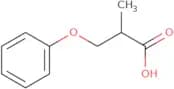
CAS:<p>Versatile small molecule scaffold</p>Fórmula:C12H16ClNO2Pureza:Min. 95%Peso molecular:241.71 g/mol2-Methyl-3-phenoxypropanoic acid
CAS:<p>2-Methyl-3-phenoxypropanoic acid is a blocker that inhibits the activity of voltage-gated sodium channels. It is a stereogenic, stereoselective molecule that also blocks muscle voltage-gated Na+ channels. 2-Methyl-3-phenoxypropanoic acid has been shown to be useful in introducing congeners into phenoxy chlorine molecules. This compound can be used as an analytical reagent for the determination of chlorine and phenyl groups in organic compounds.</p>Fórmula:C10H12O3Pureza:Min. 95%Peso molecular:180.2 g/mol2-[(Tetrahydro-2H-pyran-2-yl)oxy]-cyclopentanemethanol
CAS:<p>Versatile small molecule scaffold</p>Fórmula:C11H20O3Pureza:Min. 95%Peso molecular:200.27 g/mol7-Hydroxy-3,4-dimethyl-2,3-dihydro-1H-inden-1-one
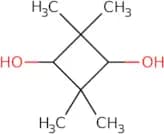
CAS:<p>Versatile small molecule scaffold</p>Fórmula:C11H12O2Pureza:Min. 95%Peso molecular:176.21 g/mol2,2,4,4-Tetramethyl-1,3-cyclobutanediol, mixture of isomers
CAS:<p>Tetramethyl-1,3-cyclobutanediol is a diacid that can be used as a monomer for the production of polyesters. It has conformational properties that are different from other diols. Tetramethyl-1,3-cyclobutanediol is soluble in hydrochloric acid and reacts with coatings containing dibutyltin oxide to produce residues. This chemical also reacts with copper oxide, resulting in the formation of copper cyclohexanol and dibutyltin oxide. Tetramethyl-1,3-cyclobutanediol is able to react with carboxylic acids to form esters. This compound has been shown to be employed in the synthesis of polycarboxylic acids such as adipic acid and sebacic acid. Tetramethyl-1,3-cyclobutanediol has been used in the production of polyester resins by reacting with ethylene glycol and tere</p>Fórmula:C8H16O2Pureza:Min. 95%Peso molecular:144.21 g/mol4-[(2-Aminopyridin-3-yl)oxy]butanenitrile
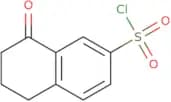
CAS:<p>Versatile small molecule scaffold</p>Fórmula:C9H11N3OPureza:Min. 95%Peso molecular:177.2 g/mol8-Oxo-5,6,7,8-tetrahydronaphthalene-2-sulfonyl chloride
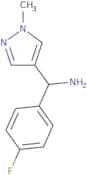
CAS:<p>Versatile small molecule scaffold</p>Fórmula:C10H9ClO3SPureza:Min. 95%Peso molecular:244.69 g/mol(4-Fluorophenyl)(1-methyl-1H-pyrazol-4-yl)methanamine
CAS:<p>Versatile small molecule scaffold</p>Fórmula:C11H12FN3Pureza:Min. 95%Peso molecular:205.23 g/mol1-(5-Methoxy-3-methyl-1-benzofuran-2-yl)ethan-1-amine
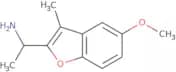
CAS:<p>Versatile small molecule scaffold</p>Fórmula:C12H15NO2Pureza:Min. 95%Peso molecular:205.25 g/mol2-[4-(1,3-Dioxaindan-5-yl)-4-methyl-2,5-dioxoimidazolidin-1-yl]acetic acid
CAS:<p>Versatile small molecule scaffold</p>Fórmula:C13H12N2O6Pureza:Min. 95%Peso molecular:292.24 g/mol1-[(4-Bromo-2-chlorophenyl)methyl]-1H-pyrazol-4-amine
CAS:<p>Versatile small molecule scaffold</p>Fórmula:C10H9BrClN3Pureza:Min. 95%Peso molecular:286.55 g/mol(1R,2R,6S,7S)-4,9-Diazatricyclo[5.3.0.0,2,6]decane dihydrochloride
CAS:<p>Versatile small molecule scaffold</p>Fórmula:C8H16Cl2N2Pureza:Min. 95%Peso molecular:211.1 g/mol2,2-Diethoxy-1-(1-methyl-1H-imidazol-2-yl)ethan-1-one
CAS:<p>Versatile small molecule scaffold</p>Fórmula:C10H16N2O3Pureza:Min. 95%Peso molecular:212.25 g/molMethyl 2-[(2-methylbutan-2-yl)amino]propanoate
CAS:<p>Versatile small molecule scaffold</p>Fórmula:C9H19NO2Pureza:Min. 95%Peso molecular:173.25 g/mol5-Chloro-2-(methylsulfanyl)pyrimidine-4-carboxamide
CAS:<p>Versatile small molecule scaffold</p>Fórmula:C6H6ClN3OSPureza:Min. 95%Peso molecular:203.65 g/mol4-Chloro-2,6-bis(methylsulfanyl)pyrimidine-5-carbonitrile
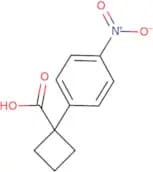
CAS:<p>Versatile small molecule scaffold</p>Fórmula:C7H6ClN3S2Pureza:Min. 95%Peso molecular:231.7 g/mol1-(4-Nitrophenyl)cyclobutanecarboxylic acid
CAS:<p>Versatile small molecule scaffold</p>Fórmula:C11H11NO4Pureza:Min. 95%Peso molecular:221.21 g/mol1-tert-Butyl 2-methyl 2,5-dihydro-1H-pyrrole-1,2-dicarboxylate
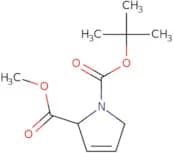
CAS:<p>Versatile small molecule scaffold</p>Fórmula:C11H17NO4Pureza:Min. 95%Peso molecular:227.26 g/mol4-{8-Nitro-2,4-dioxo-3-azatricyclo[7.3.1.0,5,13]trideca-1(13),5,7,9,11-pentaen-3-yl}benzoic acid
CAS:<p>Versatile small molecule scaffold</p>Fórmula:C19H10N2O6Pureza:Min. 95%Peso molecular:362.3 g/mol3-Methylbenzo[b]thiophene-2-carboxylic acid
CAS:<p>3-Methylbenzo[b]thiophene-2-carboxylic acid (MBTCA) is a heterocyclic compound that is an intermediate in the synthesis of 3-methylthiophene-2-carboxylic acid, a precursor to other drugs. MBTCA is an aerobic, nonpolar compound that has shown antimicrobial activity against some bacteria and fungi. It also has been shown to have practicality as a biomolecular probe for methyl groups in organic solvents. MBTCA can be synthesized by nitration of benzene in the presence of sulfur and sulfoxides. This reaction produces nitrobenzene, which can then be oxidized by potassium permanganate or hydrogen peroxide to produce MBTCA. The most common isomer of MBTCA is 2-(3,5-dimethoxybenzylidene)tetrahydrofuran, with three methyl groups on the</p>Fórmula:C10H8O2SPureza:Min. 95%Peso molecular:192.23 g/mol(2S,3R)-2-((((9H-Fluoren-9-yl)methoxy)carbonyl)amino)-3-methoxybutanoic acid
CAS:<p>Versatile small molecule scaffold</p>Fórmula:C20H21NO5Pureza:Min. 95%Peso molecular:355.4 g/mol3-(Methoxycarbonyl)pyridine-4-carboxylic acid
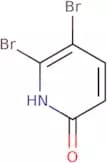
CAS:<p>Versatile small molecule scaffold</p>Fórmula:C8H7NO4Pureza:Min. 95%Peso molecular:181.15 g/mol5,6-Dibromopyridin-2-ol
CAS:<p>Versatile small molecule scaffold</p>Fórmula:C5H3Br2NOPureza:Min. 95%Peso molecular:252.89 g/moltert-Butyl 5-bromo-3,4-dihydro-2,7-naphthyridine-2(1H)-carboxylate
CAS:<p>Versatile small molecule scaffold</p>Fórmula:C13H17BrN2O2Pureza:Min. 95%Peso molecular:313.19 g/mol2-Bromo-3,3,3-trifluoro-1-propene
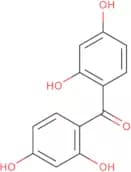
CAS:Producto controlado<p>2-Bromo-3,3,3-trifluoro-1-propene is a chemical compound that has been synthesized in an asymmetric reaction. The reactant is bromopropane and the product is 2,2,2-trifluoropropene. The methylene group on the propene molecule is activated by the nucleophilic attack of a fluoride ion from hydrogen fluoride to form a cavity with a highly strained bond. The kinetic study of this reaction revealed that the activation energy for the reaction is 42 kJ/mol. Palladium-catalyzed coupling reactions are catalyzed by palladium and require nonpolar solvents such as toluene or dichloromethane. This type of reaction has been shown to be exothermic with an isolated yield of 1%.</p>Fórmula:C3H2BrF3Pureza:Min. 95%Forma y color:Colorless PowderPeso molecular:174.95 g/mol2,2',4,4'-tetrahydroxybenzophenone
CAS:<p>2,2',4,4'-tetrahydroxybenzophenone is a hydroxylated benzophenone that has immunomodulatory effects. It binds to the receptor in the immune system and can cause an increase in cytokine production. 2,2',4,4'-tetrahydroxybenzophenone is cytotoxic and has significant toxicity in vitro. The molecule has been shown to disrupt mitochondrial membrane potential. This may be due to its ability to form hydrogen bonds with molecules on the mitochondrial membrane. 2,2',4,4'-tetrahydroxybenzophenone also modulates transcriptional regulation of genes involved in cell proliferation and apoptosis. The drug is detectable at low levels by mass spectrometry and is not known to have any toxicological effects.END>></p>Fórmula:C13H10O5Pureza:Min. 95%Forma y color:Green PowderPeso molecular:246.22 g/molRef: 3D-FT55663
Producto descatalogado2-Acetylbenzoic acid
CAS:<p>2-Acetylbenzoic acid is a functional molecule that contains an acetyl group. It can form hydrogen bonds with other molecules and has been shown to induce apoptosis in cells. The reaction products of 2-acetylbenzoic acid are malonic acid, acetylsalicylic acid, and 2-benzoylbenzoic acid. These three compounds are made by the addition of hydrogen or hydroxide to the molecule 2-acetylbenzoic acid. The molecule has two functional groups: a carbonyl group and an acetyl group. The chemical structure of this molecule can be seen in the figure below.<br>2-Acetylbenzoic Acid</p>Fórmula:C9H8O3Pureza:Min. 95%Forma y color:PowderPeso molecular:164.16 g/molRef: 3D-FA05086
Producto descatalogado1-[3-(Dimethylamino)propyl]-1-(4-fluorophenyl)-1,3-dihydro-3-oxo-5-isobenzofurancarbonitrile
CAS:<p>Please enquire for more information about 1-[3-(Dimethylamino)propyl]-1-(4-fluorophenyl)-1,3-dihydro-3-oxo-5-isobenzofurancarbonitrile including the price, delivery time and more detailed product information at the technical inquiry form on this page</p>Fórmula:C20H19FN2O2Pureza:Min. 95%Peso molecular:338.38 g/molRef: 3D-FD184085
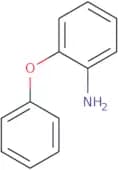
Producto descatalogado2-Phenoxyaniline
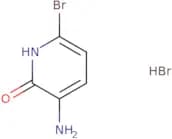
CAS:<p>2-Phenoxyaniline is a nitro compound that can be converted to the corresponding palladium complexes. It is an inhibitor of the acylation reaction, which is a type of chemical reaction in which an organic molecule reacts with an acid. The inhibition of this reaction has been shown to have an effect on heart disease, specifically by lowering cholesterol levels and reducing atherosclerosis. 2-Phenoxyaniline has also been shown to inhibit the activation energy for electron transfer reactions, making it useful as a catalyst in analytical methods. 2-Phenoxyaniline also undergoes vibrational spectroscopy when exposed to liquid chromatography and other analytical methods.</p>Fórmula:C12H11NOPureza:Min. 95%Forma y color:Brown PowderPeso molecular:185.22 g/mol3-amino-6-bromopyridin-2-ol hydrobromide
CAS:<p>Versatile small molecule scaffold</p>Fórmula:C5H6Br2N2OPureza:Min. 95%Peso molecular:269.9 g/mol4-(Methylamino)benzene-1-sulfonamide
CAS:<p>Versatile small molecule scaffold</p>Fórmula:C7H10N2O2SPureza:Min. 95%Peso molecular:186.23 g/molH-Ser-Ala-Glu-Glu-Tyr-Glu-Tyr-Pro-Ser OH trifluoroacetate
CAS:<p>Please enquire for more information about H-Ser-Ala-Glu-Glu-Tyr-Glu-Tyr-Pro-Ser OH trifluoroacetate including the price, delivery time and more detailed product information at the technical inquiry form on this page</p>Fórmula:C47H63N9O20•(C2HF3O2)xPureza:Min. 95%Ref: 3D-FS183525
Producto descatalogadoGivinostat hydrochloride
CAS:<p>Givinostat hydrochloride is a research chemical that has shown potential in various fields. It is a molybdenum-based compound that has been studied for its effects on dopamine release and hydrogen evolution. Givinostat hydrochloride has also been investigated as an osteoclast inhibitor, which may be beneficial in the treatment of bone-related disorders such as osteoporosis. Additionally, it has shown promise as a retinoid and calpain inhibitor, suggesting its potential use in dermatological conditions and neurodegenerative diseases. The compound contains fluorine atoms, making it suitable for imaging studies using fluorine MRI techniques. Givinostat hydrochloride has been tested on MDA-MB-231 cells and has shown inhibitory effects on their growth, indicating its potential as an anticancer agent.</p>Fórmula:C24H27N3O4·HClPureza:Min. 95%Peso molecular:457.95 g/mol

![[1-(Oxan-2-yl)cyclobutyl]methanamine](/_next/image/?url=https%3A%2Fstatic.cymitquimica.com%2Fproducts%2F3D%2Fthumb-webp%2FKHD00745.webp&w=3840&q=75)


![2-Bromo-5H,6H,7H-pyrrolo[1,2-a]imidazole-3-carboxylic acid](/_next/image/?url=https%3A%2Fstatic.cymitquimica.com%2Fproducts%2F3D%2Fthumb-webp%2FJWC40097.webp&w=3840&q=75)

![Methyl 2-aminobenzo[d]thiazole-5-carboxylate](/_next/image/?url=https%3A%2Fstatic.cymitquimica.com%2Fproducts%2F3D%2Fthumb-webp%2FJIA45907.webp&w=3840&q=75)

![Potassium 2-{2-[(2-cyclopropylethyl)amino]-1,3-thiazol-4-yl}acetate](/_next/image/?url=https%3A%2Fstatic.cymitquimica.com%2Fproducts%2F3D%2Fthumb-webp%2FJHD97170.webp&w=3840&q=75)
![3-{[4-(Aminomethyl)phenyl]methyl}imidazolidine-2,4-dione hydrochloride](/_next/image/?url=https%3A%2Fstatic.cymitquimica.com%2Fproducts%2F3D%2Fthumb-webp%2FJHD94975.webp&w=3840&q=75)
![1-[(1-Aminobutan-2-yl)oxy]-3-methylbenzene hydrochloride](/_next/image/?url=https%3A%2Fstatic.cymitquimica.com%2Fproducts%2F3D%2Fthumb-webp%2FJFC42976.webp&w=3840&q=75)

![1-Amino-7,7-dimethylbicyclo[2.2.1]heptan-2-one hydrochloride](/_next/image/?url=https%3A%2Fstatic.cymitquimica.com%2Fproducts%2F3D%2Fthumb-webp%2FJBA78312.webp&w=3840&q=75)

![tert-Butyl 1H,2H,3H,4H,5H,6H-pyrrolo[3,4-c]pyrrole-2-carboxylate hydrochloride](/_next/image/?url=https%3A%2Fstatic.cymitquimica.com%2Fproducts%2F3D%2Fthumb-webp%2FIYB92916.webp&w=3840&q=75)
![[5-(Methoxymethyl)-1,2-oxazol-3-yl]methanesulfonyl chloride](/_next/image/?url=https%3A%2Fstatic.cymitquimica.com%2Fproducts%2F3D%2Fthumb-webp%2FIJC99011.webp&w=3840&q=75)

![rac-tert-Butyl N-{[(3aR,7aR)-octahydropyrano[3,4-c]pyrrol-7a-yl]methyl}carbamate](/_next/image/?url=https%3A%2Fstatic.cymitquimica.com%2Fproducts%2F3D%2Fthumb-webp%2FHCD81426.webp&w=3840&q=75)
![2-Methyl-[1,2,4]triazolo[1,5-a]pyridin-6-amine](/_next/image/?url=https%3A%2Fstatic.cymitquimica.com%2Fproducts%2F3D%2Fthumb-webp%2FHAA16994.webp&w=3840&q=75)


![3-[(3-Fluorophenyl)sulfanyl]-2-hydroxy-2-methylpropanoic acid](/_next/image/?url=https%3A%2Fstatic.cymitquimica.com%2Fproducts%2F3D%2Fthumb-webp%2FGKC04742.webp&w=3840&q=75)
![5H,6H,7H,8H-[1,2,4]Triazolo[1,5-a]pyridin-6-amine](/_next/image/?url=https%3A%2Fstatic.cymitquimica.com%2Fproducts%2F3D%2Fthumb-webp%2FGCC60459.webp&w=3840&q=75)
![2-[Bis(2-methoxyethyl)amino]-5-methylbenzoic acid](/_next/image/?url=https%3A%2Fstatic.cymitquimica.com%2Fproducts%2F3D%2Fthumb-webp%2FGCC60399.webp&w=3840&q=75)
![2-Chloro-N-[(3-methylthiophen-2-yl)methyl]acetamide](/_next/image/?url=https%3A%2Fstatic.cymitquimica.com%2Fproducts%2F3D%2Fthumb-webp%2FGCC60304.webp&w=3840&q=75)
![1-(3-Methylbenzyl)-1H-pyrazolo[3,4-d]pyrimidin-4-amine](/_next/image/?url=https%3A%2Fstatic.cymitquimica.com%2Fproducts%2F3D%2Fthumb-webp%2FFGC34324.webp&w=3840&q=75)
![1-[(4-Methoxyphenyl)methyl]imidazolidine-2,4,5-trione](/_next/image/?url=https%3A%2Fstatic.cymitquimica.com%2Fproducts%2F3D%2Fthumb-webp%2FFEA68609.webp&w=3840&q=75)
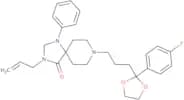
![tert-Butyl (4aS,7aS)-octahydro-1H-pyrrolo[3,4-b]pyridine-6-carboxylate](/_next/image/?url=https%3A%2Fstatic.cymitquimica.com%2Fproducts%2F3D%2Fthumb-webp%2FEZB42851.webp&w=3840&q=75)
![1-(4-Methylphenyl)-1H,4H,5H-pyrazolo[3,4-d]pyrimidin-4-one](/_next/image/?url=https%3A%2Fstatic.cymitquimica.com%2Fproducts%2F3D%2Fthumb-webp%2FECA73875.webp&w=3840&q=75)

![2-[(Tetrahydro-2H-pyran-2-yl)oxy]-cyclopentanemethanol](/_next/image/?url=https%3A%2Fstatic.cymitquimica.com%2Fproducts%2F3D%2Fthumb-webp%2FDCA22974.webp&w=3840&q=75)

![4-[(2-Aminopyridin-3-yl)oxy]butanenitrile](/_next/image/?url=https%3A%2Fstatic.cymitquimica.com%2Fproducts%2F3D%2Fthumb-webp%2FCWB56149.webp&w=3840&q=75)
![2-[4-(1,3-Dioxaindan-5-yl)-4-methyl-2,5-dioxoimidazolidin-1-yl]acetic acid](/_next/image/?url=https%3A%2Fstatic.cymitquimica.com%2Fproducts%2F3D%2Fthumb-webp%2FCWB51377.webp&w=3840&q=75)
![1-[(4-Bromo-2-chlorophenyl)methyl]-1H-pyrazol-4-amine](/_next/image/?url=https%3A%2Fstatic.cymitquimica.com%2Fproducts%2F3D%2Fthumb-webp%2FCPC18522.webp&w=3840&q=75)
![(1R,2R,6S,7S)-4,9-Diazatricyclo[5.3.0.0,2,6]decane dihydrochloride](/_next/image/?url=https%3A%2Fstatic.cymitquimica.com%2Fproducts%2F3D%2Fthumb-webp%2FCND73121.webp&w=3840&q=75)

![Methyl 2-[(2-methylbutan-2-yl)amino]propanoate](/_next/image/?url=https%3A%2Fstatic.cymitquimica.com%2Fproducts%2F3D%2Fthumb-webp%2FCLC46972.webp&w=3840&q=75)


![4-{8-Nitro-2,4-dioxo-3-azatricyclo[7.3.1.0,5,13]trideca-1(13),5,7,9,11-pentaen-3-yl}benzoic acid](/_next/image/?url=https%3A%2Fstatic.cymitquimica.com%2Fproducts%2F3D%2Fthumb-webp%2FCIA34140.webp&w=3840&q=75)
![3-Methylbenzo[b]thiophene-2-carboxylic acid](/_next/image/?url=https%3A%2Fstatic.cymitquimica.com%2Fproducts%2F3D%2Fthumb-webp%2FDAA13378.webp&w=3840&q=75)





![1-[3-(Dimethylamino)propyl]-1-(4-fluorophenyl)-1,3-dihydro-3-oxo-5-isobenzofurancarbonitrile](/_next/image/?url=https%3A%2Fstatic.cymitquimica.com%2Fproducts%2F3D%2Fthumb-webp%2FFD184085.webp&w=3840&q=75)