


Building Blocks
Subcategorías de "Building Blocks"
- Ácidos borónicos y derivados del ácido borónico(5.778 productos)
- Building Blocks quirales(1.243 productos)
- Building Blocks de hidrocarburos(6.099 productos)
- Building Blocks orgánicos(61.038 productos)
Se han encontrado 205376 productos de "Building Blocks"
5-Methyl-7-oxa-5-azaspiro[3.4]octane-6,8-dione
CAS:Versatile small molecule scaffold
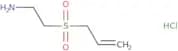
Fórmula:C7H9NO3Pureza:Min. 95%Peso molecular:155.15 g/mol3-(2-Aminoethanesulfonyl)prop-1-ene hydrochloride
CAS:Versatile small molecule scaffold
Fórmula:C5H12ClNO2SPureza:Min. 95%Peso molecular:185.67 g/molMethyl[1-(4-methylphenyl)butan-2-yl]amine
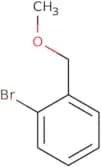
CAS:Producto controladoVersatile small molecule scaffoldFórmula:C12H19NPureza:Min. 95%Peso molecular:177.29 g/mol1-Bromo-2-(methoxymethyl)benzene
CAS:1-Bromo-2-(methoxymethyl)benzene is a boronic acid that is used in the synthesis of palladium complexes. It is synthesized by reacting 1-bromobenzene with methanol and methoxymethyl chloride. The 1-bromo-2-(methoxymethyl)benzene has been used as a ligand for palladium complexes, which are often used to catalyze organic reactions, such as the metathesis reaction. Synthetic methods have been developed to produce the compound and NMR spectra have been obtained to provide kinetic data on these reactions.
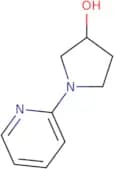
Fórmula:C8H9BrOPureza:Min. 95%Peso molecular:201.06 g/mol(3S)-1-(Pyridin-2-yl)pyrrolidin-3-ol
CAS:Versatile small molecule scaffold
Fórmula:C9H12N2OPureza:Min. 95%Peso molecular:164.2 g/molMethyl 3-amino-2-[(oxan-4-yl)methyl]propanoate hydrochloride
CAS:Versatile small molecule scaffold
Fórmula:C10H20ClNO3Pureza:Min. 95%Peso molecular:237.72 g/molRef: 3D-ICC65034
Producto descatalogado1,9,10,11,12,12-Hexachloro-5-oxatetracyclo[7.2.1.0²,⁸.0⁴,⁶]dodec-10-ene-3,7-dione
CAS:Versatile small molecule scaffoldFórmula:C11H4Cl6O3Pureza:Min. 95%Peso molecular:396.9 g/mol2-Cyclopentyloxy-benzaldehyde
CAS:2-Cyclopentyloxy-benzaldehyde has potent inhibitory activity against inflammatory diseases. It is a chemical compound that contains an amido group and two cyclopentyloxy groups. 2-Cyclopentyloxy-benzaldehyde inhibits the activation of glycogen synthase kinase-3, which is a protein that regulates inflammation in the body. This substance can be used to inhibit the spread of HIV or viral infections by inhibiting protein synthesis in these viruses. 2-Cyclopentyloxy-benzaldehyde also has an inhibitory effect on cachexia, which is a condition characterized by weight loss, muscle wasting, and fatigue.
Fórmula:C12H14O2Pureza:Min. 95%Peso molecular:190.24 g/mol2-Methylsulfonylthiophene
CAS:2-Methylsulfonylthiophene is a modulating agent that can inhibit the activity of carbonic anhydrase, adenosine receptors and 5-membered heteroaryl. It has been shown to have affinity for CB1 receptor antagonists and is used to treat cardiovascular diseases. 2-Methylsulfonylthiophene also inhibits the enzymatic activity of anhydrase in the eye, which leads to suppression of intraocular pressure (IOP). The drug also has anti-glaucoma effects by reducing the production of aqueous humour. 2-Methylsulfonylthiophene is used as a dyestuff intermediate and as an organic solvent.
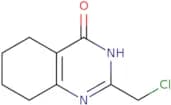
Fórmula:C5H6O2S2Pureza:Min. 95%Peso molecular:162.23 g/mol2-(Chloromethyl)-5,6,7,8-tetrahydroquinazolin-4(3H)-one
CAS:Versatile small molecule scaffold
Fórmula:C9H11ClN2OPureza:Min. 95%Peso molecular:198.65 g/molEthyl 1-amino-1-cyclobutanecarboxylate monohydrochloride
CAS:Ethyl 1-amino-1-cyclobutanecarboxylate monohydrochloride is a cyclic carbonyl compound that is used as a building block in organic synthesis. It has been used to synthesize a number of natural products, such as piperarborenine and cyclobutanes. This compound can be synthesized by reacting ethyl chloroformate with cyclobutanecarbaldehyde in the presence of an acid or base catalyst. The steric and geometric properties of this molecule are highlighted below.
Fórmula:C2H5O2CC4H6NH2·HClPureza:Min. 95%Peso molecular:179.64 g/mol6-[3-(3-Chlorophenyl)-1,2,4-oxadiazol-5-yl]-2,3-dihydropyridazin-3-one
CAS:Versatile small molecule scaffold
Fórmula:C12H7ClN4O2Pureza:Min. 95%Peso molecular:274.66 g/molRef: 3D-VEC59761
Producto descatalogado3-Amino-3-[3-(trifluoromethoxy)phenyl]propan-1-ol
CAS:Versatile small molecule scaffold
Fórmula:C10H12F3NO2Pureza:Min. 95%Peso molecular:235.2 g/mol2-Benzoyl-2-azabicyclo[2.1.1]hexane-1-carboxylic acid
CAS:Versatile small molecule scaffold
Fórmula:C13H13NO3Pureza:Min. 95%Peso molecular:231.25 g/molEthyl 2-(3-nitrophenyl)acetate
CAS:Ethyl 2-(3-nitrophenyl)acetate is an organic compound. It is a chloride channel blocker that has been shown to inhibit the activity of multidrug-resistant proteins (e.g., p-glycoprotein and multidrug resistance protein). The uptake of this drug in cells is limited by its low oral bioavailability and its interaction with aluminium ions. This drug interacts with multidrug-resistance proteins, which are involved in the transport of drugs or toxins out of the cell, by competing for binding sites. Ethyl 2-(3-nitrophenyl)acetate inhibits the catalytic activity of these proteins, leading to a regression in multidrug resistance. It can also inhibit the activity of isoxazoles and alcohols.br>br>/p>
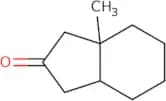
Fórmula:C10H11NO4Pureza:Min. 95%Peso molecular:209.2 g/molrac-(3aR,7aS)-3a-Methyl-octahydro-1H-inden-2-one
CAS:Versatile small molecule scaffold
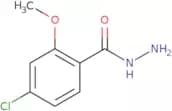
Fórmula:C10H16OPureza:Min. 95%Peso molecular:152.23 g/mol4-Chloro-2-methoxybenzohydrazide
CAS:Versatile small molecule scaffold
Fórmula:C8H9ClN2O2Pureza:Min. 95%Peso molecular:200.62 g/mol4,5-Dihydro-1H-imidazol-2-amine hydrochloride
CAS:Please enquire for more information about 4,5-Dihydro-1H-imidazol-2-amine hydrochloride including the price, delivery time and more detailed product information at the technical inquiry form on this page
Fórmula:C3H7N3•HClPureza:Min. 95%Peso molecular:121.57 g/molRef: 3D-FD183639
Producto descatalogado1-Hydroxycyclopentane-1-carbonitrile
CAS:1-Hydroxycyclopentane-1-carbonitrile is a monomer that is hydrolyzed to form benzoin and cyanohydrins. It can be used in the production of scifinder as a monomer or dimerizer.
Fórmula:C6H9NOPureza:Min. 95%Peso molecular:111.14 g/mol2-Bromo-3,3,3-trifluoro-1-propene
CAS:Producto controlado2-Bromo-3,3,3-trifluoro-1-propene is a chemical compound that has been synthesized in an asymmetric reaction. The reactant is bromopropane and the product is 2,2,2-trifluoropropene. The methylene group on the propene molecule is activated by the nucleophilic attack of a fluoride ion from hydrogen fluoride to form a cavity with a highly strained bond. The kinetic study of this reaction revealed that the activation energy for the reaction is 42 kJ/mol. Palladium-catalyzed coupling reactions are catalyzed by palladium and require nonpolar solvents such as toluene or dichloromethane. This type of reaction has been shown to be exothermic with an isolated yield of 1%.
Fórmula:C3H2BrF3Pureza:Min. 95%Forma y color:Colorless PowderPeso molecular:174.95 g/mol8-Bromo-2-methylimidazo[1,2-a]pyridine
CAS:Versatile small molecule scaffold
Fórmula:C8H7N2BrPureza:Min. 95%Peso molecular:211.05 g/moltert-Butyl (2,2-difluoro-3-hydroxypropyl)carbamate
CAS:Versatile small molecule scaffoldFórmula:C10H13NO4Pureza:Min. 95%Peso molecular:211.21 g/mol3-Hydroxy-5-methylpyridine
CAS:3-Hydroxy-5-methylpyridine (3HMP) is a chemical substance that has been classified as an amine. It is a product of the metabolism of purines, which are nitrogenous bases found in DNA and RNA. 3HMP is produced by aerogenic bacteria (such as Enterobacter), and can be used to estimate the number of these bacteria present in water samples. 3HMP has been shown to have antiviral properties against influenza virus, and can be used as a biomarker for the presence of other viruses in animals. 3HMP also has mineralization properties, which have been studied extensively, particularly with regards to pancreatic disease.
Fórmula:C6H7NOPureza:Min. 95%Forma y color:PowderPeso molecular:109.13 g/molRef: 3D-FH16174
Producto descatalogado4-Chloro-2-hydroxy-6-methylphenylboronic acid
CAS:Versatile small molecule scaffoldFórmula:C7H8BClO3Pureza:Min. 95%Peso molecular:186.4 g/mol4,5-Dihydroxy-2,3-Pentanedione
CAS:4,5-Dihydroxy-2,3-pentanedione is a carbonyl compound that is the product of the oxidation of ascorbic acid. It is used in wastewater treatment and has antimicrobial properties against infectious diseases. This compound has been shown to inhibit protein synthesis by binding to the ribosome and preventing the formation of peptide bonds between amino acids. 4,5-Dihydroxy-2,3-pentanedione has also been shown to bind to plasma proteins, which may be due to its acyl chain structure. 4,5-Dihydroxy-2,3-pentanedione can be synthesized in a catalytic mechanism that involves dehydroascorbic acid and molecular oxygen.
Fórmula:C5H8O4Pureza:Min. 95%Forma y color:PowderPeso molecular:132.11 g/molRef: 3D-FD180770
Producto descatalogadoPiperyline
CAS:Piperyline is an alkanoic acid that has shown to be effective against skin cancer. It also has antimicrobial properties, which may be due to its ability to bind metal ions and form polymeric compounds. Piperyline inhibits microbial growth by inhibiting the synthesis of proteins and nucleic acids. The antimicrobial activity is related to its cationic polymerization with hydroxyl groups, which forms a structure that can inhibit microbial enzymes and disrupt microbial cell membranes. This compound also interacts with the skin's natural lipids, making it difficult for microorganisms to attach and grow on the skin. Piperyline is synthesized in organic chemistry laboratories as an amide precursor of other pharmaceuticals such as penicillin.
Fórmula:C16H17NO3Pureza:Min. 95%Peso molecular:271.31 g/mol
![5-Methyl-7-oxa-5-azaspiro[3.4]octane-6,8-dione](/_next/image/?url=https%3A%2Fstatic.cymitquimica.com%2Fproducts%2F3D%2Fthumb-webp%2FJBD32590.webp&w=3840&q=75)

![Methyl[1-(4-methylphenyl)butan-2-yl]amine](/_next/image/?url=https%3A%2Fstatic.cymitquimica.com%2Fproducts%2F3D%2Fthumb-webp%2FLJB19921.webp&w=3840&q=75)
![Methyl 3-amino-2-[(oxan-4-yl)methyl]propanoate hydrochloride](/_next/image/?url=https%3A%2Fstatic.cymitquimica.com%2Fproducts%2F3D%2Fthumb-webp%2FICC65034.webp&w=3840&q=75)
![1,9,10,11,12,12-Hexachloro-5-oxatetracyclo[7.2.1.0²,⁸.0⁴,⁶]dodec-10-ene-3,7-dione](/_next/image/?url=https%3A%2Fstatic.cymitquimica.com%2Fproducts%2F3D%2Fthumb-webp%2FNBA66780.webp&w=3840&q=75)



![6-[3-(3-Chlorophenyl)-1,2,4-oxadiazol-5-yl]-2,3-dihydropyridazin-3-one](/_next/image/?url=https%3A%2Fstatic.cymitquimica.com%2Fproducts%2F3D%2Fthumb-webp%2FVEC59761.webp&w=3840&q=75)
![3-Amino-3-[3-(trifluoromethoxy)phenyl]propan-1-ol](/_next/image/?url=https%3A%2Fstatic.cymitquimica.com%2Fproducts%2F3D%2Fthumb-webp%2FVAC40236.webp&w=3840&q=75)
![2-Benzoyl-2-azabicyclo[2.1.1]hexane-1-carboxylic acid](/_next/image/?url=https%3A%2Fstatic.cymitquimica.com%2Fproducts%2F3D%2Fthumb-webp%2FJBD33608.webp&w=3840&q=75)




![8-Bromo-2-methylimidazo[1,2-a]pyridine](/_next/image/?url=https%3A%2Fstatic.cymitquimica.com%2Fproducts%2F3D%2Fthumb-webp%2FUXB37475.webp&w=3840&q=75)




