Building Blocks
Esta sección contiene productos fundamentales para la síntesis de compuestos orgánicos y biológicos. Building blocks son los materiales de partida esenciales utilizados para construir moléculas complejas a través de diversas reacciones químicas. Desempeñan un papel crítico en el descubrimiento de fármacos, la ciencia de materiales y la investigación química. En CymitQuimica, ofrecemos una gama diversa de building blocks de alta calidad para apoyar sus investigaciones innovadoras y proyectos industriales, asegurando que tenga los componentes esenciales para una síntesis exitosa.
Subcategorías de "Building Blocks"
- Ácidos borónicos y derivados del ácido borónico(5.756 productos)
- Building Blocks quirales(1.242 productos)
- Building Blocks de hidrocarburos(6.093 productos)
- Building Blocks orgánicos(60.532 productos)
Se han encontrado 195533 productos de "Building Blocks"
Ordenar por
Pureza (%)
0
100
|
0
|
50
|
90
|
95
|
100
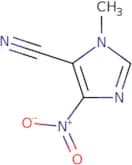
1-Methyl-4-nitro-1H-imidazole-5-carbonitrile
CAS:<p>1-Methyl-4-nitro-1H-imidazole-5-carbonitrile is a nitroimidazole that is activated by oxidation. It has been shown to be effective against strains of bacteria that are resistant to other antibiotics, such as methicillin and erythromycin. Nitroimidazoles are analogues of sulfonamides and have a reactive methylsulfonyl group that can be used to form covalent bonds with nucleophiles. 1-Methyl-4-nitro-1H-imidazole-5-carbonitrile is an example of a substituent in which the substituent is a bromo group. This substituent has been shown to react with nucleophiles, such as alkyl halides and thiols, which may lead to the formation of new compounds.</p>Fórmula:C5H4N4O2Pureza:Min. 95%Peso molecular:152.11 g/molN-Cyclopentylaniline
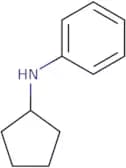
CAS:<p>N-Cyclopentylaniline is a chemical compound that is used to control pests. It has been shown to be effective as an anti-inflammatory in inflammatory pain and inflammatory diseases. N-Cyclopentylaniline also has hypotensive properties, which may be due to its ability to block the action of the enzyme phosphodiesterase 4, preventing the breakdown of cyclic AMP. This leads to vasodilation and reduced blood pressure, which can result in a decrease in heart rate. The drug has been shown to have receptor agonism effects on cannabinoid type 1 and 2 receptors, which are associated with chronic pain relief.</p>Fórmula:C11H15NPureza:Min. 95%Peso molecular:161.24 g/mol4-Propylcyclohexanone
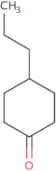
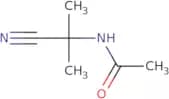
CAS:<p>4-Propylcyclohexanone is a cycloalkane that can be synthesized from butyric acid and hydroxide solution. The activation energy for this reaction is 41.7 kJ mol−1. The reaction can be catalyzed by potassium phosphate or sodium hydroxide solution, which are good bases. 4-Propylcyclohexanone has two functional groups: a hydroxyl group and a cycloalkane ring. This compound is an important precursor to eugenol, which is used in the production of perfumes, flavors, and other chemicals.</p>Fórmula:C9H16OPureza:Min. 95%Peso molecular:140.23 g/molN-(1-Cyano-1-methylethyl)acetamide
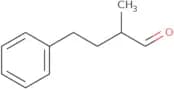
CAS:<p>Versatile small molecule scaffold</p>Fórmula:C6H10N2OPureza:Min. 95%Peso molecular:126.16 g/mol2-Methyl-4-phenylbutanal
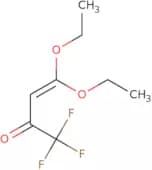
CAS:<p>Versatile small molecule scaffold</p>Fórmula:C11H14OPureza:90%MinPeso molecular:162.23 g/mol4,4-Diethoxy-1,1,1-trifluorobut-3-en-2-one
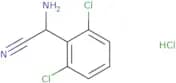
CAS:<p>Versatile small molecule scaffold</p>Fórmula:C8H11F3O3Pureza:Min. 95%Peso molecular:212.17 g/mol2-Amino-2-(2,6-dichlorophenyl)acetonitrile hydrochloride
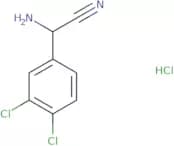
CAS:<p>Versatile small molecule scaffold</p>Fórmula:C8H7Cl3N2Pureza:Min. 95%Peso molecular:237.5 g/mol2-Amino-2-(3,4-dichlorophenyl)acetonitrile hydrochloride
CAS:<p>Versatile small molecule scaffold</p>Fórmula:C8H7Cl3N2Pureza:Min. 95%Peso molecular:237.5 g/mol4-[5-(Pyridin-3-yl)-1,2,4-oxadiazol-3-yl]phenol
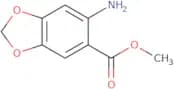
CAS:<p>Versatile small molecule scaffold</p>Fórmula:C13H9N3O2Pureza:Min. 95%Peso molecular:239.23 g/molMethyl 6-amino-1,3-dioxaindane-5-carboxylate
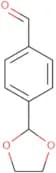
CAS:<p>Versatile small molecule scaffold</p>Fórmula:C9H9NO4Pureza:Min. 95%Peso molecular:195.17 g/mol4-(1,3-Dioxolan-2-yl)benzaldehyde
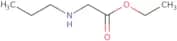
CAS:<p>Versatile small molecule scaffold</p>Fórmula:C10H10O3Pureza:Min. 95%Peso molecular:178.18 g/molethyl 2-(propylamino)acetate
CAS:<p>Ethyl 2-(propylamino)acetate is an amine that is classified as a nucleophile. It reacts with other molecules to form new compounds and has been shown to react with a variety of nucleophiles including alcohols, carboxylic acids, and phenols. Spectroscopic techniques have revealed that ethyl 2-(propylamino)acetate exists in two isomeric forms: the cis-isomer and the trans-isomer. The cis-isomer is more reactive than the trans-isomer because it has a greater electron density on its alpha carbon atom.</p>Fórmula:C7H15NO2Pureza:Min. 95%Peso molecular:145.2 g/molEthyl 5-methyl-1,2,4-oxadiazole-3-carboxylate
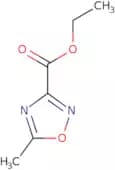
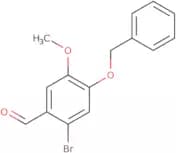
CAS:<p>Versatile small molecule scaffold</p>Fórmula:C6H8N2O3Pureza:Min. 95%Peso molecular:156.14 g/mol4-(Benzyloxy)-2-bromo-5-methoxybenzaldehyde
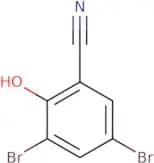
CAS:<p>Versatile small molecule scaffold</p>Fórmula:C15H13BrO3Pureza:Min. 95%Peso molecular:321.2 g/mol3,5-Dibromo-2-hydroxybenzonitrile
CAS:<p>3,5-Dibromo-2-hydroxybenzonitrile is an organic compound with the formula C6H4Br2O. It is a yellow liquid that is soluble in organic solvents. 3,5-Dibromo-2-hydroxybenzonitrile can be synthesized by reacting tert-butyl nitrite with bromine and acetonitrile in a solvent. The reaction rate of this chemical reaction is rapid and the molecule has been shown to be stable when exposed to light. The hydroxyl group on the molecule makes it hydrophobic, which means it does not dissolve well in water. 3,5-Dibromo-2-hydroxybenzonitrile has a photolabile profile, meaning that it quickly decomposes when exposed to light. This chemical compound has two isomers: synopses A and B. Synopsis A has an electron configuration of 1s22s22p</p>Fórmula:C7H3Br2NOPureza:Min. 95%Peso molecular:276.92 g/mol5-Methyl-1-benzofuran-2-carbaldehyde
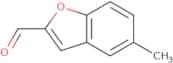
CAS:<p>Versatile small molecule scaffold</p>Fórmula:C10H8O2Pureza:Min. 95%Peso molecular:160.17 g/molEthyl 4-(bromomethyl)-5,5-dimethyl-2-oxo-2,5-dihydrofuran-3-carboxylate
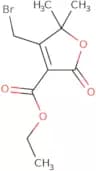
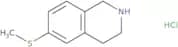
CAS:<p>Versatile small molecule scaffold</p>Fórmula:C10H13BrO4Pureza:Min. 95%Peso molecular:277.11 g/mol6-(Methylthio)-1,2,3,4-tetrahydroisoquinoline hydrochloride
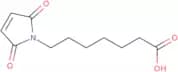
CAS:<p>Versatile small molecule scaffold</p>Fórmula:C10H14ClNSPureza:Min. 95%Peso molecular:215.74 g/mol7-(2,5-Dioxo-2,5-dihydro-1H-pyrrol-1-yl)heptanoic acid
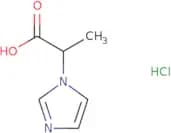
CAS:<p>Versatile small molecule scaffold</p>Fórmula:C11H15NO4Pureza:Min. 95%Peso molecular:225.24 g/mol2-Imidazol-1-yl-propionic acidhydrochloride
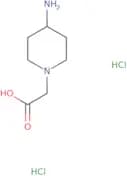
CAS:<p>Versatile small molecule scaffold</p>Fórmula:C6H9ClN2O2Pureza:Min. 95%Peso molecular:176.6 g/mol2-(4-Aminopiperidin-1-yl)acetic acid dihydrochloride
CAS:<p>Versatile small molecule scaffold</p>Fórmula:C7H16Cl2N2O2Pureza:Min. 95%Peso molecular:231.12 g/mol2-[(2-Aminophenyl)sulfanyl]acetamide
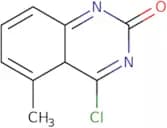
CAS:<p>Versatile small molecule scaffold</p>Fórmula:C8H10N2OSPureza:Min. 95%Peso molecular:182.25 g/mol4-chloro-5-methylquinazoline
CAS:<p>Versatile small molecule scaffold</p>Fórmula:C9H7ClN2Pureza:Min. 95%Peso molecular:178.62 g/mol2-Chloro-N-[4-(furan-2-yl)-1,3-thiazol-2-yl]acetamide
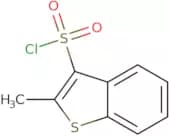
CAS:<p>Versatile small molecule scaffold</p>Fórmula:C9H7ClN2O2SPureza:Min. 95%Peso molecular:242.68 g/mol2-Methyl-1-benzothiophene-3-sulfonyl chloride
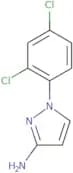
CAS:<p>Versatile small molecule scaffold</p>Fórmula:C9H7ClO2S2Pureza:Min. 95%Peso molecular:246.7 g/mol1-(2,4-Dichlorophenyl)-1H-pyrazol-3-amine
CAS:<p>Versatile small molecule scaffold</p>Fórmula:C9H7Cl2N3Pureza:Min. 95%Peso molecular:228.07 g/mol2-[(4-Cyanophenyl)formamido]acetic acid
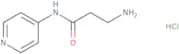
CAS:<p>2-[(4-Cyanophenyl)formamido]acetic acid is a secondary metabolite that is found in plants. It has been isolated from the leaves of the plant, Aerva lanata. 2-[(4-Cyanophenyl)formamido]acetic acid has been used as an analytical standard and as a reference material for quality control testing in the pharmaceutical industry. This compound is also being studied for its bioactive properties, including anti-inflammatory and antimicrobial activities.</p>Fórmula:C10H8N2O3Pureza:Min. 95%Peso molecular:204.18 g/mol3-Amino-N-(pyridin-4-yl)propanamide hydrochloride
CAS:<p>Versatile small molecule scaffold</p>Fórmula:C8H12ClN3OPureza:Min. 95%Peso molecular:201.65 g/mol2-Chloro-N-[4-(4-fluorobenzenesulfonyl)phenyl]acetamide
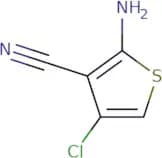
CAS:<p>Versatile small molecule scaffold</p>Fórmula:C14H11ClFNO3SPureza:Min. 95%Peso molecular:327.8 g/mol2-Amino-4-chlorothiophene-3-carbonitrile
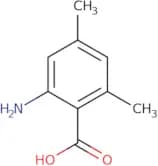
CAS:<p>Versatile small molecule scaffold</p>Fórmula:C5H3ClN2SPureza:Min. 95%Peso molecular:158.61 g/mol2-Amino-4,6-dimethylbenzoic acid
CAS:<p>Versatile small molecule scaffold</p>Fórmula:C9H11NO2Pureza:Min. 95%Peso molecular:165.19 g/mol2-Amino-3-methoxy-6-methylbenzoic acid
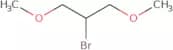
CAS:<p>Versatile small molecule scaffold</p>Fórmula:C9H11NO3Pureza:Min. 95%Peso molecular:181.19 g/mol2-Bromo-1,3-dimethoxypropane
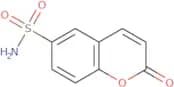
CAS:<p>Versatile small molecule scaffold</p>Fórmula:C5H11BrO2Pureza:Min. 95%Peso molecular:183.04 g/mol2-Oxo-2H-chromene-6-sulfonamide
CAS:<p>2-Oxo-2H-chromene-6-sulfonamide is a coumarin derivative that has been shown to have pro-apoptotic properties. It induces apoptosis, or programmed cell death, in hepg2 cells by inhibiting the synthesis of proteins that are necessary for the growth and survival of cancer cells. 2-Oxo-2H-chromene-6-sulfonamide also inhibits the function of annexin and mcf7, two proteins involved in apoptosis. This drug has been shown to be effective against breast cancer cells in vitro. In addition, 2-Oxo-2H-chromene-6-sulfonamide has been found to inhibit the growth of human ovarian cancer cells in vivo. The toxicity studies on this drug have not yet been conducted on humans; therefore, it is not approved for use as a therapeutic agent.</p>Fórmula:C9H7NO4SPureza:Min. 95%Peso molecular:225.22 g/mol7-Amino-2-hydroxy-1,8-naphthyridine-4-carboxylic acid
CAS:<p>Versatile small molecule scaffold</p>Fórmula:C9H7N3O3Pureza:Min. 95%Peso molecular:205.17 g/mol1-Methyl-2-sulfanyl-1H-1,3-benzodiazole-5-carbonitrile
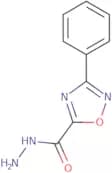
CAS:<p>Versatile small molecule scaffold</p>Fórmula:C9H7N3SPureza:Min. 95%Peso molecular:189.24 g/mol3-Phenyl-1,2,4-oxadiazole-5-carbohydrazide
CAS:<p>Phenyl-1,2,4-oxadiazole-5-carbohydrazide (POD) is a heterocycle that has analgesic properties. It is an analgesic agent that belongs to the group of arylidene hydrazides. POD binds to the opioid receptors in the brain, which causes pain relief. POD is structurally related to dipyrone and has similar pharmacological profile. The drug was shown to be effective in reducing constrictions in guinea pigs and rats.</p>Fórmula:C9H8N4O2Pureza:Min. 95%Peso molecular:204.19 g/molEthyl 7-hydroxypteridine-6-carboxylate
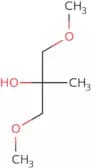
CAS:<p>Versatile small molecule scaffold</p>Fórmula:C9H8N4O3Pureza:Min. 95%Peso molecular:220.18 g/mol1-Methoxy-2-(methoxymethyl)propan-2-ol
CAS:<p>Versatile small molecule scaffold</p>Fórmula:C6H14O3Pureza:Min. 95%Peso molecular:134.17 g/mol1-(5-Bromo-2-methylphenyl)ethanone
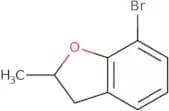
CAS:<p>1-(5-Bromo-2-methylphenyl)ethanone is an aldehyde that is used in the treatment of cancer. It has been shown to have cytotoxic effects on tumour cells by inhibiting the process of mitosis, which is required for cell division. 1-(5-Bromo-2-methylphenyl)ethanone binds to kinesin and prevents it from binding to microtubules, which are necessary for mitosis. 1-(5-Bromo-2-methylphenyl)ethanone also inhibits the production of ATP, which is needed for cellular energy. 1-(5-Bromo-2-methylphenyl)ethanone has not been shown to be mutagenic or carcinogenic.</p>Fórmula:C9H9BrOPureza:Min. 95%Peso molecular:213.07 g/mol7-Bromo-2-methyl-2,3-dihydro-1-benzofuran
CAS:<p>Versatile small molecule scaffold</p>Fórmula:C9H9BrOPureza:Min. 95%Peso molecular:213.07 g/mol5-bromo-2-methoxy-4-methylbenzoic acid
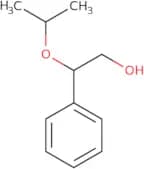
CAS:<p>Versatile small molecule scaffold</p>Fórmula:C9H9BrO3Pureza:Min. 95%Peso molecular:245.1 g/mol2-Phenyl-2-(propan-2-yloxy)ethan-1-ol
CAS:<p>Versatile small molecule scaffold</p>Fórmula:C11H16O2Pureza:Min. 95%Peso molecular:180.24 g/mol2-Amino-1-(pyridin-2-yl)ethan-1-ol dihydrochloride
CAS:<p>Versatile small molecule scaffold</p>Fórmula:C7H10N2O·2HClPureza:Min. 95%Peso molecular:211.09 g/mol2-Amino-1-(pyridin-4-yl)ethanol dihydrochloride
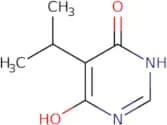
CAS:<p>Versatile small molecule scaffold</p>Fórmula:C7H10N2O·2HClPureza:Min. 95%Peso molecular:211.09 g/mol6-Hydroxy-5-(propan-2-yl)-3,4-dihydropyrimidin-4-one
CAS:<p>Versatile small molecule scaffold</p>Fórmula:C7H10N2O2Pureza:Min. 95%Peso molecular:154.2 g/mol3-Methanesulfinylbenzoic acid
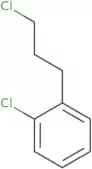
CAS:<p>3-Methanesulfinylbenzoic acid is an active site molecule that catalyzes the demethylation of alkylamines, amides, and cyclic sulfur compounds. The enzyme has been shown to have monooxygenase activity and can be biotransformed by various reactions including n-oxide formation, hydroxylation, sulfoxidation, and deamination. 3-Methanesulfinylbenzoic acid is a bacterial enzyme that has been crystallized in the x-ray crystal structures of both oxidized and reduced forms. The enzyme functions as a homodimer with a molecular weight of approximately 67 kDa.</p>Fórmula:C8H8O3SPureza:Min. 95%Peso molecular:184.21 g/mol1-Chloro-2-(3-chloropropyl)benzene
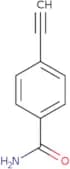
CAS:<p>Versatile small molecule scaffold</p>Fórmula:C9H10Cl2Pureza:Min. 95%Peso molecular:189.08 g/mol4-Ethynylbenzamide
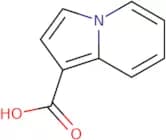
CAS:<p>4-Ethynylbenzamide is a synthetic compound that serves as an antibiotic. It is biosynthesized from the amino acid phenylalanine and the polyacetylene 4-hydroxyphenylacetone. The antibiotic activity of 4-Ethynylbenzamide has been demonstrated against gram-negative pathogens. The antibiotic inhibits bacterial growth by binding to the ribosomal protein S12, preventing its association with the 30S subunit of the ribosome and blocking protein synthesis. 4-Ethynylbenzamide also inhibits cell wall synthesis in gram-positive bacteria by binding to penicillin binding proteins, inhibiting transpeptidation and cell wall biosynthesis.</p>Fórmula:C9H7NOPureza:Min. 95%Peso molecular:145.16 g/molIndolizine-1-carboxylic acid
CAS:<p>Indolizine-1-carboxylic acid (IDCA) is an antimicrobial agent that inhibits bacterial growth by interfering with the synthesis of proteins. IDCA is a fluorescent compound that can be detected using fluorescence spectroscopy. This drug has been shown to have potent cytotoxic effects against cancer cells, as well as antibacterial activity against Staphylococcus aureus and other bacteria.</p>Fórmula:C9H7NO2Pureza:Min. 95%Peso molecular:161.16 g/mol

![4-[5-(Pyridin-3-yl)-1,2,4-oxadiazol-3-yl]phenol](/_next/image/?url=https%3A%2Fstatic.cymitquimica.com%2Fproducts%2F3D%2Fthumb-webp%2FQBA67880.webp&w=3840&q=75)
![2-[(2-Aminophenyl)sulfanyl]acetamide](/_next/image/?url=https%3A%2Fstatic.cymitquimica.com%2Fproducts%2F3D%2Fthumb-webp%2FQDA27133.webp&w=3840&q=75)
![2-Chloro-N-[4-(furan-2-yl)-1,3-thiazol-2-yl]acetamide](/_next/image/?url=https%3A%2Fstatic.cymitquimica.com%2Fproducts%2F3D%2Fthumb-webp%2FQDA27300.webp&w=3840&q=75)
![2-[(4-Cyanophenyl)formamido]acetic acid](/_next/image/?url=https%3A%2Fstatic.cymitquimica.com%2Fproducts%2F3D%2Fthumb-webp%2FQDA29083.webp&w=3840&q=75)
![2-Chloro-N-[4-(4-fluorobenzenesulfonyl)phenyl]acetamide](/_next/image/?url=https%3A%2Fstatic.cymitquimica.com%2Fproducts%2F3D%2Fthumb-webp%2FQDA30940.webp&w=3840&q=75)