Building Blocks
Esta sección contiene productos fundamentales para la síntesis de compuestos orgánicos y biológicos. Building blocks son los materiales de partida esenciales utilizados para construir moléculas complejas a través de diversas reacciones químicas. Desempeñan un papel crítico en el descubrimiento de fármacos, la ciencia de materiales y la investigación química. En CymitQuimica, ofrecemos una gama diversa de building blocks de alta calidad para apoyar sus investigaciones innovadoras y proyectos industriales, asegurando que tenga los componentes esenciales para una síntesis exitosa.
Subcategorías de "Building Blocks"
- Ácidos borónicos y derivados del ácido borónico(5.756 productos)
- Building Blocks quirales(1.242 productos)
- Building Blocks de hidrocarburos(6.093 productos)
- Building Blocks orgánicos(60.532 productos)
Se han encontrado 195533 productos de "Building Blocks"
Ordenar por
Pureza (%)
0
100
|
0
|
50
|
90
|
95
|
100
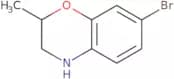
7-Bromo-2-methyl-3,4-dihydro-2H-1,4-benzoxazine
CAS:<p>Versatile small molecule scaffold</p>Fórmula:C9H10BrNOPureza:Min. 95%Peso molecular:228.09 g/mol(S)-Tetrahydro-2H-pyran-3-amine hydrochloride
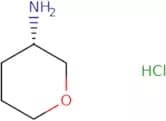
CAS:<p>Versatile small molecule scaffold</p>Fórmula:C5H12ClNOPureza:Min. 95%Peso molecular:137.61 g/mol5-(3-Methoxyphenyl)-2-methylfuran-3-carboxylic acid
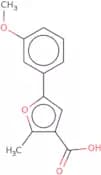
CAS:<p>Versatile small molecule scaffold</p>Fórmula:C13H12O4Pureza:Min. 95%Peso molecular:232.2 g/mol1-[(5-Fluorothiophen-2-yl)methyl]piperazine
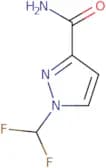
CAS:<p>Versatile small molecule scaffold</p>Fórmula:C9H13FN2SPureza:Min. 95%Peso molecular:200.28 g/mol1-(Difluoromethyl)-1H-pyrazole-3-carboxamide
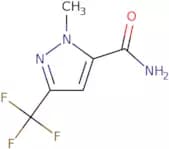
CAS:<p>Versatile small molecule scaffold</p>Fórmula:C5H5F2N3OPureza:Min. 95%Peso molecular:161.11 g/mol1-Methyl-3-(trifluoromethyl)-1H-pyrazole-5-carboxamide
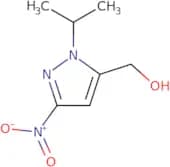
CAS:<p>Versatile small molecule scaffold</p>Fórmula:C6H6F3N3OPureza:Min. 95%Peso molecular:193.13 g/mol(1-Isopropyl-3-nitro-1H-pyrazol-5-yl)methanol
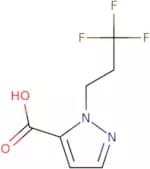
CAS:<p>Versatile small molecule scaffold</p>Fórmula:C7H11N3O3Pureza:Min. 95%Peso molecular:185.18 g/mol1-(3,3,3-Trifluoropropyl)-1H-pyrazole-5-carboxylic acid
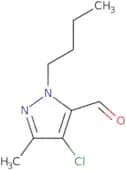
CAS:<p>Versatile small molecule scaffold</p>Fórmula:C7H7F3N2O2Pureza:Min. 95%Peso molecular:208.14 g/mol1-Butyl-4-chloro-3-methyl-1H-pyrazole-5-carbaldehyde
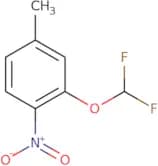
CAS:<p>Versatile small molecule scaffold</p>Fórmula:C9H13ClN2OPureza:Min. 95%Peso molecular:200.66 g/mol2-(Difluoromethoxy)-4-methyl-1-nitrobenzene
CAS:<p>Versatile small molecule scaffold</p>Fórmula:C8H7F2NO3Pureza:Min. 95%Peso molecular:203.14 g/mol[1-(Difluoromethyl)-1H-pyrazol-5-yl]methanol
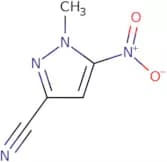
CAS:<p>Versatile small molecule scaffold</p>Fórmula:C5H6N2OF2Pureza:Min. 95%Peso molecular:148.11 g/mol1-Methyl-5-nitro-pyrazole-3-carbonitrile
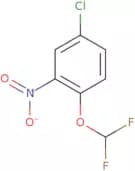
CAS:<p>Versatile small molecule scaffold</p>Fórmula:C5H4N4O2Pureza:Min. 95%Peso molecular:152.11 g/mol4-Chloro-1-(difluoromethoxy)-2-nitrobenzene
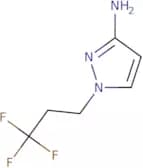
CAS:<p>Versatile small molecule scaffold</p>Fórmula:C7H4ClF2NO3Pureza:Min. 95%Peso molecular:223.56 g/mol1-(3,3,3-Trifluoropropyl)-1H-pyrazol-3-amine
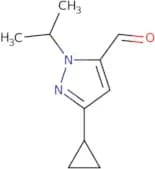
CAS:<p>Versatile small molecule scaffold</p>Fórmula:C6H8F3N3Pureza:Min. 95%Peso molecular:179.14 g/mol3-Cyclopropyl-1-(propan-2-yl)-1H-pyrazole-5-carbaldehyde
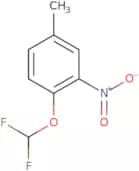
CAS:<p>Versatile small molecule scaffold</p>Fórmula:C10H14N2OPureza:Min. 95%Peso molecular:178.23 g/mol1-(Difluoromethoxy)-4-methyl-2-nitrobenzene
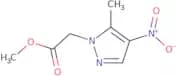
CAS:<p>Versatile small molecule scaffold</p>Fórmula:C8H7F2NO3Pureza:Min. 95%Peso molecular:203.14 g/molMethyl 2-(5-methyl-4-nitro-1H-pyrazol-1-yl)acetate
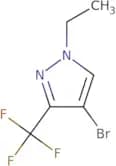
CAS:<p>Versatile small molecule scaffold</p>Fórmula:C7H9N3O4Pureza:Min. 95%Peso molecular:199.16 g/mol4-Bromo-1-ethyl-3-(trifluoromethyl)pyrazole
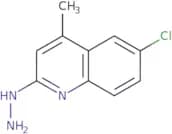
CAS:<p>Versatile small molecule scaffold</p>Fórmula:C6H6BrF3N2Pureza:Min. 95%Peso molecular:243.03 g/mol6-Chloro-2-hydrazinyl-4-methylquinoline
CAS:<p>Versatile small molecule scaffold</p>Fórmula:C10H10ClN3Pureza:Min. 95%Peso molecular:207.66 g/mol[2-(3,4-Dimethoxyphenyl)ethyl]thiourea
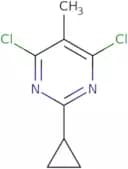
CAS:<p>Versatile small molecule scaffold</p>Fórmula:C11H16N2O2SPureza:Min. 95%Peso molecular:240.32 g/mol4,6-Dichloro-2-cyclopropyl-5-methylpyrimidine
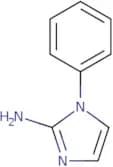
CAS:<p>Versatile small molecule scaffold</p>Fórmula:C8H8Cl2N2Pureza:Min. 95%Peso molecular:203.07 g/mol1-Phenyl-1H-imidazol-2-amine
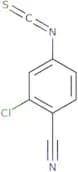
CAS:<p>1-Phenyl-1H-imidazol-2-amine is an ethylene ligand that has been used in the synthesis of polymers and copolymers. It is a monomer that has shown high activity in copolymerization with other monomers. One of its substituents, adamantyl, can be found in the microstructure of semicrystalline polymers and catalysts for polymerization reactions. The catalytic activity of 1-phenyl-1H-imidazol-2-amine can be improved by adding substituents to the imidazoline ring. 1-Phenyl-1H-imidazol-2-amine is a spectroscopic compound that exhibits infrared absorption bands at 3,200 cm–1 and 3,700 cm–1. It also absorbs strongly in the visible region at 614 nm and 538 nm.</p>Fórmula:C9H9N3Pureza:Min. 95%Peso molecular:159.19 g/mol2-Chloro-4-isothiocyanatobenzonitrile
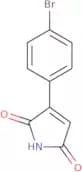
CAS:<p>Versatile small molecule scaffold</p>Fórmula:C8H3ClN2SPureza:Min. 95%Peso molecular:194.64 g/mol3-(4-bromophenyl)-2,5-dihydro-1H-pyrrole-2,5-dione
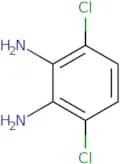
CAS:<p>Versatile small molecule scaffold</p>Fórmula:C10H6BrNO2Pureza:Min. 95%Peso molecular:252.07 g/mol3,6-Dichlorobenzene-1,2-diamine
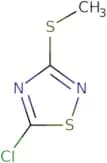
CAS:<p>Versatile small molecule scaffold</p>Fórmula:C6H6Cl2N2Pureza:Min. 95%Peso molecular:177.03 g/mol5-Chloro-3-(methylthio)-1,2,4-thiadiazole
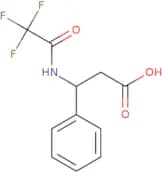
CAS:<p>Versatile small molecule scaffold</p>Fórmula:C3H3N2S2ClPureza:Min. 95%Peso molecular:166.65 g/mol3-Phenyl-3-(2,2,2-trifluoro-acetylamino)-propionic acid
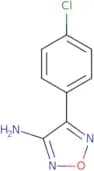
CAS:<p>Versatile small molecule scaffold</p>Fórmula:C11H10F3NO3Pureza:Min. 95%Peso molecular:261.2 g/mol4-(4-Chlorophenyl)-1,2,5-oxadiazol-3-amine
CAS:<p>4-(4-Chlorophenyl)-1,2,5-oxadiazol-3-amine is an aminofurazan derivative that serves as a precursor in the synthesis of sulfilimines. It can be oxidized to form 4-(4-chlorophenyl)imidazole and 4-(4-chlorophenyl)furazan. The conversion of 4-(4-chlorophenyl)imidazole to 4-(4-chlorophenyl)furazan can be accomplished by treatment with triphenylphosphine, m-chloroperoxybenzoic acid or dimethyldioxirane. Treatment with phosphine or trioctylphosphine yields the corresponding phosphine oxide or phosphonium salt. The sulfilimines are useful intermediates for the synthesis of aminofurazans, which have a variety of applications.</p>Fórmula:C8H6ClN3OPureza:Min. 95%Peso molecular:195.6 g/mol4-(2-Fluorophenyl)-1,2,5-oxadiazol-3-amine
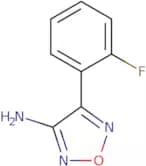
CAS:<p>Versatile small molecule scaffold</p>Fórmula:C8H6FN3OPureza:Min. 95%Peso molecular:179.15 g/mol2-(5-Phenyl-1H-1,2,3,4-tetrazol-1-yl)acetic acid
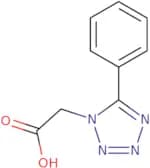
CAS:<p>Versatile small molecule scaffold</p>Fórmula:C9H8N4O2Pureza:Min. 95%Peso molecular:204.19 g/mol2H-tetrazol-2-ylacetic acid
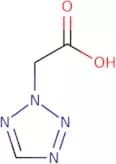
CAS:<p>2-Hydrazinotetrazole is an organic compound that can be synthesized from 2-amino-5-nitrotetrazole and hydrazine. The 2H-tetrazol-2-ylacetic acid (TZ) isomer has been shown to have resonance at 3.9 ppm. It also has a chemical shift of 3.3 ppm, which corresponds to the methylene groups in the molecule. When observed by magnetic resonance spectroscopy, it displays a doublet of triplets with an intensity ratio of 1:1:1. This indicates that there are three distinct isomers with different orientations in space, which correspond to the E, Z, and EZ isomers.</p>Fórmula:C3H4N4O2Pureza:Min. 95%Peso molecular:128.89 g/mol2-(5-Methyl-2H-1,2,3,4-tetrazol-2-yl)acetic acid
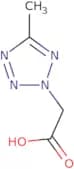
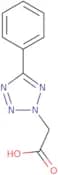
CAS:<p>Versatile small molecule scaffold</p>Fórmula:C4H6N4O2Pureza:Min. 95%Peso molecular:142.12 g/mol2-(5-Phenyl-2H-1,2,3,4-tetrazol-2-yl)acetic acid
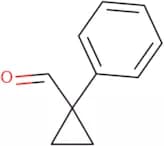
CAS:<p>2-(5-Phenyl-2H-1,2,3,4-tetrazol-2-yl)acetic acid (TZT) is a resonance stabilized molecule that has an antibonding interaction with the phenyl ring. The population of TZT conformers is dependent on the conformation of the acetate group and amide bond. TZT has been shown to have antiinflammatory properties in rats by inhibiting prostaglandin synthesis.</p>Fórmula:C9H8N4O2Pureza:Min. 95%Peso molecular:204.19 g/mol1-Phenylcyclopropanecarbaldehyde
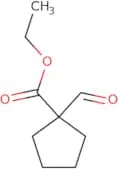
CAS:<p>1-Phenylcyclopropanecarbaldehyde is a compound that inhibits the metabolic disorder of phenoxy, alkylthio group, and α7 nicotinic acetylcholine. It has been shown to have an inhibitory effect on inflammatory diseases. 1-Phenylcyclopropanecarbaldehyde has also been shown to be an antimicrobial agent against bacteria, fungi, and parasites. This compound is metabolized by hydrolysis, oxidation, or reduction. 1-Phenylcyclopropanecarbaldehyde contains a chlorine atom in its chemical structure and reacts with hydrogen peroxide to produce chloroform. The hydroxy group in this compound can react with the insulin receptor in cells of the pancreas to cause insulin resistance and subsequently diabetes mellitus.</p>Fórmula:C10H10OPureza:Min. 95%Peso molecular:146.19 g/molEthyl 1-formylcyclopentane-1-carboxylate
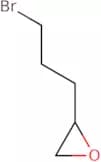
CAS:<p>Versatile small molecule scaffold</p>Fórmula:C9H14O3Pureza:Min. 95%Peso molecular:170.21 g/mol2-(3-Bromopropyl)oxirane
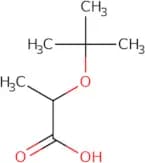
CAS:<p>2-(3-Bromopropyl)oxirane is an organic compound that has been synthesized by a process called asymmetric synthesis. This synthetic route is based on the use of synthons (asymmetric compounds) and requires that the product be expressed with a high degree of stereoselectivity. The orientation of the molecule must also be controlled to ensure that it is in the desired configuration. 2-(3-Bromopropyl)oxirane can be used as a synthon to produce enantiopure metalloporphyrins, which are often used in biological systems for electron transfer reactions or for photosynthesis. The strain imposed on the molecule during its synthesis can also be mimicked during biomimetic reactions to obtain products that are otherwise difficult to access.</p>Fórmula:C5H9BrOPureza:Min. 95%Peso molecular:165.03 g/mol(2S)-2-(tert-Butoxy)propanoic acid
CAS:<p>Versatile small molecule scaffold</p>Fórmula:C7H14O3Pureza:Min. 95%Peso molecular:146.2 g/mol2-{Imidazo[1,2-a]pyridin-2-yl}acetohydrazide
CAS:<p>Versatile small molecule scaffold</p>Fórmula:C9H10N4OPureza:Min. 95%Peso molecular:190.2 g/mol2-{Imidazo[1,2-a]pyridin-2-yl}ethan-1-ol
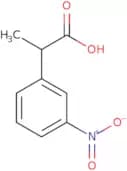
CAS:<p>Versatile small molecule scaffold</p>Fórmula:C9H10N2OPureza:Min. 95%Peso molecular:162.19 g/mol2-(3-nitrophenyl)propanoic acid
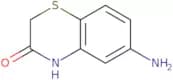
CAS:<p>2-(3-nitrophenyl)propanoic acid is an organic compound with the formula CHCH(COOH)C(=O)OCH. It is a white solid that is soluble in water. 2-(3-Nitrophenyl)propanoic acid is extracted from plant leaves and synthesized by reacting formaldehyde with sodium nitrite. The resulting product can be used to synthesize polyaniline, a polymer that conducts electricity and reacts with ammonium persulphate, forming a red precipitate. This reaction can be tracked using FTIR spectroscopy, which detects the substituents on the polymer chains.</p>Fórmula:C9H9NO4Pureza:Min. 95%Peso molecular:195.2 g/mol6-Amino-3,4-dihydro-2H-1,4-benzothiazin-3-one
CAS:<p>Versatile small molecule scaffold</p>Fórmula:C8H8N2OSPureza:Min. 95%Peso molecular:180.23 g/mol7-Amino-2H-benzo[b][1,4]thiazin-3(4H)-one
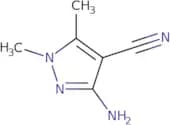
CAS:<p>Versatile small molecule scaffold</p>Fórmula:C8H8N2OSPureza:Min. 95%Peso molecular:180.23 g/mol3-Amino-1,5-dimethyl-1H-pyrazole-4-carbonitrile
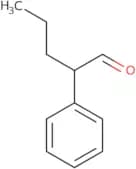
CAS:<p>Versatile small molecule scaffold</p>Fórmula:C6H8N4Pureza:Min. 95%Peso molecular:136.15 g/mol2-Phenylpentanal
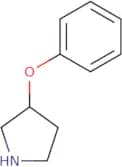
CAS:<p>2-Phenylpentanal is a synthetic odorant that has a strong, sweet, vanilla-like odor. It is used as a deodorant in acidic environments and to mask unpleasant odors. 2-Phenylpentanal is an active ingredient in air fresheners and toilet bowl deodorants. It can also be found in perfumes, soaps, and other personal care products. 2-Phenylpentanal is not toxic or flammable. The molecule has a molecular weight of 126.2 g/mol and an average particle diameter of 5 nm. It is soluble in water and alcohols with the exception of methanol. 2-Phenylpentanal can be synthesized from two molecules of acetone with magnesium oxide as a catalyst. The molecule consists of an aromatic ring with two phenyl groups connected by a pentane chain with an alpha position double bond on one side of the chain and an alpha position single bond</p>Fórmula:C11H14OPureza:Min. 95%Peso molecular:162.23 g/mol3-Phenoxypyrrolidine
CAS:<p>Versatile small molecule scaffold</p>Fórmula:C10H13NOPureza:Min. 95%Peso molecular:163.22 g/mol3-[3-(Trifluoromethyl)phenyl]pyrrolidine
CAS:<p>Versatile small molecule scaffold</p>Fórmula:C11H12F3NPureza:Min. 95%Peso molecular:215.21 g/mol3-[3-(Trifluoromethyl)phenyl]pyrrolidine hydrochloride
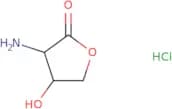
CAS:<p>Versatile small molecule scaffold</p>Fórmula:C11H13ClF3NPureza:Min. 95%Peso molecular:251.67 g/mol(3S,4R)-3-Amino-4-hydroxyoxolan-2-one hydrochloride
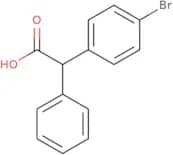
CAS:<p>Versatile small molecule scaffold</p>Fórmula:C4H8ClNO3Pureza:Min. 95%Peso molecular:153.56 g/mol2-(4-Bromophenyl)-2-phenylacetic acid
CAS:<p>Versatile small molecule scaffold</p>Fórmula:C14H11BrO2Pureza:Min. 95%Peso molecular:291.14 g/molN-Acetyl-N-methylcarbamoyl chloride
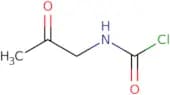
CAS:<p>Versatile small molecule scaffold</p>Fórmula:C4H6ClNO2Pureza:Min. 95%Peso molecular:135.5 g/mol

![1-[(5-Fluorothiophen-2-yl)methyl]piperazine](/_next/image/?url=https%3A%2Fstatic.cymitquimica.com%2Fproducts%2F3D%2Fthumb-webp%2FVZB77149.webp&w=3840&q=75)
![[1-(Difluoromethyl)-1H-pyrazol-5-yl]methanol](/_next/image/?url=https%3A%2Fstatic.cymitquimica.com%2Fproducts%2F3D%2Fthumb-webp%2FVZB77228.webp&w=3840&q=75)
![[2-(3,4-Dimethoxyphenyl)ethyl]thiourea](/_next/image/?url=https%3A%2Fstatic.cymitquimica.com%2Fproducts%2F3D%2Fthumb-webp%2FWAA71426.webp&w=3840&q=75)
![2-{Imidazo[1,2-a]pyridin-2-yl}acetohydrazide](/_next/image/?url=https%3A%2Fstatic.cymitquimica.com%2Fproducts%2F3D%2Fthumb-webp%2FWAA75537.webp&w=3840&q=75)
![2-{Imidazo[1,2-a]pyridin-2-yl}ethan-1-ol](/_next/image/?url=https%3A%2Fstatic.cymitquimica.com%2Fproducts%2F3D%2Fthumb-webp%2FWAA75554.webp&w=3840&q=75)
![7-Amino-2H-benzo[b][1,4]thiazin-3(4H)-one](/_next/image/?url=https%3A%2Fstatic.cymitquimica.com%2Fproducts%2F3D%2Fthumb-webp%2FWAA76279.webp&w=3840&q=75)
![3-[3-(Trifluoromethyl)phenyl]pyrrolidine](/_next/image/?url=https%3A%2Fstatic.cymitquimica.com%2Fproducts%2F3D%2Fthumb-webp%2FWAA76735.webp&w=3840&q=75)
![3-[3-(Trifluoromethyl)phenyl]pyrrolidine hydrochloride](/_next/image/?url=https%3A%2Fstatic.cymitquimica.com%2Fproducts%2F3D%2Fthumb-webp%2FWAA76736.webp&w=3840&q=75)