Building Blocks
Esta sección contiene productos fundamentales para la síntesis de compuestos orgánicos y biológicos. Building blocks son los materiales de partida esenciales utilizados para construir moléculas complejas a través de diversas reacciones químicas. Desempeñan un papel crítico en el descubrimiento de fármacos, la ciencia de materiales y la investigación química. En CymitQuimica, ofrecemos una gama diversa de building blocks de alta calidad para apoyar sus investigaciones innovadoras y proyectos industriales, asegurando que tenga los componentes esenciales para una síntesis exitosa.
Subcategorías de "Building Blocks"
- Ácidos borónicos y derivados del ácido borónico(5.756 productos)
- Building Blocks quirales(1.242 productos)
- Building Blocks de hidrocarburos(6.095 productos)
- Building Blocks orgánicos(61.055 productos)
Se han encontrado 199650 productos de "Building Blocks"
Ordenar por
Pureza (%)
0
100
|
0
|
50
|
90
|
95
|
100
4,5-Dimethyl-N1-phenylbenzene-1,2-diamine
CAS:<p>Versatile small molecule scaffold</p>Fórmula:C14H16N2Pureza:Min. 95%Peso molecular:212.3 g/mol2-Ethyl-2-(methylsulfanyl)butan-1-ol
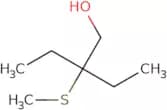
CAS:<p>Versatile small molecule scaffold</p>Fórmula:C7H16OSPureza:Min. 95%Peso molecular:148.27 g/mol1-{[(9H-Fluoren-9-yl)methoxy]carbonyl}-3-methylpiperidine-4-carboxylic acid
CAS:<p>Versatile small molecule scaffold</p>Fórmula:C22H23NO4Pureza:Min. 95%Peso molecular:365.4 g/mol2-Chloro-1-methyl-1H-imidazole-5-sulfonamide
CAS:<p>Versatile small molecule scaffold</p>Fórmula:C4H6ClN3O2SPureza:Min. 95%Peso molecular:195.63 g/mol3-Methyl-1H,2H,3H,4H,5H-pyrido[3,4-b][1,4]diazepin-2-one
CAS:<p>Versatile small molecule scaffold</p>Fórmula:C9H11N3OPureza:Min. 95%Peso molecular:177.2 g/mol2-Methyl-6-[(1,1,1-trifluoropropan-2-yl)oxy]pyridine-3-carbonitrile
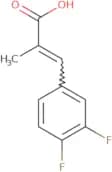
CAS:<p>Versatile small molecule scaffold</p>Fórmula:C10H9F3N2OPureza:Min. 95%Peso molecular:230.19 g/mol3-(3,4-Difluorophenyl)-2-methylprop-2-enoic acid
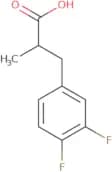
CAS:<p>Versatile small molecule scaffold</p>Fórmula:C10H8F2O2Pureza:Min. 95%Peso molecular:198.17 g/mol3-(3,4-Difluorophenyl)-2-methylpropanoic acid
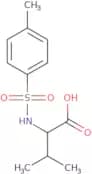
CAS:<p>Versatile small molecule scaffold</p>Fórmula:C10H10F2O2Pureza:Min. 95%Peso molecular:200.18 g/mol3-Methyl-2-(4-methylbenzenesulfonamido)butanoic acid
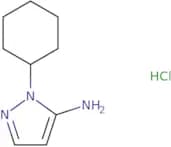
CAS:<p>Versatile small molecule scaffold</p>Fórmula:C12H17NO4SPureza:Min. 95%Peso molecular:271.33 g/mol1-Cyclohexyl-1H-pyrazol-5-amine hydrochloride
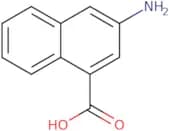
CAS:<p>Versatile small molecule scaffold</p>Fórmula:C9H16ClN3Pureza:Min. 95%Peso molecular:201.7 g/mol3-Aminonaphthalene-1-carboxylic acid
CAS:<p>3-Aminonaphthalene-1-carboxylic acid is a pyridine derivative that is structurally similar to the sulfoxide and dimethyl sulfoxide. The linear regression of the methanol and acetonitrile solvates was found to be dependent on substituent effects. The model compounds, naphthalene and benzene, were used as substituents in this experiment. Substituent effects are seen in the form of steric hindrance, inductive effect, and resonance stabilization. 3-Aminonaphthalene-1-carboxylic acid has been shown to have a variety of uses, including use as an intermediate in the synthesis of model compound skeletons.</p>Fórmula:C11H9NO2Pureza:Min. 95%Peso molecular:187.19 g/mol6-Aminonaphthalene-1-carboxylic acid
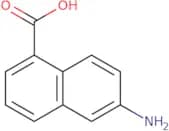
CAS:<p>Versatile small molecule scaffold</p>Fórmula:C11H9NO2Pureza:Min. 95%Peso molecular:187.19 g/mol1-(3-Chlorophenyl)propan-1-ol
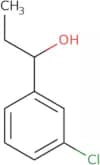
CAS:<p>The enantiomers of 1-(3-chlorophenyl)propan-1-ol are separated by a chiral column, yielding the (R)-enantiomer. The yield of the reaction is determined by the amount of oxidizing agent used to oxidize the alcohol and can be calculated by multiplying the molarity of the reactant and dividing it by the molarity of the product. The enantioselective oxidation of arylethyl alcohols with peracids in an aqueous solution was studied in this experiment. Nocardia and corallina are two examples of bacteria that produce this compound as part of their metabolism. Unreacted 1-(3-chlorophenyl)propan-1-ol can be found in ketones and carbinols, as well as other compounds containing an erythylene group.</p>Fórmula:C9H11OClPureza:Min. 95%Peso molecular:170.63 g/mol3-Propyl-2,5-dihydro-1,2,4-thiadiazol-5-imine
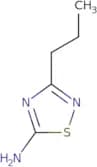
CAS:<p>Versatile small molecule scaffold</p>Fórmula:C5H9N3SPureza:Min. 95%Peso molecular:143.21 g/mol2-Methyl-5-nitro-1,3-benzoxazole
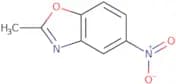
CAS:<p>2-Methyl-5-nitro-1,3-benzoxazole is a chemical compound that has been shown to inhibit the growth of wheat plants. It may have an effect on the regulation of plant growth and development. 2-Methyl-5-nitro-1,3-benzoxazole also inhibits the production of nitric oxide by activated macrophages and decreases their ability to produce cytokines. This chemical is found in soil, water, and air as well as in products such as plastics, textiles, and insulation materials. The amount of 2-methyl-5-nitro-1,3 benzoxazole present in these products is regulated by regulatory agencies to ensure safety standards are met.</p>Fórmula:C8H6N2O3Pureza:Min. 95%Peso molecular:178.15 g/mol4,6-Dinitro-1H-1,3-benzodiazole
CAS:<p>Versatile small molecule scaffold</p>Fórmula:C7H4N4O4Pureza:Min. 95%Peso molecular:208.13 g/molEthyl 3-oxo-2,3,5,6,7,8-hexahydrocinnoline-4-carboxylate
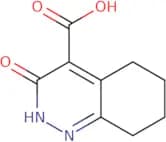
CAS:<p>Versatile small molecule scaffold</p>Fórmula:C11H14N2O3Pureza:Min. 95%Peso molecular:222.2 g/mol3-Oxo-2,3,5,6,7,8-hexahydrocinnoline-4-carboxylic acid
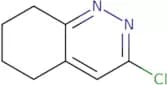
CAS:<p>Versatile small molecule scaffold</p>Fórmula:C9H10N2O3Pureza:Min. 95%Peso molecular:194.2 g/mol3-Chloro-5,6,7,8-tetrahydrocinnoline
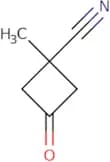
CAS:<p>Versatile small molecule scaffold</p>Fórmula:C8H9ClN2Pureza:Min. 95%Peso molecular:168.62 g/mol1-Methyl-3-oxocyclobutane-1-carbonitrile
CAS:<p>Versatile small molecule scaffold</p>Fórmula:C6H7NOPureza:Min. 95%Peso molecular:109.13 g/mol5-Oxo-3,5-dihydro-2H-thiazolo[3,2-a]pyrimidine-6-carboxylic acid
CAS:<p>Versatile small molecule scaffold</p>Fórmula:C7H6N2O3SPureza:Min. 95%Peso molecular:198.2 g/molPotassium 2-[(4-oxopent-2-en-2-yl)amino]acetate
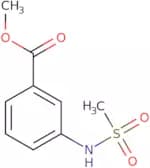
CAS:<p>Versatile small molecule scaffold</p>Fórmula:C7H10KNO3Pureza:Min. 95%Peso molecular:195.26 g/molMethyl 3-methanesulfonamidobenzoate
CAS:<p>Methyl 3-methanesulfonamidobenzoate is an organic compound that is used as a reagent in organic synthesis. It has the chemical formula CH3O2C(CH2)2SO2CH=NOH. Methyl 3-methanesulfonamidobenzoate is a methyl ester of benzoic acid, which is also known as methyl benzoate. This compound has been shown to react with DNA, forming adducts with guanine and cytosine bases.</p>Fórmula:C9H11NO4SPureza:Min. 95%Peso molecular:229.26 g/mol2-Ethyl-3-oxo-2-azatricyclo[6.3.1.0,4,12]dodeca-1(11),4(12),5,7,9-pentaene-9-sulfonyl chloride
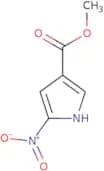
CAS:<p>Versatile small molecule scaffold</p>Fórmula:C13H10ClNO3SPureza:Min. 95%Peso molecular:295.74 g/molMethyl 5-nitro-1H-pyrrole-3-carboxylate
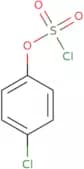
CAS:<p>Versatile small molecule scaffold</p>Fórmula:C6H6N2O4Pureza:Min. 95%Peso molecular:170.12 g/mol4-Chlorophenyl chloranesulfonate
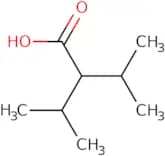
CAS:<p>Versatile small molecule scaffold</p>Fórmula:C6H4Cl2O3SPureza:Min. 95%Peso molecular:227.06 g/mol3-Methyl-2-(propan-2-yl)butanoic acid
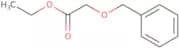
CAS:<p>3-Methyl-2-(propan-2-yl)butanoic acid is an inhibitor of cancer, which is structurally related to sulfamic acid. It has been shown to inhibit the growth of bacteria by binding to metal hydroxides and acting as a free radical scavenger. 3-Methyl-2-(propan-2-yl)butanoic acid inhibits the protease activity of trypsin and aminopeptidase and has depressant effects on the central nervous system. This compound also inhibits serotonin reuptake in the rat brain, suggesting that it may be a potential antidepressant. 3-Methyl-2-(propan-2-yl)butanoic acid has been shown to inhibit HIV infection by blocking the activation of tnf alpha.</p>Fórmula:C8H16O2Pureza:Min. 95%Peso molecular:144.21 g/molEthyl (Benzyloxy)acetate
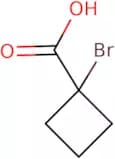
CAS:<p>Ethyl (Benzyloxy)acetate is a β-unsaturated ketone that is used in the synthesis of peroxisome proliferators. It is also used in the asymmetric synthesis of β-unsaturated ketones. Ethyl (Benzyloxy)acetate has been shown to induce inflammation and inhibit serine protease, which may be due to its ability to bind to hydroxyl groups and heterocycles. It can also act as an anti-HIV agent by binding to the hydroxyl group of insulin, which causes insulin resistance. This compound is also used as a solvent for organic chemistry reactions, including the conversion of ethyl formate into acetic acid.</p>Fórmula:C11H14O3Pureza:Min. 95%Peso molecular:194.23 g/mol1-Bromocyclobutane-1-carboxylic acid
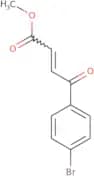
CAS:<p>Versatile small molecule scaffold</p>Fórmula:C5H7BrO2Pureza:Min. 95%Peso molecular:179.01 g/molMethyl (2E)-4-(4-bromophenyl)-4-oxobut-2-enoate
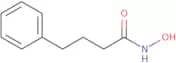
CAS:<p>Versatile small molecule scaffold</p>Fórmula:C11H9BrO3Pureza:Min. 95%Peso molecular:269.09 g/molN-Hydroxy-4-phenylbutanamide
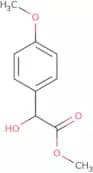
CAS:<p>N-Hydroxy-4-phenylbutanamide is a toolbox hydroxamic acid that has been shown to activate by reacting with the carbonyl group of an arylesterase. This reaction will generate an aldehyde, which can then undergo cyclodehydration in the presence of sodium periodate to form an alkene. The chiral nature of this molecule allows for selective activation on either the left or right side of the molecule. The aerobic conditions are required for this reaction to take place and it can be performed at room temperature. N-Hydroxy-4-phenylbutanamide is also used as a reagent in organic synthesis, crystallography, and alkene synthesis.</p>Fórmula:C10H13NO2Pureza:Min. 95%Peso molecular:179.22 g/molMethyl (2R)-2-hydroxy-2-(4-methoxyphenyl)acetate
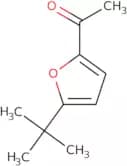
CAS:<p>Versatile small molecule scaffold</p>Fórmula:C10H12O4Pureza:Min. 95%Peso molecular:196.2 g/mol1-(5-tert-Butylfuran-2-yl)ethan-1-one
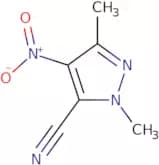
CAS:<p>Versatile small molecule scaffold</p>Fórmula:C10H14O2Pureza:Min. 95%Peso molecular:166.22 g/mol1,3-Dimethyl-4-nitro-1H-pyrazole-5-carbonitrile
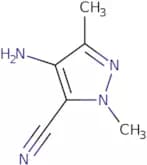
CAS:<p>Versatile small molecule scaffold</p>Fórmula:C6H6N4O2Pureza:Min. 95%Peso molecular:166.14 g/mol4-Amino-1,3-dimethyl-1H-pyrazole-5-carbonitrile
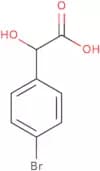
CAS:<p>Versatile small molecule scaffold</p>Fórmula:C6H8N4Pureza:Min. 95%Peso molecular:136.15 g/mol(R)-4-Bromomandelic acid
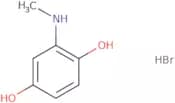
CAS:<p>Versatile small molecule scaffold</p>Fórmula:C8H7BrO3Pureza:Min. 95%Peso molecular:231.04 g/mol2-(Methylamino)benzene-1,4-diol hydrobromide
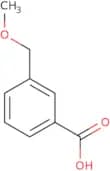
CAS:<p>Versatile small molecule scaffold</p>Fórmula:C7H10BrNO2Pureza:Min. 95%Peso molecular:220.06 g/mol3-(Methoxymethyl)benzoic acid
CAS:<p>Versatile small molecule scaffold</p>Fórmula:C9H10O3Pureza:Min. 95%Peso molecular:166.17 g/mol6-Chloro-2,3,4,9-tetrahydro-1H-carbazol-3-ol
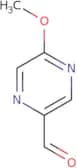
CAS:<p>Versatile small molecule scaffold</p>Fórmula:C12H12ClNOPureza:Min. 95%Peso molecular:221.68 g/mol5-Methoxypyrazine-2-carbaldehyde
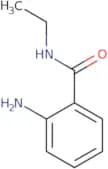
CAS:<p>Versatile small molecule scaffold</p>Fórmula:C6H6N2O2Pureza:Min. 95%Peso molecular:138.12 g/mol2-Amino-N-ethylbenzamide
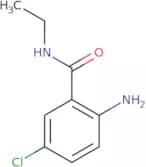
CAS:<p>2-Amino-N-ethylbenzamide is a synthetic compound that is used in the synthesis of quinazolinones and other pharmaceuticals. It is also used as a reagent for selective halogenation. 2-Amino-N-ethylbenzamide can be synthesized from anthranilic acid, which is produced by the degradation of amino acids in the body, and chloroform. The chlorination of this compound yields 2-chloroamino-N-ethylbenzamide. This reaction can be done in two ways: regioselectively or regiocontrolled. Regioselective reactions are those that have a specific orientation on the benzene ring, while regiocontrolled reactions are less specific.<br>2-Amino-N-ethylbenzamide has been used to produce trifluoromethylated compounds, which are often found in pharmaceuticals such as fluoroquinol</p>Fórmula:C9H12N2OPureza:Min. 95%Peso molecular:164.21 g/mol2-Amino-5-chloro-N-ethylbenzamide
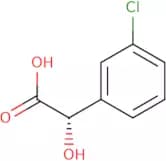
CAS:Versatile small molecule scaffoldFórmula:C9H11ClN2OPureza:Min. 95%Peso molecular:198.65 g/mol(S)-2-(3-Chlorophenyl)-2-hydroxyacetic acid
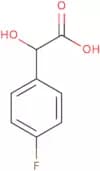
CAS:<p>(S)-2-(3-Chlorophenyl)-2-hydroxyacetic acid is a chiral compound that has the enantiomeric form of tartaric acid. It is a racemic mixture, with one molecule having the (R) configuration and the other molecule having the (S) configuration. The (R) form is found in grapes, apples, and many other fruits. The (S) form is found in lemons, oranges, and tomatoes. This compound has been shown to be effective as an antacid for relief of heartburn and stomach acidity.</p>Fórmula:C8H7ClO3Pureza:Min. 95%Peso molecular:186.59 g/mol(2R)-2-(4-Fluorophenyl)-2-hydroxyacetic acid
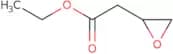
CAS:<p>Versatile small molecule scaffold</p>Fórmula:C8H7FO3Pureza:Min. 95%Peso molecular:170.14 g/molEthyl 2-(oxiran-2-yl)acetate
CAS:<p>Ethyl 2-(oxiran-2-yl)acetate is an enantiomer of ethyl 2-hydroxyacrylate that can be used as a toolbox molecule for the preparation of epoxides. It has been shown to catalyze the formation of epoxides from the corresponding alcohols and oxiranes. This compound has also been studied as a potential cholinergic agent with carbon source and in pharmaceutical preparations.</p>Fórmula:C6H10O3Pureza:Min. 95%Peso molecular:130.14 g/mol2-[(Phenoxycarbonyl)amino]propanoic acid
CAS:<p>2-[(Phenoxycarbonyl)amino]propanoic acid is a synthetic small molecule that can be used as a research tool to study the function of ion channels. It has been shown to activate ligand-gated ion channels and inhibit voltage-gated ion channels. This compound binds to the receptor site, which results in an increase in cell permeability. 2-[(Phenoxycarbonyl)amino]propanoic acid also inhibits protein interactions by binding to a specific region of the protein surface.</p>Fórmula:C10H11NO4Pureza:Min. 95%Peso molecular:209.2 g/mol3-[4-(3-Chlorophenyl)piperazin-1-yl]propan-1-ol
CAS:<p>Versatile small molecule scaffold</p>Fórmula:C13H19ClN2OPureza:Min. 95%Peso molecular:254.75 g/mol1-(3,4-Dimethoxy-benzyl)-piperazine
CAS:Producto controlado<p>Versatile small molecule scaffold</p>Fórmula:C13H20N2O2Pureza:Min. 95%Peso molecular:236.31 g/mol2-[(4S)-2,2-Dimethyl-1,3-dioxolan-4-yl]acetaldehyde
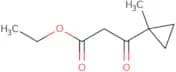
CAS:<p>Versatile small molecule scaffold</p>Fórmula:C7H12O3Pureza:Min. 95%Peso molecular:144.17 g/molEthyl 3-(1-methylcyclopropyl)-3-oxopropanoate
CAS:<p>Versatile small molecule scaffold</p>Fórmula:C9H14O3Pureza:Min. 95%Peso molecular:170.21 g/mol

![1-{[(9H-Fluoren-9-yl)methoxy]carbonyl}-3-methylpiperidine-4-carboxylic acid](/_next/image/?url=https%3A%2Fstatic.cymitquimica.com%2Fproducts%2F3D%2Fthumb-webp%2FHAD31391.webp&w=3840&q=75)

![3-Methyl-1H,2H,3H,4H,5H-pyrido[3,4-b][1,4]diazepin-2-one](/_next/image/?url=https%3A%2Fstatic.cymitquimica.com%2Fproducts%2F3D%2Fthumb-webp%2FHAD49242.webp&w=3840&q=75)
![2-Methyl-6-[(1,1,1-trifluoropropan-2-yl)oxy]pyridine-3-carbonitrile](/_next/image/?url=https%3A%2Fstatic.cymitquimica.com%2Fproducts%2F3D%2Fthumb-webp%2FHAD75990.webp&w=3840&q=75)

![5-Oxo-3,5-dihydro-2H-thiazolo[3,2-a]pyrimidine-6-carboxylic acid](/_next/image/?url=https%3A%2Fstatic.cymitquimica.com%2Fproducts%2F3D%2Fthumb-webp%2FHBA08455.webp&w=3840&q=75)
![Potassium 2-[(4-oxopent-2-en-2-yl)amino]acetate](/_next/image/?url=https%3A%2Fstatic.cymitquimica.com%2Fproducts%2F3D%2Fthumb-webp%2FHBA08581.webp&w=3840&q=75)
![2-Ethyl-3-oxo-2-azatricyclo[6.3.1.0,4,12]dodeca-1(11),4(12),5,7,9-pentaene-9-sulfonyl chloride](/_next/image/?url=https%3A%2Fstatic.cymitquimica.com%2Fproducts%2F3D%2Fthumb-webp%2FHBA10315.webp&w=3840&q=75)

![2-[(Phenoxycarbonyl)amino]propanoic acid](/_next/image/?url=https%3A%2Fstatic.cymitquimica.com%2Fproducts%2F3D%2Fthumb-webp%2FHBA22535.webp&w=3840&q=75)
![3-[4-(3-Chlorophenyl)piperazin-1-yl]propan-1-ol](/_next/image/?url=https%3A%2Fstatic.cymitquimica.com%2Fproducts%2F3D%2Fthumb-webp%2FHBA22998.webp&w=3840&q=75)

![2-[(4S)-2,2-Dimethyl-1,3-dioxolan-4-yl]acetaldehyde](/_next/image/?url=https%3A%2Fstatic.cymitquimica.com%2Fproducts%2F3D%2Fthumb-webp%2FHBA23344.webp&w=3840&q=75)