


Building Blocks
Esta sección contiene productos fundamentales para la síntesis de compuestos orgánicos y biológicos. Building blocks son los materiales de partida esenciales utilizados para construir moléculas complejas a través de diversas reacciones químicas. Desempeñan un papel crítico en el descubrimiento de fármacos, la ciencia de materiales y la investigación química. En CymitQuimica, ofrecemos una gama diversa de building blocks de alta calidad para apoyar sus investigaciones innovadoras y proyectos industriales, asegurando que tenga los componentes esenciales para una síntesis exitosa.
Subcategorías de "Building Blocks"
- Ácidos borónicos y derivados del ácido borónico(5.778 productos)
- Building Blocks quirales(1.242 productos)
- Building Blocks de hidrocarburos(6.098 productos)
- Building Blocks orgánicos(61.034 productos)
Se han encontrado 199601 productos de "Building Blocks"
Ordenar por
Pureza (%)
0
100
|
0
|
50
|
90
|
95
|
100
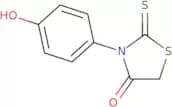
3-(4-Hydroxyphenyl)-2-sulfanylidene-1,3-thiazolidin-4-one
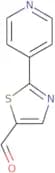
CAS:<p>Versatile small molecule scaffold</p>Fórmula:C9H7NO2S2Pureza:Min. 95%Peso molecular:225.3 g/mol2-(Pyridin-4-yl)-1,3-thiazole-5-carbaldehyde
CAS:<p>Versatile small molecule scaffold</p>Fórmula:C9H6N2OSPureza:Min. 95%Peso molecular:190.22 g/mol1H,4H,5H,6H,7H,8H-Pyrrolo[3,2-c]azepin-4-one
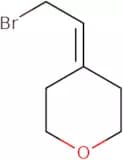
CAS:<p>1H,4H,5H,6H,7H,8H-Pyrrolo[3,2-c]azepin-4-one is a kinase inhibitor that inhibits the activity of protein kinases. It has been shown to inhibit the growth of human tumor cells in culture and inhibit the proliferation of leukemia cells in mice. 1H,4H,5H,6H,7H,8H-Pyrrolo[3,2-c]azepin-4-one binds reversibly to the ATP binding site on the ATP dependent protein kinase. The binding causes conformational changes in the enzyme's active site which prevents the transfer of phosphate groups from ATP to other proteins.</p>Fórmula:C8H10N2OPureza:Min. 95%Peso molecular:150.18 g/mol4-(2-Bromoethylidene)oxane
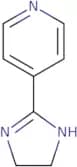
CAS:<p>Versatile small molecule scaffold</p>Fórmula:C7H11BrOPureza:Min. 95%Peso molecular:191.07 g/mol4-(4,5-Dihydroimidazol-2-yl)-pyridine
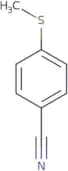
CAS:Versatile small molecule scaffoldFórmula:C8H9N3Pureza:Min. 95%Peso molecular:147.18 g/molp-Methylthio benzonitrile
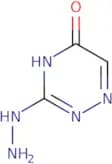
CAS:<p>p-Methylthio benzonitrile is a cross-coupling reagent that is used to synthesize sulfides, sulfones, and sulfoxides. It can also be used for the synthesis of disulfide bonds. The reaction mechanism of p-Methylthio benzonitrile involves an intramolecular nucleophilic substitution reaction between the sulfur atom and the electrophilic methylene group. This product has been shown to be efficient in the synthesis of sulfonic acids from halides and alcohols, which are important intermediates in organic synthesis. The use of this product as a catalyst for such reactions may lead to new methods for producing these compounds.</p>Fórmula:C8H7NSPureza:Min. 95%Peso molecular:149.21 g/mol3-Hydrazinyl-4,5-dihydro-1,2,4-triazin-5-one
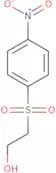
CAS:<p>Versatile small molecule scaffold</p>Fórmula:C3H5N5OPureza:Min. 95%Peso molecular:127.11 g/mol2-(4-Nitrobenzenesulfonyl)ethan-1-ol
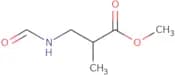
CAS:<p>Versatile small molecule scaffold</p>Fórmula:C8H9NO5SPureza:Min. 95%Peso molecular:231.23 g/mol3-Methylamino-2-methylpropionic acid methyl ester
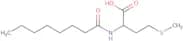
CAS:<p>Versatile small molecule scaffold</p>Fórmula:C6H13NO2Pureza:Min. 95%Peso molecular:131.17 g/mol4-(Methylthio)-2-octanamidobutanoic acid
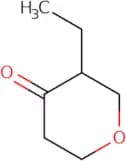
CAS:<p>Versatile small molecule scaffold</p>Fórmula:C13H25NO3SPureza:Min. 95%Peso molecular:275.41 g/mol3-Ethyloxan-4-one
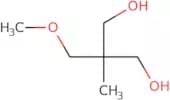
CAS:<p>Versatile small molecule scaffold</p>Fórmula:C7H12O2Pureza:Min. 95%Peso molecular:128.17 g/mol2-(Methoxymethyl)-2-methylpropane-1,3-diol
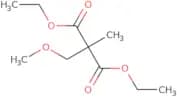
CAS:<p>Versatile small molecule scaffold</p>Fórmula:C6H14O3Pureza:Min. 95%Peso molecular:134.17 g/mol1,3-Diethyl 2-(methoxymethyl)-2-methylpropanedioate
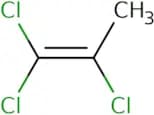
CAS:<p>Versatile small molecule scaffold</p>Fórmula:C10H18O5Pureza:Min. 95%Peso molecular:218.25 g/mol1,1,2-Trichloroprop-1-ene
CAS:<p>1,1,2-Trichloroprop-1-ene is a reactive chemical that can be used as a feedstock for the production of chlorinated products. 1,1,2-Trichloroprop-1-ene is produced by the reaction of chlorine with hydrocarbons. It has been shown to have inorganic impurities such as chloride and hydrated metal hydroxides. The reaction mixture is heated and the catalyst is added to remove these impurities. The product may be purified further by distillation or recrystallization.</p>Fórmula:C3H3Cl3Pureza:Min. 95%Peso molecular:145.41 g/molN-[(Thiophen-2-yl)methyl]acetamide
CAS:<p>Versatile small molecule scaffold</p>Fórmula:C7H9NOSPureza:Min. 95%Peso molecular:155.22 g/molN-[(5-Sulfamoylthiophen-2-yl)methyl]acetamide
CAS:<p>Versatile small molecule scaffold</p>Fórmula:C7H10N2O3S2Pureza:Min. 95%Peso molecular:234.3 g/mol[(2,3-Dihydro-1,4-benzodioxin-2-yl)methyl](propyl)amine hydrochloride
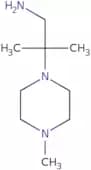
CAS:<p>Versatile small molecule scaffold</p>Fórmula:C12H18ClNO2Pureza:Min. 95%Peso molecular:243.73 g/mol2-Methyl-2-(4-methyl-piperazin-1-yl)-propylamine
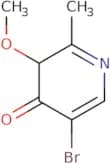
CAS:<p>Versatile small molecule scaffold</p>Fórmula:C9H21N3Pureza:Min. 95%Peso molecular:171.28 g/mol5-bromo-3-methoxy-2-methyl-1,4-dihydropyridin-4-one
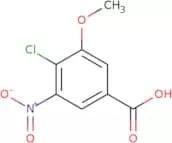
CAS:<p>Versatile small molecule scaffold</p>Fórmula:C7H8BrNO2Pureza:Min. 95%Peso molecular:218.05 g/mol4-Chloro-3-methoxy-5-nitrobenzoic acid
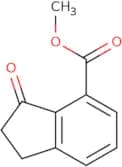
CAS:<p>Versatile small molecule scaffold</p>Fórmula:C8H6ClNO5Pureza:Min. 95%Peso molecular:231.59 g/molMethyl 3-oxo-2,3-dihydro-1H-indene-4-carboxylate
CAS:<p>Versatile small molecule scaffold</p>Fórmula:C11H10O3Pureza:Min. 95%Peso molecular:190.19 g/mol(3S,8aS)-3-(Hydroxymethyl)-octahydropyrrolo[1,2-a]piperazine-1,4-dione
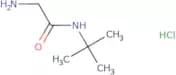
CAS:<p>Versatile small molecule scaffold</p>Fórmula:C8H12N2O3Pureza:Min. 95%Peso molecular:184.19 g/mol2-Amino-N-tert-butyl-acetamidehydrochloride
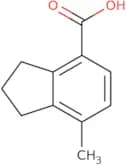
CAS:<p>Versatile small molecule scaffold</p>Fórmula:C6H15ClN2OPureza:Min. 95%Peso molecular:166.65 g/mol7-Methyl-2,3-dihydro-1H-indene-4-carboxylic acid
CAS:<p>Versatile small molecule scaffold</p>Fórmula:C11H12O2Pureza:Min. 95%Peso molecular:176.21 g/mol2-[(1,1-Dioxo-1,2-benzothiazol-3-yl)amino]acetic acid
CAS:<p>Versatile small molecule scaffold</p>Fórmula:C9H8N2O4SPureza:Min. 95%Peso molecular:240.24 g/mol4-[(1,1-Dioxo-1,2-benzothiazol-3-yl)amino]butanoic acid
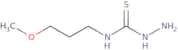
CAS:Producto controlado<p>4-[(1,1-Dioxo-1,2-benzothiazol-3-yl)amino]butanoic acid is a ligand of the nicotinic acetylcholine receptor (nAChR). It has been shown to inhibit or activate nAChRs depending on the receptor subtype. 4-[(1,1-Dioxo-1,2-benzothiazol-3-yl)amino]butanoic acid has also been shown to be an effective inhibitor of the sodium channel. 4-[(1,1-Dioxo-1,2-benzothiazol-3-yl)amino]butanoic acid is a peptide with a molecular weight of 269.30 Da and purity greater than 99%. This compound is a research tool that can be used as an antibody for cell biology and immunology experiments.</p>Fórmula:C11H12N2O4SPureza:Min. 95%Peso molecular:268.29 g/mol4-(3-Methoxypropyl)-3-thiosemicarbazide
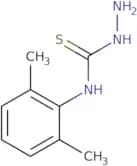
CAS:<p>Versatile small molecule scaffold</p>Fórmula:C5H13N3OSPureza:Min. 95%Peso molecular:163.24 g/mol4-(2,6-Dimethylphenyl)-3-thiosemicarbazide
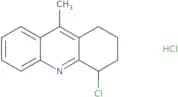
CAS:<p>Versatile small molecule scaffold</p>Fórmula:C9H13N3SPureza:Min. 95%Peso molecular:195.28 g/mol4-Chloro-9-methyl-1,2,3,4-tetrahydroacridine
CAS:<p>Versatile small molecule scaffold</p>Fórmula:C14H15Cl2NPureza:Min. 95%Peso molecular:268.2 g/molC -(4-Methyl-thiazol-2-yl)-methylamine dihydrochloride
CAS:<p>Versatile small molecule scaffold</p>Fórmula:C5H10Cl2N2SPureza:Min. 95%Peso molecular:201.12 g/mol1-(2,2-Dimethylpropanoyl)piperidin-4-one
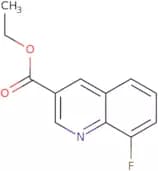
CAS:Producto controlado<p>Versatile small molecule scaffold</p>Fórmula:C10H17NO2Pureza:Min. 95%Peso molecular:183.25 g/molEthyl 8-Fluoroquinoline-3-carboxylate
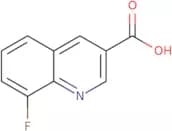
CAS:<p>Versatile small molecule scaffold</p>Fórmula:C12H10FNO2Pureza:Min. 95%Peso molecular:219.21 g/mol8-Fluoroquinoline-3-carboxylic acid
CAS:<p>Versatile small molecule scaffold</p>Fórmula:C10H6FNO2Pureza:Min. 95%Peso molecular:191.16 g/mol8-Chloroquinoline-3-carboxylic acid
CAS:<p>8-Chloroquinoline-3-carboxylic acid is an industrial chemical that is used as a pharmaceutical. It is also an antibacterial agent that has been shown to be effective against sulfite-reducing bacteria, such as Clostridium difficile and Helicobacter pylori. This drug inhibits bacterial growth by damaging the cell membrane and preventing the production of essential proteins for DNA replication. 8-Chloroquinoline-3-carboxylic acid is produced by treating quinoline with chlorination, followed by reaction with sulfuryl chloride or quinoline carboxylic acid.</p>Fórmula:C10H6ClNO2Pureza:Min. 95%Peso molecular:207.61 g/mol8-Methyl-quinoline-3-carboxylic acid
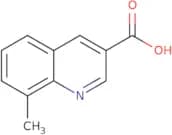
CAS:<p>Versatile small molecule scaffold</p>Fórmula:C11H9NO2Pureza:Min. 95%Peso molecular:187.2 g/mol8-Fluoro-3-quinolinecarbonitrile
CAS:<p>Versatile small molecule scaffold</p>Fórmula:C10H5FN2Pureza:Min. 95%Peso molecular:172.16 g/mol4-oxo-1,4-Dihydroquinoline-3-carbonitrile
CAS:<p>4-oxo-1,4-Dihydroquinoline-3-carbonitrile (4ODQ) is a synthetic compound that is acidic in nature. It hydrolyzes in acidic conditions to form a carboxylic acid and ammonia. 4ODQ can also react with amines to form azides, chloride to form chloramines, methyl anthranilate to form piperidines, trifluoride to form triflates, and morpholine to form morpholines. The chemical structure of 4ODQ consists of an anthranilate moiety which has been decarboxylated and an amine group which has been enaminated.<br>4ODQ inhibits the growth of cancer cells by binding to the ATP binding site on the enzyme kinase B (BRAF), thereby preventing phosphorylation of downstream proteins that are involved in cell proliferation. This inhibition leads to apoptosis or programmed cell death.</p>Fórmula:C10H6N2OPureza:Min. 95%Peso molecular:170.17 g/mol6-Chloro-4-oxo-1,4-dihydroquinoline-3-carbonitrile
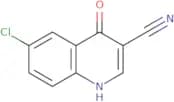
CAS:<p>Versatile small molecule scaffold</p>Fórmula:C10H5ClN2OPureza:Min. 95%Peso molecular:204.61 g/mol3-(2-Chloroethyl)-5-methyl-1,2,4-oxadiazole
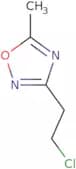
CAS:<p>Versatile small molecule scaffold</p>Fórmula:C5H7ClN2OPureza:Min. 95%Peso molecular:146.57 g/mol2-Ethylfuran-3-carboxylic acid
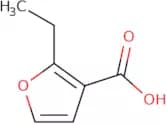
CAS:<p>Versatile small molecule scaffold</p>Fórmula:C7H8O3Pureza:Min. 95%Peso molecular:140.14 g/molMethyl 4-methylidenecyclohexane-1-carboxylate
CAS:<p>Versatile small molecule scaffold</p>Fórmula:C9H14O2Pureza:Min. 95%Peso molecular:154.21 g/mol1-Amino-2-(2-chlorophenyl)propan-2-ol
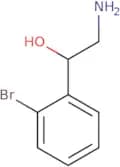
CAS:<p>Versatile small molecule scaffold</p>Fórmula:C9H12ClNOPureza:Min. 95%Peso molecular:185.65 g/mol2-amino-1-(2-bromophenyl)ethan-1-ol
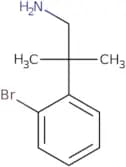
CAS:<p>Versatile small molecule scaffold</p>Fórmula:C8H10BrNOPureza:Min. 95%Peso molecular:216.1 g/mol2-(2-Bromophenyl)-2-methylpropan-1-amine
CAS:<p>Versatile small molecule scaffold</p>Fórmula:C10H14BrNPureza:Min. 95%Peso molecular:228.13 g/mol1-[(Oxolan-2-yl)methyl]piperidin-4-one
CAS:<p>Versatile small molecule scaffold</p>Fórmula:C10H17NO2Pureza:Min. 95%Peso molecular:183.25 g/mol3-Methyl-[1,2]thiazolo[5,4-b]pyridine
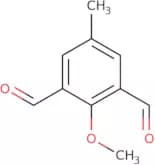
CAS:<p>Versatile small molecule scaffold</p>Fórmula:C7H6N2SPureza:Min. 95%Peso molecular:150.2 g/mol2-Methoxy-5-methylbenzene-1,3-dicarbaldehyde
CAS:<p>2-Methoxy-5-methylbenzene-1,3-dicarbaldehyde (MMDA) is a reactive molecule that has been used for cross linking and insolubilizing polymers. It is an important intermediate in the synthesis of methyl methacrylate, which is used in the production of acrylic adhesives and coatings. 2-Methoxy-5-methylbenzene-1,3-dicarbaldehyde can be used as a monomer or comonomer to produce polymers with various functionalities. This molecule undergoes bifunctional reactions with acceptor molecules such as phenols, amines and alcohols. 2-Methoxy-5-methylbenzene-1,3-dicarbaldehyde reacts with triplet oxygen to form singlet oxygen. This reaction results in the formation of reactive radicals that can cause oxidation reactions on the acceptor molecule. Monitoring this process is possible through monitoring the accept</p>Fórmula:C10H10O3Pureza:Min. 95%Peso molecular:178.18 g/molPhenyl-N-(4-cyanophenyl)carbamate
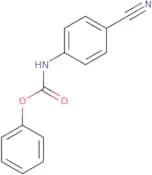
CAS:<p>Versatile small molecule scaffold</p>Fórmula:C14H10N2O2Pureza:Min. 95%Peso molecular:238.24 g/mol2-(Chloromethyl)-[1,2,4]triazolo[1,5-a]pyridine
CAS:<p>Versatile small molecule scaffold</p>Fórmula:C7H6ClN3Pureza:Min. 95%Peso molecular:167.59 g/mol1-Bromospiro[2.3]hexane
CAS:<p>Versatile small molecule scaffold</p>Fórmula:C6H9BrPureza:Min. 95%Peso molecular:161.04 g/mol

![1H,4H,5H,6H,7H,8H-Pyrrolo[3,2-c]azepin-4-one](/_next/image/?url=https%3A%2Fstatic.cymitquimica.com%2Fproducts%2F3D%2Fthumb-webp%2FWAA35723.webp&w=3840&q=75)
![N-[(Thiophen-2-yl)methyl]acetamide](/_next/image/?url=https%3A%2Fstatic.cymitquimica.com%2Fproducts%2F3D%2Fthumb-webp%2FWAA40324.webp&w=3840&q=75)
![N-[(5-Sulfamoylthiophen-2-yl)methyl]acetamide](/_next/image/?url=https%3A%2Fstatic.cymitquimica.com%2Fproducts%2F3D%2Fthumb-webp%2FWAA40329.webp&w=3840&q=75)
amine hydrochloride](/_next/image/?url=https%3A%2Fstatic.cymitquimica.com%2Fproducts%2F3D%2Fthumb-webp%2FWAA40480.webp&w=3840&q=75)
![(3S,8aS)-3-(Hydroxymethyl)-octahydropyrrolo[1,2-a]piperazine-1,4-dione](/_next/image/?url=https%3A%2Fstatic.cymitquimica.com%2Fproducts%2F3D%2Fthumb-webp%2FWCA01804.webp&w=3840&q=75)
![2-[(1,1-Dioxo-1,2-benzothiazol-3-yl)amino]acetic acid](/_next/image/?url=https%3A%2Fstatic.cymitquimica.com%2Fproducts%2F3D%2Fthumb-webp%2FWCA05477.webp&w=3840&q=75)
![4-[(1,1-Dioxo-1,2-benzothiazol-3-yl)amino]butanoic acid](/_next/image/?url=https%3A%2Fstatic.cymitquimica.com%2Fproducts%2F3D%2Fthumb-webp%2FWCA05478.webp&w=3840&q=75)







![1-[(Oxolan-2-yl)methyl]piperidin-4-one](/_next/image/?url=https%3A%2Fstatic.cymitquimica.com%2Fproducts%2F3D%2Fthumb-webp%2FWCA10610.webp&w=3840&q=75)
![3-Methyl-[1,2]thiazolo[5,4-b]pyridine](/_next/image/?url=https%3A%2Fstatic.cymitquimica.com%2Fproducts%2F3D%2Fthumb-webp%2FWCA10934.webp&w=3840&q=75)
![2-(Chloromethyl)-[1,2,4]triazolo[1,5-a]pyridine](/_next/image/?url=https%3A%2Fstatic.cymitquimica.com%2Fproducts%2F3D%2Fthumb-webp%2FWCA13994.webp&w=3840&q=75)
![1-Bromospiro[2.3]hexane](/_next/image/?url=https%3A%2Fstatic.cymitquimica.com%2Fproducts%2F3D%2Fthumb-webp%2FWCA15328.webp&w=3840&q=75)