Building Blocks
Esta sección contiene productos fundamentales para la síntesis de compuestos orgánicos y biológicos. Building blocks son los materiales de partida esenciales utilizados para construir moléculas complejas a través de diversas reacciones químicas. Desempeñan un papel crítico en el descubrimiento de fármacos, la ciencia de materiales y la investigación química. En CymitQuimica, ofrecemos una gama diversa de building blocks de alta calidad para apoyar sus investigaciones innovadoras y proyectos industriales, asegurando que tenga los componentes esenciales para una síntesis exitosa.
Subcategorías de "Building Blocks"
- Ácidos borónicos y derivados del ácido borónico(5.778 productos)
- Building Blocks quirales(1.243 productos)
- Building Blocks de hidrocarburos(6.098 productos)
- Building Blocks orgánicos(61.042 productos)
Se han encontrado 204339 productos de "Building Blocks"
Ordenar por
Pureza (%)
0
100
|
0
|
50
|
90
|
95
|
100
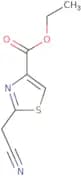
Ethyl 2-(cyanomethyl)-1,3-thiazole-4-carboxylate
CAS:Versatile small molecule scaffoldFórmula:C8H8N2O2SPureza:Min. 95%Peso molecular:196.23 g/mol(2-Bromophenyl)(phenyl)methanol
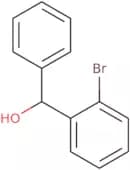
CAS:The synthesis of (2-bromophenyl)(phenyl)methanol is accomplished by the reaction of an aldehyde with bromine followed by an alkylation with magnesium. The product is obtained as a racemic mixture of enantiomers with a chiral center, which can be resolved by fractional crystallization or other separation methods. This method has been shown to be efficient for the synthesis of alcohols and carbinols, and stereogenic reactions.Fórmula:C13H11OBrPureza:Min. 95%Peso molecular:263.12 g/mol6-Ethylpyridine-2-carbonitrile
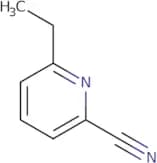
CAS:Versatile small molecule scaffoldFórmula:C8H8N2Pureza:Min. 95%Peso molecular:132.16 g/mol5,6-Dimethylpicolinonitrile
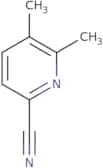
CAS:Versatile small molecule scaffoldFórmula:C8H8N2Pureza:Min. 95%Peso molecular:132.16 g/mol6-Nitro-2,3-xylidine
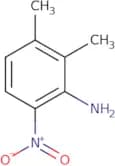
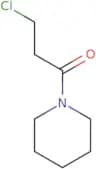
CAS:<p>6-Nitro-2,3-xylidine is a molecule that has been synthesized using organocatalytic methods. This compound is an electron acceptor and a strong nucleophile, which can be used for the synthesis of chiral derivatives. As an organocatalyst, 6-nitro-2,3-xylidine can be used to sulfonate aldehydes with high stereoselectivity. The molecular orbital diagram shows that the antibonding interaction is stronger than the bonding interaction between this compound and chloride.</p>Fórmula:C8H10N2O2Pureza:Min. 95%Peso molecular:166.18 g/mol3-Chloro-1-(piperidin-1-yl)propan-1-one
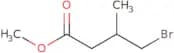
CAS:Versatile small molecule scaffoldFórmula:C8H14ClNOPureza:Min. 95%Peso molecular:175.65 g/molMethyl 4-bromo-3-methylbutanoate
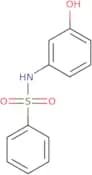
CAS:Versatile small molecule scaffoldFórmula:C6H11BrO2Pureza:Min. 95%Peso molecular:195.05 g/molN-(3-Hydroxyphenyl)benzenesulfonamide
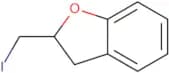
CAS:<p>Versatile small molecule scaffold</p>Fórmula:C12H11NO3SPureza:Min. 95%Peso molecular:249.29 g/mol2-(Iodomethyl)-2,3-dihydro-1-benzofuran
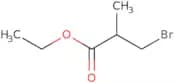
CAS:2-(Iodomethyl)-2,3-dihydro-1-benzofuran is an efficient synthesis of 2-iodo-1,3-benzofuran. It is an intermediate in the synthesis of organic compounds that contain a benzene ring with two adjacent hydrogens substituted by iodine atoms. This process is called "aromatization."Fórmula:C9H9IOPureza:Min. 95%Peso molecular:260.07 g/molEthyl 3-bromo-2-methylpropanoate
CAS:Ethyl 3-bromo-2-methylpropanoate is a test compound that belongs to the chemical class of esters. It is used in the study of biological properties. Ethyl 3-bromo-2-methylpropanoate may inhibit cancer by blocking DNA replication, which can lead to cell death and tumor shrinkage. This drug also has anti-inflammatory effects and can be used as a treatment for cancer in women, as well as animals, such as mice. Ethyl 3-bromo-2-methylpropanoate binds to lysine residues on proteins that are important for tumor growth, including histones and chloride channels.Fórmula:C6H11BrO2Pureza:Min. 95%Peso molecular:195.05 g/mol3-Hydroxy-2,2-dimethylcyclopentan-1-one
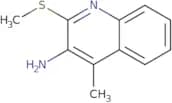
CAS:Versatile small molecule scaffoldFórmula:C7H12O2Pureza:Min. 95%Peso molecular:128.17 g/mol4-Methyl-2-(methylsulfanyl)quinolin-3-amine
CAS:Versatile small molecule scaffoldFórmula:C11H12N2SPureza:Min. 95%Peso molecular:204.29 g/mol2-[2-(Hydroxymethyl)phenoxy]benzenecarbonitrile
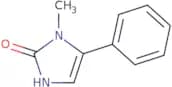
CAS:<p>Versatile small molecule scaffold</p>Fórmula:C14H11NO2Pureza:Min. 95%Peso molecular:225.24 g/mol1-Methyl-5-phenyl-2,3-dihydro-1H-imidazol-2-one
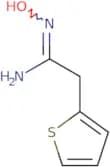
CAS:Versatile small molecule scaffoldFórmula:C10H10N2OPureza:Min. 95%Peso molecular:174.2 g/molN'-Hydroxy-2-(2-thienyl)ethanimidamide
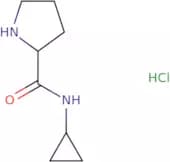
CAS:<p>Versatile small molecule scaffold</p>Fórmula:C6H8N2OSPureza:Min. 95%Peso molecular:156.21 g/molN-Cyclopropyl-2-pyrrolidinecarboxamide hydrochloride
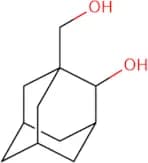
CAS:Versatile small molecule scaffoldFórmula:C8H15ClN2OPureza:Min. 95%Peso molecular:190.67 g/mol1-(Hydroxymethyl)adamantan-2-ol
CAS:1-(Hydroxymethyl)adamantan-2-ol is a natural product that has antiviral activity against vesicular stomatitis virus. It has been shown to be active in vitro against vesicular stomatitis virus, yielding approximately 20% inhibition at 10 μM. 1-(Hydroxymethyl)adamantan-2-ol is a heterocyclic compound with an equatorial hydroxyl group and one intramolecular hydrogen bond. It has been synthesized from dioxane, sulfite, and thionyl chloride. This molecule is oriented such that the carbonyl group points towards the equatorially located hydroxyl group.Fórmula:C11H18O2Pureza:Min. 95%Peso molecular:182.26 g/mol3-[3-(Trifluoromethyl)benzoyl]pyridine
CAS:Versatile small molecule scaffoldFórmula:C13H8F3NOPureza:Min. 95%Peso molecular:251.2 g/mol(2S)-2-[(Methoxycarbonyl)amino]propanoic acid
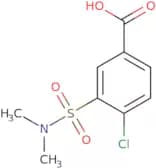
CAS:<p>(2S)-2-[(Methoxycarbonyl)amino]propanoic acid is a non-protein amino acid that is used in the synthesis of peptides. It is a chiral molecule with two stereocenters, so it can exist in four different forms. The two stereoisomers are formed through the asymmetric substitution of one or more hydroxyl groups on the prochiral molecule. This reaction can be catalyzed by histidine residues and bacitracin, which are found in many enzymes. The hydrolysis of (2S)-2-[(methoxycarbonyl)amino]propanoic acid leads to an unsymmetrical residue that reacts with imidazole and esters to form catalytic products.</p>Fórmula:C5H9NO4Pureza:Min. 95%Peso molecular:147.13 g/mol4-Chloro-3-(dimethylsulfamoyl)benzoic acid
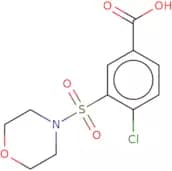
CAS:Versatile small molecule scaffoldFórmula:C9H10NO4SClPureza:Min. 95%Peso molecular:263.69 g/mol4-Chloro-3-(morpholine-4-sulfonyl)benzoic acid
CAS:Versatile small molecule scaffoldFórmula:C11H12ClNO5SPureza:Min. 95%Peso molecular:305.74 g/mol4-Chloro-3-[(prop-2-en-1-yl)sulfamoyl]benzoic acid
CAS:Versatile small molecule scaffoldFórmula:C10H10ClNO4SPureza:Min. 95%Peso molecular:275.71 g/mol4-Chloro-3-[(oxolan-2-ylmethyl)sulfamoyl]benzoic acid
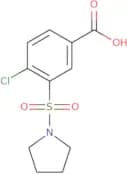
CAS:Producto controlado<p>4-Chloro-3-[(oxolan-2-ylmethyl)sulfamoyl]benzoic acid is a potent inhibitor of the antibody. It has been shown to bind to the antigen binding region of IgG, which prevents the formation of an antibody-antigen complex. 4-Chloro-3-[(oxolan-2-ylmethyl)sulfamoyl]benzoic acid is used as a research tool in cell biology and biochemistry. It has been used to study the interactions between proteins and receptors, as well as ion channels. This compound is also used for pharmacological studies with peptides and ligands, such as activators or inhibitors.</p>Fórmula:C12H14ClNO5SPureza:Min. 95%Peso molecular:319.76 g/mol4-Chloro-3-(pyrrolidine-1-sulfonyl)benzoic acid
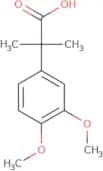
CAS:Versatile small molecule scaffoldFórmula:C11H12ClNO4SPureza:Min. 95%Peso molecular:289.74 g/mol2-(3,4-Dimethoxyphenyl)-2-methylpropanoic acid
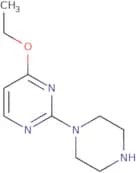
CAS:Versatile small molecule scaffoldFórmula:C12H16O4Pureza:Min. 95%Peso molecular:224.25 g/mol4-Ethoxy-2-(piperazin-1-yl)pyrimidine
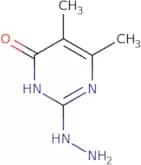
CAS:<p>Versatile small molecule scaffold</p>Fórmula:C10H16N4OPureza:Min. 95%Peso molecular:208.26 g/mol2-Hydrazinyl-5,6-dimethyl-3,4-dihydropyrimidin-4-one
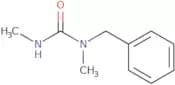
CAS:<p>Versatile small molecule scaffold</p>Fórmula:C6H10N4OPureza:Min. 95%Peso molecular:154.17 g/mol1-Benzyl-1,3-dimethylurea
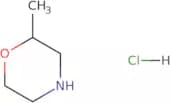
CAS:Versatile small molecule scaffoldFórmula:C10H14N2OPureza:Min. 95%Peso molecular:178.23 g/mol2-Methylmorpholine hydrochloride
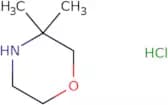
CAS:Versatile small molecule scaffoldFórmula:C5H12ClNOPureza:Min. 95%Peso molecular:137.61 g/mol3,3-Dimethylmorpholine hydrochloride
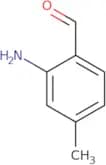
CAS:<p>Versatile small molecule scaffold</p>Fórmula:C6H13NO·HClPureza:Min. 95%Peso molecular:151.64 g/mol2-Amino-4-methyl-benzaldehyde
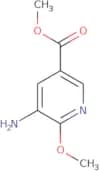
CAS:Versatile small molecule scaffoldFórmula:C8H9NOPureza:Min. 95%Peso molecular:135.16 g/molMethyl 5-Amino-6-methoxynicotinate
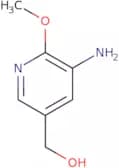
CAS:<p>Versatile small molecule scaffold</p>Fórmula:C8H10N2O3Pureza:Min. 95%Peso molecular:182.18 g/mol(5-Amino-6-methoxypyridin-3-yl)methanol
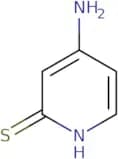
CAS:Versatile small molecule scaffoldFórmula:C7H10N2O2Pureza:Min. 95%Peso molecular:154.17 g/mol4-Amino-1,2-dihydropyridine-2-thione
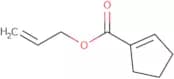
CAS:<p>Versatile small molecule scaffold</p>Fórmula:C5H6N2SPureza:Min. 95%Peso molecular:126.18 g/molProp-2-en-1-yl cyclopent-1-ene-1-carboxylate
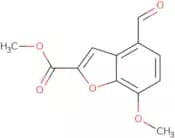
CAS:<p>Versatile small molecule scaffold</p>Fórmula:C9H12O2Pureza:Min. 95%Peso molecular:152.2 g/molMethyl 4-formyl-7-methoxy-1-benzofuran-2-carboxylate
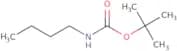
CAS:Versatile small molecule scaffoldFórmula:C12H10O5Pureza:Min. 95%Peso molecular:234.2 g/moltert-Butyl N-butylcarbamate
CAS:<p>Tert-butyl N-butylcarbamate (TBC) is an efficient method used to synthesize diphenyl sulfonium salt. TBC can be synthesized in two steps from the corresponding amine, yielding a sulfonium salt that is useful for coupling reactions. The reaction of the amine with carbon disulfide and diphenyl sulfone yields the desired product in high yield and purity. TBC is also a valuable transformation agent for vinyl carbamates. This compound has been shown to be a potent inhibitor of bacterial growth by binding to DNA-dependent RNA polymerase, thereby preventing transcription and replication.</p>Fórmula:C9H19NO2Pureza:Min. 95%Peso molecular:173.25 g/mol4-Bromo-N-[4-(hydrazinecarbonyl)phenyl]benzene-1-sulfonamide
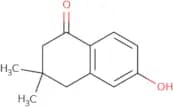
CAS:Versatile small molecule scaffoldFórmula:C13H12BrN3O3SPureza:Min. 95%Peso molecular:370.22 g/mol6-Hydroxy-3,3-dimethyl-1,2,3,4-tetrahydronaphthalen-1-one
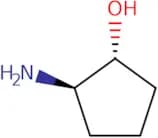
CAS:Versatile small molecule scaffoldFórmula:C12H14O2Pureza:Min. 95%Peso molecular:190.2 g/molTrans-2-Amino-Cyclopentanol
CAS:<p>Trans-2-Amino-cyclopentanol is a chemical compound with the molecular formula CHCH(NH)COH. It is a colorless liquid that can be used as a solvent and as an intermediate in organic synthesis. Trans-2-Amino-cyclopentanol is found in human livers, where it may undergo biotransformations and acetylation. The isolated yield of this amine is dependent on the conditions of the reaction, such as temperature and pH. This amine has been shown to react chemically with anthracene to form trans-2-(aminomethyl)cyclohexanone, which can then be hydrolyzed by lipase to form trans-2-(aminomethyl)cyclohexanol. Trans-2-Amino-cyclopentanol is also used in chemoenzymatic reactions and can serve as an intermediate for the production of enantiopure pyrrolid</p>Fórmula:C10H22N2O2Pureza:Min. 95%Peso molecular:202.29 g/mol5-Pyridin-3-yl-2H-[1,2,4]triazol-3-ol
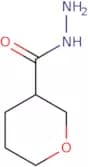
CAS:<p>Versatile small molecule scaffold</p>Fórmula:C7H6N4OPureza:Min. 95%Peso molecular:162.15 g/moloxane-3-carbohydrazide
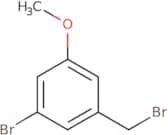
CAS:<p>Versatile small molecule scaffold</p>Fórmula:C6H12N2O2Pureza:Min. 95%Peso molecular:144.17 g/mol1-Bromo-3-(bromomethyl)-5-methoxybenzene
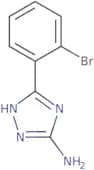
CAS:Versatile small molecule scaffoldFórmula:C8H8Br2OPureza:Min. 95%Peso molecular:279.96 g/mol5-(2-Bromophenyl)-4H-1,2,4-triazol-3-amine
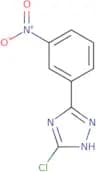
CAS:Versatile small molecule scaffoldFórmula:C8H7BrN4Pureza:Min. 95%Peso molecular:239.07 g/mol5-Chloro-3-(3-nitrophenyl)-1H-1,2,4-triazole
CAS:Versatile small molecule scaffoldFórmula:C8H5ClN4O2Pureza:Min. 95%Peso molecular:224.6 g/mol1-[(Thiophen-2-yl)methyl]-1H-pyrrole
CAS:Versatile small molecule scaffoldFórmula:C9H9NSPureza:Min. 95%Peso molecular:163.24 g/mol1-(5-Methylthiazol-2-yl)ethanone
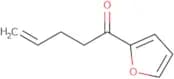
CAS:Versatile small molecule scaffoldFórmula:C6H7NOSPureza:Min. 95%Peso molecular:141.19 g/mol1-(Furan-2-yl)pent-4-en-1-one
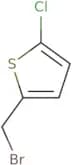
CAS:<p>Versatile small molecule scaffold</p>Fórmula:C9H10O2Pureza:Min. 95%Peso molecular:150.17 g/mol2-(Bromomethyl)-5-chlorothiophene
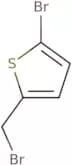
CAS:<p>Versatile small molecule scaffold</p>Fórmula:C5H4BrClSPureza:Min. 95%Peso molecular:211.51 g/mol2-Bromo-5-(bromomethyl)thiophene
CAS:<p>Versatile small molecule scaffold</p>Fórmula:C5H4Br2SPureza:Min. 95%Peso molecular:255.96 g/mol


![2-[2-(Hydroxymethyl)phenoxy]benzenecarbonitrile](/_next/image/?url=https%3A%2Fstatic.cymitquimica.com%2Fproducts%2F3D%2Fthumb-webp%2FJCA16765.webp&w=3840&q=75)
![3-[3-(Trifluoromethyl)benzoyl]pyridine](/_next/image/?url=https%3A%2Fstatic.cymitquimica.com%2Fproducts%2F3D%2Fthumb-webp%2FJCA19060.webp&w=3840&q=75)
![(2S)-2-[(Methoxycarbonyl)amino]propanoic acid](/_next/image/?url=https%3A%2Fstatic.cymitquimica.com%2Fproducts%2F3D%2Fthumb-webp%2FJCA19099.webp&w=3840&q=75)
![4-Chloro-3-[(prop-2-en-1-yl)sulfamoyl]benzoic acid](/_next/image/?url=https%3A%2Fstatic.cymitquimica.com%2Fproducts%2F3D%2Fthumb-webp%2FJCA21069.webp&w=3840&q=75)
![4-Chloro-3-[(oxolan-2-ylmethyl)sulfamoyl]benzoic acid](/_next/image/?url=https%3A%2Fstatic.cymitquimica.com%2Fproducts%2F3D%2Fthumb-webp%2FJCA21070.webp&w=3840&q=75)
![4-Bromo-N-[4-(hydrazinecarbonyl)phenyl]benzene-1-sulfonamide](/_next/image/?url=https%3A%2Fstatic.cymitquimica.com%2Fproducts%2F3D%2Fthumb-webp%2FJCA25625.webp&w=3840&q=75)
![5-Pyridin-3-yl-2H-[1,2,4]triazol-3-ol](/_next/image/?url=https%3A%2Fstatic.cymitquimica.com%2Fproducts%2F3D%2Fthumb-webp%2FJCA28283.webp&w=3840&q=75)
![1-[(Thiophen-2-yl)methyl]-1H-pyrrole](/_next/image/?url=https%3A%2Fstatic.cymitquimica.com%2Fproducts%2F3D%2Fthumb-webp%2FJCA30311.webp&w=3840&q=75)