Building Blocks
Esta sección contiene productos fundamentales para la síntesis de compuestos orgánicos y biológicos. Building blocks son los materiales de partida esenciales utilizados para construir moléculas complejas a través de diversas reacciones químicas. Desempeñan un papel crítico en el descubrimiento de fármacos, la ciencia de materiales y la investigación química. En CymitQuimica, ofrecemos una gama diversa de building blocks de alta calidad para apoyar sus investigaciones innovadoras y proyectos industriales, asegurando que tenga los componentes esenciales para una síntesis exitosa.
Subcategorías de "Building Blocks"
- Ácidos borónicos y derivados del ácido borónico(5.778 productos)
- Building Blocks quirales(1.243 productos)
- Building Blocks de hidrocarburos(6.098 productos)
- Building Blocks orgánicos(61.057 productos)
Se han encontrado 200716 productos de "Building Blocks"
Ordenar por
Pureza (%)
0
100
|
0
|
50
|
90
|
95
|
100
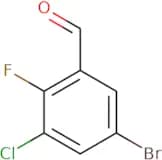
5-bromo-3-chloro-2-fluorobenzaldehyde
CAS:<p>Versatile small molecule scaffold</p>Fórmula:C7H3BrClFOPureza:Min. 95%Peso molecular:237.5 g/mol6-[(3-Methoxyphenyl)methyl]-4-methyl-5H,6H-[1,2]diazolo[3,4-c]pyrazol-3-amine
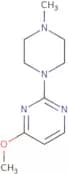
CAS:Versatile small molecule scaffoldFórmula:C13H15N5OPureza:Min. 95%Peso molecular:257.29 g/mol4-Methoxy-2-(4-methylpiperazin-1-yl)pyrimidine
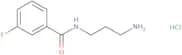
CAS:Versatile small molecule scaffoldFórmula:C10H16N4OPureza:Min. 95%Peso molecular:208.26 g/molN-(3-Aminopropyl)-3-fluorobenzamide hydrochloride
CAS:Versatile small molecule scaffoldFórmula:C10H14ClFN2OPureza:Min. 95%Peso molecular:232.68 g/mol4-Cyanobenzoic acid
CAS:<p>4-Cyanobenzoic acid (4CB) is a benzene derivative that inhibits the activity of tyrosinase, an enzyme involved in the production of melanin. It is synthesized by reacting 2,4-dichlorobenzoic acid with sodium hydroxide and acetone. 4CB has been shown to have a potent inhibitory effect on the enzyme, with an isolated yield of up to 83%. The compound also shows strong hydrogen bonding interactions with water molecules and coordinates in a geometry where one of its oxygen atoms is double bonded to two nitrogen atoms. This structural analysis suggests that 4 CB may bind to tyrosinase through adsorption mechanism.</p>Fórmula:C8H5NO2Pureza:Min. 95%Forma y color:White PowderPeso molecular:147.13 g/mol3-(Chlorosulfonyl)benzoic acid
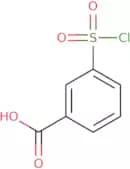
CAS:<p>3-(Chlorosulfonyl)benzoic acid is a synthetic compound that inhibits histone lysine methylation. It has been shown to protect against neuronal injury and cognitive impairment. 3-(Chlorosulfonyl)benzoic acid also has an inhibitory effect on the activation of Sirt2, which is an enzyme involved in cellular processes such as cancer, diabetes, inflammation, and aging. 3-(Chlorosulfonyl)benzoic acid has low potency and is not very soluble in water. It can be used to treat metabolic disorders by increasing the amount of insulin released from the pancreas and lowering blood glucose levels.</p>Fórmula:C7H5ClO4SPureza:Min. 95%Peso molecular:220.63 g/mol6-Chloro-3,4-dihydro-3-(a-methylbenzyl)-2H-1,2,4-benzothiadiazine-7-sulfonamide 1,1-dioxide
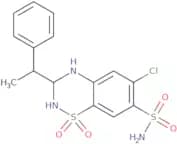
CAS:6-Chloro-3,4-dihydro-3-(a-methylbenzyl)-2H-1,2,4-benzothiadiazine-7-sulfonamide 1,1-dioxide is an active metabolite of the drug benzbromarone. It is primarily administered as a diuretic to treat high blood pressure and congestive heart failure. The pharmacodynamics of this drug are related to its ability to inhibit the activity of sodium channels in vascular smooth muscle cells and thereby reduce the force of contraction and relax the vessel wall. 6CBDMTD has shown an increase in glomerular filtration rate in patients with congestive heart failure. This drug also decreases the plasma concentration of fatty acids by inhibiting the formation of lipoprotein particles. 6CBDMTD has been shown to be effective at lowering diastolic and systolic blood pressure levels in patients with hypertension.Fórmula:C15H16ClN3O4S2Pureza:Min. 95%Peso molecular:401.89 g/mol4-Chloro-2,3-dimethylpyridine N-oxide
CAS:<p>4-Chloro-2,3-dimethylpyridine N-oxide is a chemical compound that belongs to the class of medicines. It is used in the manufacture of hydrogen peroxide, which is an oxidizing agent and a bleaching agent. 4-Chloro-2,3-dimethylpyridine N-oxide has been used as a reagent for organic synthesis and as a catalyst in organic reactions. This compound also has the ability to inhibit proton pumps, which are membrane proteins that pump protons across biological membranes. The presence of sodium impurities can lead to scaling problems because it affects the solubility of 4-chloro-2,3-dimethylpyridine N-oxide. The exothermic reaction with chlorine leads to the formation of chloride, sulfoxide, and chloride ions. These products are more soluble than 4-chloro-2,3-dimethylpyridine N-oxide itself.</p>Fórmula:C7H8ClNOPureza:Min. 95%Forma y color:Off-White PowderPeso molecular:157.6 g/molClonidine hydrochloride
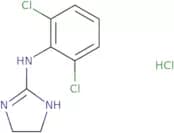
CAS:<p>Clonidine hydrochloride is a drug used in the treatment of hypertension and other cardiac diseases. It belongs to the class of drugs called centrally acting alpha-2 adrenergic agonists. Clonidine hydrochloride is also used for its antihypertensive effects in patients with neurogenic orthostatic hypotension, diabetic neuropathy, and glomerular filtration rate. The long-term efficacy and safety profile of clonidine hydrochloride has been established in clinical trials that have shown it to be effective in reducing symptoms of chronic pain and opioid withdrawal, as well as improving quality of life. Clonidine hydrochloride may be administered orally or transdermally. Clonidine binds to both alpha-1 and alpha-2 adrenergic receptors, which are responsible for vasoconstriction, inhibition of renin secretion from the kidneys, decreased sympathetic nerve activity, and increased parasympathetic nerve activity. This drug also has a protective effect on bone cancer cells</p>Fórmula:C9H9Cl2N3•HClPureza:Min. 95%Forma y color:PowderPeso molecular:266.55 g/mol1-(2-Chloroethanesulfonyl)propane
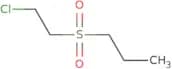
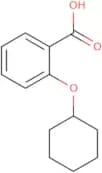
CAS:<p>Versatile small molecule scaffold</p>Fórmula:C5H11ClO2SPureza:Min. 95%Peso molecular:170.66 g/mol2-(Cyclohexyloxy)benzoic acid
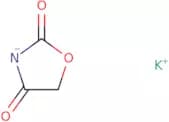
CAS:<p>2-(Cyclohexyloxy)benzoic acid is a polyvalent organic compound that is used as a binding agent and polymerization initiator in the production of polyvinyl alcohol. It can also be used to make condensation products with salicylic acid and aziridine, which are used in the manufacture of microcapsules. 2-(Cyclohexyloxy)benzoic acid is soluble in water, ethanol, acetone, and ether. This compound shows turbidity at concentrations of 0.1% (10 g/L) or greater and has an absorption maximum at 215 nm. 2-(Cyclohexyloxy)benzoic acid is not soluble in hexane or heptane.<br>2-(Cyclohexyloxy)benzoic acid has been shown to bind ammonium ions with high affinity, which may be due to its ability to form hydrogen bonds with amine groups on proteins.</p>Fórmula:C13H16O3Pureza:Min. 95%Peso molecular:220.26 g/molPotassium 2,4-dioxo-1,3-oxazolidin-3-ide
CAS:Versatile small molecule scaffoldFórmula:C3H2KNO3Pureza:Min. 95%Peso molecular:139.15 g/mol2-[(Diethylamino)methyl]cyclohexan-1-amine
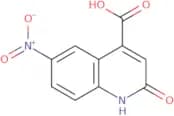
CAS:<p>Versatile small molecule scaffold</p>Fórmula:C11H24N2Pureza:Min. 95%Peso molecular:184.32 g/mol6-Nitro-2-oxo-1,2-dihydroquinoline-4-carboxylic acid
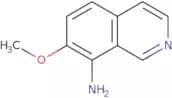
CAS:<p>Versatile small molecule scaffold</p>Fórmula:C10H6N2O5Pureza:Min. 95%Peso molecular:234.16 g/mol7-Methoxyisoquinolin-8-amine
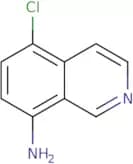
CAS:<p>Versatile small molecule scaffold</p>Fórmula:C10H10N2OPureza:Min. 95%Peso molecular:174.2 g/mol5-Chloroisoquinolin-8-amine
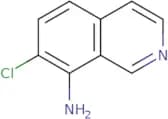
CAS:<p>Versatile small molecule scaffold</p>Fórmula:C9H7ClN2Pureza:Min. 95%Peso molecular:178.62 g/mol7-Chloroisoquinolin-8-amine
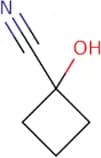
CAS:<p>Versatile small molecule scaffold</p>Fórmula:C9H7N2ClPureza:Min. 95%Peso molecular:178.61 g/mol1-Hydroxycyclobutanecarbonitrile
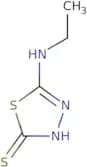
CAS:Versatile small molecule scaffoldFórmula:C5H7NOPureza:Min. 95%Peso molecular:97.12 g/mol5-(Ethylamino)-1,3,4-thiadiazole-2-thiol
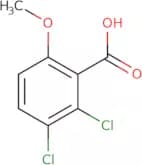
CAS:<p>Versatile small molecule scaffold</p>Fórmula:C4H7N3S2Pureza:Min. 95%Peso molecular:161.3 g/mol2,3-Dichloro-6-methoxybenzoic acid
CAS:<p>Versatile small molecule scaffold</p>Fórmula:C8H6Cl2O3Pureza:Min. 95%Peso molecular:221.03 g/mol2-(3-Chlorophenyl)-3-methylbutanoic acid
CAS:Versatile small molecule scaffoldFórmula:C11H13ClO2Pureza:Min. 95%Peso molecular:212.67 g/mol2-[4-(Propan-2-yloxy)phenyl]acetic acid
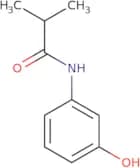
CAS:<p>Versatile small molecule scaffold</p>Fórmula:C11H14O3Pureza:Min. 95%Peso molecular:194.23 g/molN-(3-Hydroxyphenyl)-2-methylpropanamide
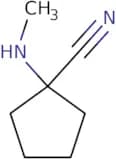
CAS:<p>Versatile small molecule scaffold</p>Fórmula:C10H13NO2Pureza:Min. 95%Peso molecular:179.22 g/mol1-(Methylamino)cyclopentane-1-carbonitrile
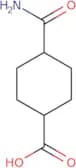
CAS:<p>Versatile small molecule scaffold</p>Fórmula:C7H12N2Pureza:Min. 95%Peso molecular:124.19 g/mol4-Carbamoylcyclohexane-1-carboxylic acid
CAS:Versatile small molecule scaffoldFórmula:C8H13NO3Pureza:Min. 95%Peso molecular:171.19 g/molN-Butyl-3-methylcyclohexan-1-amine
CAS:<p>Versatile small molecule scaffold</p>Fórmula:C11H23NPureza:Min. 95%Peso molecular:169.31 g/mol7,7-Dimethyl-8-oxa-1,3-diazaspiro[4.5]decane-2,4-dione
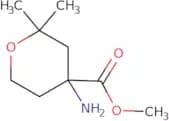
CAS:<p>Versatile small molecule scaffold</p>Fórmula:C9H14N2O3Pureza:Min. 95%Peso molecular:198.22 g/molMethyl 4-amino-2,2-dimethyloxane-4-carboxylate
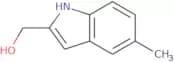
CAS:<p>Versatile small molecule scaffold</p>Fórmula:C9H17NO3Pureza:Min. 95%Peso molecular:187.24 g/mol(5-Methyl-1H-indol-2-yl)methanol
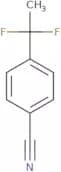
CAS:Versatile small molecule scaffoldFórmula:C10H11NOPureza:Min. 95%Peso molecular:161.2 g/mol4-(1,1-Difluoroethyl)-benzonitrile
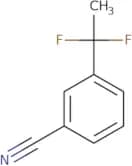
CAS:<p>Versatile small molecule scaffold</p>Fórmula:C9H7F2NPureza:Min. 95%Peso molecular:167.16 g/mol3-(1,1-Difluoroethyl)benzonitrile
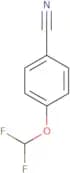
CAS:<p>Versatile small molecule scaffold</p>Fórmula:C9H7F2NPureza:Min. 95%Peso molecular:167.15 g/mol4-(Difluoromethyl)benzonitrile
CAS:<p>Versatile small molecule scaffold</p>Fórmula:C8H5F2NPureza:Min. 95%Peso molecular:153.13 g/mol3-(Difluoromethyl)benzonitrile
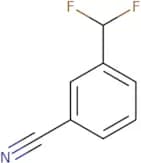
CAS:<p>Versatile small molecule scaffold</p>Fórmula:C8H5F2NPureza:Min. 95%Peso molecular:153.13 g/mol4-(1,1-Difluoroethyl)benzoic acid
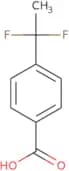
CAS:<p>Versatile small molecule scaffold</p>Fórmula:C9H8F2O2Pureza:Min. 95%Peso molecular:186.16 g/mol3-(1,1-Difluoroethyl)benzoic acid
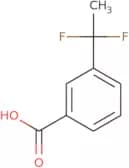
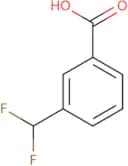
CAS:Versatile small molecule scaffoldFórmula:C9H8F2O2Pureza:Min. 95%Peso molecular:186.15 g/mol3-(Difluoromethyl)benzoic acid
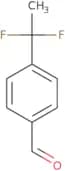
CAS:<p>Versatile small molecule scaffold</p>Fórmula:C8H6F2O2Pureza:Min. 95%Peso molecular:172.13 g/mol4-(1,1-Difluoroethyl)benzaldehyde
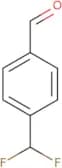
CAS:Versatile small molecule scaffoldFórmula:C9H8OF2Pureza:Min. 95%Peso molecular:170.15 g/mol4-(Difluoromethyl)benzaldehyde
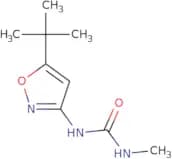
CAS:4-(Difluoromethyl)benzaldehyde is a nucleophilic compound that reacts with electrophiles. It reacts with chlorides to give the corresponding substitution product, which can be hydrolyzed to the acid ethyl ester. 4-(Difluoromethyl)benzaldehyde is not very soluble in water and has a low volatility, making it difficult to extract from organic solvents. The fluoride ion is an inhibitor of enzymes such as esterases and aminopeptidases, which are involved in the hydrolysis of esters. The uptake of 4-(difluoromethyl)benzaldehyde by cells may be due to its ability to inhibit reuptake of nipecotic acid (NPA), a neurotransmitter.Fórmula:C8H6F2OPureza:Min. 95%Peso molecular:156.13 g/mol1-(5-tert-Butyl-1,2-oxazol-3-yl)-3-methylurea
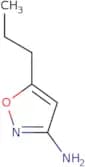
CAS:1-(5-tert-Butyl-1,2-oxazol-3-yl)-3-methylurea is an organic solvent that is used as a pesticide. It has inhibitory activity against infectious agents and has been shown to be effective in inhibiting the growth rate of some bacteria. The compound can also be used to treat cardiovascular diseases, inflammatory diseases, and pyrazole ring formation. 1-(5-tert-Butyl-1,2-oxazol-3-yl)-3-methylurea is agrochemical that can be applied to coniferous trees for agricultural purposes or used as a carbon source for animal health.Fórmula:C9H15N3O2Pureza:Min. 95%Peso molecular:197.23 g/mol5-Propylisoxazol-3-amine
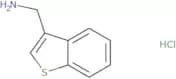
CAS:<p>Versatile small molecule scaffold</p>Fórmula:C6H10N2OPureza:Min. 95%Peso molecular:126.15 g/mol1-Benzothiophen-3-ylmethylamine hydrochloride
CAS:Versatile small molecule scaffoldFórmula:C9H10ClNSPureza:Min. 95%Peso molecular:199.7 g/mol(5-bromobenzo[b]thiophen-3-yl)methanamine hcl
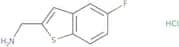
CAS:Versatile small molecule scaffoldFórmula:C9H9BrClNSPureza:Min. 95%Peso molecular:278.59 g/mol(5-Fluoro-1-benzothiophen-2-yl)methanamine hydrochloride
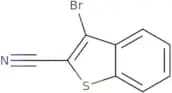
CAS:Versatile small molecule scaffoldFórmula:C9H9ClFNSPureza:Min. 95%Peso molecular:217.69 g/mol3-Bromo-1-benzothiophene-2-carbonitrile
CAS:<p>Versatile small molecule scaffold</p>Fórmula:C9H4BrNSPureza:Min. 95%Peso molecular:238.11 g/mol2-Amino-1-[3-(dimethylamino)propyl]-4,5-dimethyl-1H-pyrrole-3-carbonitrile
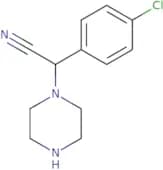
CAS:Versatile small molecule scaffoldFórmula:C12H20N4Pureza:Min. 95%Peso molecular:220.31 g/mol2-(4-Chlorophenyl)-2-(piperazin-1-yl)acetonitrile
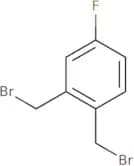
CAS:Versatile small molecule scaffoldFórmula:C12H14ClN3Pureza:Min. 95%Peso molecular:235.71 g/mol1,2-Bis(bromomethyl)-4-fluorobenzene
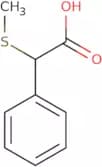
CAS:<p>Bis(bromomethyl)fluorobenzene is a synthetic chemical that can be used to debrominate olefins. It can be obtained by reductive debromination of 1,2-dibromoethane or by diazotization of 2,4-dichlorobenzene with sodium nitrite in an alkaline solution. Bis(bromomethyl)fluorobenzene is typically used as a reagent for the synthesis of heterocycles and pharmaceuticals. The yield of this reaction is dependent on factors such as temperature, reactant concentration, and reaction time.</p>Fórmula:C8H7Br2FPureza:Min. 95%Peso molecular:281.95 g/mol2-(Methylsulfanyl)-2-phenylacetic acid
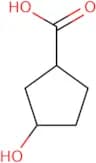
CAS:Versatile small molecule scaffoldFórmula:C9H10O2SPureza:Min. 95%Peso molecular:182.24 g/molrac-(1R,3R)-3-Hydroxycyclopentane-1-carboxylic acid
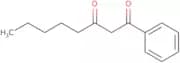
CAS:Versatile small molecule scaffoldFórmula:C6H10O3Pureza:Min. 95%Peso molecular:130.14 g/mol1-Phenyloctane-1,3-dione
CAS:1-Phenyloctane-1,3-dione is a copper extractant that has been shown to be efficient in the extraction of copper. It has also been used as a reagent and hydroxyl radical scavenger. The molecular modeling of 1-Phenyloctane-1,3-dione has shown it to be a good extractant for copper. 1-Phenyloctane-1,3-dione can be combined with tri-n-octylphosphine oxide to form an efficient reagent for extracting copper from its compounds. The synergistic effect of 1-Phenyloctane-1,3-dione with other reagents makes it an excellent extractant for copper.Fórmula:C14H18O2Pureza:Min. 95%Peso molecular:218.29 g/mol

![6-[(3-Methoxyphenyl)methyl]-4-methyl-5H,6H-[1,2]diazolo[3,4-c]pyrazol-3-amine](/_next/image/?url=https%3A%2Fstatic.cymitquimica.com%2Fproducts%2F3D%2Fthumb-webp%2FFBC80428.webp&w=3840&q=75)


![2-[(Diethylamino)methyl]cyclohexan-1-amine](/_next/image/?url=https%3A%2Fstatic.cymitquimica.com%2Fproducts%2F3D%2Fthumb-webp%2FFCA76207.webp&w=3840&q=75)

![2-[4-(Propan-2-yloxy)phenyl]acetic acid](/_next/image/?url=https%3A%2Fstatic.cymitquimica.com%2Fproducts%2F3D%2Fthumb-webp%2FFCA78407.webp&w=3840&q=75)

![7,7-Dimethyl-8-oxa-1,3-diazaspiro[4.5]decane-2,4-dione](/_next/image/?url=https%3A%2Fstatic.cymitquimica.com%2Fproducts%2F3D%2Fthumb-webp%2FFCA79579.webp&w=3840&q=75)
![(5-bromobenzo[b]thiophen-3-yl)methanamine hcl](/_next/image/?url=https%3A%2Fstatic.cymitquimica.com%2Fproducts%2F3D%2Fthumb-webp%2FFCA81075.webp&w=3840&q=75)
![2-Amino-1-[3-(dimethylamino)propyl]-4,5-dimethyl-1H-pyrrole-3-carbonitrile](/_next/image/?url=https%3A%2Fstatic.cymitquimica.com%2Fproducts%2F3D%2Fthumb-webp%2FFCA81776.webp&w=3840&q=75)