Building Blocks
Esta sección contiene productos fundamentales para la síntesis de compuestos orgánicos y biológicos. Building blocks son los materiales de partida esenciales utilizados para construir moléculas complejas a través de diversas reacciones químicas. Desempeñan un papel crítico en el descubrimiento de fármacos, la ciencia de materiales y la investigación química. En CymitQuimica, ofrecemos una gama diversa de building blocks de alta calidad para apoyar sus investigaciones innovadoras y proyectos industriales, asegurando que tenga los componentes esenciales para una síntesis exitosa.
Subcategorías de "Building Blocks"
- Ácidos borónicos y derivados del ácido borónico(5.778 productos)
- Building Blocks quirales(1.243 productos)
- Building Blocks de hidrocarburos(6.097 productos)
- Building Blocks orgánicos(61.052 productos)
Se han encontrado 201390 productos de "Building Blocks"
Ordenar por
Pureza (%)
0
100
|
0
|
50
|
90
|
95
|
100
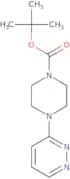
tert-Butyl 4-(pyridazin-3-yl)piperazine-1-carboxylate
CAS:<p>Versatile small molecule scaffold</p>Fórmula:C13H20N4O2Pureza:Min. 95%Peso molecular:264.32 g/mol6-Bromo-1,3-dioxaindan-4-amine
CAS:<p>Versatile small molecule scaffold</p>Fórmula:C7H6BrNO2Pureza:Min. 95%Peso molecular:216.03 g/mol2,3,3-Trimethyl-4,5-benzo-3H-indole
CAS:2,3,3-Trimethyl-4,5-benzo-3H-indole is a fine chemical that is used as a versatile building block for research chemicals and speciality chemicals. It can be used to synthesize drugs. 2,3,3-Trimethyl-4,5-benzo-3H-indole is also a reaction component in the synthesis of complex compounds with high quality.Fórmula:C15H15NPureza:Min. 96 Area-%Peso molecular:209.29 g/molD-Tryptophan
CAS:D-Tryptophan is a versatile building block that has many applications in the field of fine chemicals, research chemicals, and speciality chemicals. D-Tryptophan is a useful building block for complex compounds and can be used as a reagent or reaction component. It is also a useful scaffold in organic synthesis.Fórmula:C11H12N2O2Pureza:Min. 98.0 Area-%Peso molecular:204.23 g/molRef: 3D-T-8300
1kgA consultar5kgA consultar250gA consultar500gA consultar2500gA consultar-Unit-kgkgA consultarL-Tyrosine
CAS:<p>L-Tyrosine is a non-essential amino acid with versatile building block properties. It can be used as a reagent in organic synthesis, as a building block for complex compounds, and as a speciality chemical. L-Tyrosine is also useful as a reaction component in the synthesis of peptides and proteins. L-Tyrosine is an important intermediate in the production of pharmaceuticals, agrochemicals, dyes, flavors and fragrances. The CAS number for L-Tyrosine is 60-18-4.</p>Fórmula:C9H11NO3Peso molecular:181.19 g/molRef: 3D-T-9010
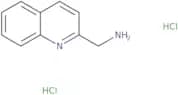
1kgA consultar5kgA consultar10kgA consultar25kgA consultar2500gA consultar-Unit-kgkgA consultar2-Aminomethylquinoline 2HCl
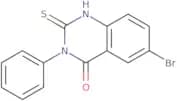
CAS:<p>Versatile small molecule scaffold</p>Fórmula:C10H11ClN2Pureza:Min. 95%Peso molecular:194.66 g/mol6-Bromo-3-phenyl-2-sulfanyl-3,4-dihydroquinazolin-4-one
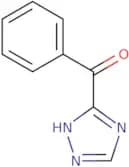
CAS:Versatile small molecule scaffoldFórmula:C14H9BrN2OSPureza:Min. 95%Peso molecular:333.2 g/mol3-Benzoyl-4H-1,2,4-triazole
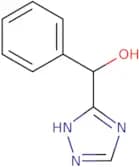
CAS:<p>3-Benzoyl-4H-1,2,4-triazole is an aryl ketone that can be used in the synthesis of triazoles. It is a strong acid, proton donor, and it can be used to synthesize ketones.</p>Fórmula:C9H7N3OPureza:Min. 95%Peso molecular:173.17 g/molPhenyl(4H-1,2,4-triazol-3-yl)methanol
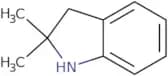
CAS:Versatile small molecule scaffoldFórmula:C9H9N3OPureza:Min. 95%Peso molecular:175.19 g/mol2,2-Dimethyl-2,3-dihydro-1H-indole
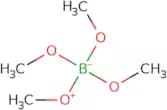
CAS:<p>Versatile small molecule scaffold</p>Fórmula:C10H13NPureza:Min. 95%Peso molecular:147.22 g/molSodium tetramethoxyboranuide
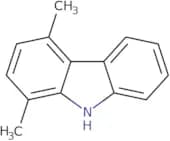
CAS:Versatile small molecule scaffoldFórmula:C4H12BO4•NaPureza:Min. 95%Forma y color:PowderPeso molecular:157.94 g/mol1,4-dimethyl-9H-carbazole
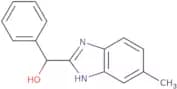
CAS:<p>1,4-dimethyl-9H-carbazole is a synthetic compound that is used in the study of the biological effects of nitro compounds. It has been shown to have antitumor and anti-HIV activities. 1,4-Dimethyl-9H-carbazole inhibits proliferation of human tumor cells and murine leukemia cell lines by affecting their DNA synthesis and thus inhibiting their growth. It also inhibits DNA replication in human T cells, which may be due to its ability to inhibit enzyme activity or interfere with cellular metabolism. This compound also inhibits the growth of HIV by interfering with the production of viral nucleic acids.</p>Fórmula:C14H13NPureza:Min. 95%Peso molecular:195.26 g/mol(5-Methyl-1H-1,3-benzodiazol-2-yl)(phenyl)methanol
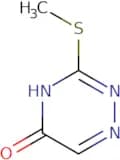
CAS:Versatile small molecule scaffoldFórmula:C15H14N2OPureza:Min. 95%Peso molecular:238.28 g/mol3-(Methylthio)-1,2,4-triazin-5(4H)-one
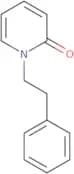
CAS:<p>3-(Methylthio)-1,2,4-triazin-5(4H)-one is an organic compound that belongs to the class of thiones. It is a ligand in coordination chemistry and can be used for the discovery of new lead compounds. 3-(Methylthio)-1,2,4-triazin-5(4H)-one binds to heavy metals such as lead or zinc by forming chelate complexes with them. This ligand also has nitro groups that are sensitive to oxidation and nitration under acidic conditions. The compound has been shown to have high chemical stability when exposed to air or moisture and heat. 3-(Methylthio)-1,2,4-triazin-5(4H)-one is not toxic when ingested orally and does not cause skin irritation or eye damage in animal studies.</p>Fórmula:C4H5N3OSPureza:Min. 95%Peso molecular:143.17 g/mol1-Phenethyl-2-pyridone-d5
CAS:Versatile small molecule scaffoldFórmula:C13H13NOPureza:Min. 95%Peso molecular:199.25 g/mol2-Phenylfuro[3,2-b]pyridine
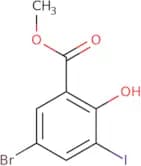
CAS:<p>2-Phenylfuro[3,2-b]pyridine (2PFBP) is a synthetic compound that has antibacterial activity. It is a stereoselective compound, which means it selectively binds to one of the two enantiomers of an enzyme. The selectivity of 2PFBP for methicillin-resistant Staphylococcus aureus (MRSA) was demonstrated in a study using mcf-7 cells, which are human cancer cells that have been transformed by the gene encoding methicillin resistance. The compound inhibited MRSA cell growth and induced apoptosis in MRSA cells. 2PFBP also has antibacterial activity against other bacteria such as S. aureus and S. epidermidis strains. 2PFBP inhibits bacterial growth by binding to DNA-dependent RNA polymerase, thereby preventing transcription and replication. The high frequency of human activity has been shown using a patch-clamp technique on human erythrocytes</p>Fórmula:C13H9NOPureza:Min. 95%Peso molecular:195.22 g/molMethyl 5-bromo-2-hydroxy-3-iodobenzenecarboxylate
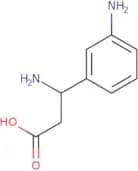
CAS:Versatile small molecule scaffoldFórmula:C8H6BrIO3Pureza:Min. 95%Peso molecular:356.95 g/mol3-Amino-3-(3-aminophenyl)propanoic acid
CAS:Versatile small molecule scaffoldFórmula:C9H12N2O2Pureza:Min. 95%Peso molecular:180.2 g/mol1,3-Bis[1-(2-hydroxyethyl)-4-piperidyl]propane
CAS:<p>Versatile small molecule scaffold</p>Fórmula:C17H34N2O2Pureza:Min. 95%Peso molecular:298.47 g/mol2-Ethynylbicyclo[2.2.1]heptan-2-ol
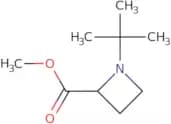
CAS:Versatile small molecule scaffoldFórmula:C9H12OPureza:Min. 95%Peso molecular:136.19 g/molMethyl 1-tert-butylazetidine-2-carboxylate
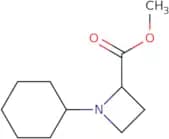
CAS:<p>Versatile small molecule scaffold</p>Fórmula:C9H17NO2Pureza:Min. 95%Peso molecular:171.24 g/molMethyl 1-cyclohexylazetidine-2-carboxylate
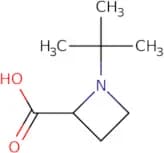
CAS:Versatile small molecule scaffoldFórmula:C11H19NO2Pureza:Min. 95%Peso molecular:197.3 g/mol1-tert-Butyl-azetidine-2-carboxylic acid
CAS:<p>Versatile small molecule scaffold</p>Fórmula:C8H15NO2Pureza:Min. 95%Peso molecular:157.21 g/mol5-Methanesulfonyl-1,2-dihydropyridin-2-one
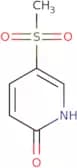
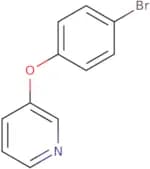
CAS:<p>5-Methanesulfonyl-1,2-dihydropyridin-2-one is an electrophilic compound that is used in the treatment of type 2 diabetes. It is a competitive inhibitor of glucokinase and blocks the phosphorylation of glucose to glucose-6-phosphate by glucokinase. 5MSDHP binds to liver microsomes and inhibits the activity of glucokinase and other enzymes, such as glutathione S transferases, glutathione peroxidases, and NADPH oxidases. This drug also has been shown to activate glucokinase activators, such as sulforaphane in human liver cells.</p>Fórmula:C6H7NO3SPureza:Min. 95%Peso molecular:173.19 g/mol3-(4-Bromophenoxy)-pyridine
CAS:Versatile small molecule scaffoldFórmula:C11H8BrNOPureza:Min. 95%Peso molecular:250.09 g/mol4,5-Dimethyl-2-nitrophenol
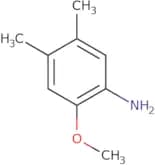
CAS:<p>4,5-Dimethyl-2-nitrophenol is a phenolic compound that can be synthesized from a variety of precursors. It has been shown to react with hydrogen peroxide and chloride to produce nitrobenzene. Nitrobenzene has been used as an intermediate in the synthesis of other organic compounds. 4,5-Dimethyl-2-nitrophenol also reacts with hydrogen peroxide to form the fluorescent product 2,6-dichloro-4-(p-hydroxyphenyl)phenol. This reaction is used for detection of hydrogen peroxide in environmental chemistry. 4,5-Dimethyl-2-nitrophenol can undergo tautomeric shifts between its dienone and enedione forms. The ligand interactions of these two forms are different, which may lead to different reactions with other molecules.</p>Fórmula:C8H9NO3Pureza:Min. 95%Peso molecular:167.16 g/mol2-Methoxy-4,5-dimethylaniline
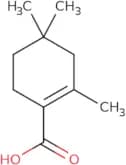
CAS:Versatile small molecule scaffoldFórmula:C9H13NOPureza:Min. 95%Peso molecular:151.21 g/mol2,4,4-Trimethylcyclohex-1-ene-1-carboxylic acid
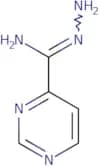
CAS:<p>Versatile small molecule scaffold</p>Fórmula:C10H16O2Pureza:Min. 95%Peso molecular:168.23 g/molN-Aminopyrimidine-4-carboximidamide
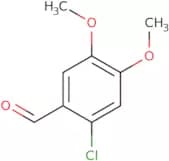
CAS:<p>Versatile small molecule scaffold</p>Fórmula:C5H7N5Pureza:Min. 95%Peso molecular:137.14 g/mol2-Chloro-4,5-dimethoxybenzaldehyde
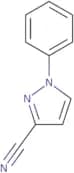
CAS:<p>2-Chloro-4,5-dimethoxybenzaldehyde is a functional group that can be used as a nucleophile in organic synthesis. It has been shown to react with amines to produce nitro compounds. This functional group also reacts with acidic substances such as malic acid and ethanol extractions, forming chlorinated products. 2-Chloro-4,5-dimethoxybenzaldehyde can be extracted from the surface of plants using piperazine or morpholine.</p>Fórmula:C9H9ClO3Pureza:Min. 95%Peso molecular:200.62 g/mol1-Phenyl-1H-pyrazole-3-carbonitrile
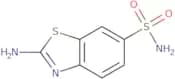
CAS:Versatile small molecule scaffoldFórmula:C10H7N3Pureza:Min. 95%Peso molecular:169.18 g/mol2-Amino-benzothiazole-6-sulfonic acid amide
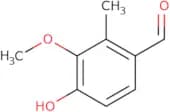
CAS:<p>2-Amino-benzothiazole-6-sulfonic acid amide is a drug that belongs to the class of anhydrase inhibitors. It has been found to have a potent inhibitory effect on carbonic anhydrase, which is thought to be involved in the pathogenesis of some cancers. This drug has also been shown to have antiviral effects against HIV and Herpes simplex virus type 1, as well as antibacterial activity against Entamoeba histolytica and Giardia lamblia. 2-Amino-benzothiazole-6-sulfonic acid amide has been shown to reduce inflammation by inhibiting immunodeficiency, which may be due to its inhibition of the enzyme carrageenan synthase. The carrageenan synthase enzyme is required for the production of polysaccharides found in red blood cells and microorganisms that are involved in inflammatory processes.</p>Fórmula:C7H7N3O2S2Pureza:Min. 95%Peso molecular:229.28 g/mol4-Hydroxy-3-methoxy-2-methylbenzaldehyde
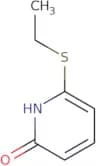
CAS:Versatile small molecule scaffoldFórmula:C9H10O3Pureza:Min. 95%Peso molecular:166.17 g/mol6-(Ethylthio)pyridin-2(1H)-one
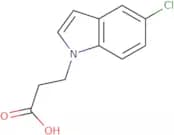
CAS:<p>Versatile small molecule scaffold</p>Fórmula:C7H9NOSPureza:Min. 95%Peso molecular:155.22 g/mol3-(5-Chloro-1H-indol-1-yl)propanoic acid
CAS:Versatile small molecule scaffoldFórmula:C11H10ClNO2Pureza:Min. 95%Peso molecular:223.65 g/mol2-Amino-2-phenylpropan-1-ol Hydrochloride
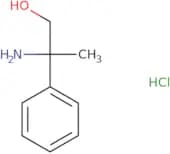
CAS:<p>Versatile small molecule scaffold</p>Fórmula:C9H13NO·HClPureza:Min. 95%Peso molecular:151.24 g/mol3-Bromo-2,6-dimethoxyphenol
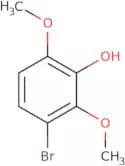
CAS:Versatile small molecule scaffoldFórmula:C8H9BrO3Pureza:Min. 95%Peso molecular:233.06 g/mol2-Hydroxy-1-(1H-indol-3-yl)propan-1-one
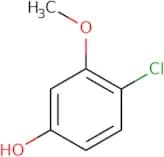
CAS:Producto controlado<p>Versatile small molecule scaffold</p>Fórmula:C11H11NO2Pureza:Min. 95%Peso molecular:189.21 g/mol4-Chloro-3-methoxy phenol
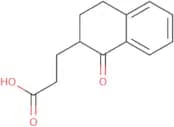
CAS:4-Chloro-3-methoxy phenol is a chemical that belongs to the group of halogenated aromatic compounds. It is a colorless liquid with a sweet odor. 4-Chloro-3-methoxy phenol has been found to be absorbed by humans through inhalation and ingestion. The absorbed dose is dependent on the individual's weight, and the radiation dose depends on the type of radiation used. 4-Chloro-3-methoxy phenol can be synthesized by reacting 2 chloroanisole with chlorine gas in an experimental reaction mechanism. This compound reacts with DNA bases and causes mutations, as well as producing reactive oxygen species that can cause oxidative damage to DNA.Fórmula:C7H7CIO2Pureza:Min. 95%Peso molecular:158.58 g/mol3-(1-Oxo-1,2,3,4-tetrahydronaphthalen-2-yl)propanoic acid
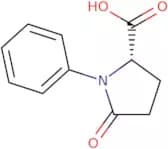
CAS:Versatile small molecule scaffoldFórmula:C13H14O3Pureza:Min. 95%Peso molecular:218.2 g/mol5-Oxo-1-Phenylpyrrolidine-2-carboxylic acid
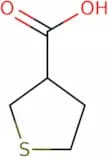
CAS:Versatile small molecule scaffoldFórmula:C11H11NO3Pureza:Min. 95%Peso molecular:205.21 g/molThiolane-3-carboxylic acid
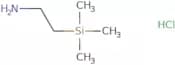
CAS:<p>Thiolane-3-carboxylic acid is a heterospirocyclic compound that inhibits HIV-1 reverse transcriptase. Thiolane-3-carboxylic acid is a biologically active metabolite of the anti-HIV drug azidothymidine, which is in turn obtained by the chemical transformation of the urethane intermediate. The structural similarity between this compound and valine has been shown to be due to the presence of a thiobenzoic ring system. The inhibition of HIV-1 replication by this active form has been shown using protease inhibitors, hydroxyethylamine, and alcohols.</p>Fórmula:C5H8O2SPureza:Min. 95%Peso molecular:132.18 g/mol(2-Aminoethyl)trimethylsilane hydrochloride
CAS:<p>Versatile small molecule scaffold</p>Fórmula:C5H16ClNSiPureza:Min. 95%Peso molecular:153.72 g/molMethyl[(trimethylsilyl)methyl]amine hydrochloride
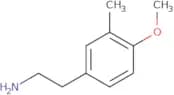
CAS:Versatile small molecule scaffoldFórmula:C5H16ClNSiPureza:Min. 95%Peso molecular:153.72 g/mol2-(4-Methoxy-3-methylphenyl)ethan-1-amine
CAS:Producto controlado<p>Versatile small molecule scaffold</p>Fórmula:C10H15NOPureza:Min. 95%Peso molecular:165.23 g/mol2-(3-Methoxy-4-methylphenyl)ethan-1-amine
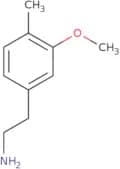
CAS:Producto controlado<p>Versatile small molecule scaffold</p>Fórmula:C10H15NOPureza:Min. 95%Peso molecular:165.23 g/molEthyl 3-(4-hydroxy-6-methyl-2-sulfanylpyrimidin-5-yl)propanoate
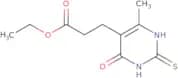
CAS:Versatile small molecule scaffoldFórmula:C10H14N2O3SPureza:Min. 95%Peso molecular:242.3 g/mol1-Benzyl-1H-pyrrole-3-carboxylic acid
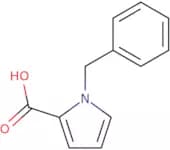
CAS:Versatile small molecule scaffoldFórmula:C12H11NO2Pureza:Min. 95%Peso molecular:201.22 g/mol1-Benzyl-1H-pyrrole-2-carboxylic acid
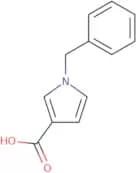
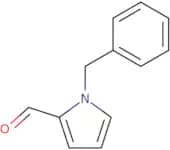
CAS:Versatile small molecule scaffoldFórmula:C12H11NO2Pureza:Min. 95%Peso molecular:201.22 g/mol1-Benzyl-1H-pyrrole-2-carbaldehyde
CAS:<p>1-Benzyl-1H-pyrrole-2-carbaldehyde is a chemical compound that yields 1,4-benzodioxan-6,7(2H)-dione as an intermediate. The β-cyclodextrin is used to increase the solubility of the product. The shift in the UV spectrum of 1,4-benzodioxan-6,7(2H)-dione in the presence of 1-[(β-cyclodextrin)amino]ethyl methide was mediated by azafulvenium (1) and pyridine (3). This reaction was found to be intramolecular and n-substituted. Azafulvenium (1) activated the carbonyl group of 1-(N′N′dimethylaminoethyl methide) at position 6 on the pyrrole ring by hypervalent interaction with nitrogen. This reagent can be used for synthesis</p>Fórmula:C12H11NOPureza:Min. 95%Peso molecular:185.23 g/mol


![2-Phenylfuro[3,2-b]pyridine](/_next/image/?url=https%3A%2Fstatic.cymitquimica.com%2Fproducts%2F3D%2Fthumb-webp%2FTAA06882.webp&w=3840&q=75)
![1,3-Bis[1-(2-hydroxyethyl)-4-piperidyl]propane](/_next/image/?url=https%3A%2Fstatic.cymitquimica.com%2Fproducts%2F3D%2Fthumb-webp%2FTAA07384.webp&w=3840&q=75)
![2-Ethynylbicyclo[2.2.1]heptan-2-ol](/_next/image/?url=https%3A%2Fstatic.cymitquimica.com%2Fproducts%2F3D%2Fthumb-webp%2FTAA08403.webp&w=3840&q=75)


![Methyl[(trimethylsilyl)methyl]amine hydrochloride](/_next/image/?url=https%3A%2Fstatic.cymitquimica.com%2Fproducts%2F3D%2Fthumb-webp%2FTAA13532.webp&w=3840&q=75)